

Holding On to Your Hard-Earned Clients
Customer retention best practices are crucial for sustainable growth in the competitive home services market. This listicle provides seven actionable strategies to strengthen customer relationships and maximize customer lifetime value. Learn how to implement customer success programs, personalized service, voice of customer initiatives, educational resources, loyalty programs, proactive support, and seamless omnichannel experiences. These customer retention best practices will help your home service business minimize churn and boost profits.
1. Customer Success Programs
Customer success programs are a crucial customer retention best practice, acting as a proactive and relationship-focused approach to client management. These initiatives aim to ensure your customers achieve their desired outcomes using your home service product or service. Unlike reactive customer support, which addresses issues after they arise, customer success anticipates customer needs and proactively guides them towards maximizing the value of their purchase, fostering loyalty and reducing churn. This approach is particularly valuable for home service businesses where repeat business and positive word-of-mouth are essential for growth.
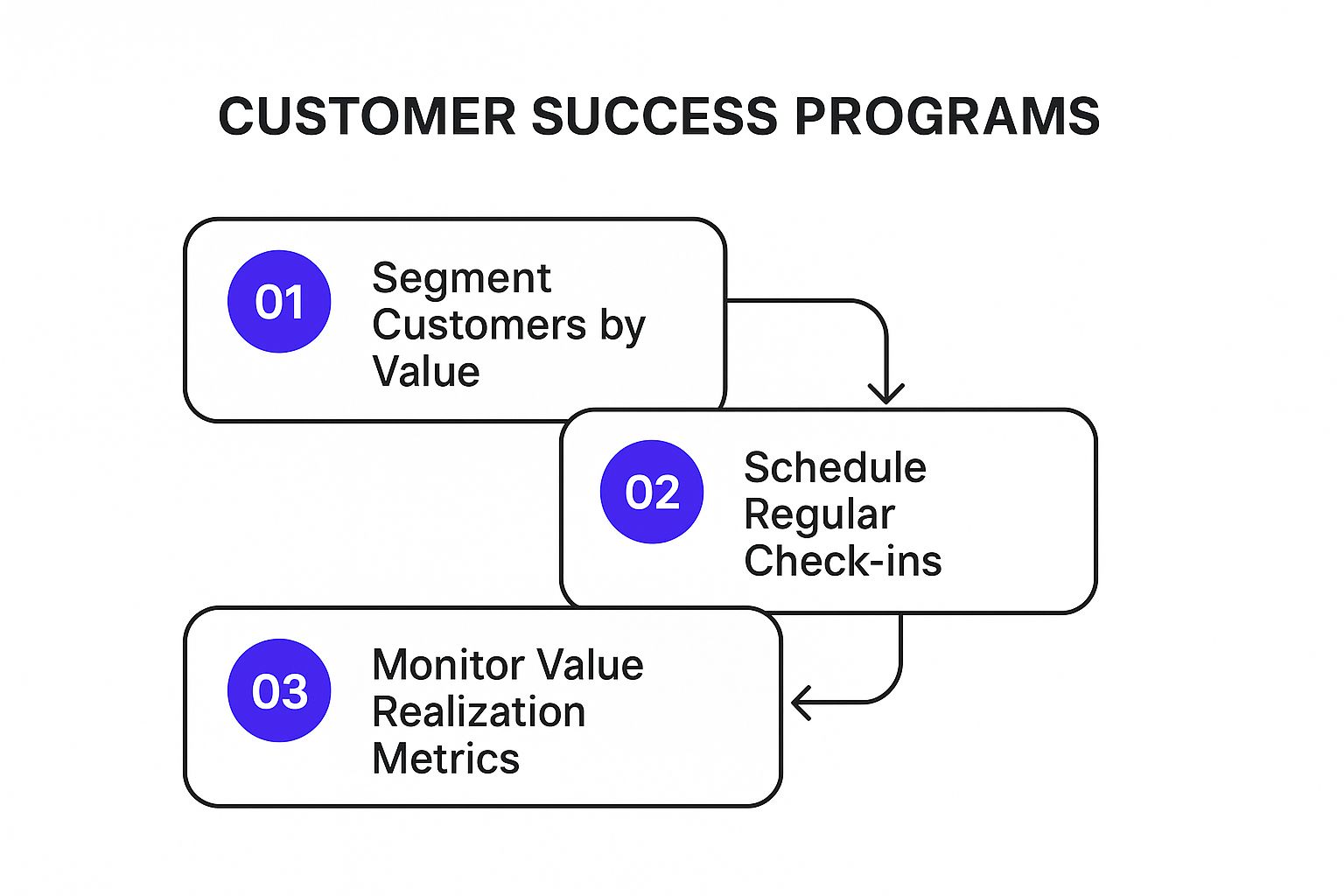
The infographic illustrates a simplified customer success process flow. It starts with onboarding and initial setup, moves through ongoing support and engagement, and culminates in renewal and advocacy. Key steps highlighted include proactively identifying potential issues, personalizing the customer experience, and regularly measuring customer satisfaction. The flow underscores the importance of continuous engagement and proactive intervention to drive customer success. As seen in the infographic, a successful program leads to renewals and advocacy, showcasing the cyclical nature of customer success.
This proactive approach is particularly beneficial for home service businesses because it builds trust and long-term relationships with clients. Consider a scenario where a customer utilizes your landscaping services. A customer success program would not just ensure the initial landscaping is done well, but also proactively schedule seasonal maintenance, offer advice on lawn care, and address any concerns before they escalate. This fosters a stronger customer relationship and increases the likelihood of repeat business and referrals.
Features of successful customer success programs include dedicated customer success managers (CSMs), regular check-ins and business reviews, customized success plans for each client, value realization tracking, and proactive outreach at critical points in the customer journey. For home service businesses, this could translate to assigning a dedicated CSM to key accounts, conducting regular property visits to assess ongoing needs, and offering tailored service packages based on individual client requirements.
Pros:
- Reduced Churn: Addressing issues proactively significantly reduces churn by preventing cancellations.
- Upselling/Cross-selling Opportunities: Satisfied customers are more open to additional services, creating upselling and cross-selling opportunities. For example, a customer who is happy with their regular cleaning service might be receptive to adding carpet cleaning or window washing services.
- Customer Advocacy: Happy customers become advocates, driving referrals and positive reviews – invaluable for home service businesses.
- Product Development Feedback: Direct customer interaction provides valuable feedback for improving service offerings.
Cons:
- Resource Intensive: Requires investment in CSMs and supporting infrastructure.
- Scalability Challenges: Can be difficult to scale for businesses with numerous small customers. However, for home service franchises, a centralized customer success program can be implemented across franchisees, offering economies of scale.
- Delayed ROI: The return on investment might take time to materialize.
- Hiring Challenges: Requires careful hiring of CSMs with the right skill set – ideally individuals with strong interpersonal skills, knowledge of the home service industry, and a proactive approach to problem-solving.
Examples: While Salesforce and HubSpot are cited as examples of successful customer success programs, their models can be adapted for the home service sector. Imagine a local plumbing company implementing a tiered support system based on customer value, offering proactive maintenance reminders, and conducting annual plumbing system checks for their high-value customers.
Tips for Home Service Businesses:
- Segmentation: Segment customers by value and tailor your success efforts. Focus your highest touch efforts on your most valuable clients.
- Clear Metrics: Establish clear success metrics, such as customer lifetime value, referral rates, and customer satisfaction scores, that align with your business goals.
- Early Warning Systems: Implement systems to identify at-risk accounts. For example, missed appointments or decreased service frequency could signal potential disengagement.
- Automation: Automate routine tasks like appointment reminders and satisfaction surveys, freeing up CSMs to focus on high-touch interactions.
Implementing a robust customer success program is a worthwhile investment for home service business owners, franchise owners, and franchisees seeking to enhance customer retention best practices. By proactively nurturing customer relationships and ensuring customer satisfaction, you can build a loyal customer base, drive repeat business, and ultimately boost your bottom line.
2. Personalization at Scale
Personalization at scale is a crucial customer retention best practice, especially for home service businesses. It goes beyond simply addressing customers by their first name; it involves using data, technology, and automation to create truly customized experiences that resonate with each individual customer while maintaining operational efficiency. This approach recognizes individual preferences, behaviors, and needs to create relevant interactions across all touchpoints in the customer journey, from initial contact to ongoing service and follow-up. For home service businesses, this could mean anything from tailoring service reminders based on past appointments and equipment owned, to offering personalized discounts on relevant services, or even proactively suggesting maintenance based on seasonal changes and individual home characteristics.
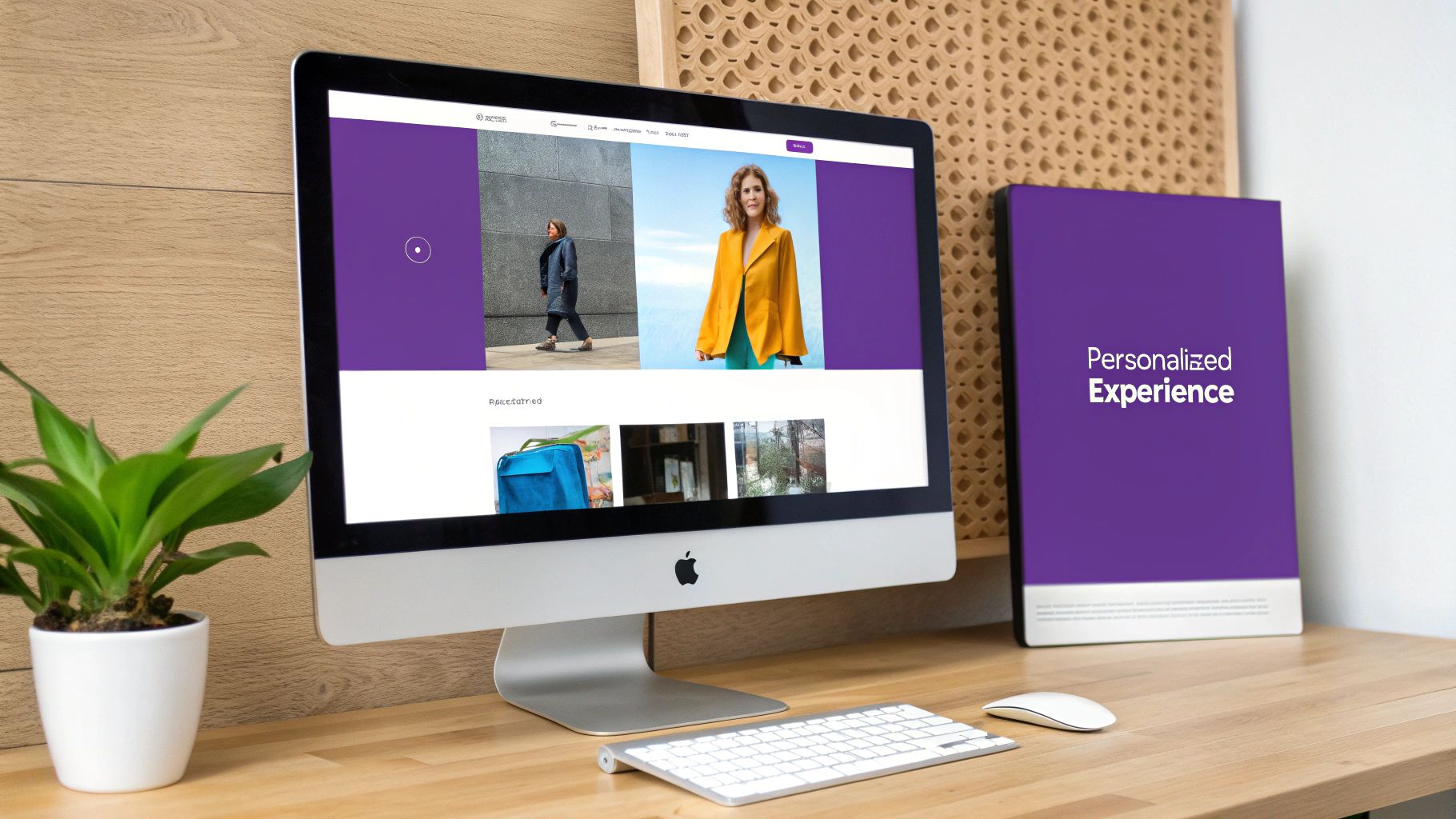
This method leverages several key features. AI-driven recommendation engines can analyze customer data to suggest relevant services or products. Behavioral segmentation groups customers based on shared actions and preferences, enabling targeted communication. Dynamic content generation automatically tailors website content, emails, and other materials to individual customers. Omnichannel personalization ensures a consistent experience across all communication channels, be it email, SMS, or in-app notifications. Finally, predictive analytics anticipates customer needs, allowing you to proactively offer solutions before problems arise, a key differentiator in the home services industry. Imagine predicting a furnace issue before it happens and reaching out proactively – that's the power of personalization.
Why This Approach Matters for Home Service Businesses:
In a competitive market, personalization sets you apart. Homeowners value businesses that understand their specific needs and provide relevant solutions. By personalizing the customer experience, you're building trust, fostering loyalty, and increasing the lifetime value of each customer.
Examples of Successful Implementation:
- Amazon: Their recommendation engine, a prime example of personalization at scale, drives 35% of their revenue. While not a home service business, the principle applies. Imagine recommending specific home maintenance services based on past purchases or property characteristics.
- Netflix: Saves approximately $1 billion per year by reducing churn through personalized recommendations, demonstrating the direct impact on customer retention.
Pros:
- Increased Customer Engagement: Tailored experiences are more likely to capture attention and encourage interaction.
- Improved Conversion Rates and Average Order Value: Relevant offers and services lead to higher sales and increased spending per customer.
- Stronger Emotional Connection: Personalized interactions create a sense of value and appreciation, fostering customer loyalty.
- Competitive Advantage: A truly personalized experience is difficult for competitors to replicate.
Cons:
- Data Management: Requires robust data collection and management capabilities.
- Privacy Concerns: Navigating privacy regulations and ensuring customer trust is crucial.
- Technical Complexity: Implementing these systems can be challenging.
- Over-Personalization: Too much personalization can feel intrusive.
Actionable Tips for Home Service Businesses:
- Start Small: Begin with high-impact, low-effort personalization tactics, like personalized email greetings and service reminders.
- Unified Data: Implement a customer data platform (CDP) to consolidate customer information.
- Testing is Key: Test different personalization approaches before full-scale deployment.
- Human Oversight: Balance automation with human oversight to avoid inappropriate recommendations.
- Transparency: Be open about data usage and offer clear opt-out options.
By strategically implementing personalization at scale, home service businesses can cultivate stronger customer relationships, drive repeat business, and ultimately achieve sustainable growth within their local market.
3. Voice of Customer (VoC) Programs
One of the most powerful customer retention best practices for home service businesses is implementing a Voice of Customer (VoC) program. VoC programs systematically capture, analyze, and, crucially, act upon customer feedback gathered across various channels and touchpoints. This structured approach provides invaluable insights into customer expectations, preferences, and pain points, allowing your business to make data-driven improvements that directly enhance customer retention. For home service businesses, understanding why customers stay or leave is critical for long-term success, and a VoC program provides that crucial understanding.
How VoC Programs Work:
VoC programs leverage a variety of methods to collect customer feedback. This can include:
- Multi-channel feedback collection: Gather data from surveys (email, SMS, in-app), customer interviews, online reviews (Google, Yelp, etc.), social media listening, and even feedback forms left after service appointments.
- Real-time feedback mechanisms: Implement tools that capture immediate feedback after a service interaction, allowing you to address issues quickly and efficiently. This is particularly important for home service businesses, where immediate feedback can rectify a situation before it escalates.
- Text and sentiment analysis: Utilize software to analyze open-ended feedback for sentiment (positive, negative, neutral) and recurring themes, revealing hidden insights and trends.
- Closed-loop feedback processes: Ensure that every piece of feedback is addressed, and the customer is informed of the action taken. This demonstrates that their input is valued.
- Cross-functional action committees: Establish teams representing different departments (e.g., technicians, customer service, management) to review feedback and collaboratively implement solutions. This ensures a unified approach to addressing customer concerns.
Why VoC is Essential for Home Service Businesses:
In the competitive home service industry, positive word-of-mouth and repeat business are vital. A VoC program provides a systematic way to build customer loyalty by directly addressing their needs and concerns. Knowing what aspects of your service delight customers and what areas need improvement gives you a competitive edge. It allows you to proactively address issues before they escalate into lost customers.
Benefits of VoC Programs:
- Identifies pain points before they lead to churn: Proactive identification of customer issues prevents small problems from snowballing into reasons for customers to seek alternative service providers.
- Provides data-driven insights for product and service improvements: VoC data offers concrete evidence to support decisions about service enhancements, technician training, and overall operational improvements.
- Demonstrates to customers that their opinions matter: Following up on feedback and communicating actions taken shows customers you value their input and are committed to providing excellent service.
- Helps prioritize investments based on customer impact: Instead of guessing what customers want, VoC data allows you to invest resources in areas that will have the biggest impact on customer satisfaction and retention.
Challenges of VoC Programs:
- Survey fatigue can lead to declining response rates: Avoid overwhelming customers with frequent or lengthy surveys. Keep them concise and focused.
- Requires organizational commitment to act on feedback: Collecting feedback is useless unless you're willing to implement changes based on the insights.
- Can create unrealistic customer expectations if feedback isn't addressed: If customers provide feedback and see no action taken, it can lead to frustration and distrust.
- Difficult to reconcile conflicting feedback from different customer segments: Prioritization and careful analysis are needed to address conflicting feedback effectively.
Examples of VoC in Action:
While large corporations like Apple and Delta utilize sophisticated VoC programs, the principles are easily adaptable for home service businesses. Imagine a local plumbing company using an automated SMS survey after each service call to gauge customer satisfaction, or a landscaping company actively monitoring online reviews and responding to both positive and negative comments.
Actionable Tips for Home Service Businesses:
- Limit survey length and frequency: Short, targeted surveys sent at appropriate intervals (e.g., after a service completion) are more effective.
- Implement 'you said, we did' communications: Share with customers how their feedback has led to specific changes or improvements within your business.
- Combine quantitative metrics (NPS, CSAT) with qualitative insights: Numbers tell a story, but open-ended feedback provides context and depth.
- Distribute VoC insights throughout the organization: Share feedback with technicians, customer service representatives, and everyone involved in delivering the customer experience.
- Set up governance structures that ensure feedback drives action: Assign responsibilities and establish clear processes for reviewing, analyzing, and acting on customer feedback.
By implementing a well-structured VoC program, home service businesses can gain a significant advantage in understanding their customers, improving their services, and ultimately, boosting customer retention. It's a crucial investment for long-term success in a competitive market.
4. Customer Education and Enablement: A Key to Home Service Customer Retention
Customer education and enablement is a powerful customer retention best practice that focuses on empowering your customers to get the most out of your home services. By providing resources, training, and support, you're not just selling a service; you're building a relationship based on trust and expertise. This approach fosters customer confidence, proficiency, and self-sufficiency, ultimately leading to increased satisfaction, repeat business, and valuable word-of-mouth referrals. This is especially crucial in the home service industry where ongoing maintenance and future needs are common.
How it Works in Home Services:
Imagine a customer just had a new HVAC system installed. Providing them with simple maintenance tips, like how to change the air filter regularly, not only extends the life of the system but also prevents future problems. This proactive approach builds trust and positions you as the go-to expert for their home service needs. By educating customers, you empower them to take ownership of their systems and understand the value of your services beyond the initial installation or repair.
Features & Examples:
Several tools can facilitate customer education and enablement:
- Self-Service Knowledge Bases: An FAQ section on your website addressing common questions about your services, maintenance tips, and troubleshooting guides can significantly reduce the burden on your customer support team.
- Interactive Product Tutorials and Walkthroughs: Short videos demonstrating how to operate newly installed appliances or systems can improve customer understanding and satisfaction. For example, a walkthrough of a smart thermostat's features empowers customers to utilize its full potential.
- Webinars and Online Courses: Host webinars on seasonal maintenance for HVAC systems, plumbing, or landscaping. This establishes you as an industry expert and provides valuable information that keeps customers engaged.
- Customer Academies (for larger businesses): Develop a series of online courses that delve deeper into specific home maintenance topics. This could include certifications for customers who complete certain modules, encouraging further engagement and loyalty.
- Community Forums for Peer Learning: Although less common in home services, forums can be helpful for specialized services where customers might benefit from sharing experiences and tips.
Pros and Cons:
-
Pros:
- Reduces support costs by empowering customer self-service.
- Increases customer satisfaction and loyalty.
- Positions your business as a trusted advisor.
- Creates stronger customer relationships.
- Drives repeat business and referrals.
-
Cons:
- Requires ongoing content creation and maintenance.
- Demands varied content formats to cater to different learning styles.
- Measuring ROI can be challenging, although the long-term benefits are significant.
Actionable Tips for Home Service Businesses:
- Map content to the customer journey: Provide pre-service information to set expectations, post-service tips for maintenance, and ongoing educational resources to foster long-term relationships.
- Use multiple formats: Combine videos, written guides, and infographics to cater to different learning preferences.
- Leverage your customer success team (if applicable): Train your team to proactively suggest relevant educational resources to customers.
- Track engagement: Monitor which resources are most popular to understand customer needs and refine your content strategy.
Why This Deserves its Place in the List:
In the competitive home service industry, customer retention is paramount. Customer education and enablement is a proactive strategy that differentiates your business, fosters customer loyalty, and drives long-term growth. By investing in educating your customers, you're investing in the future of your business.
This video provides further insight into the importance of customer education. While it might not be specifically geared towards home services, the core principles apply across industries. Remember, empowered customers are happy customers, and happy customers are more likely to remain loyal to your business.
5. Loyalty and Rewards Programs
Loyalty and rewards programs are a proven customer retention best practice, providing a structured approach to incentivizing repeat business and fostering long-term customer relationships. These programs reward customers for their continued patronage, offering everything from points and exclusive discounts to tiered membership levels and special recognition. By creating both rational (financial) and emotional reasons to stick around, loyalty programs can significantly impact your bottom line. This is particularly relevant for home service businesses, where repeat customers are essential for sustained growth.
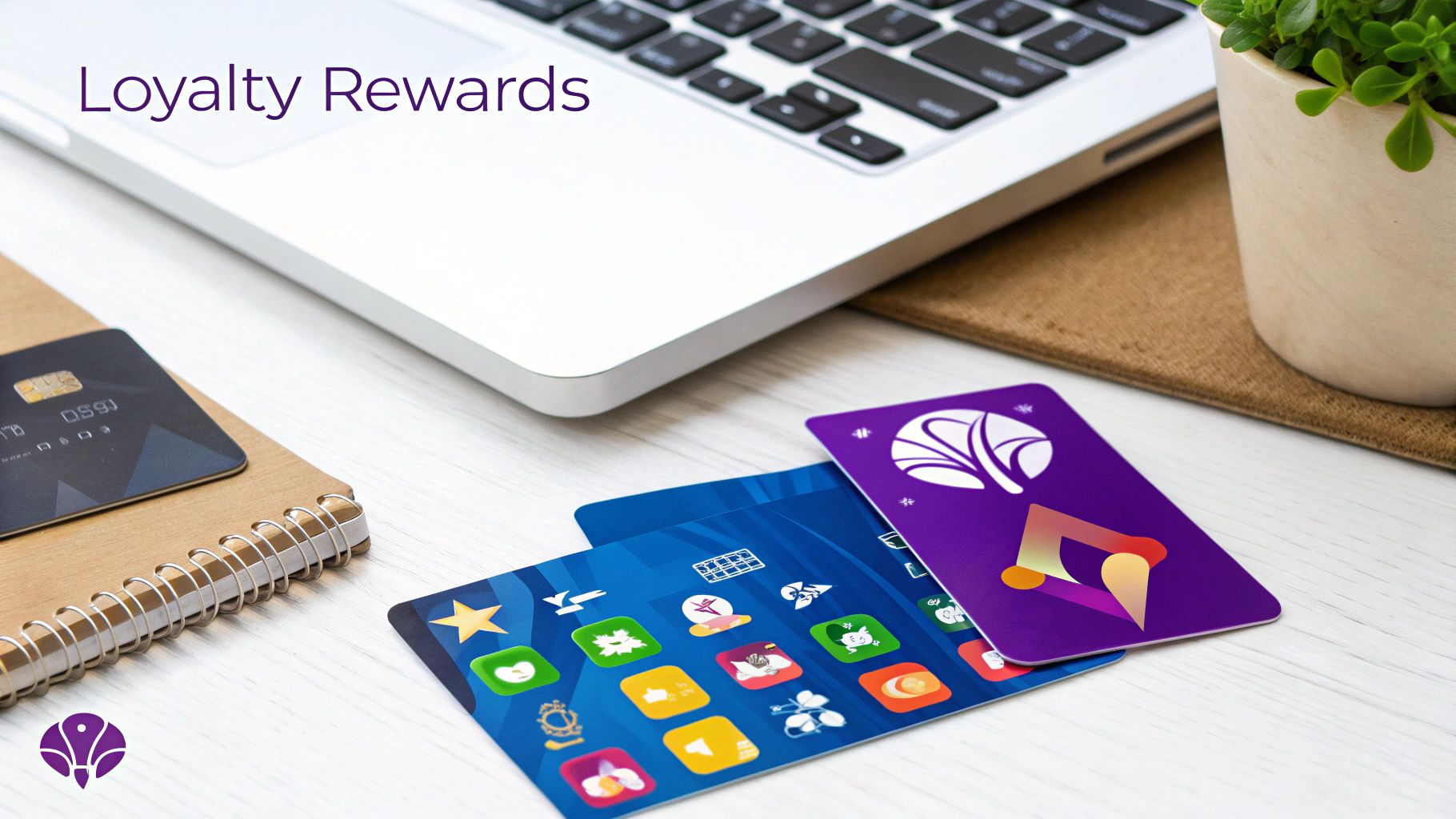
For home service businesses, a well-structured loyalty program can transform one-time clients into loyal, long-term customers. Imagine a plumbing company offering discounts on annual maintenance checks for members or a landscaping business providing priority scheduling to its loyalty program participants. These types of incentives encourage customers to choose your services over competitors, even when faced with slightly lower prices elsewhere.
Features of Effective Loyalty Programs:
- Points-based rewards systems: Accumulate points with each purchase, redeemable for discounts or other rewards.
- Tiered membership levels: Offer escalating benefits as customers spend more, creating a sense of progress and exclusivity.
- Experiential rewards: Go beyond discounts. Think priority service, free consultations, or exclusive access to new services.
- Gamification: Introduce elements of fun and competition, such as bonus points for referrals or early booking.
- Exclusivity and recognition: Make members feel valued with personalized communications, birthday rewards, and early access to promotions.
Pros:
- Tangible financial incentives: Drive repeat business and increase customer lifetime value.
- Valuable data collection: Gain insights into customer preferences and behaviors to personalize future offers.
- Cross-selling and upselling opportunities: Promote related services or higher-tier packages to existing loyal customers.
- Emotional connection: Foster a sense of community and appreciation, strengthening the customer-business relationship.
Cons:
- Cost: Programs require investment in technology, rewards, and administration.
- Points liability: Requires careful management and accounting for accrued points.
- Attracting deal-seekers: Some customers may focus solely on discounts rather than genuine loyalty.
- Differentiation: Standing out can be challenging in industries saturated with loyalty programs.
Examples of Successful Implementation:
- Amazon Prime: Combines free shipping, streaming content, and other perks to achieve incredibly high renewal rates. This model can inspire home service businesses to bundle services or offer added benefits.
- Starbucks Rewards: A mobile-first approach and personalized offers drive a significant portion of the company's transactions. This highlights the power of convenience and personalization.
- Sephora's Beauty Insider: Uses tiered rewards and experiential benefits to drive a substantial portion of sales from loyalty members. This demonstrates the effectiveness of tiered programs and exclusive experiences.
Tips for Home Service Businesses:
- Focus on emotional loyalty: Offer exceptional service, personalized attention, and build genuine relationships.
- Simplicity and transparency: Make earning and redeeming rewards easy to understand and track.
- Exclusive experiences: Offer priority service, free consultations, or other perks that money can't buy.
- Data-driven personalization: Use program data to tailor communications and offers to individual customer needs and preferences.
- Regular refresh: Keep the program exciting by introducing new rewards and benefits periodically.
Why Loyalty Programs Deserve a Place in Your Customer Retention Strategy:
In the competitive home service industry, building a loyal customer base is crucial for long-term success. Loyalty programs provide a structured and proven framework for achieving this, converting one-time clients into repeat customers who actively choose your services time and again. By focusing on building emotional connections and offering valuable rewards, these programs can differentiate your business, drive revenue growth, and establish your brand as the go-to provider in your community.
6. Proactive Customer Service
Proactive customer service is a key customer retention best practice that involves anticipating and addressing customer needs before they become problems. Instead of reacting to complaints, you're taking preventative measures to ensure a smooth and positive customer experience. This approach shifts the focus from reactive problem-solving to preventative care, reaching out to customers with solutions before they experience frustration or even consider switching to a competitor. This is especially crucial in the home services industry, where customer loyalty is directly tied to trust and reliability.
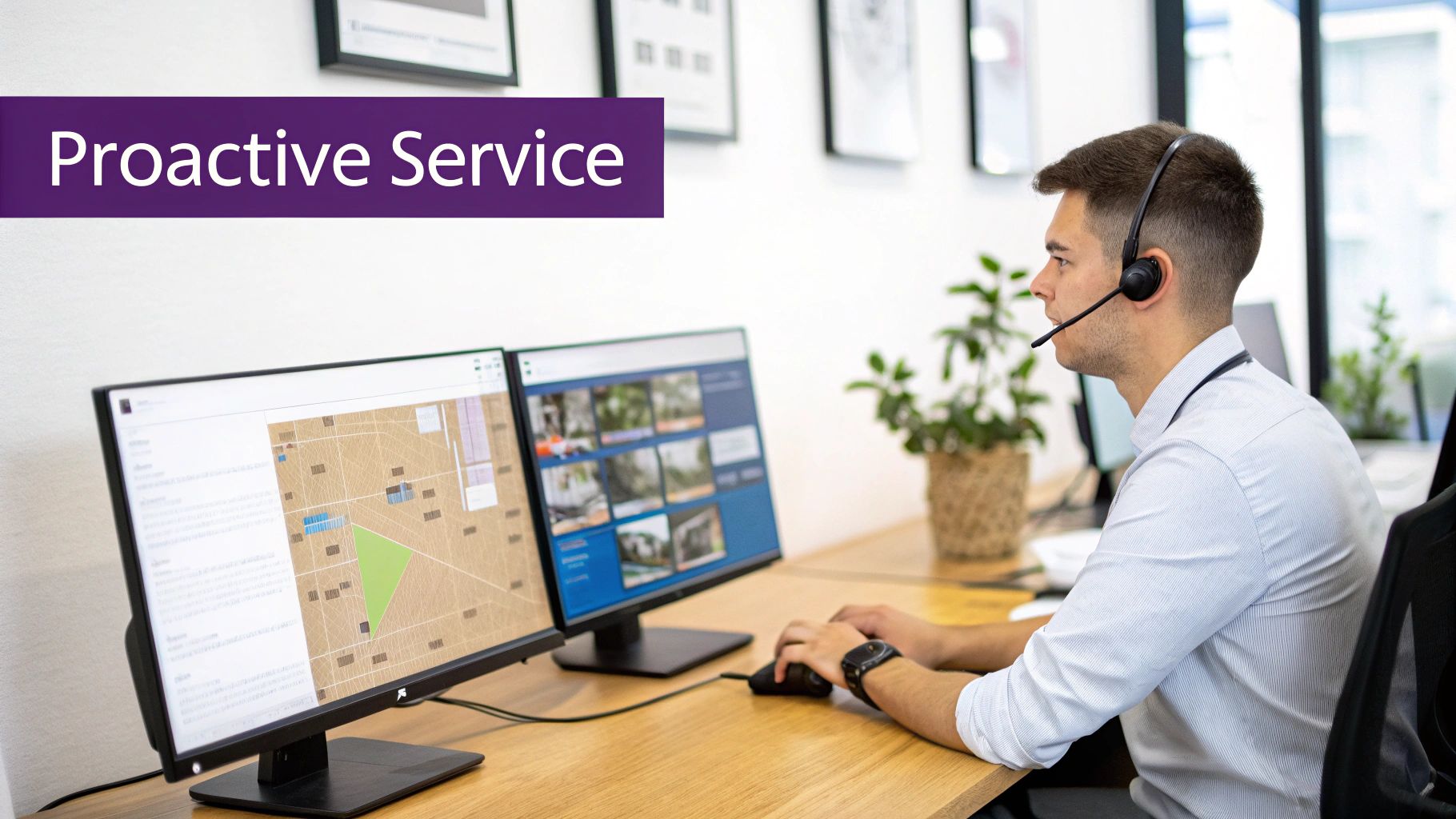
Imagine a scenario where a customer's HVAC system is due for maintenance. Instead of waiting for them to call and schedule an appointment (or worse, experience a breakdown), a proactive home service business would reach out in advance, reminding them of the upcoming maintenance and offering to schedule a convenient time. This not only prevents potential issues but also demonstrates care and builds trust – a vital component of customer retention in the home services sector.
Features of Proactive Customer Service:
- Predictive Analytics: Analyzing data to identify potential issues before they arise. For example, predicting when a customer's water heater might need replacing based on its age and usage.
- Automated Monitoring Systems: Utilizing technology for early problem detection. This might involve remote monitoring of HVAC systems to detect performance issues before they lead to a breakdown.
- Pre-emptive Communication: Informing customers about known issues or potential delays. For example, notifying customers about a service delay due to inclement weather.
- Service Outreach at Critical Moments: Reaching out to customers at key points in their customer lifecycle. This could include a follow-up call after a service appointment to ensure satisfaction.
- Proactive Account Reviews and Health Checks: Regularly reviewing customer accounts to identify potential areas for improvement and address any emerging issues.
Pros:
- Reduces Churn: Prevents negative experiences that could drive customers away.
- Builds Trust: Demonstrates care and attention, fostering stronger customer relationships.
- Reduces Support Volume: Addresses common issues systematically, freeing up staff to handle more complex requests.
- Creates Advocates: Positive surprises can turn satisfied customers into enthusiastic promoters of your business.
Cons:
- Requires Investment: Implementing sophisticated monitoring and analytics capabilities can be resource-intensive.
- Potential for Over-Communication: There's a risk of alerting customers to problems they weren't aware of, potentially creating unnecessary anxiety.
- Difficult to Measure ROI: The return on investment of preventing problems can be challenging to quantify.
Examples:
- A plumbing company proactively contacts customers in areas experiencing hard water to offer water softener installation.
- An electrician reminds customers about annual electrical safety inspections.
- A landscaping company alerts customers about seasonal lawn care needs.
Tips for Implementation:
- Start Small: Focus on high-impact, common issues that are easy to predict, like scheduling preventative maintenance.
- Customer Journey Mapping: Identify vulnerability points in the customer journey where proactive intervention can make a difference.
- Train Your Team: Equip your service teams to identify and escalate emerging patterns that could indicate potential problems.
- Real-time Monitoring: Implement dashboards for early warning signs of potential issues.
- Standardized Protocols: Create consistent procedures for proactive outreach to ensure a professional and unified approach.
Proactive customer service deserves a place on this list of customer retention best practices because it represents a fundamental shift from reactive to preventative care. By anticipating and addressing customer needs before they become problems, home service businesses can build stronger relationships, reduce churn, and cultivate a loyal customer base. This approach, popularized by companies like Zendesk and Intercom in the SaaS world, can be equally effective for home service businesses seeking to enhance customer loyalty and drive sustainable growth. By implementing these proactive strategies, you’re not just fixing problems; you're preventing them, and that’s a powerful way to build trust and retain customers in the competitive home services market.
7. Seamless Omnichannel Experience
A seamless omnichannel experience is crucial for customer retention best practices, especially in the competitive home services industry. It goes beyond simply being present on multiple channels; it's about creating a cohesive and integrated experience for your customers, no matter how they choose to interact with your business. This approach ensures customers can effortlessly engage with your home services company through their preferred channels – be it your website, mobile app, social media, email, phone, or even in-person – while enjoying a consistent and personalized experience that acknowledges their history and preferences. This fosters loyalty and encourages repeat business.
How it Works:
A true omnichannel experience relies on a unified view of the customer. Imagine a homeowner needing to schedule a plumbing repair. They might initially browse your services on your website, then ask a question via your Facebook page, and finally book the appointment through your mobile app. With a seamless omnichannel strategy, their interactions across these different touchpoints are connected. The customer service representative responding on Facebook can see their website browsing history, and the booking app pre-fills their information based on their previous interactions. This eliminates redundant information requests, saves the customer time and frustration, and builds a stronger, more personalized relationship.
Features of a Seamless Omnichannel Experience:
- Unified customer data accessible across all channels: This is the foundation. Every interaction, from service history to communication preferences, is stored and accessible by any team member on any platform.
- Consistent branding and messaging across touchpoints: Maintaining a consistent brand voice and visual identity across all channels reinforces professionalism and builds trust.
- Ability to start interactions in one channel and continue in another: Customers should be able to seamlessly transition between channels without losing context or having to repeat information.
- Channel-appropriate experiences that maintain context: Optimize the experience for each channel, acknowledging the customer's journey and tailoring interactions accordingly. A mobile app might prioritize quick booking, while email might be used for detailed service follow-up.
- Integrated backend systems that share customer information: CRM systems, scheduling software, and other backend tools must be integrated to ensure data flows seamlessly between them.
Examples of Successful Implementation:
- Disney: The My Disney Experience app seamlessly connects park tickets, hotel reservations, dining plans, and even ride wait times into a single, user-friendly platform, enhancing the overall guest experience. This model translates well to home services, allowing customers to manage appointments, view service history, and communicate with technicians all in one place.
- Bank of America: Their ability to start a mortgage application online and continue in-branch exemplifies the seamless transition between channels, providing customers with flexibility and personalized support. Similarly, home service customers could start a service request online and have a technician follow up with a phone call to discuss details.
Pros:
- Increases customer convenience and reduces friction: A smoother experience encourages repeat business and positive word-of-mouth referrals.
- Provides competitive differentiation: In a crowded home services market, a superior customer experience can be a key differentiator.
- Improves customer satisfaction: Respecting customers' time and preferences builds loyalty and trust.
- Creates multiple touchpoints for strengthening the relationship: Each interaction is an opportunity to reinforce your brand and build a stronger connection with the customer.
Cons:
- Requires significant technology investment and integration: Implementing a truly omnichannel strategy requires robust software and systems integration.
- Organizational silos can impede implementation: Breaking down internal barriers and fostering collaboration between departments is essential.
- Complex to manage consistent experiences across diverse channels: Maintaining consistency requires careful planning and ongoing monitoring.
Actionable Tips for Home Service Businesses:
- Map the complete customer journey: Identify all potential touchpoints and understand how customers interact with your business across different channels.
- Implement a customer data platform (CDP): A CDP unifies customer data from all sources, providing a single view of the customer.
- Train staff to access and utilize cross-channel customer histories: Equip your team with the tools and knowledge to provide personalized service based on a complete understanding of the customer's journey.
- Prioritize friction points where channel transitions commonly occur: Focus on smoothing out the transitions between channels to create a truly seamless experience.
Why This Deserves its Place in the List:
In the home services industry, building long-term customer relationships is essential for sustainable growth. A seamless omnichannel experience directly addresses this by fostering convenience, personalization, and stronger communication, ultimately leading to increased customer retention and higher lifetime value. By adopting this approach, home service businesses can differentiate themselves from the competition and build a loyal customer base that drives repeat business and referrals.
7 Best Practices Comparison Matrix
| Best Practice | Implementation Complexity 🔄 | Resource Requirements ⚡ | Expected Outcomes 📊 | Ideal Use Cases 💡 | Key Advantages ⭐ |
|---|---|---|---|---|---|
| Customer Success Programs | High: Dedicated teams, tailored plans | High: Skilled CSMs, ongoing outreach | Reduced churn, upsell opportunities, advocacy | B2B, enterprise clients, high-value accounts | Proactive retention, customer advocacy, actionable feedback |
| Personalization at Scale | Very High: Data, AI tech, privacy controls | Very High: Data infrastructure, AI | Increased engagement, conversion, emotional bond | E-commerce, digital media, subscription services | Competitive differentiation, relevancy, predictive insights |
| Voice of Customer (VoC) Programs | Medium: Multi-channel feedback systems | Medium: Survey tools, analytics | Actionable insights, improved products, retention | Companies prioritizing customer insight | Data-driven improvements, customer trust, prioritized action |
| Customer Education and Enablement | Medium: Content creation and updates | Medium: Content teams, platforms | Faster adoption, self-sufficiency, retention | SaaS, complex product environments | Cost reduction, enhanced user proficiency, switching barriers |
| Loyalty and Rewards Programs | Medium: Program design and management | Medium: Marketing, CRM systems | Increased repeat business, emotional loyalty | Retail, hospitality, consumer goods | Tangible incentives, emotional connection, data collection |
| Proactive Customer Service | High: Predictive analytics, monitoring | High: Analytics tools, trained teams | Reduced churn, fewer support requests | Service-centric, high-touch industries | Prevents issues, builds trust, lowers reactive support load |
| Seamless Omnichannel Experience | Very High: Technology integration | Very High: IT systems, governance | Higher satisfaction, reduced friction, loyalty | Retail, banking, hospitality | Consistency, convenience across channels, customer retention |
Turning Retention into Revenue
Mastering customer retention best practices is crucial for sustainable growth in the home service industry. Throughout this article, we've explored key strategies ranging from implementing customer success programs and personalization at scale to leveraging the voice of your customer and providing proactive service. We've also highlighted the importance of customer education, loyalty programs, and a seamless omnichannel experience. These elements work together to build strong customer relationships that translate directly into increased revenue and long-term business success. Remember, a loyal customer base not only provides repeat business but also acts as a powerful source of referrals, further fueling your growth.
To maximize the impact of your customer retention efforts and drive revenue growth, explore these effective customer retention strategies from Kleene.ai. These strategies offer further insights into building a loyal customer base. By prioritizing customer relationships and implementing these strategies, you’re not just acquiring customers; you’re building a thriving community around your services. This fosters loyalty and significantly reduces the cost and effort associated with acquiring new customers.
Investing in your existing customers is an investment in your future. These customer retention best practices empower you to cultivate a loyal customer base, leading to increased profitability and a sustainable competitive advantage in the home service market. Ready to streamline your operations and dedicate more time to nurturing valuable customer relationships? Explore how Phone Staffer can automate your cold calling, generate more leads, and free up your team to focus on the customer retention strategies that truly matter.