
Why HVAC Answering Services Are Your Business Lifeline
Imagine a scorching summer day. A homeowner's AC gives up the ghost. They're sweating, stressed, and scrambling for a solution. They start dialing HVAC companies. The first to pick up? They win the job. That's where an HVAC answering service steps in – your business's lifeline. It grabs those crucial calls, even when you're busy on another job, at lunch, or clocked out for the day. It's the difference between a new customer and a missed opportunity.
Think of it like this: your HVAC answering service is a highly trained receptionist, always on duty. They understand the urgency of HVAC problems, speak the language of worried homeowners, gather vital information, and reassure callers that help is coming. They can book appointments, dispatch technicians, and even handle basic questions, giving you the space to focus on the actual repairs. This means your business keeps humming, even when you're not around.
But not all answering services are cut from the same cloth. Some are generic call centers, just taking messages. Others specialize in HVAC. This specialization is key. It means the agents understand the ins and outs of HVAC systems and can speak intelligently with customers who might be using technical terms. A specialized HVAC answering service becomes a true extension of your team, understanding your business and representing you professionally to each caller.
They can triage calls, putting emergencies first and ensuring the most urgent situations get immediate attention. This makes customers happier and helps your team work more efficiently.

Consider HVAC Answering Service, Inc. They're a smaller company, but their laser focus on HVAC ensures continuous customer support, allowing HVAC businesses to concentrate on their core work. Learn more about HVAC Answering Service, Inc. This specialization becomes even more vital considering the HVAC industry is expected to reach $296.92 billion by 2028. This growth underscores the increasing need for effective customer service solutions. Choosing the right HVAC answering service can seriously impact your bottom line, turning missed calls into paying customers and strengthening your position in this growing market.
The True Cost Of Every Missed Call (It's Higher Than You Think)
Imagine this: a homeowner's furnace gives out on the coldest night of the year. Panic sets in. They grab their phone and start dialing HVAC companies. Who are they going to call? The first business that answers, of course. If that's not you, you've just lost a customer, potentially a long-term one. And that's just one scenario.
Every unanswered call is a missed opportunity, a potential job gone to a competitor. Think of it like leaving money on the table. You’ve invested in marketing and advertising to get those calls in the first place. Letting them go to voicemail is like throwing that investment away.
The Impact of Missed Calls During Peak Seasons
Now, picture the height of summer. The temperature’s soaring, and AC units are working overtime. Your technicians are already swamped. The phones are ringing off the hook. This is when missed calls become even more costly. Your team is stretched thin, and each unanswered call represents not just a lost service call, but also potential revenue lost at your busiest time.
An HVAC answering service acts like a safety net during these peak seasons. Think of it as having a virtual receptionist, ensuring every call is answered promptly and professionally, no matter how busy your team is. This keeps customers happy and prevents them from calling your competitors.
Handling Multiple Calls and Maximizing Lead Capture
What happens when multiple calls come in at once? Your in-house team can only handle so much. While they're busy with one customer, others are left on hold, growing increasingly frustrated. Some might even hang up and call someone else.
A professional HVAC answering service can handle multiple calls simultaneously. It's like having extra hands on deck, ensuring no potential customer is left waiting. This boosts customer satisfaction and maximizes your lead capture potential. Every call is answered, every lead is nurtured.
Let’s take a closer look at the real financial impact of missed calls. The table below illustrates the potential revenue loss based on different average job values and the number of missed calls per month.
| Call Type | Average Job Value | Monthly Missed Calls | Lost Revenue | Annual Impact |
|---|---|---|---|---|
| Routine Service | $200 | 5 | $1,000 | $12,000 |
| Repair | $500 | 3 | $1,500 | $18,000 |
| Emergency | $800 | 2 | $1,600 | $19,200 |
| Installation | $2,000 | 1 | $2,000 | $24,000 |
As you can see, even a small number of missed calls can add up to a significant amount of lost revenue over time. This underscores the importance of capturing every lead.
The Growing HVAC Market and the Importance of Lead Capture
The HVAC market is booming. It's projected to reach $296.92 billion globally by 2028, with the U.S. market expected to be worth $35.8 billion by 2030. Discover more insights on HVAC market growth. In such a competitive and expanding market, every lead counts. Missing calls means missing out on a piece of this growing pie.
Investing in an HVAC answering service isn't just about saving money; it's about strategically positioning your business for growth and future success. It's about ensuring you capture every opportunity in a market that's only getting bigger.
What Makes HVAC Answering Services Actually Work
Imagine calling a generic call center with a complex HVAC issue. You’re trying to explain a strange grinding noise coming from your furnace, but the person on the other end just doesn’t seem to grasp the urgency. They take a message, but you’re left wondering if anyone truly understands the potential disaster unfolding in your basement.
This is the critical difference between a generic answering service and a specialized HVAC answering service. Think of it like calling a medical clinic versus a general receptionist. The medical receptionist understands medical terminology and can prioritize your call based on the severity of your symptoms. An HVAC answering service does the same for your home service business.
They act as a true extension of your team, employing agents trained in HVAC-specific terminology. They can decipher a homeowner’s description of a "clunking noise" from their air conditioner and relay that accurate information to your technicians. This transforms a vague customer message into actionable intelligence, saving valuable time and frustration.
They also understand the nuances of HVAC emergencies. A burst pipe in the middle of winter demands immediate attention, while a routine maintenance check can be scheduled for a later date. Like a triage nurse in a hospital emergency room, the answering service prioritizes calls, ensuring your technicians respond to the most urgent situations first. This keeps customers happy and allows you to manage your resources more efficiently.
Advanced Features for Streamlined Operations
Professional HVAC answering services go beyond simple call handling. They offer advanced features designed to streamline your entire operation and turn your answering service into a powerful business tool. This is where the real magic happens.
-
CRM Integration: Imagine a system where every call automatically logs into your Customer Relationship Management (CRM) system. No more double entry, no more lost leads. All customer information flows seamlessly between the answering service and your database.
-
Real-Time Dispatch: Picture this: a homeowner reports a gas leak. The answering service instantly dispatches the nearest available technician, minimizing response time and potential danger. This immediate action transforms your answering service from a cost center into a tool for safety and efficiency.
-
Integrated Appointment Scheduling: Instead of playing phone tag, the answering service can book appointments directly into your calendar, eliminating back-and-forth communication and reducing scheduling errors.

These advanced capabilities take a simple answering service and transform it into a sophisticated business management system. You might be interested in exploring more about answering services and their impact on your business. They truly can become the backbone of a responsive, efficient, and customer-focused HVAC operation.
Decoding HVAC Answering Service Pricing Models
Choosing the right HVAC answering service can feel like picking out the perfect pair of shoes. You need something that fits your needs, your budget, and won't leave you with blisters down the line. And just like shoe shopping, navigating the different pricing models can be a bit overwhelming. So let's break down the common pricing structures and find the perfect fit for your business.
Understanding the Options
Most HVAC answering services offer a few key pricing structures, each with its own advantages and disadvantages.
-
Per-Minute Pricing: Imagine paying for gas by the drop. It seems small, but it adds up fast. Per-minute pricing works similarly. You pay for each minute the answering service spends talking to your customers. This can be good for businesses with very low call volumes, but high call volumes can lead to some unexpectedly large bills.
-
Per-Call Pricing: Think of this like buying a movie ticket. You pay one price for the whole show, no matter how long it is. Per-call pricing charges a flat fee for each call answered, regardless of how long the conversation takes. This offers more predictability, especially if your calls tend to be short and sweet.
-
Flat Monthly Rate: This is your all-you-can-eat buffet of answering services. You pay a fixed monthly fee for a predetermined number of minutes or calls, making budgeting a breeze. This works well for businesses with consistent call volumes.
-
Tiered Pricing: This option is like choosing a cell phone plan. There's a package for everyone, from the basic user to the data hog. Tiered pricing combines elements of the other models, scaling up based on expected call volume, features, and service levels.
To get a visual understanding of how these pricing models can impact your business, take a look at the infographic below:
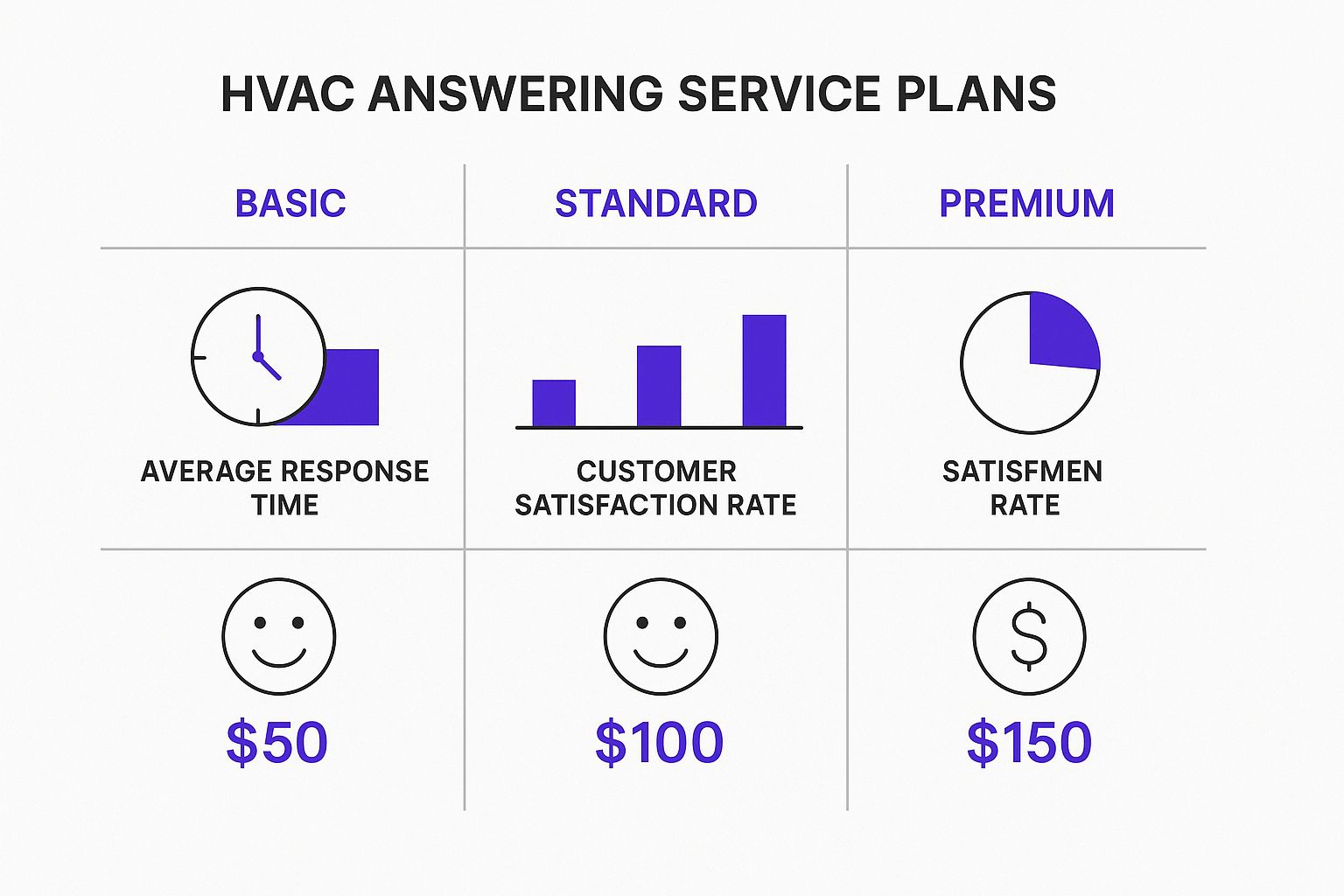
As the infographic shows, while basic plans offer lower upfront costs, premium plans often deliver faster response times and happier customers, which can ultimately lead to a healthier bottom line.
Calculating the True Cost
Going for the cheapest option might be tempting, but remember, you get what you pay for. Think of it like buying tools. A cheap wrench might do the job in a pinch, but a high-quality wrench will last longer and perform better. The same applies to HVAC answering services. The goal isn't to find the lowest cost-per-call but the highest cost-per-lead.
A lower per-minute rate might mean longer wait times and frustrated customers, driving them straight to the competition. Investing a bit more in a specialized HVAC answering service, even if the per-call fee is slightly higher, could result in more qualified leads and a better return on your investment. For more tips on choosing the right service, check out our guide on the best phone answering services.
To help you understand the different pricing models and their best-fit scenarios, we’ve put together a comparison table:
HVAC Answering Service Pricing Comparison
Breakdown of different pricing models with pros, cons, and best-fit scenarios
| Pricing Model | Cost Range | Best For | Pros | Cons |
|---|---|---|---|---|
| Per-Minute | $0.50-$1.50/minute | Low call volumes, short calls | Simple to understand, only pay for what you use | Can become expensive with high call volumes or longer calls |
| Per-Call | $2-$5/call | Moderate call volumes, predictable call lengths | Predictable costs | Can be less cost-effective for short calls |
| Flat Monthly Rate | $100-$500/month | Consistent call volumes, high call volumes | Predictable budgeting, cost-effective for high usage | Can be wasteful if call volume drops significantly |
| Tiered | Varies widely | Businesses with varying needs and budgets | Flexibility, scalable to business growth | Can be complex to navigate and compare different tiers |
This table provides a general overview. Actual prices and features will vary depending on the specific service provider.
Before signing any contracts, be sure to read the fine print. Look out for hidden fees like charges for after-hours calls, holidays, or going over your minute allowance. Also, pay close attention to setup fees, cancellation policies, and any other potential surprises.
By understanding the nuances of each pricing model and carefully considering your business needs, you can choose an HVAC answering service that will help you convert more calls into satisfied, loyal customers.
Choosing Your HVAC Answering Service Partner
Picking the right HVAC answering service is a lot like choosing the right foundation for a house. A weak foundation leads to problems down the line, while a strong one sets you up for success. The wrong answering service can damage your customer relationships and hold you back, while the right one becomes a vital part of your growth. It's not just about picking up the phone; it's about presenting your business in the best possible light and making the most of every potential customer.
Identifying Your Specific Needs
Before you start comparing different services, take some time to evaluate your own business. What are your biggest challenges when it comes to handling calls? Are you missing calls after hours? Overwhelmed during the busy season? Could you use help scheduling appointments or dispatching technicians? Just like a doctor diagnoses a patient before prescribing treatment, understanding your unique needs is crucial for finding the right solution.
For example, if missed after-hours emergency calls are your main concern, a 24/7 service with emergency dispatch experience is a must. If scheduling is a bottleneck during peak times, focus on services that integrate seamlessly with your scheduling software. By knowing exactly what you need, you can avoid getting sidetracked by fancy features that don't solve your actual problems. You might find it helpful to learn more about why businesses hire virtual assistants.
Asking the Right Questions
Once you know what you need, you can start researching HVAC answering service providers. Don't just accept what they tell you at face value. Ask the important questions that will reveal which services truly specialize in HVAC and which are just general call centers.
-
HVAC Expertise: How much experience do they have working with HVAC companies? Do their agents understand industry terms? Can they tell the difference between a routine maintenance call and a real emergency?
-
Call Handling Procedures: What's their protocol for handling after-hours calls? How do they escalate emergency situations? How do they collect important information from callers and relay it to your technicians?
-
Technology Integration: Does the service integrate with your existing CRM or scheduling software, such as ServiceTitan? Can they provide real-time updates and reports?
-
Scalability: Can they handle surges in call volume during your busy season? How do they increase their capacity when needed?
-
References: Ask for references from other HVAC businesses. Talking to their current clients will give you valuable insights into their performance.
By asking these pointed questions, you'll quickly identify which providers really grasp the unique challenges of the HVAC industry and can be a true partner for your business. This thoughtful approach ensures you find a service that doesn't just answer the phone, but enhances your customer experience and fuels your growth.
Real HVAC Businesses Share Their Success Stories
Choosing the right HVAC answering service can feel like a big decision. It's akin to bringing on a new team member, someone who's the voice of your business for every single caller. So, how can you really grasp the impact a good service can have? The best way is to hear it straight from other HVAC businesses who've been there. Let's dive into some real-world success stories and learn from their experiences.
From Missed Calls to Captured Customers
Take "Cozy Comfort Heating," a family-owned business operating in a mid-sized city. They were constantly struggling to handle after-hours emergency calls. This meant missed opportunities, lost leads, and frustrated potential customers. Sound familiar? After partnering with a specialized HVAC answering service, their emergency call conversion rate jumped by a staggering 85%. The answering service effectively became their 24/7 safety net, catching valuable leads that were previously slipping through the cracks. It was like uncovering hidden revenue they hadn't even realized they were losing.
Optimizing Service and Identifying Opportunities
"Cool Breeze Commercial HVAC" offers another compelling example. This contractor was constantly bogged down by administrative tasks, making it difficult to manage service routes efficiently and respond promptly to customer needs. Implementing an answering service that provided detailed call reporting changed everything. Suddenly, they could optimize their service routes, reduce response times, and even identify new revenue opportunities within their market. The call reports became a powerful business intelligence tool, offering valuable insights into customer needs and emerging market trends.
Lessons Learned and Practical Advice
These success stories offer practical lessons for any HVAC business thinking about using an answering service. A key takeaway? Training is paramount. "Cozy Comfort Heating" initially experienced inconsistencies in call handling. This all changed when they invested time in training the answering service team on their specific protocols and terminology. Think of it as onboarding any new employee – clear communication and thorough training are essential for success.
Another important lesson is to measure success beyond just call volume. "Cool Breeze Commercial" discovered that simply counting calls wasn't enough. They began tracking key metrics such as appointment setting rates, customer satisfaction scores, and lead conversion rates. This data-driven approach allowed them to fine-tune their strategy and truly maximize their return on investment.
These real-world experiences offer valuable insights into the practical application of HVAC answering services. They underscore the importance of proper implementation, thorough training, and ongoing evaluation. By learning from these successes and challenges, you can confidently navigate the selection process and find a service partner that truly elevates your business.

Your HVAC Answering Service Action Plan
Ready to take your customer service to the next level and make sure every single lead counts? This action plan is your guide to smoothly integrating an HVAC answering service into your business. Think of it like designing the perfect system for a more responsive, more robust operation. Whether you’re ready to sign on the dotted line tomorrow or just beginning your research, these steps will ensure you proceed with confidence.
Assessing Your Current Situation
Before you start comparing providers, take a good look at how you handle calls now. What are your biggest frustrations? Are calls going unanswered after hours? Does peak season feel overwhelming? Is scheduling appointments a struggle? Pinpointing these challenges is like diagnosing a problem before seeking a solution. This honest self-assessment is the foundation for finding the perfect fit.
-
Track Missed Calls: How many calls are you missing each day? Are these mostly routine questions or urgent requests? This data puts a number on the problem and helps justify the investment.
-
Analyze Peak Times: When are your phones ringing non-stop? Understanding your peak call volume will help you find a service that can scale to meet your needs.
-
Evaluate Current Resources: How much time are your staff spending on administrative tasks, like answering phones and scheduling? This assessment helps you understand how much time and productivity you could gain.
Building Your Business Case
To convince yourself, and maybe your accountant, of the value of an HVAC answering service, you need a solid business case. It's not just about the cost, it’s about showing the return.
-
Calculate the Cost of Missed Calls: Using your tracked missed call data and your average job value, estimate how much revenue you’re losing. This concrete number highlights the financial impact of poor call handling.
-
Project Potential Revenue Growth: Estimate how many more jobs – and how much more revenue – you could book by capturing those missed calls. This demonstrates the revenue-generating potential of an answering service.
-
Factor in Efficiency Gains: Think about how much time you’ll save by offloading administrative work. This time can be used for billable work, making your financial justification even stronger.
Preparing for a Smooth Transition
Choosing a provider is only the first step. Preparing your business for a seamless transition is crucial for maximizing the benefits of your new HVAC answering service.
-
Develop Customized Scripts: Give the answering service scripts that reflect your brand’s personality and gather essential customer information. This guarantees consistent and professional communication.
-
Train Your Staff: Prepare your team for the changes to call handling. Clear communication and training minimizes confusion and gets everyone on board.
-
Communicate with Customers: Let your customers know about the new answering service, emphasizing the benefits of improved availability and faster response times. Build excitement rather than anxiety.
Evaluating Providers and Negotiating Contracts
Choosing the right partner requires careful evaluation and smart negotiation.
-
Create Evaluation Criteria: Prioritize features like HVAC experience, emergency dispatch capabilities, and integrations with software like ServiceTitan based on your specific needs. This creates an objective way to evaluate providers and avoid impulse decisions.
-
Negotiate Contract Terms: Talk through contract length, cancellation policies, and payment terms. Protecting your interests upfront avoids surprises later. Don't hesitate to ask questions and negotiate unfavorable terms.
-
Establish Success Metrics: Define key performance indicators (KPIs), such as call answer rates, appointment setting rates, and customer satisfaction. These metrics allow you to monitor the service’s effectiveness and make adjustments as needed.
Ready to see what a difference a professional HVAC answering service can make? Explore how Phone Staffer can transform your lead generation and customer service. Visit Phone Staffer today to learn more!