
So, what exactly is an outbound call center? In simple terms, it's a team of agents who are actively making calls out to customers and prospects. This is the complete opposite of an inbound center, where agents wait to receive calls.
Outbound teams are the ones initiating the conversation, whether it's for sales, lead generation, customer surveys, or appointment setting.
Understanding the Outbound Call Center Concept
Think of an outbound call center as the engine of your company's growth. Instead of waiting for the phone to ring, your team is the one making it ring.
It's the difference between a shopkeeper waiting for customers to walk in and a salesperson going out to find them. This proactive approach gives you control over your lead flow and customer outreach, which is crucial for any home service business looking to scale up.
The core difference is straightforward: Outbound centers push conversations out to the market, while inbound centers pull conversations in from customers.
This proactive strategy isn't just a theory; it delivers real results. Companies that use cold calling see, on average, 42% more growth than businesses that don't. It remains a powerful tool for finding new customers and building your pipeline. To get a better handle on the sales side of things, it’s worth exploring what is outbound sales and how it works.
To make the distinction even clearer, let's break down the key differences between outbound and inbound operations.
Outbound vs Inbound Call Centers at a Glance
| Feature | Outbound Call Center (Proactive) | Inbound Call Center (Reactive) |
|---|---|---|
| Call Direction | Agents make outgoing calls. | Agents receive incoming calls. |
| Primary Purpose | Sales, lead generation, appointment setting, surveys. | Customer service, tech support, order processing. |
| Main Goal | Generate new business and opportunities. | Resolve customer issues and build loyalty. |
| Key Metrics | Dials per hour, conversion rates, appointments set. | First-call resolution, average handle time, customer satisfaction. |
As you can see, each model serves a very different, yet equally important, business function.
This visual gives you a great snapshot of how the numbers often play out between the two.
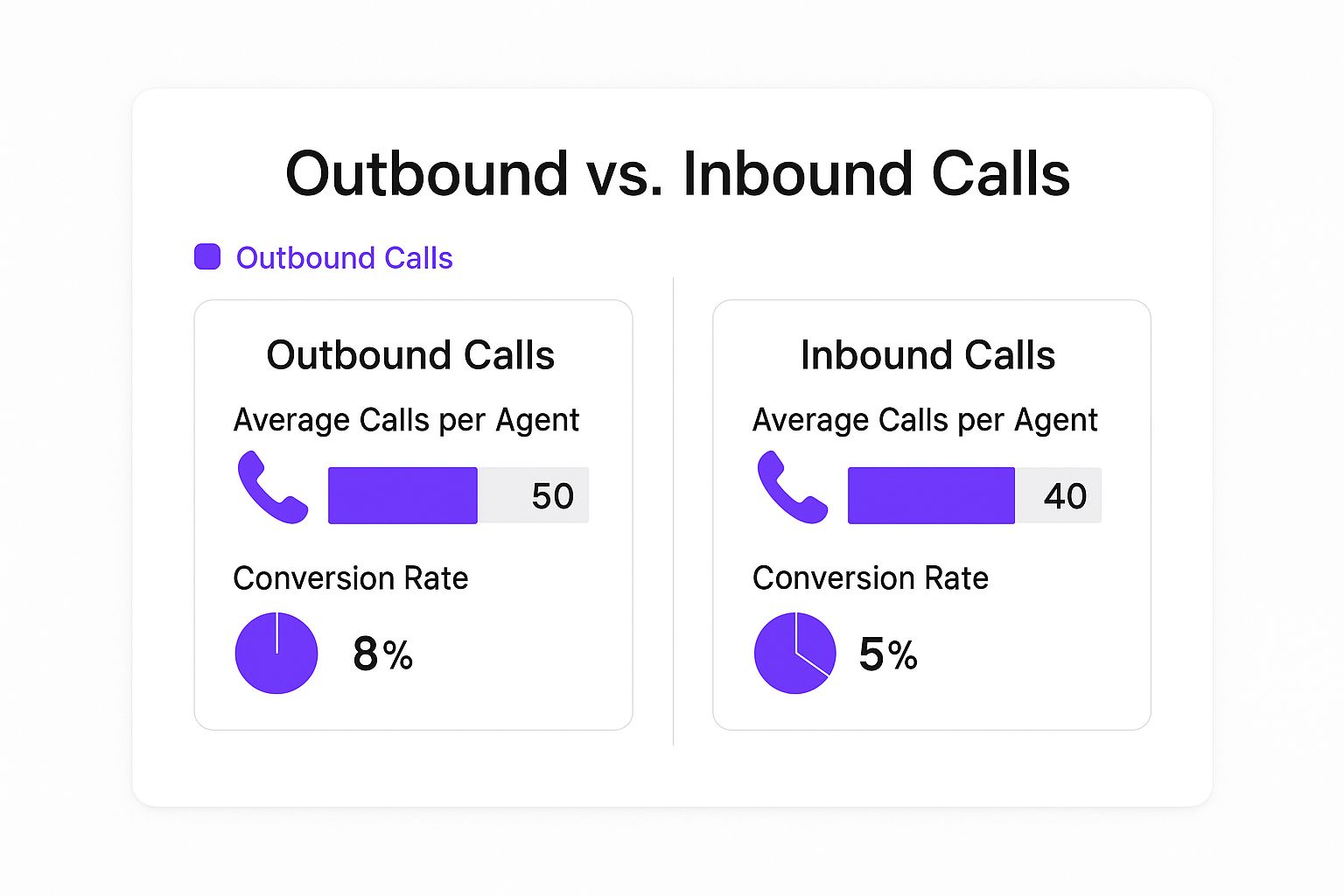
The data really highlights the power of a proactive approach. While outbound agents might handle fewer calls than their inbound counterparts, their direct outreach often results in a much higher conversion rate—turning more conversations into actual business.
How an Outbound Operation Actually Works

Ever wondered what's happening behind the scenes in an outbound call center? It’s not just people randomly dialing numbers from a phonebook. Think of it more like a well-oiled machine, engineered to turn a simple list of contacts into real appointments and qualified leads.
It all starts with the prospect list. This is the fuel for the entire operation. For a home service company, a good list isn't just a jumble of names; it’s strategically organized by things like zip code, previous service history, or even specific neighborhoods you want to target.
This curated list gets plugged into specialized dialing software, which is the engine of the operation. It efficiently works through the numbers, filtering out disconnected lines and voicemails so agents spend their time talking to actual people.
The Agent's Journey on a Call
The moment a prospect picks up the phone, a trained agent steps in. They aren't just winging it; they have a clear goal and a roadmap to get there, whether it's booking a seasonal maintenance check or setting up a free estimate.
A typical call flows through a few key stages:
- The Opener: The first few seconds are crucial. The agent introduces themselves and the company, getting straight to the point with a clear and compelling reason for the call.
- Qualification: Next, they ask a few smart questions to see if the person on the other end is a good fit. Are they a homeowner? Are they experiencing the problem your service solves?
- The Pitch: Once qualified, the agent connects the dots, explaining how your service directly addresses the prospect's needs.
- The Close: This is the finish line. The agent aims to lock in the appointment, get it on the calendar, or schedule the next step.
An effective outbound call isn't a monologue; it's a structured dialogue. Agents follow a proven framework but adapt their approach based on the prospect's responses, making each interaction feel personal and relevant.
When you combine a smart list with powerful technology and skilled agents, you get a system built for growth. Every part of the process is designed to make the most of every single conversation.
The Core Functions That Drive Business Growth
When you hear "outbound call center," the first thing that probably comes to mind is cold calling. But that's just scratching the surface. A well-run outbound operation is a dynamic tool designed to actively chase down growth opportunities, turning potential interest into real revenue and happy, long-term customers.
Of course, a big piece of the puzzle is direct sales and telemarketing. This is the classic function where skilled agents get on the phone to sell your services. For a home service company, that could look like calling homeowners in a specific neighborhood to offer a seasonal HVAC tune-up or a limited-time special on roof inspections.
Right alongside sales, these centers are fantastic for lead generation and qualification. Agents can make the initial contact with potential customers, feel out their level of interest, and figure out if they're actually a good match for what you offer. This process weeds out the tire-kickers, so your in-house team only talks to people who are genuinely ready to buy.
Expanding Beyond Sales Calls
One of the most powerful things an outbound center can do is appointment setting. Here, the main goal isn't necessarily to close a sale on the phone. Instead, it's to get a qualified estimate or consultation booked right onto your calendar. It's the perfect handoff from that first touchpoint to a real, face-to-face sales opportunity.
Think of an outbound call center as your business development team. Its job is not only to sell but to fill your pipeline, gather intelligence, and nurture customer relationships for long-term success.
This proactive approach is also incredibly effective for strengthening the bonds you have with your existing customers. Some of the key functions here include:
- Customer Retention: Imagine an agent making a friendly check-in call a week after you’ve completed a job. This simple act ensures the customer is satisfied and lets you handle small issues before they blow up.
- Market Research: Thinking about expanding? Agents can run targeted surveys, calling homeowners in a new area to ask what services they actually need. It’s a direct line to valuable, on-the-ground data.
- Re-engagement Campaigns: Every business has a list of old quotes that never went anywhere. This list can be a goldmine. Agents can follow up on these old leads to see if anything has changed, often breathing new life into deals you thought were long gone.
Each of these tasks shows how outbound call center operations do so much more than just deliver a sales pitch. They become a strategic part of your entire growth machine.
Here’s the rewritten section, crafted to sound more human and expert-driven:
Why Outbound Calling Is a Game Changer for Home Services
If you're in the home service business—whether it's HVAC, plumbing, or roofing—an empty schedule is more than just a quiet day; it's lost revenue. Most businesses wait for the phone to ring, but a smart outbound calling strategy flips that script entirely. It becomes your engine for growth, actively filling the pipeline and making sure slow seasons become a thing of the past.
Think about it this way: what if your team could call every homeowner in a specific neighborhood right before winter hits to schedule a furnace check-up? That’s not a cold call; it’s a genuinely helpful service. You’re preventing a potential emergency for them while guaranteeing a packed calendar for your technicians. This kind of targeted outreach turns downtime into profitable uptime.
Reviving Old Leads and Building Real Loyalty
Your outbound team can also be a goldmine for reviving old opportunities. We all have a stack of quotes that never went anywhere. A simple, friendly follow-up call can be all it takes to turn a "maybe later" into a booked job, transforming those old proposals from a forgotten file into a fresh source of leads.
But it's not just about booking the next job. These calls are also your secret weapon for quality control and building lasting relationships. Imagine calling a customer a week after a job is done just to see how everything is working. That single gesture shows you stand by your work, builds incredible trust, and is the surest way to get repeat business and glowing referrals.
By actively reaching out, you’re no longer just waiting for demand—you’re creating it. You take control of your workflow, build stronger customer relationships, and generate a predictable stream of revenue.
And the numbers back this up. The global call center market was valued at around $340 billion back in 2020 and is on track to hit nearly $496 billion by 2027. With North America accounting for over 40% of that market, it’s obvious that businesses are getting a massive return on their investment in outsourced calling. You can dive deeper into these market trends in this regional analysis of the call center industry.
The Essential Tech Powering Modern Call Centers

A high-performing outbound call center isn't just about having great people on the phones—it's about equipping them with the right tools. The technology stack is what separates a sluggish, inefficient team from a finely tuned operation that gets real results.
At the very core of this tech stack is the Customer Relationship Management (CRM) system. You can think of it as the central nervous system for all your customer information. It tracks every conversation, past purchase, and note, giving your agents the full picture so they can have smarter, more personal conversations.
Then there's the engine of productivity: the predictive dialer. This brilliant piece of software automates the tedious dialing process, skipping over busy signals, voicemails, and dead ends. Agents aren't wasting time manually dialing numbers; they're only connected when a real person is on the other end, which can multiply their actual talk time.
The Rise of AI and Quality Assurance
Artificial intelligence isn't just a buzzword anymore; it's a practical tool that’s making a real difference. For example, AI-powered software helps with lead scoring by analyzing customer data to figure out who is most likely to buy. This helps your team focus their energy where it counts the most.
The industry is definitely moving in this direction. A staggering 92% or more of companies are now putting money into AI tools to make their customer interactions more effective. This shift is all about delivering the right message at the right time. For a deeper dive, check out this piece on how outbound calling is evolving with technology.
Technology doesn't replace skilled agents; it empowers them. The right tools handle the repetitive, time-consuming tasks, freeing up agents to focus on what they do best: building relationships and closing deals.
Finally, you have call recording and monitoring software. This is absolutely critical for quality assurance. It lets managers listen in on calls, give specific, helpful feedback to agents, and make sure everyone on the team is delivering a consistent, on-brand message. It's the combination of all these tools that makes a modern outbound campaign tick.
Got Questions? We've Got Answers
Stepping into the world of outbound call centers can feel a bit overwhelming, so let's clear up a few common questions. Here are some straightforward answers to help you see how this all fits together.
"Isn't an Outbound Call Center Just a Fancy Name for Telemarketing?"
Not quite. While telemarketing is definitely part of the picture, it's only one piece of a much larger puzzle. Telemarketing is laser-focused on one thing: selling directly over the phone.
An outbound call center does that and so much more. Think of it as your proactive communication hub, handling everything from generating fresh leads and setting solid appointments to conducting market research and making sure your current customers feel valued. Telemarketing is a single tool; an outbound call center is the entire toolbox.
How Do You Actually Measure if It's Working?
You track its success with key performance indicators (KPIs) that tie directly back to what you wanted to achieve in the first place. The metrics you watch depend entirely on the goal of your campaign.
A few of the most common KPIs we look at are:
- Conversion Rate: What percentage of calls resulted in the desired action—like a sale or a booked job?
- Cost Per Acquisition (CPA): Simple math. How much did you spend to land each new customer from your calling efforts?
- Appointment Set Rate: How many qualified, ready-to-go appointments were booked for your team?
"This Sounds Great, But Can a Small Business Really Afford This?"
Absolutely. In fact, this is where small businesses can really shine. Modern services have made proactive outreach more accessible and budget-friendly than ever before.
Instead of getting bogged down by the huge overhead of hiring, training, and managing an in-house team, you can partner with a specialized service. This gives you a direct, cost-effective way to generate leads, follow up on those old quotes, and keep your job board packed.
Ready to fill your calendar with qualified appointments without lifting a finger? Phone Staffer offers a done-for-you cold calling service that books jobs directly for your home service business. Learn more and get started today.