
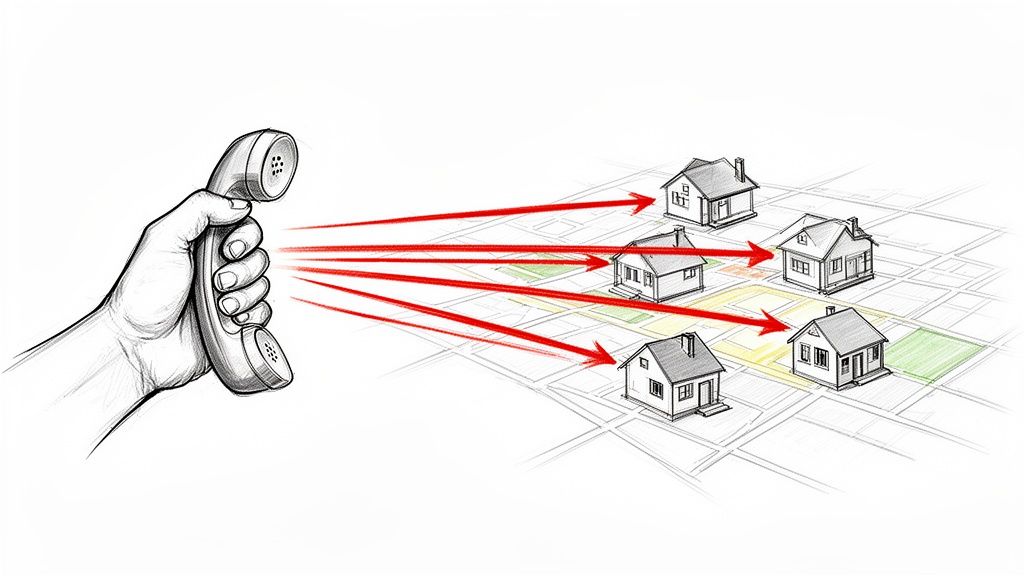
Outbound lead generation is all about taking the initiative. Instead of waiting for potential customers to find you and reach out, you make the first move. It's the process of actively identifying and contacting the exact clients you want to work with.
What Outbound Lead Generation Looks Like for Home Services
Let's use a simple analogy: outbound is like being a hunter, while inbound is like being a fisherman. A fisherman casts a line with some bait and waits for a fish to bite—that's your typical inbound marketing. A hunter, on the other hand, actively goes out and finds their target.
For a home service business, this means you stop waiting for homeowners to stumble upon your website or Google listing. You're the one making the first contact.
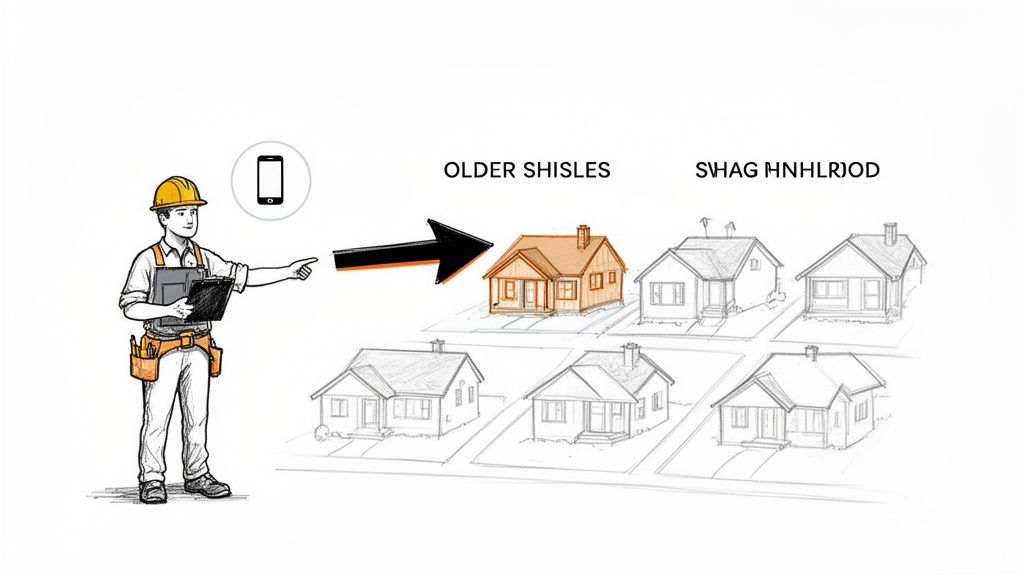
Imagine you're a roofing contractor. An inbound strategy would be writing blog posts on "5 Signs You Need a New Roof" and hoping people find them through a search. The outbound approach? You identify a neighborhood full of homes built 20-25 years ago, get a list of those addresses, and start calling to offer a free, no-obligation roof inspection.
You're in complete control of who you talk to, when you talk to them, and what you say.
Why This Puts You in the Driver's Seat
The biggest advantage of outbound is control. Inbound methods like SEO and content marketing are fantastic for building a brand over the long haul, but they can be slow and unpredictable. You're at the mercy of Google's algorithms and a prospect's motivation to actually search for a solution.
Outbound flips that script completely.
By starting the conversation yourself, you aren't just hoping for business to come your way—you're actively creating it. This proactive approach lets you fill your calendar on demand, smooth out those dreaded seasonal lulls, and build a predictable stream of revenue.
This strategy also lets you get incredibly specific with your targeting. You can focus all your energy on:
- Specific neighborhoods: Want to break into that new subdivision across town? Now you can.
- Ideal customer types: Need more commercial work? You can reach out directly to property managers.
- Key "trigger" events: Just saw a hailstorm on the news? You can be the first to contact affected homeowners.
At the end of the day, outbound lead generation is about making things happen instead of waiting for them. It’s a direct, powerful way to connect with potential customers, pack your appointment book, and drive real growth for your business without sitting by the phone.
Why Outbound Still Works for Home Services
In a world buzzing with digital marketing trends, it’s tempting to write off old-school tactics like cold calling as a thing of the past. But for home service businesses, that couldn't be further from the truth. Outbound isn’t just working; it's a powerful engine for immediate, predictable growth when you need it most.
Think of it like this: Inbound marketing—SEO, content, social media—is like planting a garden. You prepare the soil, plant the seeds, and nurture them for months, hoping for a great harvest down the road. It works, but it takes time.
Outbound lead generation is like going straight to the farmer's market. You know exactly what you need, and you can get it right now. That direct approach gives you a level of control that inbound just can't offer.
Speed and Precision in Targeting
Let's get practical. Imagine you're an HVAC contractor, and you're staring down the barrel of a slow season. Waiting around for a homeowner to search "furnace repair near me" could leave your schedule full of holes for weeks.
With a smart outbound plan, you can take control.
You could pull a list of homes built over 20 years ago in a specific zip code and proactively call them with a furnace inspection special. This isn't just blindly dialing for dollars; it's a calculated move to generate appointments precisely when you need them. The same logic works wonders for a roofer after a hailstorm or a plumber targeting neighborhoods with known piping issues.
This kind of surgical precision allows you to:
- Fill your calendar on demand, smoothing out those seasonal dips and keeping your crews busy.
- Target commercial properties like apartment complexes or property management companies to land larger, recurring contracts.
- Steer your company's growth by actively pursuing the exact kind of jobs you want.
Outbound lead generation isn't just a survival tactic—it's how savvy home service pros get an immediate boost to their pipeline. While content marketing often generates more leads at a lower cost over the long haul, outbound powers a staggering 60% of total marketing leads, according to Inbeat—a critical advantage when speed is everything. For Phone Staffer users, our direct cold calling gets appointments booked on the spot, directly combating the fact that 79% of leads never convert without solid follow-up.
The Perfect Partner to Your Inbound Efforts
At the end of the day, outbound and inbound aren't enemies. They're the perfect team. While your long-term SEO and content marketing build your brand's foundation, outbound outreach acts as your rapid-response crew, booking jobs for today and tomorrow. It’s the tool that hands you the controls, giving you predictability and the power to generate revenue on your own terms.
Outbound lead generation is your go-to for immediate results. When waiting for the phone to ring simply isn't an option, a direct, proactive approach is what keeps your business growing, no matter the season.
This proactive outreach, paired with amazing customer service, makes sure every opportunity is captured. Handling both incoming and outgoing calls expertly is a must, which is why so many businesses rely on 24/7 phone answering for home services to ensure no lead ever slips through the cracks.
Choosing Your Outbound Channels to Book More Jobs
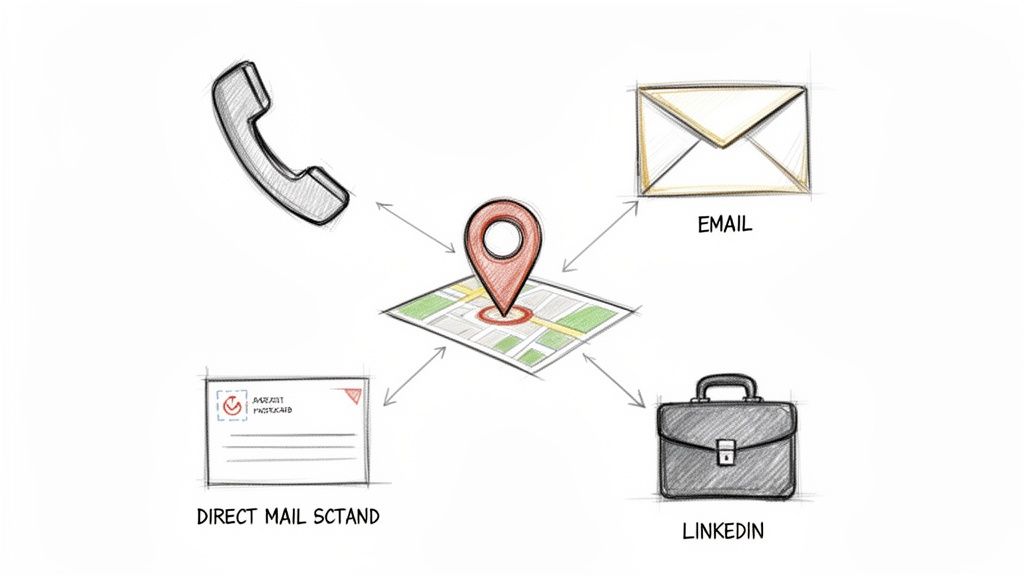
Alright, you’re ready to stop waiting and start hunting for new jobs. The big question is, where do you start? Think of it like a toolbox—you wouldn't use a hammer to fix a leaky pipe. The best outbound strategies for home services are all about making direct, personal connections, and picking the right tool for the right customer.
A smart multi-channel strategy is your best bet. It ensures you’re reaching potential customers on different fronts, creating a system where each channel supports the others to keep your appointment book full.
Professional Cold Calling: The Appointment-Booking Engine
Let’s be clear: when we talk about professional cold calling, we’re not talking about those annoying, generic telemarketing calls everyone hates. This is about smart, targeted conversations. For home service businesses, a well-placed phone call is still one of the most direct and powerful ways to generate high-quality leads.
The secret sauce is relevance. A skilled caller with a solid script can turn a simple phone call into a qualified appointment booked right on your calendar. You're not just selling; you're offering a solution to a problem they might already have.
Here’s what that looks like in the real world:
- For an HVAC company: You could call homes in a 20-year-old neighborhood offering a free furnace check-up right before the first cold snap.
- For a roofing contractor: After a hailstorm, you can contact homeowners in the affected area to offer a no-obligation damage assessment.
- For a plumber: Reaching out to local property managers with a preventative drain cleaning package is a proactive way to land commercial work.
This approach flips the script. The call goes from being an interruption to a genuinely helpful offer. And remember, a good telephony CRM integration can make managing these calls and tracking your follow-ups a whole lot easier.
A well-executed cold call is more than just a sales pitch; it's the start of a conversation. It identifies a need, offers a solution, and builds the initial trust required for a homeowner to welcome you into their home.
Many owners find that they don’t have the time—or the specialized skills—to do this effectively themselves. Outsourcing this task is often the smartest move. Learning more about how to hire a virtual assistant for telemarketing is a great first step to getting this off your plate so you can focus on running the business.
Expanding Your Reach with Other Channels
While calling is often the workhorse of an outbound strategy, layering in other channels makes your approach much more resilient and effective.
- Personalized Email Campaigns: This is your go-to for B2B targets. Think property managers, builders, or real estate agents. A short, sharp email offering a specific service—like bulk HVAC maintenance or post-construction cleanup—can get your foot in the door for those big commercial contracts.
- LinkedIn Outreach: When you need to connect with specific decision-makers on the commercial side, LinkedIn is king. It allows you to find and start a professional conversation with facility managers or commercial property owners long before you ever ask for their business.
- Hyper-Targeted Direct Mail: Don't sleep on snail mail. In a world of overflowing inboxes, a well-designed postcard can really stand out. Sending a mailer with a compelling offer to a specific zip code is a fantastic way to drum up business for services like lawn care or window cleaning.
Outsourcing Your Outreach to Accelerate Growth
As a home service business owner, you're a master of your craft. You're out there managing crews, making sure jobs get done right, and steering the ship. The one thing you probably don't have time for? Spending hours every day cold calling potential customers.
Outbound lead generation is an incredibly powerful way to fill your schedule, but it's also a major time and energy drain. This is where bringing in outside help can make a world of difference.
Think about it: what if you had a dedicated team whose only job was to make calls and book qualified appointments for you? That’s the real power of outsourcing your outreach. Instead of building an entire appointment-setting machine from scratch, you can tap into one that’s already running at full speed.
The True Cost of a DIY Approach
At first glance, hiring someone in-house to make calls seems like the cheaper option. But the hidden costs pile up fast. You’re not just paying a salary. You’re also on the hook for:
- Recruitment and Hiring: The time and money it takes just to find a decent candidate.
- Training and Onboarding: Getting them up to speed on your services, scripts, and processes.
- Software and Tools: The monthly fees for dialers, CRM seats, and fresh data lists.
- Management Overhead: Your own time spent supervising, coaching, and keeping them on track.
When you start adding it all up, understanding the insourcing vs. outsourcing decision becomes a critical business move. Outsourcing turns all those variable, time-sucking expenses into a single, predictable investment that's 100% focused on getting you results.
By outsourcing, you’re not just hiring a caller; you’re acquiring a proven process. You gain instant access to expertise, technology, and a system designed to generate appointments efficiently, freeing you to focus on running your operations.
Accelerate Growth with Specialized Partners
Working with a company that specializes in outbound calling does more than just save you time—it gets you into your market faster and brings in better leads. In fact, research shows that outsourcing can produce 43% better results than trying to do it all in-house. On top of that, 79% of companies say it helped them expand into their market faster with higher-quality leads.
This performance jump happens because specialists live and breathe this stuff. They are constantly tweaking scripts, analyzing call data, and refining their approach to get the best results. That’s a level of focus that’s almost impossible to maintain when you’re also running a busy home service company. For many owners, the first practical step is looking into how to hire a virtual assistant to take on these specialized roles.
Ultimately, outsourcing your lead generation is about buying back your time and tapping into expert resources. It lets you ramp up your lead flow without ramping up your internal headaches, keeping your crews busy and your business growing—all while you stay firmly in the driver's seat.
How to Measure Your Outbound Success and ROI
Running an outbound campaign without tracking the results is like driving blind. You're definitely moving, but you have no idea if you're actually getting closer to your destination or just burning gas. To know if your hard work is paying off, you need to keep an eye on a few key numbers. These metrics tell you what's working, what's a waste of time, and most importantly, what your return on investment (ROI) really is.
Don't worry, this isn't about getting lost in complicated spreadsheets. It's about focusing on the numbers that draw a straight line from your outreach efforts to booked appointments and closed jobs. This data gives you the power to make smart decisions instead of just guessing.
Core Metrics for Home Service Businesses
To get a clear picture of how your campaign is doing, you only need to watch a handful of essential metrics. Think of them as the dashboard gauges for your lead generation engine.
- Dial-to-Contact Rate: This is simple: how many calls do you have to make just to get a real person on the phone? If your team makes 100 calls and speaks to 20 homeowners, your contact rate is 20%. If this number is super low, it’s a big red flag that your calling list might be old and full of bad numbers.
- Appointment Set Rate: Of the actual conversations you have, how many turn into a booked appointment? If you talk to those 20 homeowners and book four appointments, your set rate is 20%. This metric is a direct reflection of your caller's skill and how compelling your offer is.
- Cost Per Lead (CPL): This is your total campaign cost divided by the number of appointments you booked. Spend $1,000 on calling and get 10 appointments, your CPL is $100. This number is critical for understanding exactly how much you're paying to get a potential customer in the door.
Outbound isn't going anywhere. In fact, projections show that 60% of all marketing leads will come from outbound strategies in 2025, cementing its role as a workhorse for growth. A good outbound lead qualification rate usually sits between 20-40%, but the best teams are hitting even higher numbers by using better tools and refined processes. It's always a good idea to check out current lead generation statistics to see how your own numbers stack up.
Outsourcing your outreach is one of the fastest ways to improve these metrics, letting you plug into a proven system.
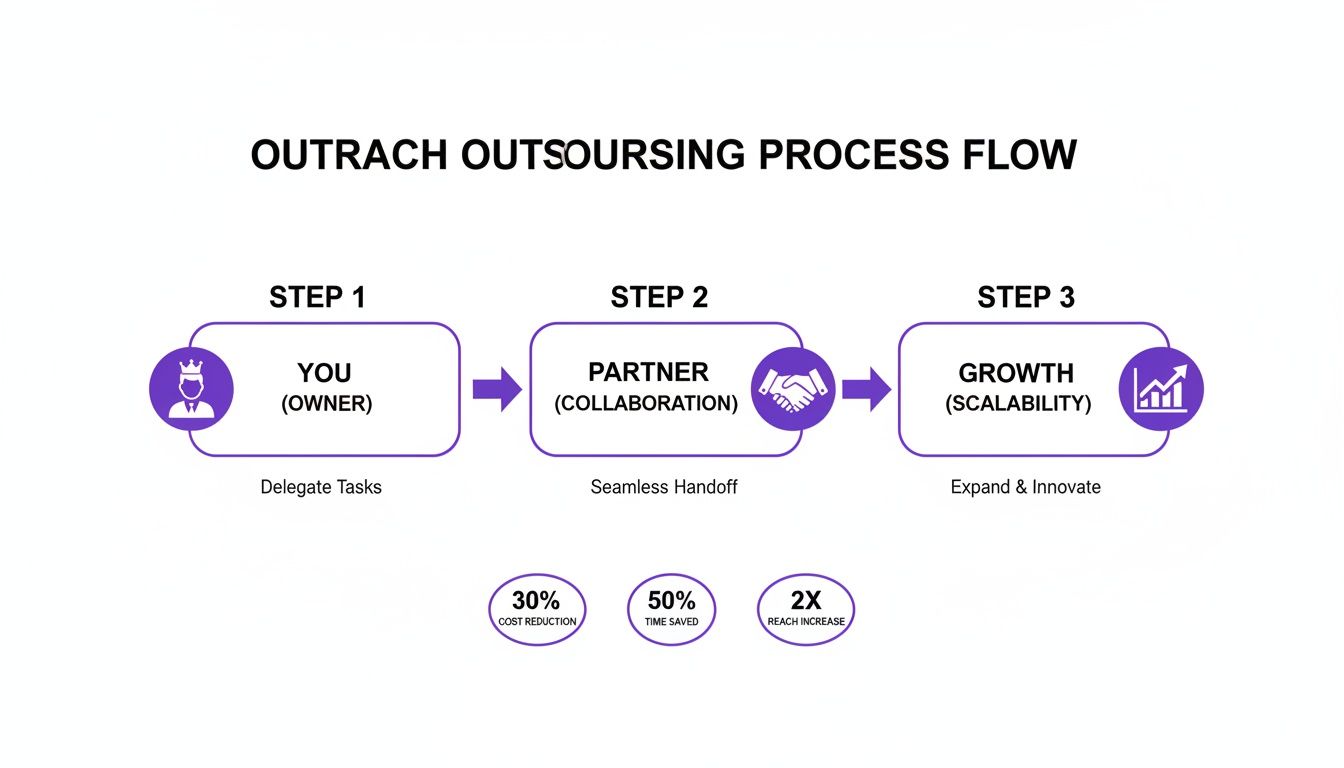
As you can see, the idea is to hand off the heavy lifting to a specialized partner, which frees you up to focus on closing deals and growing the business.
Calculating Your Ultimate ROI
At the end of the day, there's one number that trumps all others: your ROI. It answers the only question that really matters: "Is this actually making me money?"
ROI Formula: (Revenue from Outbound Jobs – Campaign Cost) / Campaign Cost
Let's walk through a real-world example. Say you spent $1,000 on a cold calling campaign. That campaign booked five new roofing jobs, and your average job is worth $2,000. That’s $10,000 in new revenue from a $1,000 investment.
Your ROI would be ($10,000 – $1,000) / $1,000, which works out to a 900% return. Knowing this number isn't optional—it's the only way to know for sure if your outbound strategy is a true profit center for your business.
Common Questions About Outgoing Sales
Jumping into outbound marketing can feel like a big leap, especially if you're used to waiting for the phone to ring. I get it. A lot of home service owners I talk to have the same questions and hang-ups before they get started. Let's clear the air and tackle those head-on so you can feel good about moving forward.
We'll run through this as a simple Q&A to give you straight-up, practical answers to what's likely on your mind.
Isn't Cold Calling Just Annoying and Old-Fashioned?
This is always the first question, and it’s a fair one. Nobody wants to be that annoying telemarketer. But here's the thing: modern, professional cold calling is a totally different ballgame from that old stereotype. It’s not about blasting out generic, high-pressure pitches. It’s about targeted problem-solving.
Think of it this way: a good caller isn't just dialing for dollars. They're identifying a real potential need—like noticing a neighborhood full of 20-year-old homes with original furnaces just before a cold snap—and offering a genuinely helpful solution, like a free inspection. The conversation is respectful, professional, and timed to be helpful.
For a homeowner who isn't glued to Google, a relevant, well-timed call often feels like a proactive service, not an interruption. It's a hands-on approach to customer care, which is why it still works so well in an industry where trust is everything.
How Much Is an Outbound Campaign Going to Cost Me?
The cost really boils down to how you approach it. If you try to build an entire outbound system in-house, you're looking at some serious and ongoing expenses. You've got staff salaries, weeks of training, the cost of buying data lists, and monthly software fees. It adds up fast.
Outsourcing to a specialized service almost always gives you a more predictable and manageable cost. You’re paying for the result—the appointments—not all the overhead that comes with hiring, training, and managing your own team.
This approach takes a lot of the financial risk off your shoulders and lets you dial your efforts up or down as needed. A good partner will even help you calculate the potential ROI before you start, making sure the investment makes perfect sense for your budget and growth targets.
What’s the Difference Between a Remote CSR and a Cold Caller?
That's a great question, and it gets to the heart of proactive versus reactive roles. While both can work from anywhere, they have very different jobs.
A dedicated cold caller is a specialist. Their one and only job is to proactively reach out to generate brand-new leads and book appointments from scratch. Think of them as your business's "hunters"—they're actively out there finding new opportunities to fill your schedule.
A remote CSR (Customer Service Representative) or VA (Virtual Assistant) is a more versatile player who becomes part of your day-to-day operations. They typically handle things like:
- Answering all incoming calls from your various marketing efforts.
- Scheduling jobs that come from both inbound and outbound leads.
- Taking care of administrative tasks that keep your office from getting bogged down.
- Following up with existing leads to nurture them toward a sale.
So, the cold caller is the engine that brings in new business. The remote CSR is the expert who makes sure every single lead, no matter where it came from, is handled perfectly to maximize your chances of winning the job.
How Quickly Will I Actually See Results?
This is where outbound really shines. Unlike SEO or content marketing, which can take months and months to build momentum, a well-run outbound campaign gets you results much, much faster.
You can start seeing booked appointments land on your calendar within the first few weeks.
Once the initial setup is done—getting the lists targeted, the script dialed in—the outreach starts right away. It's totally realistic to have new, qualified appointments showing up within the first month. This makes it the perfect strategy for filling the calendar during a slow season or when you're trying to break into a new service area.
Ready to stop waiting for the phone to ring and start filling your calendar with qualified appointments? Phone Staffer provides a done-for-you cold calling service that books jobs directly for you. We also hire, train, and place expert remote CSRs and VAs to ensure every lead is captured and converted.
Learn how we can accelerate your growth at https://phonestaffer.com.