
A solid pest control estimate is your first step toward a profitable job. It’s what separates the pros who thrive from the ones who are constantly struggling to make ends meet. Think of it less as just a number and more as your most powerful sales tool—it builds trust, sets clear expectations, and ultimately, fuels your bottom line.
The Foundation Of Profitable Pest Control Estimates
Getting your estimates right is the difference between growing a healthy business and watching your profits bleed out. I’ve seen too many new owners fall into the trap of guesswork, and the consequences can be brutal.
I know a guy—let's call him Mike—who was fantastic at the hands-on work but green when it came to the numbers. His first year in business, he was so eager to land every job that he consistently underbid everyone else. He’d just throw out a number on the spot, completely forgetting to factor in the premium cost of a specific rodenticide or the extra 45 minutes of drive time to a property out in the county.
He was busy, sure, but his bank account was shrinking. The breaking point hit when a massive German cockroach cleanout in a local restaurant kitchen ended up costing him nearly double what he’d charged the client. He almost lost the business.
From Guesswork to a Growth System
Frustrated and on the verge of packing it in, Mike completely changed his approach. He stopped guessing and started building a real system. He began tracking everything: every minute of his technicians' labor, every ounce of chemical used, every mile on the truck. It wasn't just about covering his costs anymore; it was about truly understanding them.
This shift completely turned his business around. By creating a standardized process for his pest control estimates, Mike was able to:
- Pinpoint his true breakeven point for every single service he offered.
- Confidently justify his pricing to customers by breaking down the value they were getting.
- Boost his net profit margins by 30% in just six months, all without scaring off his clients.
Mike's story is a perfect reminder that a sharp quote isn't just paperwork—it's the strategic foundation for a profitable, sustainable business. Having a system is more critical than ever, especially in a market that’s exploded. The U.S. pest control industry is now worth a massive $29.7 billion, with over 34,000 businesses competing for work.
Building a profitable estimate starts with knowing what to include. These are the absolute non-negotiables.
Quick Guide to Essential Estimate Components
| Component | Why It Matters | Example |
|---|---|---|
| Direct Labor Costs | This is the time your technician spends on-site. Underestimate this, and you're losing money from the start. | Technician's hourly wage + payroll taxes for the 1.5 hours spent treating a home for ants. |
| Material & Chemical Costs | Chemicals, baits, and traps are direct job costs. You must account for them accurately, not just "eyeball" it. | Cost of 3 tubes of carpenter ant bait gel + 1 gallon of perimeter spray mix. |
| Overhead & Indirect Costs | These are the hidden costs of doing business: insurance, vehicle maintenance, software, rent. | A percentage of your monthly overhead (15-20%) applied to each job's total cost. |
| Travel Time & Fuel | Drive time is work time. Factoring in fuel and vehicle wear-and-tear is crucial, especially for rural clients. | 45 minutes round-trip travel time + $0.60/mile vehicle cost for a 20-mile trip. |
| Target Pest & Severity | A simple spider treatment is vastly different from a complex termite or bed bug job. Price accordingly. | A Level 3 German cockroach infestation requires more product and follow-up visits than a Level 1 ant issue. |
| Profit Margin | This isn't just what's left over; it's the planned profit that allows your business to grow. | After all costs are covered, adding a 25-40% margin to determine the final client price. |
By mastering these components, you move from hoping for a profit to planning for one. It's the most reliable way to ensure every job you take actually builds your business.
A well-crafted estimate does more than state a price; it communicates your professionalism, expertise, and the comprehensive value you provide. It’s your first and best chance to prove you’re the right choice for the job.
When you nail your estimation process, you also elevate the customer's experience from the very first call. As we’ve covered before, great customer care is a cornerstone of the home service industry. Your estimate is often the first real piece of communication a potential client gets from you, and it sets the tone for the entire relationship.
Calculating The Real Costs Of Pest Control Services
If you want to build a profitable pest control business, you have to know your numbers cold. This isn't about guessing or just trying to undercut the other guy. It's about understanding every single dollar that goes into a job so that every quote you send is actually designed to make you money.
I see this all the time with new owners. Let’s take Sarah, a new franchisee I know. She started out doing a ton of small jobs, mostly standard ant treatments. Her pricing was simple: the cost of one bottle of chemical plus an hour of her tech’s time. It seemed to work, but her profit margins were razor-thin.
Then she got a call that was a complete game-changer. A huge, older home with clear signs of a serious termite infestation. Her simple little formula was suddenly useless. This job wasn't just one bottle of spray; it demanded specialized termiticides, bait stations, and multiple follow-up visits. It wasn't a one-hour job—it was a multi-day project.
Sarah knew she was in over her head. If she had quoted that termite job using her ant-treatment model, she would have lost thousands. That was her wake-up call to get serious and dig into the real costs of her business.
Uncovering Your Direct Costs
Direct costs are the expenses you can point to on any specific job. They seem obvious, but they're surprisingly easy to underestimate. Sarah learned to get granular with this, breaking down every single service she offered.
- Chemicals and Materials: This is so much more than "one bottle of spray." You need to account for the exact amount of termiticide, the number of bait stations, the tubes of caulk for exclusion work, and even the disposable gloves your technician puts on. A termite job could easily run $300-$500 in materials alone, a world away from the $20 for a basic ant treatment.
- Labor Hours: Don't just clock the time spent spraying. You have to factor in all on-site time—the initial inspection, talking the customer through the process, and the final cleanup. A technician's hourly wage plus payroll taxes for a four-hour termite treatment looks very different from a 45-minute spider job.
Building a winning quote is really a three-part process: you have to systemize your costs, price for actual profit, and then sell the value you’re providing.

As you can see, the price itself is just the middle step. It's built on a solid foundation of knowing your costs and supported by your ability to communicate your value.
The Hidden Costs That Sink Businesses
The expenses that really sink businesses are the indirect ones—your overhead. These are all the things that keep your business running but aren't tied to one specific job. Forgetting to account for them is why so many pest control companies fail, even when their schedule looks packed.
Sarah fired up a spreadsheet and started listing out all these "hidden" expenses:
- Vehicle Costs: Fuel, insurance, and loan payments are obvious. But she also factored in depreciation and a budget for maintenance and repairs, calculating a per-mile cost to run each truck.
- Insurance: General liability, workers' comp, and commercial auto are non-negotiable and add up fast.
- Equipment: The sprayer, drills, and ladders all have a lifespan. She started accounting for their eventual replacement cost.
- Software and Admin: This covers everything from scheduling software to paying for someone to answer your phones. Properly handling inbound leads is crucial, and understanding the cost-saving benefits of a dedicated phone answerer helps you budget for growth.
- Rent and Utilities: The monthly nut for your office or storage unit.
She totaled up her monthly overhead and divided it by the number of billable hours her team could realistically work. This gave her an "overhead-per-hour" rate, which she started adding to every single estimate. Now, every job was contributing its fair share to keeping the lights on.
Your breakeven point is the absolute minimum you must charge to avoid losing money. It’s calculated by adding your direct costs (labor + materials) to the job’s share of indirect costs. Anything above that number is your profit.
Bringing It All Together for Accurate Pest Control Estimates
Once you truly know your costs, you can price your services with confidence. A one-time visit for common pests might fall between $100 and $260 in a typical home, with the national average hovering around $171. But that price can swing wildly from $50 to $500 depending on the pest, where you're located, and how bad the infestation is. For ongoing services, annual plans can range anywhere from $300 to over $900.
By tracking her true costs, Sarah could confidently price that big termite job. She knew her breakeven point to the dollar and could add a healthy profit margin while clearly explaining the value to the homeowner. She won the job, made a great profit, and, most importantly, created a system she could use for every quote from that day forward.
How to Price Your Services for Different Pests
Here’s the thing: treating a few ants in a kitchen is a world away from tackling a full-blown termite infestation. If you’re using a one-size-fits-all price for every job, you’re either leaving money on the table or losing it entirely. A flat rate might seem simple, but it’s a fast track to undercharging for tough jobs and overcharging for easy ones.
The real key is to get strategic and price your services based on the pest itself—the difficulty, the risk, and what the customer is actually willing to pay to solve their problem.

Think about it from the customer’s point of view. Someone spotting a line of ants is annoyed; they want a quick, affordable fix. But a homeowner who finds termite damage chewing through their foundation? That’s a five-alarm fire. They’re facing a crisis and are prepared to invest whatever it takes to protect their home. Your pricing has to reflect that difference in urgency and perceived value.
Match Your Price to the Pest's Complexity
I know a company down in Texas that learned this lesson the hard way. They used to price most of their services pretty similarly, but they couldn't figure out why they were barely breaking even on bed bug jobs while making a killing on simple spider treatments. The problem was they were treating every call as just another number on a work order.
So, they completely overhauled their pricing. They created different service categories based on the real-world challenges of each pest. It looked something like this:
- Standard Pests (Spiders, Ants, Silverfish): These were their bread-and-butter jobs. They priced them competitively, offering a one-time service or an affordable quarterly plan to get customers in the door.
- High-Intensity Pests (Roaches, Rodents): These jobs cost more because they knew they'd require multiple visits, more labor, and pricier materials like specialized baits and traps.
- Premium Pests (Bed Bugs, Termites): This was their top-tier, premium-priced service. It accounted for the massive amount of labor, expensive chemicals, and the high liability involved in these treatments.
Just by making this shift, they boosted their overall revenue by 40% in the first year alone—without needing a ton of new customers. They were finally charging what their work was actually worth.
The perceived value of your service is directly tied to the severity of the customer’s problem. A customer facing thousands in potential home repairs from termites has a much higher willingness to pay than one dealing with a minor nuisance.
Factor in Treatment Difficulty and Risk
Some pests are just plain tough. Bed bugs, for example, have become the bane of our industry. After being nearly wiped out decades ago, they’re back with a vengeance. In fact, a recent report on homeowner trends from ConsumerAffairs.com found that 76% of pest control professionals now consider them the most difficult pest to treat. That difficulty—the extra labor, the follow-up inspections, the risk of callbacks—absolutely justifies a higher price tag.
Termites are a different beast altogether, mainly because of the immense financial risk. They cause billions in damage to homes across the country, and a serious infestation can easily cost a homeowner $3,000 or more in repairs. When you sell a termite treatment, you're not just selling chemicals and labor. You’re selling peace of mind and protection against a catastrophic loss. That value is immense.
Create Service Packages That Actually Sell
Instead of just giving a single price, one of the best things you can do is offer tiered service packages. It’s a classic "good, better, best" approach that lets customers choose what they're comfortable with while gently guiding them toward more comprehensive—and profitable—options.
Here's a simple, practical way to structure your packages:
- Home Shield Plan (Basic): This is your entry-level offer. It’s a general pest control plan covering common nuisances like ants and spiders with quarterly exterior sprays. It's affordable and a fantastic way to introduce new customers to your company.
- Home Shield Plus (Mid-Tier): This package builds on the basic plan. You include everything from the Home Shield plan but add interior treatments and coverage for tougher pests like roaches or wasps. It provides more complete protection at a higher price point.
- Termite Defense Plan (Premium): This is your flagship service, designed specifically for termite prevention and elimination. It should include annual inspections, the installation of a professional baiting system, and a damage repair warranty. This is your highest-margin service, and you should position it as an essential investment in protecting their property.
This model gives the power of choice to the customer. More importantly, it clearly lays out the value they get by moving up to a better plan, making it much easier for you to justify the higher cost and lock in those valuable, long-term contracts.
Turning Your Quote Into a Booked Job
You've done the hard work of calculating an accurate price. That’s a great start, but let's be honest—a number on a piece of paper doesn't pay the bills. If you can't turn that estimate into a scheduled appointment, your calculations don't mean much. This is where the way you communicate your value becomes just as critical as the math itself.

Think about it from the customer's perspective. They’re often stressed and just want their problem solved. They aren't just buying pest control; they're buying peace of mind. The company that makes them feel the most confident is usually the one that gets the job, even if they aren't the absolute cheapest.
I saw this firsthand with a small, family-run pest control business out in Arizona. Their closing rate was stuck around 40%, and they couldn't figure out why. After digging into their process, we found the culprit: their techs were just scribbling a price on a generic form and handing it over. There was no conversation, no explanation, no value.
They revamped their on-site script and cleaned up their written quotes to be clearer and more professional. That one change was all it took. In just three months, their close rate jumped by over 20%. No magic tricks, just better communication.
Frame the Price With a Powerful Script
How you say the price matters. Whether you're on a call or on-site, dropping a number without context is a gamble. It invites a simple "yes" or "no" and puts all the focus on cost. Instead, you need to guide the conversation and connect your price to the solution you're providing.
Let's break down two ways to present the same quote:
- The Price-Dropper: "Okay, so to get rid of the rodents, it'll be $450."
- The Problem-Solver: "Based on what I found, they're getting in through the attic and the basement crawlspace. Our comprehensive rodent exclusion plan is the best long-term fix. We'll seal those entry points, set up a full trapping system, and back it all up with a 90-day guarantee. That complete service is $450. Does that sound like the right solution for you?"
See the difference? The second one isn't just a price; it’s a plan. It shows expertise and justifies the cost by focusing on the outcome—a permanent solution.
Scripts That Sell: Key Phrases to Use
Here are a few phrases I’ve seen work wonders. Feel free to adapt them to your own services and style. The goal is to be a consultant, not a salesperson.
- "Most of your neighbors with this ant issue go with our Home Shield Plus plan. It takes care of the problem you're seeing now and also prevents pests all year long. I can walk you through how that works if you'd like."
- "I know that's a significant number. The main reason our termite treatment is priced this way is because we use the Sentricon System. It's scientifically designed to eliminate the entire colony, queen and all, so you don't have this problem again next year."
- "Given how widespread the infestation is, we'll need to use our most thorough approach. That means a full interior and exterior treatment, and we'll come back in two weeks for a free follow-up to make sure they're gone for good. Is that something you'd be interested in?"
This approach builds immediate trust. The customer sees you as the expert who is there to solve their problem, not just take their money.
Design a Quote Document That Closes the Deal
Your written estimate is your silent salesperson. A scribbled, confusing quote can make a customer second-guess your professionalism, even if the price is right. A clean, clear document, on the other hand, reinforces your credibility. Using software to simplify estimates, quotes, and invoicing can make this process fast and foolproof.
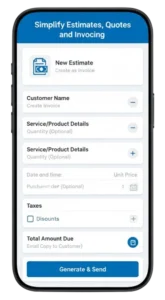
Make sure every estimate you send includes these four things:
- A Detailed Scope of Work: Don't just say "ant treatment." Get specific: "Treat interior baseboards and exterior perimeter for odorous house ants with a non-repellent liquid insecticide. Place targeted ant bait stations in kitchen and bathroom voids." This shows you know what you're doing.
- Tiered Options: Offering a "Good, Better, Best" choice is a powerful sales tactic. It gives the customer a sense of control and makes it more likely they'll choose one of your options instead of shopping around.
- The "Why" Behind the Price: Add a line or two about what makes you the right choice. Mention your satisfaction guarantee, the premium products you use, or your warranty. This reinforces the value.
- A Clear Call to Action: Tell them exactly what to do next. Don't leave them hanging. Something like, "Ready to be pest-free? Click here to approve your estimate," or "Call us by Friday to lock in your 10% new customer discount."
A professional estimate is more than just a price list; it's a proposal that clearly outlines the problem, presents a compelling solution, and makes it easy for the customer to say 'yes.' It's your silent salesperson.
By pairing a confident script with a professional document, you shift the entire dynamic from price to value. It’s often the final, crucial step in turning all your hard work into profitable, booked jobs.
Turning Your Pest Control Estimates Into Booked Jobs
Getting the numbers right on an estimate is one thing. Turning that piece of paper into a scheduled job and a happy customer? That’s a whole different ballgame. This is where the real work begins.
Honestly, this part of the job is less about math and more about people. When a customer calls you, they’re stressed. They have a problem they want gone, and they’re looking for someone they can trust. More often than not, the company that wins isn't the cheapest—it's the one that builds confidence and makes the customer feel heard.
Don't Just Send and Pray—Have a Follow-Up Plan
Leaving an estimate with a potential client and just hoping for a callback is a surefire way to lose business. You need a simple, consistent process for following up. It’s one of the easiest ways to turn a "maybe" into a "yes."
I remember working with a business owner who was pulling his hair out. His team sent out a ton of quotes every week, but their closing rate was hovering around 30%. We dug in and found the problem: they had zero follow-up. Once the quote was out the door, the lead went cold unless the customer called back themselves.
We put a simple 3-day follow-up cadence in place. It wasn't complicated:
- Day 1 (Within 24 hours): A quick, friendly phone call. Something like, "Hey, it's Mark from ABC Pest Control. Just wanted to make sure you got the estimate and see if you had any questions right off the bat."
- Day 2 (48 hours): A short email that adds value. "Just following up on our quote for your rodent issue. I wanted to point out that our service includes a full 90-day guarantee for total peace of mind. Let me know when you're ready to get on the schedule!"
- Day 3 (72 hours): One last, no-pressure check-in. "Hi, Mark again. Just doing a final check on the estimate. We've got a tech in your neighborhood on Friday if you want to get this handled before the weekend."
The change was incredible. Within two months, his company saw a 35% increase in conversions. He didn't drop his prices. He didn't change his services. He just showed people he was organized and genuinely wanted to solve their problem. A disciplined approach to managing estimates can dramatically increase your sales conversion rate.
How to Handle Price Objections Without Slashing Your Rates
It’s the objection every service pro dreads: "That's more than I expected." Your gut reaction might be to offer a discount, but that's a race to the bottom. It devalues your expertise and kills your profit margin. The trick is to pivot the conversation from price to value.
Don't panic. Just breathe and respond with confidence.
Customer: "Wow, $600 is more than I was hoping to spend."
Your Response: "I completely understand. It's an important investment to protect your home. Do you have 60 seconds for me to explain what's included in that price? A lot of quotes won't include the comprehensive exclusion work we do, and our 12-month warranty means you won't be paying for this same problem again in a few months."
This kind of response is powerful. You're not arguing; you're educating. You validate their concern, pivot back to the value you provide, and subtly hint that cheaper options are cheaper for a reason.
If they still can't meet the price, don't just offer a random 10% off. Instead, see if you can adjust the scope of work. For example: "While I can't change the price on our full home protection plan, we could do a targeted exterior-only treatment for $350. It wouldn't come with the interior guarantee, but it would definitely tackle the immediate issue you're seeing." This keeps your pricing solid while still giving them a viable option.
Create a Reason to Act Now (Without Being Pushy)
Creating urgency isn't about high-pressure sales tactics. It’s about giving the customer a gentle, logical reason to make a decision sooner rather than later.
Here are a few ethical ways to do it:
- Explain the Consequences of Waiting: "The termite activity we found is in its early stages. If we treat it now, we can stop the colony before it causes serious structural damage to your home."
- Use Your Schedule as a Tool: "We have an opening in your area this Thursday. If we can lock you in for that spot, we can get this solved before the weekend. After that, we're booked out for about two weeks."
- Offer a Small, Time-Sensitive Bonus: "For anyone who books within 48 hours of the estimate, we're throwing in a complimentary exterior spider-web cleaning."
In the end, every phone call and email is a chance to build trust. When you're professional and prepared, you show customers you’re a reliable partner, not just another service provider. Managing these calls and follow-ups effectively is key to growth, and having a dedicated home service receptionist can be a total game-changer for turning those valuable estimates into booked-and-billed jobs.
Even with the best formulas, you're going to run into tricky situations on the ground. Let's walk through some of the questions I get asked all the time and cover how seasoned pros handle them.
How Do I Adjust My Pest Control Estimates For Different Regions?
You absolutely have to adjust your pricing for different regions. It’s not even a question. A price that keeps you profitable in a small Texas town will put you out of business in a major city like San Francisco. This isn't just about matching competitors; it's about covering your real-world costs.
I have a friend who learned this the hard way when he expanded his business from Austin to San Francisco. His go-to labor rate in Austin was $45/hour. When he got to SF, he couldn't find a single qualified tech for less than $60/hour. On top of that, his insurance and vehicle expenses jumped by almost 30%.
His solution was simple but effective: he created a "regional cost multiplier." He used his Austin prices as a baseline and then applied a 1.25x multiplier to all labor and overhead for the San Francisco jobs. A $400 job in Austin was now correctly priced at $500 in San Francisco. It saved his margins.
What Is The Best Way To Handle Price Negotiations?
Whatever you do, don't just drop your price. The second you do, you send a clear message: your initial price was padded, and your service isn't worth what you asked for. The right move is to reinforce the value you're providing, and only then offer to adjust the scope of the work.
I saw a veteran tech handle this perfectly once. A homeowner balked at his $750 quote for a nasty German cockroach infestation, saying another company offered to do it for $500.
Instead of caving, the tech calmly broke it down. "I completely understand," he said. "For our $750 service, we're not just spraying. We use a three-part system of baiting gels, insect growth regulators to halt the breeding cycle, and we lock in two follow-up visits to guarantee the entire colony is gone. Can I ask if the other quote included all that?"
The customer admitted it didn't. The tech then gave him a choice: "If the budget is firm at $500, we can do a single, intensive treatment without the follow-up visits, but I can't offer our money-back guarantee on that." The customer immediately saw the difference and signed up for the $750 service. The value was now crystal clear.
When a customer objects to the price, your first move shouldn't be to lower it. It should be to increase the perceived value of your service by explaining exactly what they're paying for.
Should I Charge For Giving A Pest Control Estimate?
This really depends on how much work the estimate involves. For quick, common jobs like ants or spiders that you can practically quote over the phone, a free estimate is a great way to get your foot in the door. It's the industry standard.
But for complex problems that require a serious diagnostic effort, you should definitely charge an inspection fee. Think about a tricky termite job that takes an hour or more, involves suiting up to crawl under a house, and ends with a detailed report. Your time and expertise are valuable.
A company owner I know in Florida came up with a great system for this. He charges a $125 inspection fee for all termite and bed bug calls, which instantly filters out people who aren't serious. But here's the brilliant part: he tells the customer upfront, "If you decide to move forward with our treatment plan, we will credit the entire $125 inspection fee back to your service."
This small change accomplished two things: it paid his team for their diagnostic time and dramatically boosted his closing rate. Customers who paid the fee were already invested, and getting that credit back made them feel like they were getting a great deal.
Are you ready to stop chasing leads and start booking more profitable jobs? Phone Staffer specializes in finding, training, and managing expert cold callers who generate qualified appointments for home service businesses like yours. We handle the entire process, so you can focus on what you do best. Learn more at https://phonestaffer.com.