
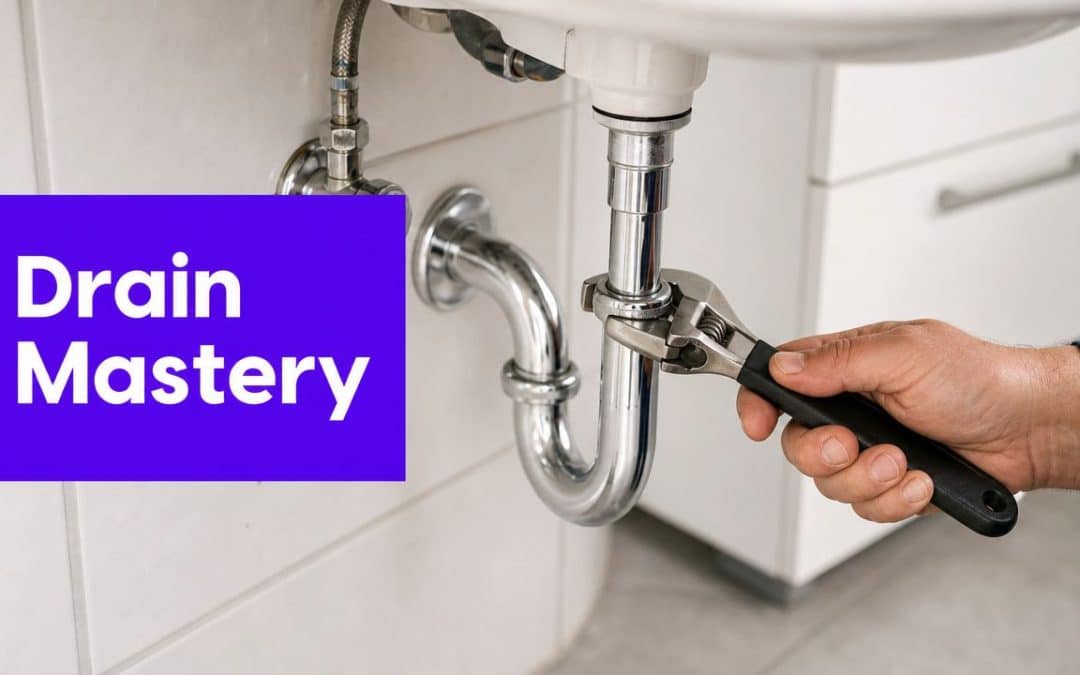
You open the vanity door because you noticed a little puddle. The shelf liner is wet, the toilet paper roll you stored under the sink is ruined, and now the question starts: is this just a loose nut, or is this turning into a real plumbing job?
That's how bathroom sink drain pipe problems usually show up. Not with drama. With a drip, a slow drain, a sour smell, or that gurgle that tells you the water got out but didn't leave cleanly. Homeowners feel the annoyance first. Plumbers see the pattern underneath it. Business owners should see both, because these are the exact small-frustration problems that create high-intent service calls.
The Unsung Hero Under Your Sink
A bathroom sink drain pipe doesn't get much respect until it fails. The faucet gets the attention. The vanity gets the compliments. The drain only gets noticed when the cabinet floor turns damp or the sink starts holding water longer than it should.
A common scene goes like this. Someone wipes out the sink, puts things away, and later finds a ring of water under the P-trap. They tighten one nut by hand, run the faucet again, and the drip moves to another joint. That's normal. Drain assemblies are simple, but they're unforgiving when parts are crooked, mismatched, or stressed by bad alignment.

Indoor plumbing feels permanent now, but modern standardization is newer than commonly assumed. In the United States, only 1% of homes lacked complete plumbing facilities in 1990, down from nearly half of homes in 1940, according to U.S. Census plumbing history data. That shift matters because as indoor plumbing became expected, sink drains, traps, and rough-in layouts became more standardized too.
A bathroom sink drain pipe looks small because most of it is hidden. The consequences of a bad one are not small.
For homeowners, that means a lot of problems are fixable once you understand what you're looking at. For home service companies, it means sink drain issues are strong lead topics because people usually search when water is already leaking or backing up. Speed matters at that point. If your office misses those calls, someone else gets the job. That's one reason contractors use systems like a home service receptionist to catch the call while the customer is still standing in front of the mess.
Anatomy of a Bathroom Sink Drain
Under the sink, the drain assembly works like a small disposal route. Water leaves the basin, passes through the drain body, drops down the tailpiece, moves through the trap, and heads into the wall drain. If any section is the wrong size, badly sealed, or out of line, the whole assembly starts acting up.

The parts that matter most
Start at the top with the drain flange and pop-up stopper. That's the visible trim inside the bowl. It holds water when closed and directs water into the drain opening when open.
Below that is the tailpiece, the straight vertical section dropping down from the sink. This is the piece many homeowners recognize because it's easy to see and easy to replace. The trap assembly connects to it.
Then comes the P-trap, usually made from a J-bend and a trap arm. This is the curved section that holds water. That water seal is what keeps sewer gas from moving back into the bathroom. The trap also catches dropped items and some debris before they disappear into the branch drain.
Finally, the trap arm runs into the wall stub-out. That wall connection is where many replacement jobs go sideways, because the new sink or vanity often doesn't land where the old one did.
For an average residential bathroom sink, the most common drain pipe size is 1 1/4 inch (32 mm), while 1 1/2 inch and 2 inch sizes are also used depending on fixture capacity and local code, as explained in this sink drain pipe size guide from Angi.
Material choice changes the job
The material under the sink affects appearance, cost, and how forgiving the assembly will be during install.
| Material | Pros | Cons | Best For |
|---|---|---|---|
| PVC | Cheap, easy to cut, common at home centers | Less attractive in open vanities | Most standard replacements inside enclosed cabinets |
| ABS | Lightweight, straightforward to assemble | Appearance is basic, may not match visible fixture finishes | Utility-focused replacements where looks don't matter |
| Chrome-plated brass | Looks better in exposed installs, more rigid feel | Costs more, shows misalignment faster, can be harder for DIYers to adjust | Pedestal sinks and exposed decorative drain setups |
What homeowners usually miss
Slip-joint connections look simple, so people assume tighter is always better. It isn't. The washer has to face the right direction, the pipe has to seat straight, and the nut only works if the parts are aligned before tightening.
Practical rule: If a drain assembly only fits when you force the pipes together, it does not fit.
That single mistake explains a lot of repeat leaks. A bathroom sink drain pipe should assemble with clean alignment first. Tightening should seal the connection, not bend the system into place.
Diagnosing Common Drain Disasters
Most bathroom sink drain problems fall into three buckets. Slow draining, leaking, and bad smells. The trick is not guessing. The trick is matching the symptom to the right failure point.

When the sink drains slowly
A slow bathroom sink usually has buildup close to the fixture. Hair, toothpaste residue, soap film, and grooming debris collect around the stopper and upper tailpiece first. The homeowner sees standing water and assumes the wall line is blocked. Sometimes it is. Often it isn't.
One job that sticks with me involved a guest bath sink that “needed snaking” according to the owner. The actual issue was a pop-up stopper packed with hair and paste-like residue. Once the stopper was pulled and cleaned, the sink drained normally.
If you're trying to narrow down the cause before taking anything apart, it helps to review common patterns behind household clogs. This breakdown of common drain blockage reasons gives useful context on what tends to accumulate and where.
Check these clues first:
- Water drains, but slowly: The blockage is usually partial, not total.
- Gurgling after the basin empties: Air is fighting through restricted drainage.
- The sink backs up fast during shaving or handwashing: Debris is likely close to the top of the assembly.
When water shows up under the sink
Leaks tell a story if you watch where the water starts. A drip from the lowest nut often started at a higher connection and traveled down the pipe before dropping. That's why wiping everything dry first matters.
A very common service call comes after a vanity replacement. The new sink tailpiece lands off-center from the wall drain, so the installer uses extra force to pull the trap sideways. It may hold for a day or two, then the washer shifts and the leak starts.
A frequently overlooked issue is fit and alignment when replacing a drain pipe, especially if the new vanity doesn't line up with the wall drain. If the wall drain is more than a few inches off-center, a simple replacement can become a complex job requiring extension tubes and angled fittings, a common point of failure for DIY projects, as shown in this drain alignment discussion and demo.
When the bathroom smells wrong
Not every drain problem leaks water. Some leak air.
A guest bathroom that doesn't get used often can start smelling like sewer gas because the trap water evaporated. The trap is still there. It just isn't doing its job because the water seal is gone. Run the faucet, refill the trap, and the smell often disappears.
Other odor complaints come from residue in the overflow channel, slime in the tailpiece, or a poorly sealed drain body at the sink itself. The important part is separating a true sewer smell from a mildew smell or cabinet odor.
If the smell gets stronger near the sink bowl or drain opening, inspect the stopper, tailpiece, and trap before assuming the line in the wall is the problem.
A quick field checklist
Use a simple order of operations:
- Dry everything first. Old moisture hides the active leak.
- Run a small stream, then a full flow. Some leaks only appear under volume.
- Check the stopper and upper drain first on slow drains.
- Look for stress in the trap. Bent or twisted parts don't stay sealed.
- Smell near the bowl and cabinet separately. That helps separate drain odor from damp-cabinet odor.
For a service business, this section alone can become three lead-generating topics. “Slow sink drain,” “leak under bathroom sink,” and “bathroom sink smells like sewer” are not the same customer problem, even if the fix happens under the same vanity.
Principles of Basic Drain Repair and Installation
Most under-sink repairs aren't hard because the plumbing is advanced. They're hard because the space is cramped, the parts are slippery, and one rushed move creates two new leaks. Good work under a bathroom sink comes from patience and order.

Start with layout, not tools
Before loosening anything, look at the assembly and decide whether the parts are reusable, mismatched, or obviously stressed. Keep a small bucket, towels, channel-lock pliers, and replacement washers nearby. On a simple trap job, preparation saves more time than wrenching does.
Rough-in height matters more than many DIYers expect. Typical bathroom sink rough-in guidance places the discharge or drain hole 16–20 inches above the floor, and installers often add about 1 inch of extra pipe length for insertion into the adapter to keep a proper seal, according to this bathroom plumbing rough-in guide from Home Depot. If that height is off, or the wall stub-out is too deep or too shallow, a standard J-bend connection gets awkward fast.
The install has to be relaxed
A proper install feels loose until the final alignment. That's a good sign. Assemble the tailpiece, trap, and trap arm so the parts can still move a little. Get the geometry right first. Tighten after everything sits naturally.
The most common mistakes are easy to recognize:
- Washer backward: The joint won't seal cleanly and may drip immediately.
- Pipe cut too short: The connection looks fine until water volume exposes the shallow insertion.
- Nut overtightened: Plastic nuts can distort washers instead of improving the seal.
- Trap forced sideways: The assembly may hold briefly, then start leaking after normal use.
One homeowner I dealt with had replaced every visible part under a new vanity and still got a drip at the trap arm. The issue wasn't the trap. The cut piece into the wall adapter was too short, so the seal never had enough engagement. That kind of mistake is frustrating because the drain looks finished until you test it.
For homeowners who want a practical companion on slow-drain troubleshooting before replacing parts, this guide from MG Drain Services LLC for drain repair is useful because it stays focused on the bathroom sink rather than turning into generic drain advice.
Here's a visual walkthrough that pairs well with the principles above:
Testing is part of the repair
A drain job isn't done when the nuts are tight. It's done when the system stays dry under real use.
Use this test sequence:
- Wipe every joint dry: A clean surface makes fresh leaks obvious.
- Run warm water at low flow first: Watch the upper joints and drain body.
- Fill and release the sink if possible: That adds a stronger discharge through the trap.
- Touch around each nut with a dry paper towel: A slow seep shows up there first.
- Check again later: Some leaks appear after the pipes warm slightly or settle.
A drain that passes a quick glance but fails a ten-minute test was never repaired properly.
That's the part beginners skip. It's also the part that protects the vanity cabinet.
DIY vs Pro What Is the Right Call
Some bathroom sink drain pipe jobs are perfect DIY work. Others look simple until the cabinet fills with parts, the store run starts, and the leak still isn't gone. The right call depends less on bravery and more on fit, confidence, and what the problem is.
Jobs that usually make sense for DIY
If the issue is visible and accessible, many homeowners can handle it. Replacing a straightforward P-trap, cleaning a stopper, swapping a worn slip-joint washer, or tightening a loose connection are all reasonable projects when the wall drain lines up and the parts match.
DIY tends to go well when:
- The problem is obvious: One cracked trap or one worn washer is easier than a mystery leak.
- The assembly is standard: A common vanity with open access is forgiving.
- You can test thoroughly: Time matters because rushing causes repeat leaks.
Jobs that usually belong to a plumber
Call for help when the problem moves beyond the exposed assembly. Trouble inside the wall, repeated leakage after replacement, or a drain body mismatch can waste a lot of time for a homeowner and create cabinet damage in the process.
A common homeowner mistake is not understanding that sinks with an overflow channel require a specific drain body with openings to accept that water. Using the wrong drain can cause hidden leaks inside the vanity or prevent the overflow from working, as explained in this overflow versus non-overflow sink drain guide.
Here's the short version of call a plumber when:
- The new sink doesn't line up with the wall drain: Above-floor adjustments only go so far.
- The leak source isn't clear: Water travels, and guessing wastes parts.
- Odors return after cleaning and trap refill: The issue may not be at the fixture.
- You bought the wrong drain for the basin design: Overflow compatibility matters.
- You don't want three store trips and a half-day under the vanity: That's a fair reason by itself.
For plumbing companies, the quality of intake matters. The person answering the phone should know how to ask whether the sink has an overflow, whether the vanity was recently replaced, and whether the leak appears only during drainage or all the time. A specialized plumbing virtual receptionist can screen those details and book the right service window instead of treating every under-sink call like the same problem.
Turn Drips and Clogs into Business Growth
For homeowners, the takeaway is simple. A bathroom sink drain pipe is a modest assembly that causes outsized aggravation when it fails. Most issues come down to clogs, leaks, odor, or alignment. The fix works best when the diagnosis is specific.
For plumbing businesses, this topic is more than repair work. It's a reliable demand signal. People don't search “bathroom sink drain pipe” because they're casually browsing. They search because they have a wet cabinet, a slow sink, or a new vanity that won't connect. That's qualified intent.
The marketing angle most companies miss
Drain content works best when it mirrors the customer's exact problem instead of talking about plumbing in general. “Leak under bathroom sink after new vanity” is stronger than “bathroom plumbing services.” “Sink drain smells like sewer in guest bath” is stronger than “drain cleaning.”
That precision should carry into paid search too. If you want a cleaner campaign structure around symptom-based services, Aim Set Win's approach to Google Ads is a useful model for thinking about intent-driven ad groups and landing page alignment.
Better lead conversations start with the pain point
Outbound and inbound scripts should sound like a plumber wrote them. Not like a marketer guessing.
Try language like this:
- For outbound calling: “We're reaching out to homeowners in your area because under-sink leaks and slow bathroom drains are common after sink or vanity changes. Has that shown up in your home?”
- For inbound screening: “Is the water leaking while the faucet is running, while the sink is draining, or even when nothing is being used?”
- For dispatch triage: “Did you replace the sink drain assembly recently, or has this been the original setup for a while?”
Those questions qualify the call fast. They also help office staff separate a simple trap leak from a drain-body issue or a possible wall-drain alignment job. If you're building support around that workflow, a guide on how to hire a virtual assistant is a practical place to start because the administrative side of lead handling matters just as much as the wrench work.
If your home service company wants more booked jobs from common homeowner problems like sink leaks, clogs, and drain replacements, Phone Staffer can help you turn those pain points into real appointments with trained callers, outbound campaigns, and better front-end lead handling.