

Effective call center training programs are much more than just a manual and a phone. They're structured processes meticulously designed to sharpen an agent's skills, deepen their product knowledge, and boost their ability to handle customer calls with confidence and grace. This is the bedrock of any high-performing customer service team, directly influencing everything from agent morale to customer satisfaction.
Building a Foundation for Effective Training
Let's be real for a moment. Handing a new hire a thick binder of scripts and calling it "training" is a recipe for disaster. I've seen it happen time and again. The best home service businesses know that success isn't about creating robotic script-readers; it's about cultivating confident, resourceful agents who can think on their feet.
That old-school, stuffy classroom model? It’s being replaced by dynamic, flexible training that actually works for modern teams. When you invest in a well-designed program, you're directly improving the metrics that define your success. You’re building a culture where agents feel empowered to solve problems, which always leads to better outcomes.
The Modern Training Philosophy
A winning training program today has to balance three key ingredients: deep product and service knowledge, polished soft skills, and total fluency with your systems (like your CRM and booking software). The ultimate goal is to arm your agents to create an exceptional customer experience, no matter what the customer throws at them. It's about moving past rote memorization to foster genuine understanding and adaptability.
When agents are properly trained, they transform from just being voices on the phone into true brand ambassadors. This is especially critical for remote teams where a virtual receptionist might be the only human interaction a customer has with your company.
The core philosophy of successful training is simple: Build problem-solvers, not script-followers. An agent who understands the "why" behind a policy is far more effective than one who can only recite it.
This shift has also changed how training gets done. Gone are the days of mandatory, all-day classroom sessions. Modern training is now a mix of self-paced online modules, interactive role-playing, and continuous coaching. This flexibility allows agents to learn at a comfortable pace, which dramatically increases how much they actually remember and apply.
Core Components of a Modern Call Center Training Program
To truly grasp the shift, it helps to see the old and new approaches side-by-side. The most successful programs have moved far beyond the basics.
| Training Pillar | Traditional Approach | Modern Approach |
|---|---|---|
| Knowledge Transfer | Lecture-based, reading manuals. | Interactive e-learning, video tutorials, searchable knowledge base. |
| Skills Practice | Listening to recorded calls, limited role-play. | AI-powered call simulations, live peer-to-peer role-playing with feedback. |
| System Training | Following a printed guide, watching a demo. | Hands-on practice in a "sandbox" or training version of the live system. |
| Performance Feedback | Weekly or monthly review based on a few calls. | Real-time coaching, daily metric dashboards, immediate feedback on performance. |
| Ongoing Learning | One-time onboarding, occasional refresher courses. | Continuous micro-learning, weekly huddles, mentorship programs. |
Embracing these modern pillars isn't just about using new tech; it's about adopting a mindset of continuous improvement for your team.
Visualizing the Impact of Quality Training
The proof, as they say, is in the numbers. The data below shows the real, tangible results you can expect from a well-executed training program. We're talking significant improvements in agent performance and, most importantly, customer happiness.
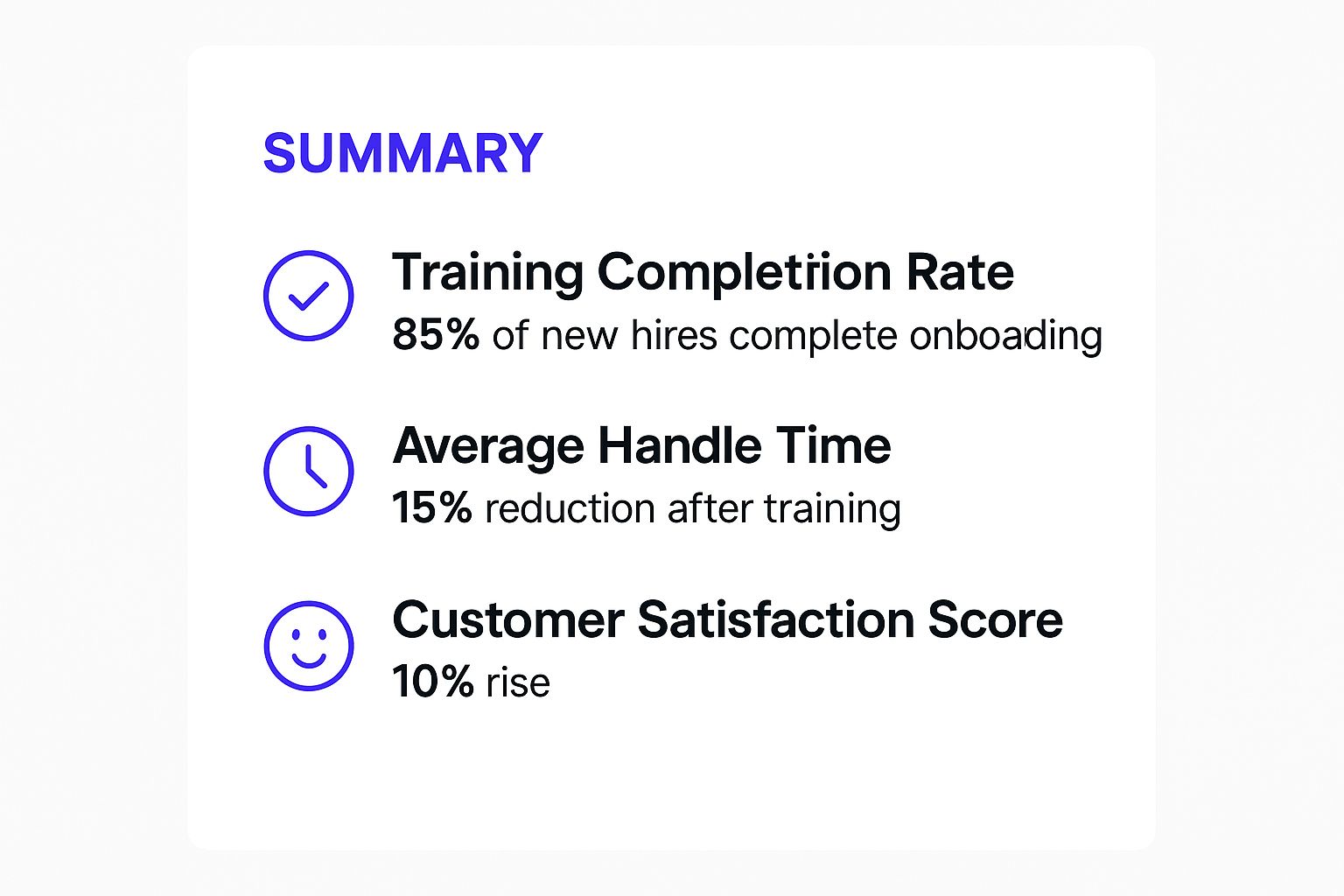
These metrics—like an 85% completion rate, a 15% drop in handle time, and a 10% jump in customer satisfaction—aren't just vanity stats. They show that investing in your agents pays dividends, making your entire operation more efficient while strengthening the customer relationships that grow your business. The foundation you build here directly creates a more capable, confident, and motivated team.
Crafting a Training Curriculum That Actually Works
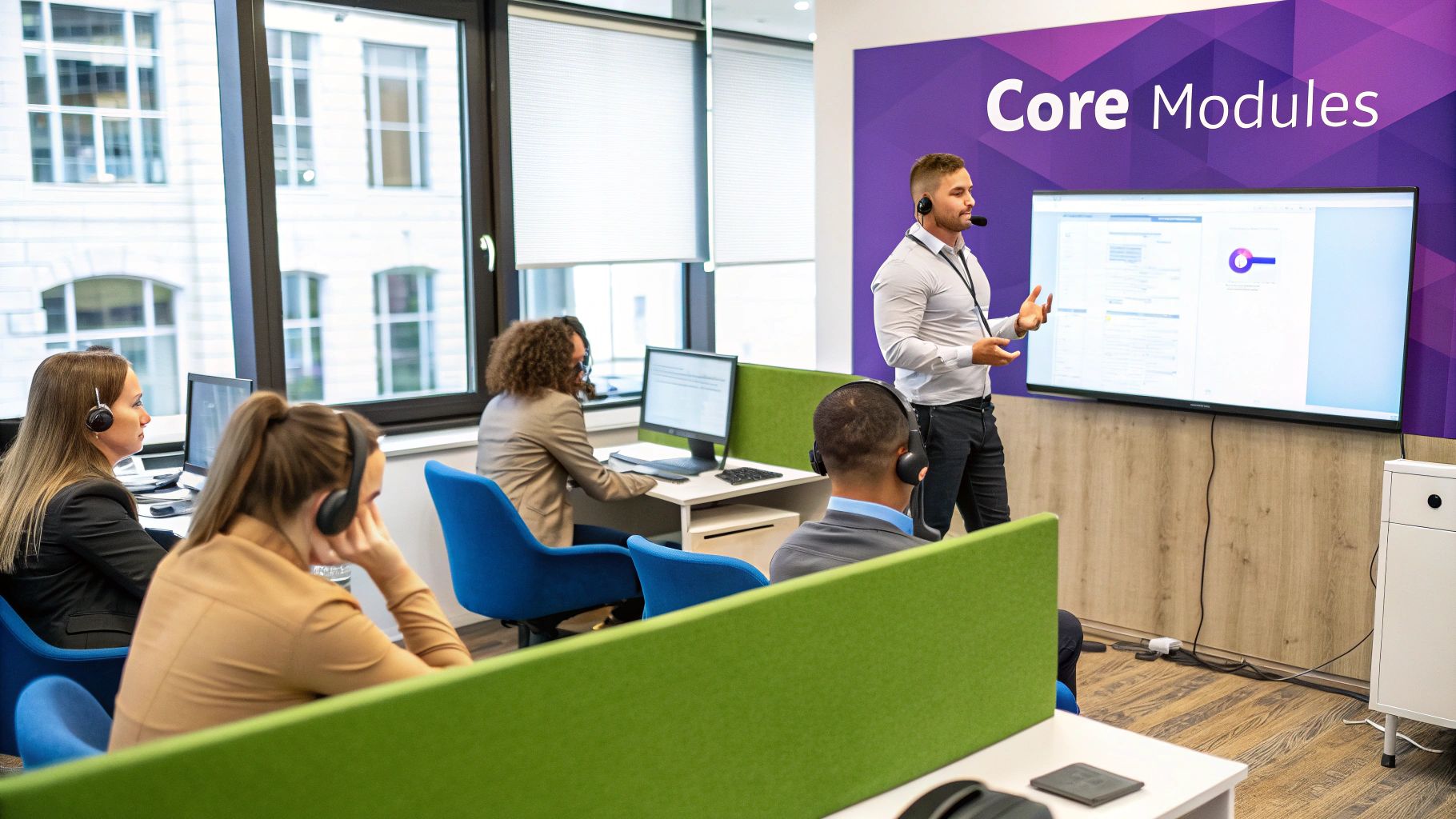
Alright, you know you need better training. That's the easy part. The real work starts when you sit down to build the actual curriculum. I've seen a lot of programs fall flat because they miss the mark here. A truly effective call center training program isn’t just about teaching scripts; it’s a careful blend of concrete technical skills and those crucial, often-overlooked soft skills.
First things first, let's map out the absolute must-have hard skills. These are the practical, black-and-white things your team needs to know to do their job. For a home service business, this list is pretty specific and has a direct impact on your bottom line.
For example, your agents need to be masters of your Customer Relationship Management (CRM) software. And I don't just mean they know which buttons to press. They need to understand the why—how to pull up a customer's entire history, log notes that a technician can actually use, and schedule a job without creating a downstream mess.
Striking the Right Balance Between Hard and Soft Skills
While knowing the software is the skeleton, soft skills are the heart of a great customer interaction. These are the human-to-human abilities that turn a routine booking call into an experience that makes a customer feel genuinely cared for. In a world full of competitors, this is your secret weapon.
I’ve seen this mistake time and time again: companies spend 90% of their training on systems and procedures, leaving a tiny 10% for the human side of things. The truly top-performing teams I've worked with do the opposite. They know that empathy and good listening are what solve the real problem and create loyal fans.
Imagine a homeowner calling in a full-blown panic because a pipe just burst in their kitchen. They don't just need an agent who can click the right buttons to dispatch a plumber. They need a calm, reassuring voice on the other end of the line who can show empathy and clearly explain what’s going to happen next. That’s the difference-maker.
Here’s how you can think about structuring this balance in your training:
- Product and Service Guts: Your agents must know your services inside and out—from the nitty-gritty of an HVAC maintenance contract to the average cost of an emergency plumbing visit.
- System Fluency: Beyond the CRM, they need to be comfortable with your phone system, any specialized booking platforms, and your internal chat tools like Slack or Microsoft Teams.
- Active Listening: This is a skill, not a given. Train your team to listen for what's not being said—the frustration in a customer's voice, the anxiety—to get to the root of the issue.
- Empathy and Connection: Equip them with phrases that build immediate rapport. Simple things like, "That sounds incredibly stressful, let's get this sorted out for you right away," can completely change the tone of a call.
How to Structure Your Content So It Sticks
Once you know what you're teaching, you have to be smart about how you teach it. Throwing a new hire into a week-long information firehose is the fastest way to make sure they forget 80% of it by the following Monday.
The solution is to break your curriculum into logical, bite-sized modules. You have to crawl before you can walk. An agent should be completely comfortable looking up a customer in the CRM before you even think about teaching them how to handle a complex multi-service booking. This tiered approach builds confidence and keeps people from getting overwhelmed.
And please, mix it up! No one learns well by reading a dusty binder for eight hours a day. A blended learning approach is always the winner.
- Short Video Tutorials: These are gold for showing software processes. A quick two-minute screen recording on scheduling an appointment beats a 10-page document every single time.
- Interactive "Sandboxes": Give them a safe space to play. A training version of your CRM lets agents practice entering customer data and booking jobs without the fear of messing up a real account.
- Quick-Reference Job Aids: One-page cheat sheets are lifesavers. Create simple PDFs or internal wiki pages for things like your service area map, pricing tiers, or refund policy. Your team will use these daily, long after their initial training is over.
Picking the Right Training Methods for Today's Teams
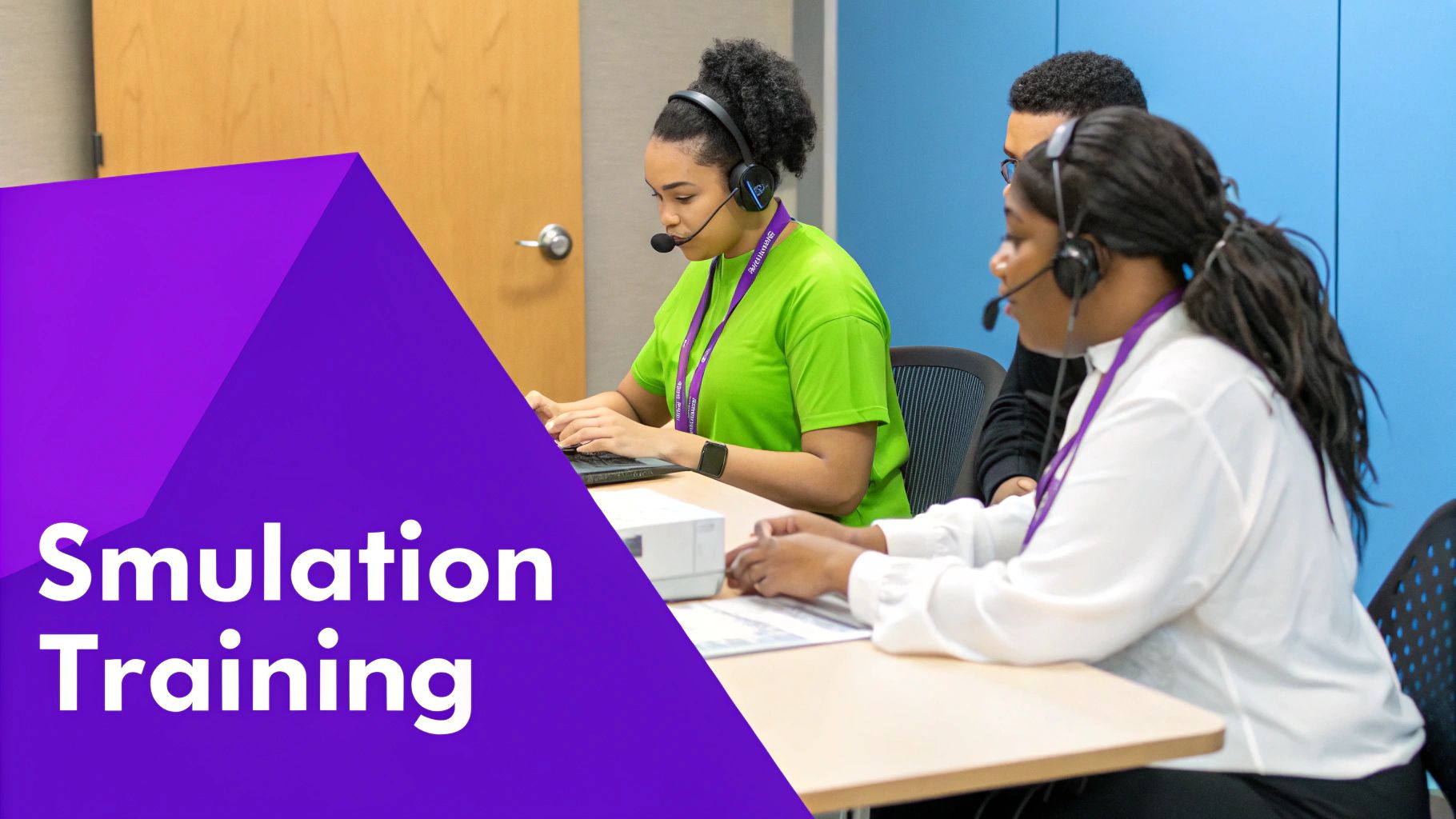
You can have the most brilliant training curriculum in the world, but it will absolutely fall flat if you don't think about how you're going to deliver it. The delivery method is just as important as the content itself. For home service businesses juggling in-office, hybrid, and fully remote agents, the old-school, one-size-fits-all classroom approach just doesn't cut it anymore.
The real goal here is to build a flexible and genuinely supportive learning environment. This isn't about a single "training week" that everyone has to suffer through. It's about blending different methods that work for different people and different situations. After all, you wouldn't train a brand-new hire the same way you'd give a quick refresher to a five-year veteran.
Create a Blend for Maximum Impact
I've found that the most effective call center training programs mix self-paced learning with live, interactive sessions. This combo really gives you the best of both worlds: the efficiency of solo work and the energy of group engagement.
Here’s how it usually breaks down:
- Self-Paced eLearning: This should be your go-to for foundational knowledge. Think company policies, the nitty-gritty of your service offerings, or basic tutorials for your scheduling software. Your team can tackle these modules on their own time, which is a lifesaver when dealing with varied schedules and learning speeds.
- Live Virtual Sessions: Save your live, face-to-face time (even if it's over Zoom) for the stuff that requires a human touch. This is where you role-play those tricky customer calls, practice active listening skills, and really dig into empathy. These sessions are also gold for building a sense of team and company culture, especially when your agents are spread out.
This blended model is more important than ever. The number of remote call center agents keeps climbing as businesses look to cut overhead and give employees the flexibility they crave. That shift means your training has to be designed from the ground up to support a team that isn't sitting in the same room. For more on this, Sprinklr often shares great insights on remote agent trends.
Use Microlearning for On-the-Job Support
One of the most powerful tools you can add to your training kit is microlearning. I'm talking about creating short, super-focused, and easily searchable bits of content that your agents can pull up right when they need them.
Think of it as a "just-in-time" support system. An agent is on a call and forgets how to process a specific kind of refund. Instead of digging through an hour-long video, they can find a 30-second clip that walks them through it. Or maybe they need to handle an angry customer—they can quickly pull up a one-page PDF with de-escalation scripts.
A huge mistake I see companies make is building a massive, static library of training guides that just gathers dust after onboarding. Microlearning keeps that knowledge alive and useful, turning training from a one-time chore into a continuous, everyday resource.
This approach is incredibly valuable if your team includes offshore staff. It gives them immediate, clear answers on your specific procedures without having to wait for a supervisor to become available. If you're exploring that staffing model, our guide on how to hire offshore virtual assistants has some practical tips.
Ultimately, you want to empower your agents with the right answer at the exact moment they need it. When you combine self-paced fundamentals, live practice sessions, and a library of micro-resources, you build a training ecosystem that actually works for the way people work today.
Using Role-Play to Prepare for Real Conversations
Knowing the right answer is one thing. Delivering it calmly while a customer is breathing fire down the phone is another skill entirely. This is where the rubber meets the road—where theory gets tossed out the window, and real-world skills take over.
Honestly, realistic, scenario-based role-playing is the single most effective tool I've seen for building an agent's confidence. It's how you prepare them for the pressure of a live call.
Think of it like a fire drill. You don’t just show firefighters a map of the building; you run them through drills in simulated smoke-filled hallways until their actions are pure instinct. It’s the same for your CSRs. They need a safe space to practice navigating tough conversations before they’re handling them with your business’s reputation on the line.
Crafting Scenarios That Feel Real
The magic of effective role-play is in the realism. Forget generic scripts. Your practice sessions have to feel like the calls your team actually gets every single day. This is how you close the gap between knowing company policy and applying it with genuine empathy.
To get you started, here are a few specific scenarios I've seen work wonders in home service training:
- The Angry "Where's My Tech?" Call: A homeowner is furious because your technician missed their four-hour service window. The agent’s job? De-escalate the anger, offer a sincere apology, check the tech’s GPS status, and provide a real solution—like getting them rescheduled for the first appointment tomorrow with a discount.
- The "I'm Just Calling for a Price" Inquiry: A potential customer is shopping for a new HVAC system and scoffs at your quote. The agent needs to stand firm without being defensive, explaining the value behind the price—your certified techs, superior parts, and unbeatable warranty.
- The Graceful Upsell Opportunity: A customer calls to book a simple plumbing repair. A sharp agent will hear the opportunity to talk about the benefits of an annual service plan, pointing out how it could have saved the customer money on this exact call.
How to Structure Practice for Real Impact
Just running through scenarios isn't enough. The real growth comes from how you structure the session and, most importantly, the feedback. You're trying to create a supportive environment where people aren't afraid to stumble and learn.
I’ve had the most success with a simple three-part structure for every role-play: the setup, the live practice, and the debrief.
During the debrief, it's all about constructive feedback. Start with something they did well, offer one specific area for improvement, and then end on an encouraging note.
Here’s a critical mistake I see managers make: they do all the talking. The best insights often come from peers who are taking these calls day in and day out. Let other agents chime in with how they might have handled it. This fosters a culture of collaborative learning.
This kind of hands-on practice directly impacts what customers care about most. A whopping 75% of customers see first-contact resolution as the most important part of a good experience. They want their problem solved on the first try.
As customer expectations shift toward more natural, conversational support, our training has to follow suit by focusing on practical skills and emotional intelligence. For a deeper dive into these trends, you can explore the full research on call center statistics.
Ultimately, role-playing is what turns a good agent into a great one. It’s the hands-on work that ensures they’re ready to represent your brand with professionalism and empathy, no matter what gets thrown at them.
Is Your Training Actually Working? Measuring ROI and Driving Improvement

Here's the truth: a truly great call center training program never really ends. It’s a living, breathing part of your business that has to keep evolving. But to make it better, you first have to prove its value and understand the impact it’s having. This is where you need to get comfortable with the numbers and connect them directly back to your training.
Without measurement, you're just guessing. Good training should produce real, tangible results that show up in your key performance indicators (KPIs). When you see those numbers move in the right direction after a training push, you know your investment is paying off.
Pinpoint the KPIs That Actually Matter
For any home service business, a few metrics tell you almost everything you need to know. Don't get lost in a sea of data; focus on the numbers that directly reflect how your agents are performing and how happy your customers are.
Here are the big ones I always watch:
- First Call Resolution (FCR): This is the gold standard. When you see your FCR rate climb after a new training module, it means your team is getting better at solving problems on the first try. That’s a huge win.
- Customer Satisfaction (CSAT): Are your customers happier? Training on soft skills like empathy and active listening should cause a noticeable bump in your CSAT scores.
- Average Handle Time (AHT): Now, be careful with this one. A lower AHT is usually good, but not if it’s hurting your FCR or CSAT scores. The real goal is to be efficient, not to rush customers off the phone.
- Booking Conversion Rate: For home services, this is where the money is. Are your reps getting better at turning calls into booked, profitable jobs? This metric tells you instantly.
By tracking these KPIs before and after you roll out specific training, you get a crystal-clear picture of what’s hitting the mark and what’s falling flat. It’s a much smarter way to operate than just going with your gut.
Create a Culture of Constant Improvement
The data you collect shouldn’t just gather dust in a spreadsheet. It’s fuel. Use it to create a feedback loop that drives your team to get better every single day. This is how you turn training from a one-off event into a cycle of constant refinement.
The biggest mistake I see owners make is treating training as a "set it and forget it" task. The best programs are dynamic. They use agent feedback and performance data to spot knowledge gaps and adjust the curriculum on the fly.
When your KPIs show that agents are struggling with a specific type of call—maybe it’s questions about a new HVAC service plan—that’s your signal. It’s time to develop a quick microlearning module or run a focused role-playing session to tackle that exact problem. This agile approach keeps your training from ever getting stale.
Ongoing coaching is absolutely non-negotiable. Regular one-on-ones where you review call recordings and discuss performance metrics are where real growth happens. It's also in these moments you might realize you need a different kind of support. If you're weighing your options, exploring the differences between a dedicated phone answerer vs call centers can help you decide what's right for your business model.
By measuring what truly matters and then acting on what you find, you stop thinking of training as an expense. Instead, it becomes what it should be: a powerful engine for growing your business.
Common Questions About Call Center Training
Even with the best plan in hand, questions always pop up when you're building out a training program. I get it. Let’s walk through some of the most common questions I hear from managers so you can sidestep a few common pitfalls and move forward with confidence.
How Long Should New Agent Training Last?
There isn't a single magic number here. I've found the most effective approach for home service businesses is a phased one. It prevents information overload while getting agents productive quickly.
Here’s a breakdown that works:
- Intensive Phase (1-3 weeks): This is where you front-load the essentials. We're talking company culture, who you are, your core services, navigating the software, and the absolute fundamentals of talking to customers. It’s a sprint, but a necessary one.
- "Nesting" Period (2-4 weeks): After the initial deep dive, agents start taking live calls, but with a safety net. They need immediate support and close supervision. This is where the theory meets reality, allowing them to apply what they've learned in a controlled, real-world setting.
The whole point is to build a solid foundation. After that initial period, the best programs weave in continuous learning—short micro-lessons and quick refresher sessions—to keep skills sharp and tackle new challenges as they come up.
What Is the Biggest Training Mistake to Avoid?
Hands down, the most damaging mistake I see is treating training as a one-and-done event. This "check the box" mentality completely ignores that people learn differently and that skills fade without practice. It just doesn't work.
An equally critical error is focusing almost exclusively on technical skills. So many programs drill agents on scripts and systems but completely gloss over empathy, de-escalation, and active listening—the very skills that build trust and turn a frantic customer into a loyal one.
Think about it. A customer doesn't care if your agent knows every button in the CRM if that agent can't show a little human understanding when their AC dies on a 95-degree day. Neglecting soft skills is a guaranteed way to sink your customer experience.
How Do I Make Training More Engaging for Remote Agents?
Keeping a distributed team engaged requires more than just firing up a Zoom call. You have to be intentional about creating connection and interaction.
A blended learning model is your best bet. Combine self-paced modules that agents can do on their own time with live virtual sessions for group discussion and team building. I’ve seen great success with simple gamification, like using leaderboards or awarding badges for completing modules. It sparks a bit of friendly competition and keeps people motivated.
Use your tech tools. Breakout rooms are fantastic for small-group role-playing. Encourage constant use of the chat and Q&A features to keep everyone involved.
Finally, deliver your content in bite-sized chunks. This "microlearning" approach fights screen fatigue and makes it much easier for remote agents to absorb key info between calls.
Are you ready to stop worrying about lead follow-up and answering every call? Phone Staffer can help. We provide trained, professional CSRs and VAs for your home service business, or we can handle the cold calling for you. Learn how Phone Staffer can grow your business.