
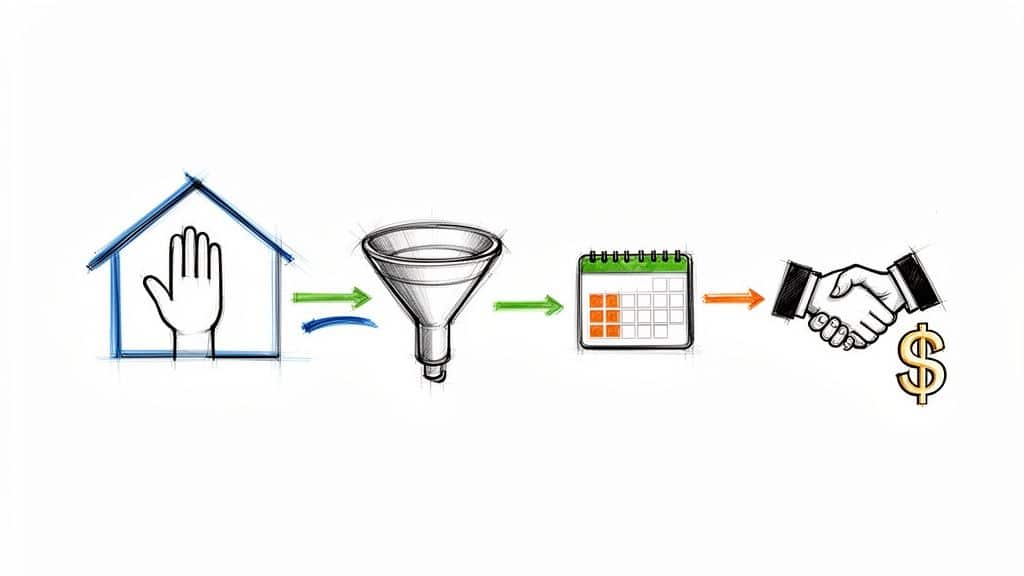
In the home service world, a sales lead is simply a homeowner raising their hand for help. It’s not just a name and number; it's that web form submission about a leaky faucet or the phone call about a broken AC unit on the hottest day of the year. This first contact is the starting pistol for every potential job.
What Exactly Is a Sales Lead?
Think of a sales lead as the first flicker of interest. It's an unconfirmed opportunity—a name, phone number, or email for someone who might need your plumbing, HVAC, or roofing expertise. But that initial "hello" is just step one.
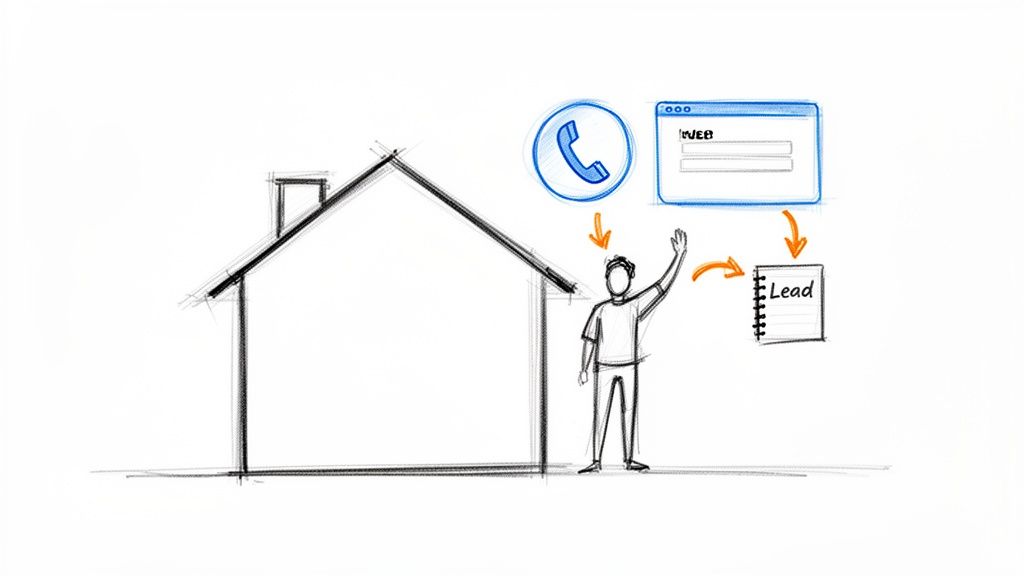
At its core, a sales lead is a person or household that seems like a good fit for your services and has the authority to hire you. Getting these leads is one thing; getting them to show up consistently is another, which is why a solid online presence is so important. If you want to dive deeper into that, check out this proven guide to local SEO for home services.
Here's the tough reality, though: a huge chunk of these initial inquiries go nowhere. A whopping 80% of new leads never convert to sales, which means only about one out of every five will actually become a paying customer.
This is exactly why having a steady flow of quality leads is the lifeblood of any successful service business. The goal isn't just to fill a spreadsheet with contact info. It’s to find the homeowners with a real problem you can solve right now.
What’s the Difference Between a Lead, a Prospect, and an Opportunity?
It’s easy to get tangled up in sales jargon, but getting this right is huge. Knowing the difference between a lead, a prospect, and an opportunity helps you focus your energy where it actually counts—on the contacts who are most likely to turn into paying customers.
Let's walk through a real-world scenario. Imagine you run an HVAC company and someone named John Smith fills out your website's contact form.
His information lands in your inbox: John Smith, j.smith@email.com, 555-123-4567. Right now, that’s all you have. This is a lead. It’s just raw, unvetted contact information. You have no idea if he actually owns the home, if he's serious about buying a new furnace, or if he was just clicking around online. He’s a question mark.
From Lead to Prospect
So, you give John a call. He picks up, and you start a real conversation. You quickly learn his furnace is on its last legs and he is, in fact, the homeowner looking for quotes.
Boom. John just graduated from a lead to a prospect. A prospect is a lead you’ve qualified. You’ve confirmed they have a genuine need and fit the profile of someone you can actually help. The question mark is gone; now you know there’s a real problem to solve.
A lead is just a name and number, but a prospect is a potential customer you've actually engaged with. This is a critical distinction. Research shows that only about 27% of B2B leads are ready to talk to sales right away. The rest need a lot more time and attention before they become real prospects. You can dig into more lead generation stats on Inbeat.agency.
From Prospect to Opportunity
The conversation continues. John tells you he has a budget of around $8,000, needs the new furnace installed before the first cold snap next month, and asks if you can come out to give him a formal estimate.
Now, John has become an opportunity. An opportunity is a prospect who has a clear, defined project with a potential sale on the horizon. You’ve identified the specific need (new furnace), the budget, and a timeline. It’s no longer a vague inquiry—it’s a tangible job you can actively work on closing.
Understanding this natural progression is the key to an effective sales process. It stops you from wasting time on dead-end leads and helps you zero in on the opportunities that will actually grow your business.
To make this even clearer, here’s a quick-glance table to help you instantly tell these stages apart.
Lead vs Prospect vs Opportunity At a Glance
| Stage | Definition | Home Service Example | Next Step |
|---|---|---|---|
| Lead | Raw, unvetted contact information. A person who has shown initial interest but hasn't been qualified. | Someone downloads your "10 Signs You Need a New Roof" guide. | Make initial contact to qualify their needs and intent. |
| Prospect | A qualified contact who fits your ideal customer profile and has a recognized need for your service. | You call the lead and confirm their roof is 25 years old and has active leaks. | Nurture the relationship, provide value, and understand their specific project requirements. |
| Opportunity | A prospect with a defined project, budget, and timeline. They are actively considering a purchase. | The prospect asks you to schedule an on-site inspection to provide a formal quote for a full roof replacement. | Present a detailed proposal, follow up, and close the sale. |
Thinking of your pipeline in these three distinct stages—Lead, Prospect, Opportunity—is the foundation for a repeatable, scalable sales system that turns simple inquiries into signed contracts.
MQL vs. SQL: Knowing When a Lead is Ready to Buy
Let's be honest, not every lead that comes your way is a guaranteed sale. Some folks are just kicking the tires, while others are ready to hand over their credit card. This is where understanding the difference between a Marketing Qualified Lead (MQL) and a Sales Qualified Lead (SQL) can seriously change your business.
Think of it like a temperature gauge. An MQL is a warm lead. They’ve shown some interest, maybe downloaded a guide from your website or followed you on social media. They’re curious, but they're not pulling out their wallet just yet.
An SQL, on the other hand, is a red-hot lead. They’ve gone beyond simple curiosity and have taken a clear step that says, "I'm ready to talk about a project." This is who your estimators or sales team need to call—right now.
What "Warm" vs. "Hot" Looks Like in Real Life
For a home service business, the difference is pretty clear once you know what to look for.
- MQL (Warm): Someone downloads your free "Winter Plumbing Prep Checklist" or signs up for your monthly newsletter. They're engaging with your brand and see you as an expert, but they haven't asked for a quote.
- SQL (Hot): A homeowner fills out your "Request an Estimate" form for a new water heater installation. Or they call your office asking about your availability for an emergency electrical repair. They have a specific, immediate need.
Nailing this distinction is the cornerstone of a smooth and efficient sales process. It’s no surprise that businesses who get lead nurturing right generate a staggering 451% more qualified leads. This ensures your sales team spends its time on conversations that actually lead to new jobs. You can dig into more lead generation statistics to see just how big of an impact this makes.
By creating this clear divide, you let your marketing efforts do what they do best: nurture the MQLs with helpful content and build trust over time. Meanwhile, your sales team can jump on the SQLs, giving them the fast, focused attention they need to close the deal. It’s the perfect handoff, making sure no promising lead ever gets lost in the shuffle.
How to Qualify Leads That Actually Convert
A constant stream of phone calls and web forms might feel like a win, but it means very little if none of those contacts turn into paying customers. When your team wastes time chasing people who were never going to buy, it costs you real money and leads to serious burnout.
The fix isn't complicated. You just need a simple, consistent process to separate the serious buyers from the tire-kickers. This process is called lead qualification, and it’s all about asking the right questions to see if a contact has a genuine problem you can solve.
For home service businesses, one of the most practical ways to do this is by adapting a classic sales framework called BANT.
The BANT Method for Home Services
The traditional BANT acronym stands for Budget, Authority, Need, and Timeline. It’s a solid foundation, but we can tweak it to be much more direct and useful for a plumber, electrician, or roofer.
-
Budget: You don’t need to ask for their credit score, but you can definitely get a feel for their financial readiness. A simple question like, "Are you thinking of a patch for now, or are you looking for a more permanent solution?" helps you understand if they're prepared for the potential cost.
-
Authority: This one is a big deal in the home services world. You have to ask, "Are you the homeowner or the person authorized to make decisions about this property?" There's no point in discussing a full roof replacement with a tenant who can't approve the work.
-
Need: How bad is the problem, really? A homeowner with water pouring through their ceiling has a much more urgent need than someone just starting to think about a kitchen remodel for sometime next year.
-
Timeline: When do they actually need the job done? A frantic "as soon as possible!" is the hallmark of a red-hot lead. "Maybe sometime in the fall" tells you this person needs to be nurtured, not scheduled for an immediate estimate.
This initial sorting process helps you filter new contacts right from the first interaction. Think of it like a simple decision tree.
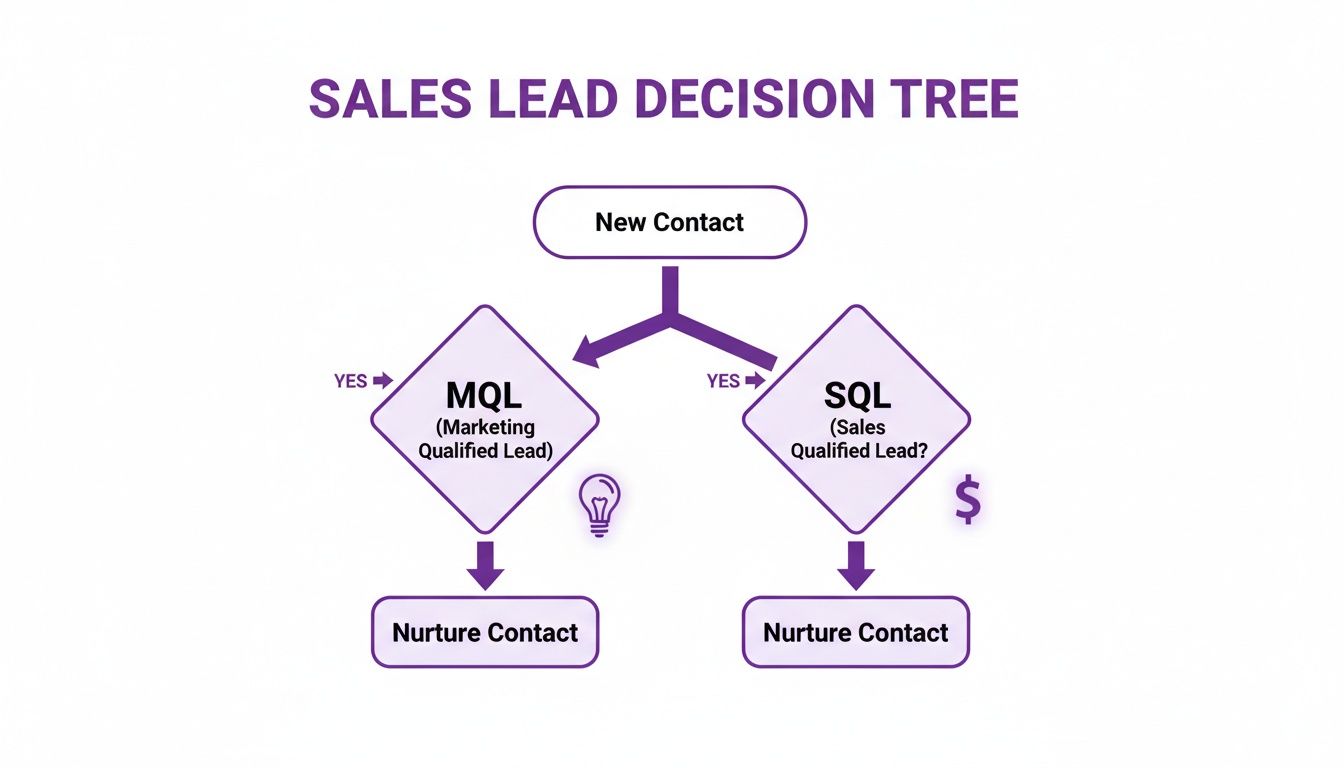
This quick evaluation helps you immediately start to define a sales lead, separating the merely curious from the truly committed.
By weaving these BANT-style questions into your initial conversations, you can build a quick profile of every person who calls in. This lets you prioritize your time and energy, focusing your team on the leads that are most likely to become booked jobs on the calendar.
If you want to go deeper on this, check out our guide on how to qualify sales leads and close more deals for more advanced frameworks and scoring models.
The Hidden Cost of a Slow Lead Response
In the home service world, speed isn't just a bonus—it's everything.
Picture this: a homeowner's AC gives out on a 90-degree day. They aren't going to sit around and wait. They’re jumping on Google, calling the first few HVAC companies they see, and the first business to answer the phone and book a visit almost always gets the job.
Every minute you delay, that hot, urgent sales lead gets colder. This isn't just a missed opportunity; it's a direct hit to your bottom line. You spend good money on marketing to get the phone to ring, but if no one is there to pick it up immediately, that investment goes right down the drain.
The Financial Drain of Delay
This problem is much bigger than just one missed call. A slow or disorganized process for handling new leads is a massive, silent leak in your potential revenue.
A slow or undefined lead generation process can dramatically slow deals for 79% of sales teams. Worse yet, 55% of sales leaders in the US directly attribute lost revenue to weak lead management systems. You can dig into more of this data on Salesforce.com.
Think about it in practical terms. A homeowner with a burst pipe isn't going to leave a voicemail and patiently hope for a callback. They're hanging up and dialing the next plumber on their list. The first pro to offer a solution and a timeline wins the business, period.
Having a dedicated system for rapid response isn't a luxury; it's a core requirement for survival and growth. It ensures every dollar you spend on marketing has the best possible chance to turn into a profitable, booked job, stopping your best leads from becoming your competitor’s newest customers.
Turning Your Qualified Leads into Booked Jobs
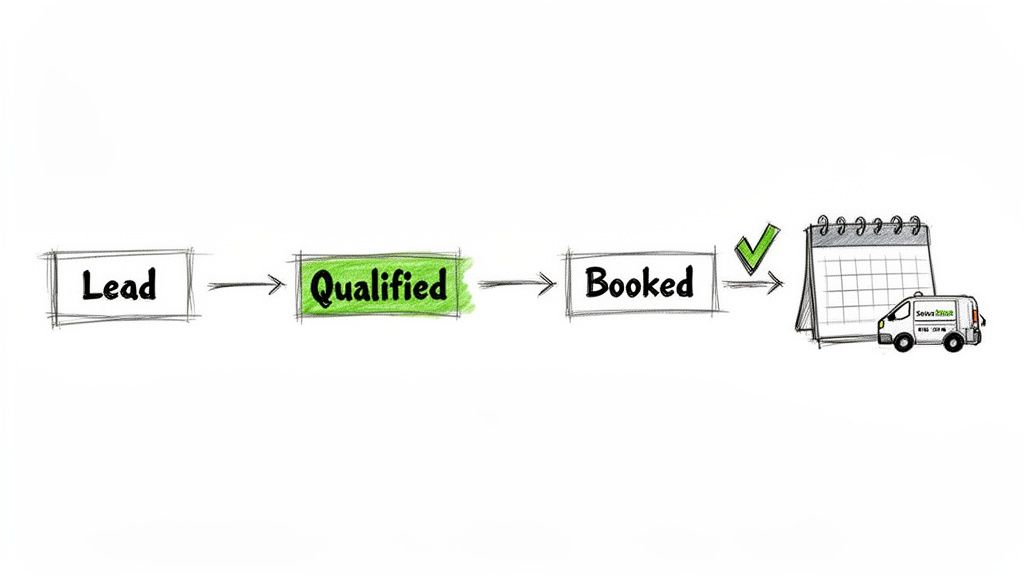
So you’ve identified a qualified lead. Great. But that’s only half the battle. Getting that initial spark of interest to turn into a paying job on your schedule is where the real work—and revenue—begins.
You need a solid, repeatable process to bridge that gap. Without one, even the most promising leads can fizzle out simply because nobody followed up consistently. This is where having a dedicated outreach "engine" makes all the difference, whether it's your in-house team or a remote crew. The goal is to build a follow-up machine that catches every qualified lead and actively pushes them toward a booked appointment.
The Power of Persistent Follow-Up
Let's be honest, not every lead is ready to book on the first call. Lukewarm inquiries often need a bit of professional, persistent nurturing to get them across the finish line.
Did you know it takes an average of eight follow-up calls just to reach a prospect? In the home service industry, where trust is everything and homeowners take their time, that consistent contact is non-negotiable. It's how you ensure a valuable opportunity doesn't slip through the cracks. You can find more lead follow-up strategies on Salesforce.com.
This is precisely why having trained CSRs handle this critical task can be the difference between a forgotten inquiry and a loyal, paying customer for years to come.
Your Top Questions About Sales Leads, Answered
How Quickly Should I Respond to a New Lead?
Think fast. No, faster. Ideally, you want to be on the phone with a new lead within five minutes.
In the home service world, speed is everything. When a homeowner has a burst pipe or a dead AC unit in the middle of summer, they aren't waiting around. The first contractor to call them back is almost always the one who gets the job. A lightning-fast response is your single biggest advantage in turning a fresh lead into a booked appointment.
What’s the Easiest Way to Qualify a Sales Lead?
Keep it simple. You don't need a complex system, just a few smart questions. A great starting point is a stripped-down version of the classic BANT method. When you get someone on the phone, find out:
- Budget: Do they have a realistic budget in mind for this project?
- Authority: Are you speaking with the actual homeowner who can make the final call?
- Need: How urgent is their problem? Is this a "nice-to-have" or a "need-it-done-yesterday" situation?
- Timeline: When are they looking to get the work started and finished?
This quick framework helps you instantly gauge a lead's quality and figure out who needs your attention right now.
Are All Leads Worth Chasing?
Absolutely not. Chasing every single inquiry, no matter how vague, is a recipe for burnout and wasted resources.
Your team's prime time should be spent on Sales Qualified Leads (SQLs)—the folks who are raising their hands and taking action, like filling out your "Request an Estimate" form. For the Marketing Qualified Leads (MQLs) who are just kicking the tires (maybe they downloaded a guide), keep them warm with helpful emails. Nurture them until they're ready to make a move.
Stop letting valuable leads and potential jobs slip through the cracks. Phone Staffer can hire, train, and place dedicated remote CSRs and VAs in your business to make sure every call gets answered and every lead gets the follow-up they deserve. Book a free consultation to see how it works.