

That first phone call isn't just an interruption in your day; it’s your single best chance to win a new customer. How you answer—or if you answer—can be the deciding factor for someone choosing between you and the next company on their list.
Think about it: when a potential customer calls, they're actively looking to hire someone. This is your moment to make an immediate, positive impression that sets you apart from the competition who let calls roll to voicemail.
The stakes are surprisingly high. Only about 38% of small businesses actually answer their inbound calls effectively. That means a huge number of potential jobs are simply falling through the cracks, creating a massive opportunity for any business that gets this right.
Turn Your First Hello into a Booked Job
A consistently great phone greeting builds trust from the very first word. This isn't about sounding like a robot reading from a script. It’s about creating a welcoming, professional, and efficient experience for every single caller. A powerful opening line really just needs to nail three key things.
This quick reference table breaks down the essential elements of a powerful opening line.
Core Components of a Professional Greeting
| Component | Why It Matters | Example |
|---|---|---|
| Warm Greeting | Sets a positive, friendly tone right away. | "Good morning!" or "Thanks for calling!" |
| Company & Name ID | Confirms the caller reached the right place and who they're talking to. | "…you've reached Apex Plumbing, this is Sarah speaking." |
| Offer to Help | Immediately shows you're ready to solve their problem. | "How can I help you today?" |
Putting it all together, you create a seamless and reassuring experience for the caller, just like this:
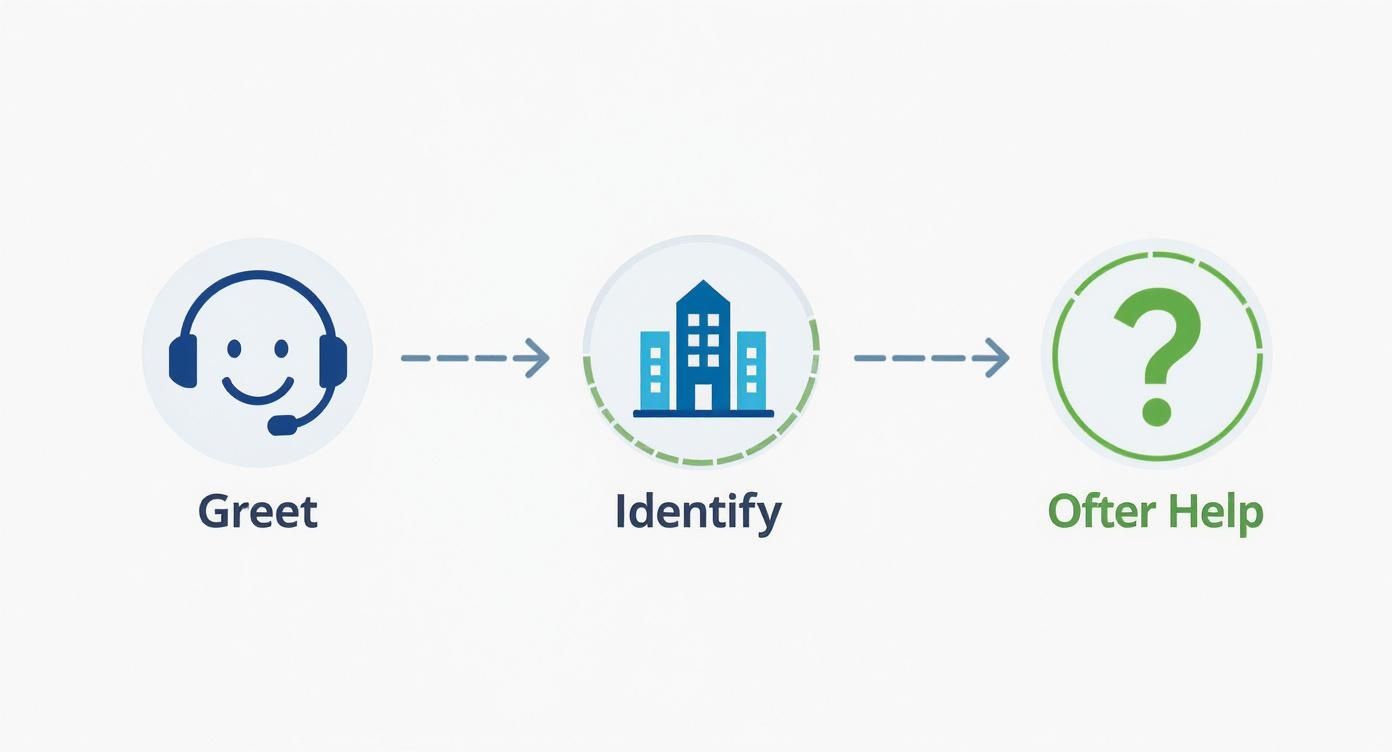
This simple, repeatable process does more than just answer a question—it establishes instant credibility and a helpful attitude. Every incoming call is more than just an inquiry; these contacts are the lifeblood of your company, as our guide on https://phonestaffer.com/blog/what-is-business-leads explains.
Ultimately, a customer-focused mindset is what turns these initial calls into booked jobs. It’s about more than just being polite; you can find great insights on how to truly love your customers from some unexpected places. When you nail the first "hello," you're not just answering the phone—you're starting a relationship.
Phone Scripts That Sound Human, Not Robotic
A warm greeting gets the call started on the right foot, but the real test is navigating the rest of the conversation. Nobody wants to talk to a robot. Scripts can be a huge asset, but they're a disaster if your team just reads them word-for-word.
The key is to think of them less as scripts and more as flexible frameworks for common situations. This approach gives your team the essential talking points they need while letting them adapt to each caller's unique personality. It’s the difference between reciting a monologue and having a real conversation.
Core Elements of a Flexible Script
Instead of a rigid, word-for-word document, a great script framework focuses on goals for the call. This structure keeps the dialogue natural while ensuring your team gathers and provides all the critical information.
Here’s what to include:
- Acknowledge and Empathize: Kick things off by showing you're listening. A simple phrase like, "I understand you're looking for a quote for a new water heater," immediately builds a connection.
- Ask Guiding Questions: Don't make the customer do all the work. Have a list of smart questions ready to get the details you need. An HVAC company might ask, "Is this for a routine maintenance check, or are you dealing with an emergency repair?"
- Provide Clear, Simple Information: Drop the industry jargon. When you’re talking about pricing or services, use straightforward language that any homeowner can easily understand.
- Set Clear Next Steps: Always end the call by telling the customer exactly what will happen next. Something like, "Okay, I've got your consultation scheduled for Tuesday at 10 AM. You'll get a confirmation email from us in just a few minutes," leaves no room for confusion.
This framework approach prevents calls from feeling stiff and impersonal. If you're looking to dig deeper into building these out, there are some great resources on how to create a better customer support script that help guide your team without making them sound like robots.
Phone Script Scenarios for Home Services
Let's look at how this framework plays out in a few real-world situations every home service business encounters. Notice how the professional response is structured yet conversational, focusing on solving the customer's problem with a helpful, human touch.
| Scenario | Ineffective Response | Professional Response |
|---|---|---|
| Pricing Question | "A new roof costs ten thousand dollars." | "I can definitely help with that. Our roofing projects typically range from $8,000 to $15,000, depending on the materials and roof size. The best way to get you an exact price is with a free, no-obligation inspection. Would you be available for one this week?" |
| Scheduling | "We're booked out. Call back later." | "It looks like our schedule is full for this week, but I do have an opening next Monday afternoon. Does that work for you? I can also add you to our waitlist in case we get a cancellation." |
The difference is night and day. The professional responses are built around the same core information but deliver it in a way that is helpful, reassuring, and keeps the conversation moving forward. This is how you turn a simple phone call into a booked job.
Navigating Tough Customer Calls with Confidence
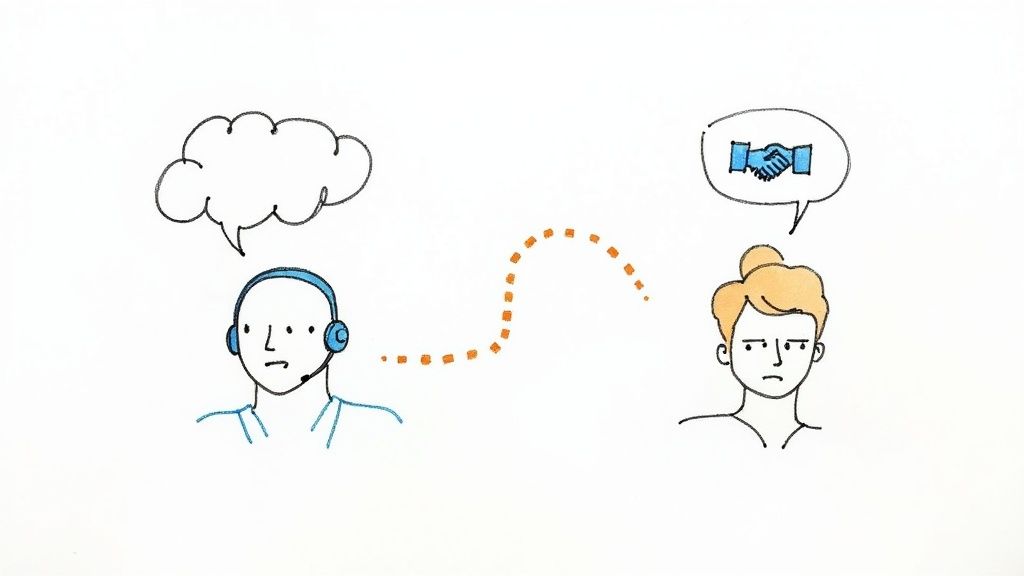
Not every call is going to be a straightforward booking. Sooner or later, you’ll get that call—the one from a frustrated customer with a serious complaint or someone who’s downright angry about your pricing. How you handle these moments is what separates the pros from the amateurs. It’s a true test of your company’s character and can turn a major headache into a huge win for your reputation.
The absolute worst thing you can do is get defensive or flustered. That just pours gasoline on the fire. The real key is to take a breath, stay calm, and prepare to listen. I mean really listen.
A Framework for De-escalation
When a caller is heated, your primary goal isn't to fix the problem right away. It's to bring the temperature down. Start by letting them get it all out without cutting them off.
Once they've had their say, the next step is crucial: validate their feelings. You need to show them you're on their side. Try a few phrases that have always worked for me:
- "I can absolutely understand why you're frustrated by that."
- "That sounds like a really difficult situation. I'm sorry you're having to deal with it."
- "Honestly, if I were in your shoes, I’d be upset, too."
This simple act of empathy makes them feel heard and understood. Once that connection is made, you can start steering the conversation toward a solution. This is the kind of human touch that automated systems just can't replicate. It's no wonder that 85% of consumers will hang up on an automated menu, according to business phone statistics on Phonely.ai.
The goal is not to win the argument; it’s to win back the customer. A difficult call is an opportunity to demonstrate your commitment to exceptional service and turn a one-star experience into a five-star resolution.
After you've acknowledged their frustration, calmly start gathering the facts. Ask good, clarifying questions to make sure you understand the whole picture.
Then, take ownership. Propose a clear, actionable plan to make things right. Whether that’s scheduling a free follow-up visit, offering a partial refund, or getting a manager involved, a concrete next step shows you’re serious about fixing the problem. This structured approach keeps you in control and reassures the customer they made the right choice calling you.
Mastering the Small Details of Phone Etiquette
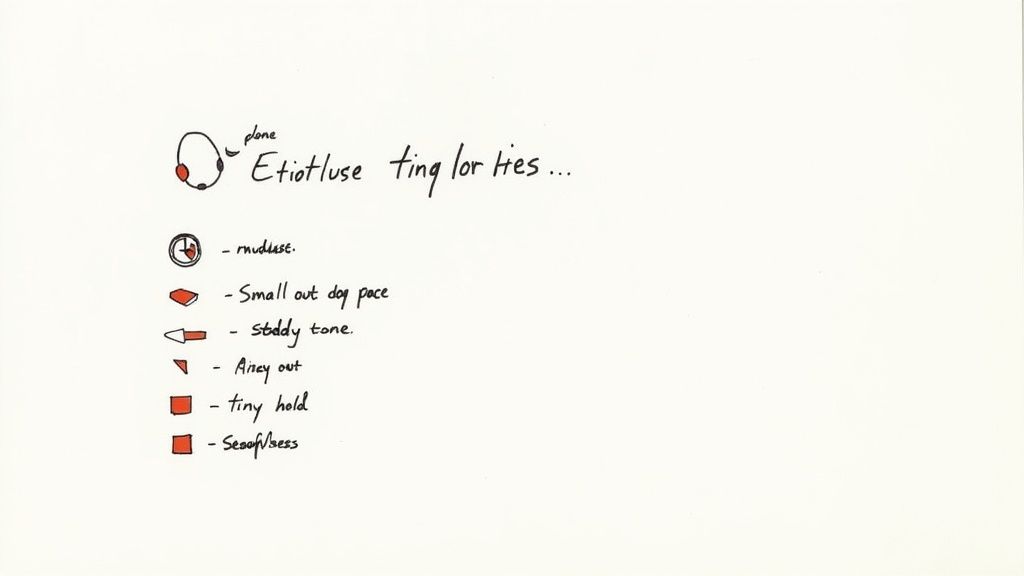
How you answer the phone is about much more than just the words you say. It’s the whole experience you create. The little, unspoken rules of phone etiquette are often what separate a caller who feels rushed from a customer who feels truly valued.
Think about your tone and pace. A warm, calm voice can immediately put a nervous customer at ease. Here’s a little trick I’ve used for years: physically smile right before you pick up the phone. It sounds silly, but it genuinely changes the tone of your voice, making you sound friendlier and more approachable from the very first word.
On top of that, make sure you're speaking clearly and at a moderate pace. Rushing through your words can make a customer feel like you're trying to get them off the phone, and it's especially critical when you're discussing complex project details or quoting a price.
Create a Professional Sounding Board
What’s happening in the background of your call matters just as much as what you're saying. A barking dog, a blaring TV, or your own side conversations immediately scream "unprofessional." It’s distracting for you and tells the customer they aren't your top priority.
Always try to find a quiet space before taking a call. If you're working from a lively home or a busy shop, a good noise-canceling headset is one of the best investments you can make. It pays for itself by making every single call sound more professional.
Professionalism isn't one big thing; it's a hundred little things. Cutting out distractions shows the caller they have your undivided attention and that you take their business seriously.
And please, drop the industry jargon. Using technical terms that a homeowner has never heard of can make them feel alienated or even foolish. Stick to simple, straightforward language when explaining what needs to be done.
Handling Holds and Transfers the Right Way
Putting someone on hold or transferring them is a delicate moment in any call. If you handle it poorly, you risk frustrating the customer. The key is to always ask for permission first.
- Ask Politely: "Do you mind holding for just a moment while I pull up your project details?"
- Explain the Why: "Bob, our lead technician, is the best person to answer that question. Is it alright if I transfer you over to him?"
- Check Back In: If a hold drags on for more than 60 seconds, jump back on the line. A quick "Still working on this for you, I appreciate your patience!" goes a long way.
These small courtesies show you respect the caller's time and are committed to giving them a great experience from start to finish.
How to End the Call and Secure the Job
The final moments of a call are just as important as the first "hello." A strong, professional closing is what turns a good conversation into a scheduled job. It's the difference between a solid lead and a missed opportunity.
Never, ever end a call with a vague, "Okay, talk to you later." You've got to take charge. A simple way to do this is by summarizing the key points of your discussion. This quick recap ensures you and the customer are on the same page and eliminates any last-minute confusion.
Confirming Next Steps Clearly
Before you hang up, you need to spell out exactly what happens next and when. This is a masterclass in how to answer the phone professionally because it gives the customer clarity and builds their confidence in your business.
Give them a clear, simple action plan.
- For an appointment: "Alright, Mrs. Jones, we have you booked for your plumbing inspection this Friday at 10 AM. You’ll get a text reminder from us the day before."
- For a quote: "I have all the details I need. I'm going to work this up and will email you a detailed quote by the end of the day. How does that sound?"
A decisive closing makes the customer feel like they’re in capable hands. It reinforces that your company is organized, reliable, and ready to solve their problem.
This approach dramatically improves your First Call Resolution (FCR), which is a huge metric for customer satisfaction. Globally, FCR rates hover around 70-75%, but many calls fail simply because the person answering the phone doesn't have the right information to finalize the details. You can dive deeper into this with recent call center statistics from LiveAgent.com.
By summarizing and confirming, you make sure every call ends on a productive note. This principle of clear communication is just as vital in other industries, which we touch on in our guide on lead generation for car sales.
Finally, always end the conversation with a polite thank you. It solidifies that great final impression and keeps them coming back.
Got Questions About Phone Etiquette? We've Got Answers.
Even the best scripts can't prepare you for every single call. The real world is messy, and questions always pop up. Mastering the art of the phone call is a skill you sharpen over time, not something you learn overnight.
Let’s tackle some of the most common situations home service pros run into.
What to Say When You Don't Know the Answer
It happens to everyone. A customer throws you a curveball with a question you just don't have the answer to. What's the best way to handle it?
First, don't panic and definitely don't guess. Making something up on the spot is a fast way to kill customer trust if you turn out to be wrong. Honesty is your best friend here. Show them you're on their side and committed to getting the right information.
Try this on for size:
"That's a great question, and I want to be sure I give you the correct details. Let me put you on a brief hold while I check with one of our senior technicians. Would that be okay?"
Or, if it might take a few minutes:
"You know, that's a question for our lead plumber, and I want to get you the most accurate answer. Let me track him down and call you right back. What's the best number to reach you at in the next 10-15 minutes?"
Both approaches show you're taking their question seriously. You're not just passing the buck; you're taking ownership and setting a clear expectation for when they'll get an answer. That’s how you build credibility.
Leaving a Voicemail That Actually Gets a Call Back
How many times have you played phone tag with a customer? It's frustrating for everyone. The key to a good voicemail is to keep it short, clear, and to the point. A long, rambling message is a surefire way to get deleted.
Here's a simple, effective formula:
- Who You Are: State your name and your company right away.
- Why You're Calling: Get straight to it. "I'm calling to confirm your HVAC maintenance appointment for tomorrow at 9 AM."
- Your Number: Say your phone number slowly and clearly.
- Repeat Your Number: Say it again. Seriously, people are often scrambling for a pen.
- Sign Off: Keep it simple. "Thanks, have a great day!" is all you need.
Should I Be More Casual with Repeat Customers?
This is a great question. You've built a relationship with a long-time client, so is it okay to relax the tone a bit?
Absolutely, but with one important rule: always start the call professionally. Once you've confirmed who you're speaking with and they recognize you, you can naturally ease into a more familiar, friendly conversation. It’s all about reading the room.
The goal is to be personable, not unprofessional. The conversation should still be respectful and focused on their needs. This lets you strengthen that personal connection that keeps customers loyal while still representing your company's high standards.
Are missed calls costing you business? The team at Phone Staffer can hire, train, and place expert remote CSRs in your business to ensure every call is answered professionally. Learn more about our services.