
If you're looking to get more HVAC leads, it's not about finding one magic bullet. It's about building a reliable system that brings in work from multiple directions. The best in the business combine smart digital marketing, like local SEO and targeted ads, with old-school methods that still work wonders, like referrals and getting known in the community. This mix creates a powerful lead generation engine, so you’re never scrambling for jobs or at the mercy of a single source.
Building Your Foundation for Consistent Leads
Before you even think about putting money into advertising, you’ve got to get your foundation right. A solid base is what turns a curious homeowner into a paying customer. In my experience, relying on just one lead channel—whether it’s pay-per-click ads or just word-of-mouth—is a surefire way to create a rollercoaster of feast and famine. A diversified strategy is what builds a resilient business that keeps the calls coming, rain or shine.
This means you need to blend modern digital tactics with the traditional methods that have always built trust. Think about it: a customer’s journey today is rarely linear. It might start with a frantic "AC repair near me" search on Google, shift to asking for recommendations on a local Facebook group, and then end with a call to the company that showed up in both places. Your job is to be visible at every one of those steps.
What’s Really Driving Growth? The Market at a Glance
The opportunity out there is massive, but so is the competition. Projections show the U.S. HVAC services market is set to climb from USD 19.85 billion in 2024 to USD 27.31 billion by 2029. That growth is fueled by homeowners wanting more energy-efficient systems and the simple fact that nearly 90% of U.S. homes have air conditioning.
This boom means there’s plenty of work to go around, but it also makes smart lead generation non-negotiable.
Core Pillars of HVAC Lead Generation
A strong lead generation system is built on a few key pillars. If you neglect one, the whole structure can get wobbly when the market shifts or a competitor gets aggressive. For steady, long-term growth, you need to focus on building out your sustainable organic lead generation strategies that attract customers naturally.
Here are the pillars you absolutely must build:
- Own Your Backyard on Google: When an AC unit dies on a hot day, the first thing people do is grab their phone. You have to be there when they search.
- Create a Referral Machine: Happy customers and strategic partners can become your best, most consistent source of high-quality, exclusive leads.
- Use Paid Ads Strategically: Paid advertising isn’t a crutch; it’s a tool. Use it to fill gaps in your schedule and snag those "ready to buy now" customers.
- Get Known Locally (Offline): Being a trusted, familiar face in your community gives you an edge that no purely online company can replicate.
Core HVAC Lead Generation Channels at a Glance
To help you visualize where to focus your efforts, here’s a quick breakdown of the main channels. Each has its own strengths and is best suited for different goals.
| Channel | Average Cost Per Lead | Typical Lead Intent | Best For |
|---|---|---|---|
| Local SEO | Low (Sweat Equity) | High | Building long-term, organic growth and local authority. |
| Paid Ads (PPC) | $25 – $150+ | Very High | Getting immediate leads for emergency repairs or seasonal promotions. |
| Referrals | Free – Low Cost | High | Generating high-trust, high-conversion jobs from happy customers. |
| Partnerships | Low (Time/Effort) | Varies | Tapping into other local businesses’ customer bases (realtors, plumbers). |
| Cold Calling | $10 – $50 | Low | Proactive outreach for commercial contracts or B2B services. |
This table shows there’s no single "best" channel. A healthy business uses a combination to create a balanced and predictable pipeline.
Key Takeaway: A diversified lead strategy isn't just about getting more calls; it's about building a predictable, resilient business. Each channel feeds the others, creating a system where you’re always the first company people think of when they need help.
Of course, getting the lead is just the beginning. Without a rock-solid process for managing sales leads, you’re just pouring water into a leaky bucket. This is where so many contractors drop the ball, letting good, hard-won opportunities slip away.
Winning High-Intent Customers with Local SEO
Let’s be honest. When a homeowner’s AC gives out in the middle of a July heatwave, they aren’t casually browsing. They’re grabbing their phone and searching for the first available, trustworthy pro to fix it. Right now.
This is exactly where Local SEO becomes your biggest money-maker. It’s all about showing up at the top of the list when someone in your service area has an urgent problem. Get this right, and your phone will ring with high-intent customers who are ready to book.
Master Your Google Business Profile
Think of your Google Business Profile (GBP) as your digital storefront. It’s often the very first thing a potential customer sees. If it’s incomplete or looks neglected, they’ll assume your work is, too. But a well-managed profile builds instant trust.
To turn your GBP into a true lead-generating machine, you need to get these details right:
- Geo-tagged Photos: Stop using generic stock photos. Snap pictures of your team at actual job sites, your branded vans parked in the neighborhoods you serve, and recent installations. When you geo-tag these photos, you’re sending powerful signals to Google about exactly where you do business.
- A Steady Stream of Reviews: Reviews are everything. They are the social proof that tells a nervous homeowner, "These guys are legit." Make it a habit to ask every single happy customer for a review. A constant flow of positive, recent feedback is one of the strongest ranking factors.
- Accurate Service Information: Be specific. Don't just list "HVAC." List everything: "emergency AC repair," "furnace installation," "ductless mini-split maintenance," and so on. Make sure your service area is defined down to the specific towns and zip codes you cover.
My favorite pro tip: When you reply to reviews (and you should reply to all of them), work in the service and location. Something like, "Thanks, Mark! We were happy to get that new furnace installed for you in Scottsdale. Stay warm this winter!" It's a subtle but effective way to reinforce your keywords.
Build Hyper-Targeted Location Pages
A single "Services" page on your website just won't cut it anymore. If you want to really dominate your market, you need to create dedicated pages for each core service in each city or town you cover.
Think about it from the customer’s perspective. They’re not searching for "HVAC company." They’re searching for "AC repair in Phoenix" or "furnace tune-up near me." A dedicated landing page for that exact search query tells Google you are the most relevant result, hands down.
These pages should be more than just a few sentences. Talk about common issues for that area, outline your process, and have a crystal-clear call to action. It’s not just great for SEO; it shows customers you truly understand their local needs. For a deeper dive, check out these essential HVAC SEO tips that can help you climb the local search rankings.
Understanding LSAs vs. Google Ads
While organic SEO is the foundation for long-term growth, sometimes you need the phone to ring today. That's where paid ads come in. But it's crucial to know the difference between the two main players on Google.
Not all ads are created equal, and knowing where to put your money can make a huge difference.
| Feature | Google Local Services Ads (LSAs) | Traditional Google Ads (PPC) |
|---|---|---|
| Payment Model | Pay-per-lead (you only pay for valid calls or messages) | Pay-per-click (you pay whether they book or not) |
| Key Benefit | The "Google Guaranteed" badge builds instant trust | Total control over ad copy, keywords, and targeting |
| Ideal Use Case | Best for generating immediate calls for core emergency services | Perfect for promoting special offers or targeting niche jobs |
LSAs are a game-changer. They put you right at the very top of the search results, complete with a green "Google Guaranteed" checkmark. For a homeowner in a panic, that badge of trust is often the deciding factor. The best part? You only pay for a legitimate lead, making it a much lower-risk way to get started with paid advertising.
Traditional Google Ads give you more granular control, but they also require more hands-on management to ensure you’re not just wasting money on clicks that don't convert. A smart strategy often involves using both.
5. Get Smart with Paid HVAC Lead Services
Let's be honest, jumping into paid advertising can feel like you're just lighting money on fire, especially when you see the cost for a single click. But when you approach it strategically, paid channels are one of the fastest ways to get high-intent HVAC leads and fill up your schedule, especially during slower periods. The trick is to see it as a targeted investment, not just a shot in the dark.
You have to be where your customers are searching, and in 2025, that means online. Over 55% of consumers looking for HVAC services start their journey with a Google search. This is a massive opportunity, but it also means the competition is fierce. The average cost for an HVAC lead from Google Ads can run anywhere from $90 to $200, and don't be surprised to see that number climb past $400 during a summer heatwave or a winter cold snap. You can find more data on these advertising costs and see why a solid online strategy is no longer optional.
This image really breaks down the numbers for a typical paid lead campaign, showing what you can expect in terms of cost and conversion.
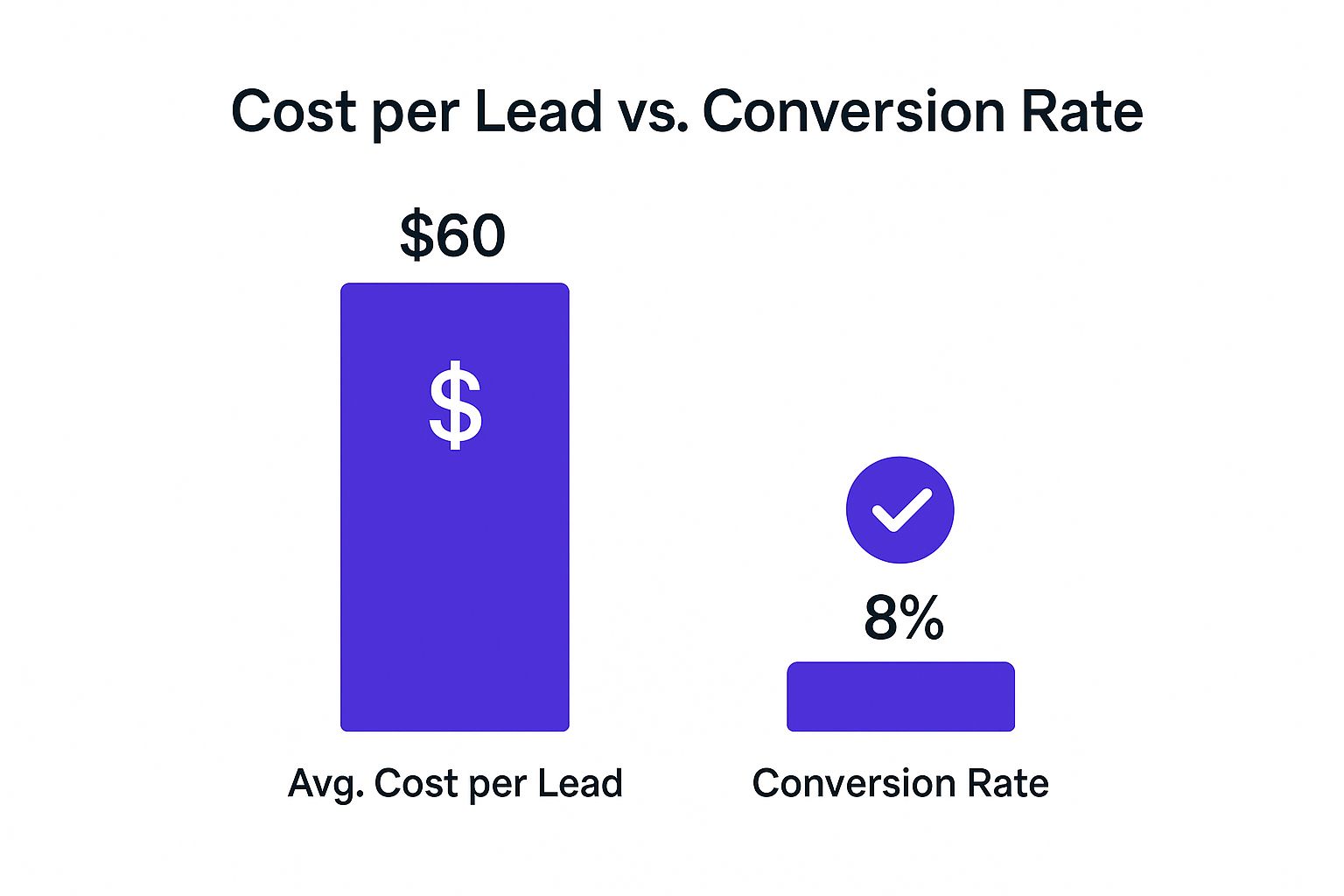
As you can see, the cost per lead is significant, but a well-managed campaign can definitely deliver a healthy conversion rate and a strong ROI.
Playing the Third-Party Lead Aggregator Game
Many contractors start their paid lead journey with platforms like Angi or HomeAdvisor. They dangle the promise of a constant flow of job requests, but there’s a big catch you need to be ready for: shared leads. When a lead lands in your inbox from one of these services, you’re in a dead sprint against four or five other local contractors who just got the exact same information.
Winning these jobs isn't about having the lowest price. It’s about being the fastest and the most prepared.
The second a shared lead hits your system, the race is on. The first contractor to get on the phone and build a connection has an enormous advantage. If you wait even 30 minutes, you're likely to hear, "Thanks, but I already hired someone."
To make these aggregators work, your follow-up process has to be dialed in. This means someone on your team needs to call that lead within five minutes, armed with a clear, confident script, and be ready to book an appointment right then and there.
Comparing Paid HVAC Lead Platforms
Choosing where to spend your marketing dollars can be tough. Each platform has its own set of rules and a different type of customer. Here’s a quick breakdown to help you decide where your business fits best.
| Platform | Pros | Cons | Best Suited For |
|---|---|---|---|
| Google Ads | High-intent, exclusive leads. Full control over campaigns. | High cost per lead. Requires expertise to manage. | Companies with a dedicated marketing budget and the resources to actively manage campaigns for maximum ROI. |
| Angi / HomeAdvisor | Steady stream of leads. Simple to get started. | Shared leads create intense competition. Lead quality can be inconsistent. | New businesses or those looking to fill schedule gaps quickly, who have a rock-solid, fast-response sales process. |
| Facebook Ads | Lower cost per lead. Great for brand awareness and top-of-funnel. | Leads are often less "ready to buy." Requires creative ad design. | Contractors focused on building a long-term brand, offering maintenance plans, or running seasonal promotions. |
| Nextdoor | Hyper-local targeting. Builds community trust and reputation. | Lower lead volume. Ads can be seen as intrusive if not done well. | Businesses aiming to dominate specific neighborhoods and build a strong local reputation through word-of-mouth. |
Ultimately, the best platform depends on your immediate goals. For high-quality, exclusive leads, nothing beats a well-run Google Ads campaign. But if you need to generate volume quickly and have a team that can out-hustle the competition, aggregators can still be a valuable tool.
Make Your Ad Budget Work Harder, Not Just Spend More
Whether you’re buying leads from an aggregator or running your own PPC campaigns, you can't afford to burn cash on irrelevant clicks. The single most effective tactic to protect your ad spend is to build a robust negative keyword list.
Think of all the search terms you absolutely don't want to show up for. Your list should be packed with phrases from people who aren't looking to hire you right now, such as:
- DIY Searches: "how to fix," "troubleshooting," "DIY AC repair"
- Informational Queries: "what is a seer rating," "furnace manuals," "air filter sizes"
- Job Hunters: "hiring," "jobs," "hvac careers"
- Bargain Seekers: "free estimate," "cheap AC service," "used furnace"
For instance, you don't want to pay for your "New Trane Furnace Installation" ad to show up when someone searches for a "Trane furnace parts manual." By adding "parts" and "manual" to your negative keyword list, you instantly filter out that unqualified traffic. This ensures your budget is spent only on homeowners who are actually looking to hire a pro, which directly boosts your ROI and helps you land more profitable HVAC jobs.
Building a Powerful Referral Engine
While everyone's chasing the next big thing in digital marketing, some of the most profitable HVAC leads are probably already in your phone. They come from your existing customers. Think about it—a happy client telling their neighbor about the fantastic job you did is way more convincing than any ad you could run.
But here’s the thing: just hoping for word-of-mouth is like playing the lottery. It's not a strategy. To get a steady flow of high-quality leads, you need to build an actual system that encourages and rewards people for sending business your way. This is how you turn a satisfied customer into your best salesperson.
Systematize Your Customer Referrals
Putting a formal referral program in place removes all the guesswork. It doesn't have to be complicated, either. The main goal is to make it dead simple to understand and valuable enough that people actually bother to do it.
First, figure out a clear reward. It could be a $50 gift card, a discount on their next maintenance visit, or even straight-up cash for every new customer they refer who books a job. Honestly, the specific reward isn't as important as making the offer crystal clear.
Once you’ve got that ironed out, create some simple tools to get the word out:
- Leave-Behind Flyers: Have your techs leave a professional-looking flyer after every single job. It should spell out the referral program and include a QR code or a simple link they can use to sign up.
- Email Signatures: This one is easy. Just add a quick line to every employee's email signature, like, "Love our service? Ask how you can get $50 for referring a friend!"
- Follow-Up Emails: Slot a section about your referral program right into the automated "thank you" or invoice email you send after a service call. Make it impossible to miss.
A proactive referral system does more than just bring in leads; it reinforces the value you provide. When you ask for a referral, you’re subtly communicating that you’re confident in your work and expect your customers to be thrilled with the outcome.
Forge Strategic Local Partnerships
Looking beyond your immediate customer base, there's an untapped goldmine of leads waiting for you with other local pros who serve the same homeowners you want to reach. These are non-competing businesses that have already earned the trust of your ideal clients.
Just think about who homeowners talk to right before or after they might need HVAC work. Building solid relationships with these folks can create a powerful referral network that feeds exclusive leads straight to your phone.
Who to Partner With and How to Approach Them
Your best partners are people who can naturally recommend your services without it feeling forced. Your mission is to become their one and only call for anything HVAC-related.
Start by thinking about these key players:
- Real Estate Agents: They're in the trenches every day, helping people buy and sell homes. This process almost always involves pre-sale HVAC inspections or post-purchase replacements.
- Property Managers: These pros manage multiple rental units and are constantly on the lookout for reliable contractors for routine maintenance and emergency calls. A solid relationship here can mean dozens of jobs a year.
- Plumbers & Electricians: They're often the first ones to spot a furnace on its last legs or an issue with an AC unit's wiring while they're on a totally unrelated call.
- Roofers & Remodelers: Major home renovations often require HVAC systems to be moved, upgraded, or completely replaced.
When you reach out, don't just ask for leads. That’s what everyone else does. Instead, lead with value. For example, you could say to a realtor, "I know you're swamped with inspections. If you ever need a quick, honest HVAC assessment for a client to keep a sale moving, I’d be happy to provide one at no charge."
This simple offer immediately positions you as a helpful resource, not just another contractor with their hand out.
Using Offline Marketing to Build Local Trust
In a world where everyone is glued to a screen, becoming a familiar, trusted face in your actual community is a massive advantage. While your competitors are busy duking it out online, you can build a level of trust that no algorithm can ever match. These so-called "old-school" tactics still pack a serious punch because they weave your business into the very fabric of the neighborhoods you want to serve.
This isn’t just about slapping your logo on a few flyers. It’s about creating real, tangible connections. When a homeowner sees your company sponsoring the local little league team or spots your branded tent at the annual town festival, you stop being just another business. You become a neighbor. This kind of consistent, physical presence builds brand recognition that pays dividends for years, making you the first company they think of when their AC gives out.
Modern Twists on Classic Tactics
Even the most traditional marketing methods can get a modern upgrade. Take something like door knocking. Instead of sending your techs door-to-door cold, you can use hyper-targeted social media ads. The moment you finish a job, you could run a small, inexpensive ad campaign that only targets that specific neighborhood, maybe showcasing a quick testimonial or a picture of your clean work van. It’s the digital version of being seen on the street.
Another powerful, and often overlooked, strategy is direct mail. To really reach potential customers who aren't constantly online, you might consider investing in professional direct mail marketing services. Sending a high-quality, targeted postcard to homes in an area you just serviced can be surprisingly effective at getting the phone to ring.
Key Insight: Offline marketing isn't about choosing between traditional and digital. It's about making them work together. Sponsoring a local event and then amplifying it with a few social media posts creates a powerful one-two punch for your brand.
Turn Your Fleet into Mobile Billboards
Every single one of your work vehicles is a powerful marketing asset. Think of it as a mobile billboard that advertises your business everywhere it goes. A clean, professional vehicle wrap is genuinely one of the best investments you can make for generating local leads.
Make sure your branding is impossible to miss and easy to act on.
- Bold Logo and Name: Your company name should be instantly recognizable from a distance.
- Clear Service List: Briefly list your core services. Think: Heating, Cooling, Maintenance.
- Easy-to-Read Phone Number: This is the most critical part. Make it huge and clear.
Think about it for a second. Your vans are parked in driveways, sitting in traffic, and rolling through neighborhoods all day long. A compelling wrap doesn't just look professional; it actively generates inbound calls and cements your brand as the local, go-to HVAC expert.
Your Top Questions About HVAC Leads, Answered
If you're trying to figure out the best way to generate HVAC leads, you're not alone. I've heard these same questions from countless HVAC business owners over the years. Let's cut through the noise and get you some straight answers.
What’s the Real Secret to Getting Exclusive HVAC Leads?
Honestly? It's about building your own lead-generating machine instead of renting one from someone else. When you buy leads, you're often just one of five companies getting the same contact information. The best way to get leads that are truly yours is to own the channels they come from.
Here’s what I mean:
- Become the Local SEO King: When a homeowner in your town searches for "AC repair near me," your website needs to be at the top. A lead that comes directly through your site or your Google Business Profile is an exclusive lead. It's yours and yours alone.
- Run Your Own Ads: Taking control of your own Google Ads or Local Services Ads means the calls and form submissions come directly to you. No middleman, no sharing.
- Create a Referral Network: You can't buy the trust that comes from a referral. Actively asking happy customers for reviews and connecting with complementary local businesses (think plumbers, roofers, real estate agents) creates a powerful, exclusive stream of high-quality leads.
When you focus on these areas, you're not just buying a lead; you're building a direct connection with a potential customer who chose to contact you. That's a game-changer for your closing rate.
Are Paid Lead Services Like Angi or HomeAdvisor Actually Worth the Money?
They can be, but you have to go in with your eyes wide open and a rock-solid plan. My advice is to treat these services as a way to plug holes in your schedule, not as the foundation of your business. The value you get from platforms like Angi or HomeAdvisor depends entirely on your ability to be faster and better than the competition.
Here's the hard truth: success with shared leads is all about speed. If you're not the first person calling that homeowner—and I mean within 5 minutes—you've probably already lost the job. Your follow-up process needs to be lightning-fast.
These platforms are only worthwhile if you track your ROI like a hawk. Figure out exactly what it costs you to land a customer through them. If the math isn't working in your favor, take that money and pour it back into the channels that bring you exclusive, more profitable work.
How Much Should an HVAC Company Really Be Spending on Marketing?
For an established HVAC company, a good rule of thumb is to invest 5-10% of your total revenue back into marketing. That budget should cover everything—from your digital ads and SEO efforts to truck wraps and local sponsorships.
But that's just a benchmark. If you're a newer business trying to carve out a space in a crowded market, you'll likely need to be more aggressive. Pushing that budget closer to the 10-15% range might be necessary to build brand awareness and start gaining momentum.
The most critical piece of advice I can give you is this: track everything. Know which marketing dollars are bringing in the best jobs, and don't be afraid to shift your budget to double down on what works.
Stop letting good leads slip through the cracks. Phone Staffer can provide trained, remote CSRs to answer your phones and ensure every opportunity is captured. We also offer a done-for-you cold calling service to book appointments directly on your calendar. Learn how we can help you convert more leads at Phone Staffer.