

Boosting your customer satisfaction scores really comes down to one thing: consistently meeting and exceeding expectations every single time you interact with a customer. For those of us in the home service world, that means nailing three core areas: prompt communication, transparent processes, and empowering your field team to be rockstars on-site.
Why Customer Satisfaction Is The Real Engine For Growth
Let's be clear—customer satisfaction scores aren't just feel-good numbers to put on a report. They are the very foundation of a healthy, growing home service business. We live in an age where one bad review on Google can scare away a dozen potential jobs.
High scores in metrics like CSAT (Customer Satisfaction Score) and NPS (Net Promoter Score) directly fuel your bottom line. Happy customers don't just come back; they become your best salespeople through word-of-mouth referrals and glowing online testimonials.

This link between service quality and business growth has never been more important. Today's homeowners have more information and more choices than ever before, and they have very little patience for a bad experience.
The Real Cost of Unhappy Customers
The service game has gotten tougher. Since 2020, companies have dealt with a 20% jump in weekly customer service issues. It gets worse. In the U.S., a staggering 74% of customers said they had a bad service interaction in 2022, which is an 8% increase from the year before. This trend has pushed the American Customer Satisfaction Index (ACSI) to a worrying low.
So, what does that mean for your business day-to-day?
- Lost Revenue: One poor interaction can mean losing that customer forever, along with anyone they might have referred.
- Damaged Reputation: Negative reviews on Yelp or Google directly hurt your ability to bring in new leads.
- Higher Costs: We all know it costs way more to find a new customer than it does to keep an existing one happy.
The real challenge isn't just fixing problems—it's preventing them from happening in the first place. Proactive communication and setting clear expectations from the very first phone call are crucial for avoiding customer dissatisfaction.
A huge part of keeping customers happy and growing your business involves managing client expectations effectively. When a homeowner knows exactly what to expect—from arrival times and costs to the specific work being done—you wipe out the main reasons for complaints and low scores. This transforms a simple service call into a chance to build a real relationship, earning their loyalty and encouraging the kind of positive feedback that helps your company thrive.
Nailing the First Impression and Every Communication After
That first phone call is your handshake. It's the moment a potential customer, often stressed about a problem in their home, decides if you're the right person for the job. If that call goes to a ringing, unanswered void, you've likely lost them to the next name on their Google search.
How you handle that initial contact sets the entire tone. Is it prompt, empathetic, and organized? Or is it a frustrating game of phone tag? The answer to that question will shape their entire experience, long before your truck ever pulls into their driveway.
Set Crystal-Clear Expectations from the Jump
Nothing sours a customer experience faster than ambiguity. When a homeowner calls, they need to know three things right away: when you'll be there, what it will cost, and what you're going to do. Vague "we'll be there sometime on Tuesday" windows and hidden fees are a surefire way to earn a one-star review.
Instead, be direct and transparent. Let's say a customer calls about a leaky pipe. A well-trained receptionist might say:
"We can have a technician out to you between 1 PM and 3 PM tomorrow. There's an $89 diagnostic fee to find the source of the leak, but we'll waive that completely if you decide to go ahead with the repair. Does that time work for you?"
See the difference? This simple script confirms the appointment, clarifies the initial cost, and perfectly manages their expectations. It builds immediate trust and puts the customer at ease.
A study found that 73% of customers say valuing their time is the most important thing a company can do to provide good service. Answering the phone quickly and setting clear appointment times shows you respect their time from the very beginning.
To keep these crucial interactions consistent, it's a good idea to create a standardized process. For a closer look at how to structure this, you can learn more about building an effective call center quality monitoring form to ensure every call hits the mark.
Key Communication Touchpoints and Their Impact
Every interaction is an opportunity to either build trust or create frustration. Let's break down some common touchpoints and how to get them right.
| Touchpoint | Poor Practice | Best Practice | Impact on Satisfaction |
|---|---|---|---|
| Initial Phone Call | Answering machine, long hold times, untrained staff | Answer within 3 rings, empathetic tone, clear next steps | High: Sets a professional, reliable tone for the entire relationship. |
| Appointment Setting | Vague arrival window (e.g., "sometime tomorrow") | Specific 2-hour window, upfront pricing discussion | High: Reduces customer anxiety and shows respect for their time. |
| Confirmation | No follow-up after the call | Immediate email/text with appointment details and technician's name | Medium: Builds confidence and reinforces that they made the right choice. |
| Pre-Arrival | Technician shows up unannounced | Automated "on the way" text with a GPS tracking link | High: Provides peace of mind and allows the customer to prepare. |
| Post-Service | Leaving without a clear invoice or follow-up instructions | Digital invoice sent immediately, quick check-in call/text | Medium: Creates a clean, professional finish and opens the door for feedback. |
As you can see, small improvements at each stage add up to a dramatically better customer experience, which is the foundation of great reviews and repeat business.
Use Confirmation and Reminders to Build Confidence
Once an appointment is on the books, your job isn't done. The silence between the call and the service is where doubt can creep in. You can easily prevent this by using simple, automated follow-ups.
- Instant Confirmation: The moment you hang up, an automated text or email should go out. It should confirm the date, the time window, and even the name of the technician who will be arriving.
- Friendly Reminder: Send another message 24 hours before the service. This little nudge drastically reduces no-shows and shows the customer you’re on top of your game.
This kind of proactive communication turns a simple transaction into a reassuring, professional experience.
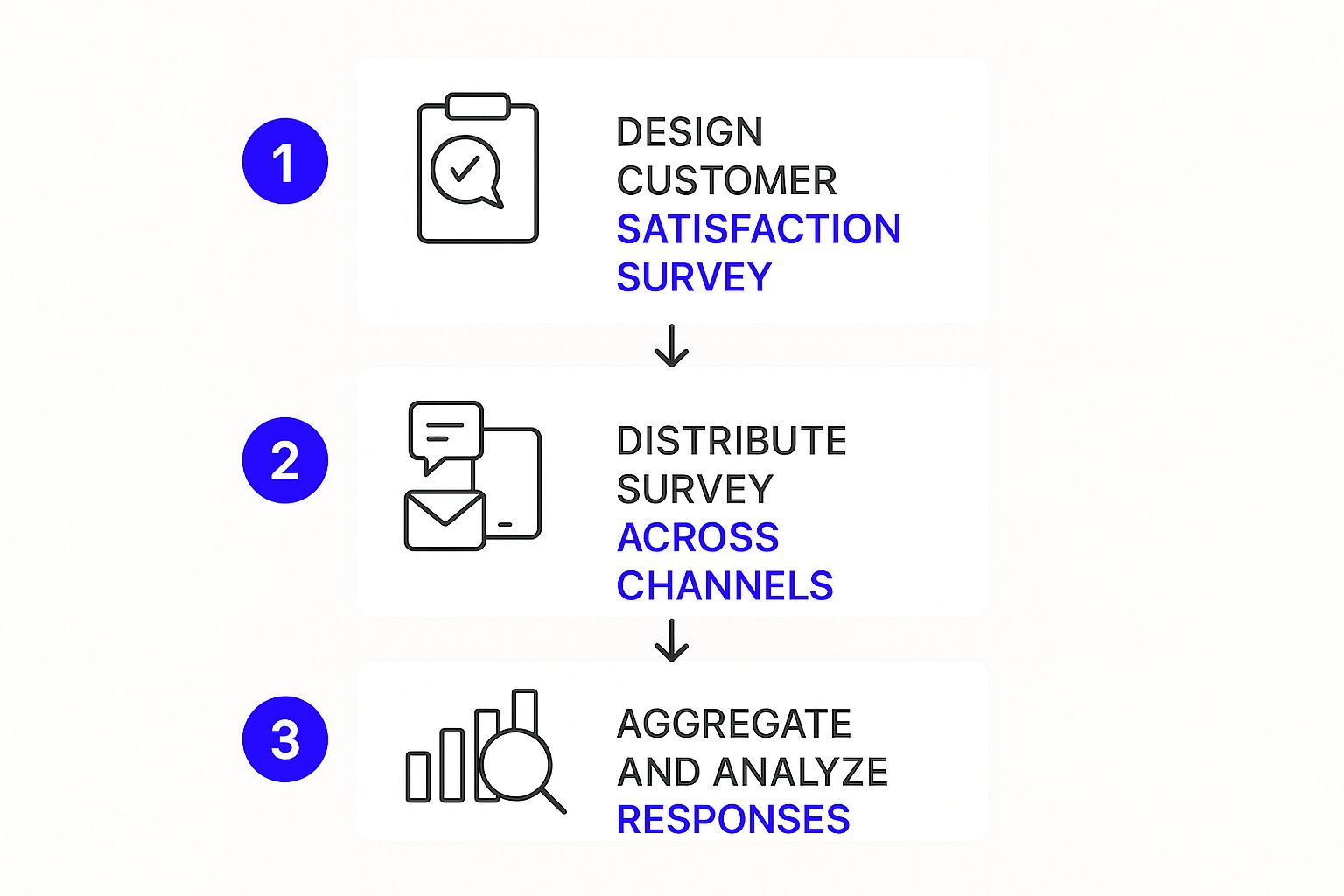
Ultimately, great communication isn't a one-off event. It's a continuous cycle of setting expectations, delivering on them, and gathering feedback to keep getting better.
Turning Your Field Team into Customer Champions
Your technicians are the face of your company. When they walk into a customer’s home, they aren't just there to fix a problem; they are your brand. A perfect repair can be completely overshadowed by a poor customer interaction, tanking your satisfaction scores in the process.
The real magic happens when you start treating every service call as a relationship-building opportunity. It’s about shifting the focus from just technical skills to include the human element. This is how you turn a routine fix-it call into an experience that builds real trust and earns you a customer for life.
Beyond the Toolbox: The Power of Soft Skills
Getting the job done right is just table stakes. What sets a great service experience apart is how your team communicates, empathizes, and handles the unexpected. Investing in soft skills training is a direct investment in your company's reputation and bottom line.
Here’s where to concentrate your efforts:
- Active Listening: This isn’t just about waiting for the customer to stop talking. It's about truly hearing their frustration and concern. A tech who can diagnose the customer’s anxiety along with the technical issue provides a level of reassurance that money can't buy.
- Proactive Communication: No one likes being left in the dark. Train your team to explain what they’re doing as they do it. A simple update like, “Alright, I’ve found the issue. It’s a worn-out capacitor, a pretty common fix. I have one on the truck and should have you up and running in about 20 minutes,” turns customer uncertainty into confidence.
- On-the-Spot Problem-Solving: Give your technicians the authority to make small judgment calls that delight the customer. Maybe they spot a loose fixture while working on a pipe. Empowering them to tighten it free of charge can transform a good experience into a rave review.
I’ve seen it time and time again: a technician who shows up on time, clearly explains the work, and leaves the area cleaner than they found it will almost always get a higher rating than one who just does a technically flawless job and rushes out. It's the small, professional touches that make all the difference.
Arming Your Team with the Right Information
There’s nothing worse for a customer than repeating their problem to three different people. Giving your technicians all the necessary details before they even knock on the door is one of the simplest yet most effective ways to boost customer satisfaction scores.
When a tech walks in armed with the customer’s history and the specifics of the issue, it sends a powerful message: "We're organized, we care, and we value your time." A mobile app or tablet with access to the CRM isn’t a nice-to-have anymore; it's essential.
Make sure this tool gives them everything they need:
- Detailed Job Notes: What exactly did the customer say on the phone? Did they sound stressed?
- Customer History: Is this their first call, or are they a loyal customer of 10 years? Have they had this issue before?
- Equipment Details: What's the make and model of the water heater or AC unit?
Imagine your tech arriving and saying, "Hi Mrs. Jones, I see we were out six months ago for a similar leak. I’ve already reviewed the notes from that visit, so I have a good idea of where to start looking." That single sentence builds instant credibility and shows the customer they aren't just another stop on a map.
For those serious about elevating their field operations, exploring tools that bring all this information together is key. For instance, checking out Resgrid's platform features for field management can give you a good idea of what’s possible with modern field service software.
Embracing a "Total Experience" Strategy
Great phone service is crucial. So are skilled technicians. But in today's market, excelling at individual parts of your business just isn't enough to get ahead. If you really want to move the needle on your customer satisfaction scores, you have to start looking at the bigger picture—how every single touchpoint, from the first call to the final follow-up, works together.
This is where a Total Experience (TX) strategy comes in. It’s a powerful idea built on a simple truth: your customer's happiness is directly linked to your team's happiness and the quality of the tools they use every day.

Connecting the Dots for a Better Business
Think of Total Experience as a three-legged stool. If one leg is wobbly, the whole thing is unstable. Here are the three legs that hold up a fantastic service experience:
- Customer Experience (CX): This is everything the homeowner feels and sees when they interact with your brand. The initial phone call, the booking process, the technician's visit, the invoice—it all counts.
- Employee Experience (EX): This is all about your team. Do they feel supported? Are they properly trained? Do they have tools that make their jobs easier, not harder? A happy, empowered team is your single greatest asset.
- User Experience (UX): This covers the technology side. How easy is it for a customer to book a job on your website? How intuitive is the scheduling app your techs use in the field? Good UX removes friction for everyone.
When these three areas are in sync, magic happens. A technician who has an easy-to-use app with all the customer details right at their fingertips (great EX and UX) is set up for success. They can walk into the job confidently and deliver the kind of amazing service that earns rave reviews (great CX). This holistic view is no longer just a nice-to-have; it's a serious competitive advantage.
Adopting a 'total experience' (TX) approach is one of the most effective ways to boost customer satisfaction scores. In fact, companies that get this right are expected to outperform competitors by a whopping 25% in customer success metrics by 2025. This isn't surprising when you consider that 82% of companies see empowered employees as a key driver of great customer outcomes. You can find more customer experience trends on Custify.com.
From Theory to Reality: Total Experience in Action
So, what does this actually look like for a plumbing or HVAC company on a busy Tuesday? Let’s walk through a common scenario to see the difference.
The Situation: A customer’s AC dies on the hottest day of the summer. They are stressed, and their patience is thin.
-
The Old Way (Siloed Approach): The customer fumbles through a clunky online form that barely works on their phone (bad UX). They call and get a stressed-out CSR who can’t see the technician’s schedule, so they offer a vague, frustrating 8-hour arrival window (bad EX). When the technician finally shows up late, they have no idea the customer is already annoyed and just want to get the job done (bad CX). The AC gets fixed, but you’re left with a one-star review.
-
The Total Experience Way (Connected Approach): The customer finds your simple, mobile-friendly website and books an appointment in under a minute (good UX). Your remote CSR from a service like Phone Staffer, who has a fully integrated calendar, sees a real-time opening and schedules a tight, two-hour window, giving the customer immediate peace of mind (good EX). Your tech gets a notification on their tablet with all the job details and customer notes, arrives on time, and confidently explains the repair (good CX). The result? A five-star review, a customer for life, and probably a few referrals.
By focusing on the total experience, you stop just fixing problems and start creating a smooth, professional, and positive journey for everyone involved.
Weave Technology and AI Into Your Service
In this business, technology isn't some fancy add-on anymore; it's the bedrock of a fantastic customer experience. Homeowners today are used to seamless booking, real-time updates, and instant answers. If you’re not using the right tools, just meeting these basic expectations can feel like an uphill battle.
By bringing smart tech into your operations, you can take the tedious, repetitive tasks off your team's plate. This isn’t about replacing your best people—it’s about giving them the freedom to focus on the hands-on work that actually boosts your customer satisfaction scores.
Use Smart Tools to Iron Out the Wrinkles
The right software can take your daily operations from barely controlled chaos to a well-oiled machine. Just think about the biggest headaches for your customers and your crew. I guarantee there’s a tool built to solve that exact problem.
- Smarter Scheduling: Forget spending hours manually mapping out routes. Modern scheduling software can automatically optimize a technician's entire day. This cuts down on drive time and fuel costs, but more importantly, it lets you give customers tighter, more reliable arrival windows.
- Automated Updates: A simple, automated "on my way" text with a GPS tracking link is an absolute game-changer. This one feature nearly eliminates those "where's my tech?" calls and gives customers the transparency they crave.
- Website Chatbots: Think of a simple AI-powered chatbot as your 24/7 digital greeter. It can handle common questions about your services, pricing, or coverage area, providing instant help and capturing leads long after you’ve closed up for the day.
Never Let a Call Go to Voicemail Again
Be honest—how many potential jobs slip through the cracks and end up in your voicemail box each week? Every one of those missed calls is a lost opportunity. This is where virtual support services, like what we offer at Phone Staffer, make a huge difference. They guarantee a professional, live person answers every single time a customer reaches out.
This gives you 24/7 coverage without the massive overhead of hiring an overnight team. A well-trained virtual CSR can book appointments right into your schedule, answer common questions, and make sure every lead is captured. It’s a simple way to dramatically improve that critical first impression.
Artificial intelligence is quickly becoming a non-negotiable part of top-tier customer service, making resolutions faster and more accurate. In fact, as of 2025, a staggering 90% of customer experience leaders say they're already seeing a positive return from their AI tools. On top of that, 79% of support agents report that AI copilots actually help them do their jobs better. You can dig into more of the data on AI's impact on customer support trends.
At the end of the day, using technology is about more than just being efficient. It's about building a reliable, professional system that makes your customers happy at every single touchpoint. From the moment they find you online to the final invoice, the right tools make it so much easier to keep your promises and earn those glowing five-star reviews.
Frequently Asked Questions
Even with the best game plan, questions are bound to pop up as you start fine-tuning your operations. Here are some straight-up answers to the questions we hear most often from business owners looking to get a real handle on their customer satisfaction scores.
What’s the Fastest Way to Improve My Scores?
If you want to see a quick jump in your scores, you have to nail the first impression. That means making sure every single phone call is answered promptly by a real, professional person. Voicemail is a lead killer and an absolute satisfaction destroyer.
At the same time, get some automated appointment reminders running via text and email. These two simple moves work wonders because they hit the biggest source of customer anxiety head-on: uncertainty. Getting this right sets a positive, organized tone for the entire job and can give you a noticeable lift in your scores in just a few weeks.
A key takeaway is that the fastest improvements often come from fixing the very first touchpoint. A customer who has a smooth and reassuring booking experience is far more likely to be forgiving of minor issues down the line.
How Do I Get Technicians to Care More About Satisfaction?
You can't just tell your team to care more; you have to show them why it matters and what's in it for them. A great starting point is to tie customer feedback directly to their performance reviews. Think about offering small bonuses, a free lunch, or some public recognition for the tech who consistently gets the best ratings.
Even more important, though, is empowerment. Give your team the training and the authority to solve small customer issues right there on the spot, without needing to call a manager. When an employee feels trusted and equipped to make things right, they naturally take more ownership of the customer's experience. They become your biggest advocates.
Is Expensive Software the Only Way to Boost CSAT?
Not a chance. While specialized software can certainly help, the real foundation of high CSAT scores is built on people and processes. You can make a massive impact with low-cost, smart operational changes.
Focus on the fundamentals first:
- Standardize communication: Create simple scripts or talking points for common questions.
- Create on-site checklists: Have techs follow a simple routine, like greeting the customer by name, explaining the work clearly, and always cleaning up the area.
- Actively ask for feedback: Send a simple follow-up survey after every single job.
These process-driven improvements often have a much bigger and more lasting impact on your customer satisfaction than any single piece of tech you could buy.
Ready to ensure every customer call is handled professionally and promptly? Phone Staffer can place a trained, remote CSR into your business to answer every call, book jobs, and make sure no lead ever slips through the cracks. Learn more about how we can help you.