

For a home service professional, a business lead is really just the start of a conversation. It's that moment a potential customer with a problem—one you can solve—reaches out.
Think of it as a digital knock on your door. It could be a homeowner filling out a "free estimate" form on your website or someone calling to ask about your availability. Each one is a direct opportunity to book a new job.
The First Step to a Paid Job
Every single job on your schedule, every paid invoice, started out as one thing: a lead. It's that initial spark of interest that, when you handle it right, turns into a profitable customer relationship. A lead isn’t just a name and a phone number; it’s a person actively signaling they need your expertise.
For instance, a lead in the home service world looks like:
- A homeowner hitting "submit" on your website's "Request a Quote" form for a new AC unit.
- A direct phone call from a panicked homeowner asking about your emergency roof repair services.
- An email inquiry about how much weekly lawn maintenance would cost.
- A direct message on your company's Facebook page asking if you service their neighborhood.
Why Every Lead Matters
Seeing the potential in every inquiry is fundamental to growing your business. But here’s the thing: interest alone doesn't pay the bills. In the hyper-competitive world of home services, a potential customer's attention span is incredibly short.
A lead is a potential customer who's shown interest in your services. But without rapid follow-up, 79% of these leads will never convert to paying customers. If you don't call a lead within five minutes, they're 9x less likely to book a job.
That statistic should stop you in your tracks. It hammers home a critical truth: a lead's value evaporates with every minute you wait. Quick, professional follow-up is what turns a simple inquiry into a scheduled job on your calendar.
Understanding what a business lead is—and more importantly, acting on it immediately—is what separates thriving home service companies from the ones constantly struggling to find work. If you want to dive deeper, you can explore more insights on lead generation statistics to see just how critical speed truly is.
Understanding the 3 Types of Business Leads Every Home Service Pro Should Know
Let's get one thing straight: not all leads are created equal. Getting a handle on the different types is one of the most important things you can do for your home service business. I like to think of them in terms of temperature—cold, warm, and hot.
Each "temperature" tells you where a potential customer is in their journey, which in turn tells you exactly how to approach them to win the job.
To make this crystal clear, let's use a common scenario: a leaky faucet. A person's awareness of this problem and their urgency to fix it is what separates one lead type from another. Once you can spot the difference, you can stop wasting time and start focusing your energy where it counts.
Cold Leads: The First Drip
A cold lead is someone who might need you someday, but not today. They're at the very beginning of the awareness stage, maybe not even fully realizing they have a problem that needs fixing.
In our leaky faucet example, this is the homeowner who notices a tiny, infrequent drip under their kitchen sink. It's not a big deal… yet.
Here’s how you can spot a cold lead:
- No Real Urgency: The problem is just a minor annoyance, easily ignored for now.
- Just Browsing: They might be passively looking at a blog post titled "5 Signs Your Water Heater is About to Fail" but aren't asking for quotes.
- No Direct Contact: They haven’t called you or filled out a form on your website.
Think of the person you met at a home show who took your business card out of politeness. They have your info, but they aren't about to call. The goal here isn't a hard sell; it's about staying top of mind with occasional, helpful content so when that drip gets worse, your name is the first one they remember.
Warm Leads: The Drip Is Getting Annoying
A warm lead knows they have a problem and they're actively looking for someone to solve it. Their intent is much higher because the issue has become too noticeable to ignore.
Back to our analogy: that little drip is now a steady, constant drip…drip…drip. There’s a small, persistent puddle under the sink. This homeowner is now on their phone, searching for "plumbers near me" and reading through customer reviews.
A warm lead has made the jump from being problem-aware to being solution-aware. They know they need help and are actively figuring out who to hire.
This is the person who lands on your website, checks out your services page, and maybe even downloads your pricing guide. They’ve taken clear steps that signal they’re close to making a decision. You need to treat these leads with priority, because if you don't connect with them quickly, you can bet your competitor will.
Hot Leads: The Kitchen Is Flooding!
A hot lead (sometimes called a qualified lead) needs to hire someone right now. The situation is urgent, and they've moved past the research phase. They are ready to buy.
This is our homeowner whose leaky faucet just burst. Water is spewing everywhere, and their kitchen is quickly turning into a swimming pool. They aren't casually comparing quotes anymore—they're desperately calling the first reputable pro who can get there ASAP.
Hot leads are the people filling out your "Request Emergency Service" form or calling your office and asking, "How soon can you send a truck?" They have a critical problem and are ready to pay to fix it immediately. In these moments, speed is everything. An instant response is the only way you’re going to land that job.
The Lead Lifecycle From First Call to Final Invoice
A business lead doesn't just fall out of the sky and magically become a paying customer. Every potential client goes on a predictable journey, what we call the lead lifecycle. Getting a handle on this path is a game-changer because it forces you to see your sales process through the customer's eyes. You start to see exactly where people are losing interest and can finally plug those leaks in your pipeline.
Think of it as a simple, four-stage road that takes someone from a vague "I need help" to "When can you start?" Each stage has a clear purpose, and nailing all four is what turns a random phone call into reliable, repeatable revenue for your home service company.
Let’s walk through it with a classic example: a homeowner who realizes they need a new fence.
Stage 1: Lead Generation
This is the starting line. Lead generation is all about getting on a potential customer's radar and sparking their interest. It’s the moment they find out you exist.
For our homeowner who needs a fence, this could happen in a few different ways:
- They type "fence installation near me" into Google and your website pops up.
- They spot one of your trucks in the neighborhood and snap a picture of the phone number.
- A neighbor gives you a shout-out on the local community Facebook group.
At this point, they've basically raised their hand. They have a problem, and they think you might be the one to solve it. The only goal here is to make that first connection.
Stage 2: Lead Qualification
Okay, so you’ve got their attention. What's next? Qualification. This is where you figure out if this person is a real potential customer or just a tire-kicker. It's a critical filter that saves you from pouring hours into dead-end conversations.
This is where you ask smart questions. "What's your timeline on this project?" or "Are you the one making the final decision on this?" A few quick questions separate the serious buyers from the folks who are just daydreaming.
This infographic breaks down how a lead's "temperature" changes as they get closer to a decision.
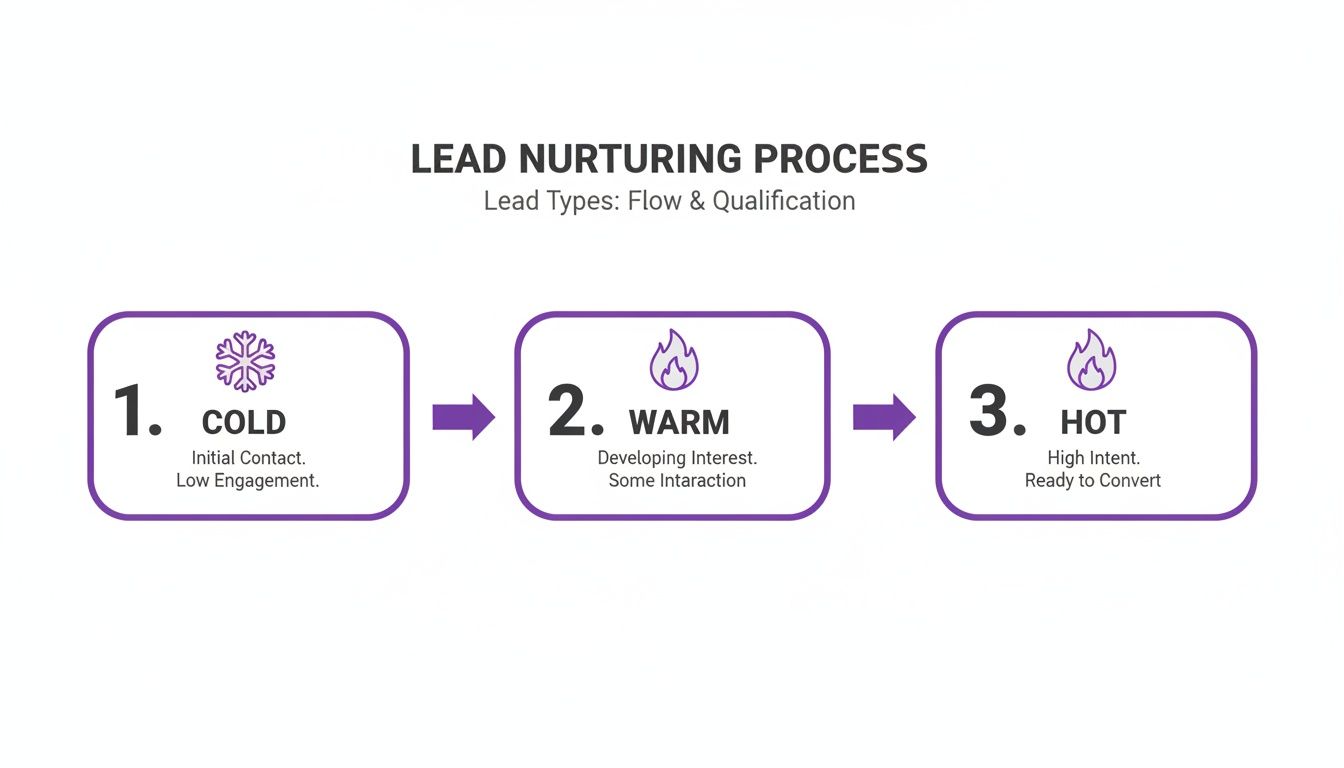
As you can see, leads warm up as they move through your process and get ready to buy.
Stage 3: Lead Nurturing
Here’s a hard truth: not every qualified lead is ready to pull the trigger right away. That's where nurturing comes in. It’s all about building a relationship and staying on their mind until they're ready to commit.
Lead nurturing is the art of building trust over time. You're providing value and showing off your expertise without being pushy.
For the fence customer, this could be a simple follow-up email with a link to your project gallery. Or maybe you send them a helpful guide on choosing the right fence material. These small, helpful touchpoints position you as the go-to expert, not just another contractor out for a quick buck.
Stage 4: Lead Conversion
And finally, we get to the good part: conversion. This is the finish line, the moment a lead takes the action you want them to take, whether that’s booking an estimate or scheduling the actual job.
All your hard work—finding them, qualifying them, and nurturing them—pays off right here. You've answered their questions, earned their trust, and made it incredibly easy for them to say "yes." For our homeowner, this is the moment they call you back and say, "Let's get this on the calendar."
How to Qualify and Score Home Service Leads
Let’s be honest, not every phone call or form submission is a golden ticket. Some people are just kicking tires, while others are practically waving cash at you, ready to book a job right now. The real trick is knowing how to spot the difference instantly.
That’s where lead qualification and scoring come in. Think of it as your secret weapon for sorting the "maybes" from the "must-calls," ensuring your team pours their energy into the leads that will actually turn into paying customers. It’s all about working smarter to fill your calendar with profitable jobs.
The Power of a Simple Scoring System
So, what is lead scoring? It’s basically a point system you create for incoming leads. You assign points based on specific actions or details that show how serious a prospect is. For a home service company, this doesn't have to be complicated at all.
Imagine a simple checklist. A homeowner calling about a burst pipe gets a high score. Someone just asking for a ballpark estimate on a renovation they might do next year? A much lower score. This system takes the guesswork out of prioritizing your follow-up calls.
This method gives you a crystal-clear view of your most valuable leads at a glance. If you're using a CRM like HubSpot and want to get really granular, this guide on How to Set Up Lead Scoring in HubSpot is a fantastic resource.
Lead scoring isn't about being complicated; it's about being intentional. It forces you to define what an ideal customer looks like and then systematically find them in your pipeline.
Building Your Home Service Scorecard
You don't need a degree in data science to build a scorecard. Just start by brainstorming what makes a lead a perfect fit for your business.
For most home service pros, the important stuff usually boils down to these things:
- Urgency of Need: Is this an emergency repair, a project with a deadline, or just early-stage research?
- Budget Confirmation: Did they mention a budget? Or do they avoid talking about money?
- Service Location: Are they in your prime service area, or on the outskirts?
- Decision-Making Authority: Are you talking to the actual homeowner who can say "yes"?
Now, let's put this into practice with a quick example. Imagine you run a roofing company and a new lead comes in. Here’s a simple way you could score them to decide how quickly you need to act.
Sample Lead Scoring for a Roofing Company
| Lead Characteristic | Points Awarded | Why It Matters |
|---|---|---|
| Active roof leak reported | +50 | This is an emergency. They need help now and are likely to hire fast. |
| In primary service zip code | +20 | Jobs closer to home are more profitable and easier to schedule. |
| Confirmed homeowner | +15 | You're speaking directly to the person who can approve the work. |
| Budget discussed and aligns with your pricing | +15 | This shows they are a serious, qualified buyer, not a price shopper. |
| Just looking for a price for "future" project | -10 | Lower priority. This lead needs nurturing, not an immediate site visit. |
By adding up the points, you instantly know where to focus. A lead with an urgent need, located in your top zip code, who is also the homeowner would shoot right to the top of your list. This simple, practical system shifts your follow-up process from being reactive to being truly strategic, which is a surefire way to boost your conversion rates.
Mastering the Follow-Up to Win More Jobs
In the home services game, speed is everything. It's not just a nice-to-have; it's the difference between landing a profitable job and watching it go to a competitor who was just a little quicker on the draw. The moment a potential customer reaches out, a clock starts ticking.
Your entire goal is to turn that initial flicker of interest into a booked appointment, and your immediate response is your secret weapon.
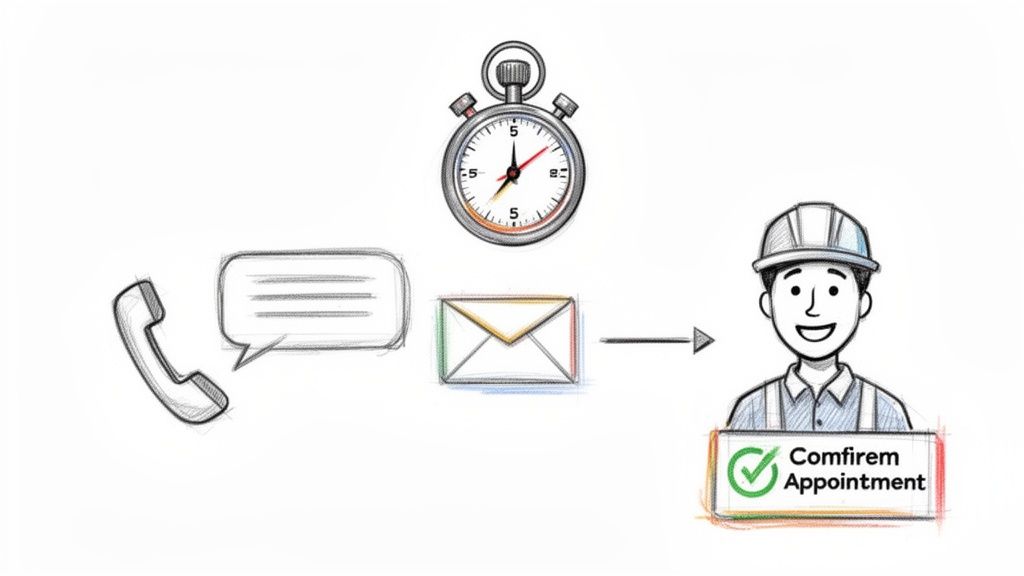
The first conversation isn't the time for a hard sell. It's about making a great first impression, confirming they have a problem you can solve, and getting them on the schedule. Keep it simple, friendly, and focused. Overthinking it just causes delays, and hesitation is the enemy here.
Your First Five Minutes: A Winning Framework
When a new lead pops up, you have to act. Don't wait. The best follow-up isn't about being aggressive; it's about being present and incredibly helpful. You want to make it as easy as possible for that customer to connect with you on their terms.
Here’s the simple, three-step sequence that works like a charm:
- Immediate Phone Call: Drop what you're doing and call them within five minutes. A real conversation is the fastest way to understand their needs, convey your expertise, and show them you’re ready to help now.
- Follow-Up Text Message: If they don't pick up, send a text right away. No need to get fancy. A simple, "Hi [Name], this is [Your Name] from [Company Name]. Just tried calling about your request for [service]. Is now a good time for a quick chat?" is perfect.
- Informative Email: Lastly, send a quick email. This reinforces your other attempts and gives them helpful info, like a link to your website or a few customer reviews.
Persistent, professional follow-up is a system, not an afterthought. It transforms random check-ins into a reliable process that guides a lead from initial interest to a scheduled job, dramatically improving your conversion rates.
Great follow-up isn't just about being persistent; it's about being strategic with your messaging. For example, using proven high-conversion sales follow-up email templates can give you a massive head start.
Remember, that first contact is just the opening move. A solid follow-up plan ensures you never let a good lead go cold. And if you're doing any outbound prospecting, getting a handle on typical cold calling conversion rates will help you set realistic goals for your team.
How a Remote Team Transforms Your Lead Management
Knowing what a lead is and how to nurture it is one thing. Actually doing it while you’re running a business is a whole different ballgame. Between giving estimates, managing crews, and keeping current customers happy, crucial tasks like answering every single phone call can easily fall through the cracks.
This is where bringing in a dedicated remote team can completely change your growth trajectory.
Picture this: you're up on a ladder, focused on a tricky repair, and your phone rings. It’s a new lead, but you can’t possibly answer. By the time you get a free moment to call back, they’ve already hired your competition. Sound familiar? A remote team of customer service representatives (CSRs) makes that problem disappear, ensuring every call gets a prompt, professional answer.
They become a seamless extension of your business, turning what was once a missed opportunity into a booked appointment.
Turning Headaches into Growth Opportunities
A great remote team does more than just answer the phone—they take full ownership of the front end of your lead management process. This frees you up to do what you do best: running the business and delivering top-notch service, all while knowing your sales pipeline is being actively filled.
This kind of expert support solves the most common frustrations for home service owners:
- No More Missed Calls: A remote CSR is always on deck to grab that hot lead, whether you're on a job site, in a supplier meeting, or spending time with family.
- On-the-Spot Lead Qualification: They use your specific criteria to ask the right questions, instantly sorting serious buyers from tire-kickers.
- Instant Appointment Booking: Qualified leads get booked directly into your calendar, often on that very first call.
By handing off your lead management, you aren't just hiring an assistant; you're building a system to stop revenue from leaking out of your business. A remote team turns an unpredictable trickle of leads into a reliable, scalable operation.
Proactively Filling Your Calendar
But it's not all about waiting for the phone to ring. A remote team can also be a powerful engine for generating new business.
Outbound callers can work through your list of past clients to check in, offer new service agreements, or schedule annual maintenance. This kind of proactive outreach is fantastic for reactivating old customers and essentially creating new jobs from thin air.
Ultimately, a remote team shifts lead management from a reactive, stressful chore into a strategic asset. They bring the structure and consistency you need to capture, qualify, and convert leads with precision, making sure no opportunity is wasted and your schedule stays packed.
Frequently Asked Questions About Business Leads
Even after getting the basics down, you probably still have a few questions swirling around. Let's tackle some of the most common ones we hear from home service pros every day.
What Is the Difference Between MQL and SQL?
Think of it as the difference between someone browsing at Home Depot and someone asking an employee where the drain snakes are.
A Marketing Qualified Lead (MQL) is that browser. Maybe they downloaded your "DIY Gutter Cleaning Checklist." They're curious and kicking the tires, but they're not ready to pull out their wallet just yet. They need a little more time and information.
A Sales Qualified Lead (SQL), on the other hand, is the person with a specific problem. They're the ones who fill out your "Request a Quote for Gutter Installation" form. Their need is immediate, and their intent is clear. For most home service companies, your inbound leads are SQLs—which is why jumping on them instantly is non-negotiable if you want to win the job.
How Many Times Should I Follow Up with a Lead?
This is where persistence meets strategy. The data consistently shows it can take anywhere from five to eight "touches"—a thoughtful mix of calls, texts, and emails—to finally connect with a lead and get them on the schedule.
The secret isn't just to pester them. Each time you reach out, you should be adding value, not just asking, "Are you ready yet?" A great starting sequence is an immediate phone call, a quick text if they don't answer, followed by an email with your company info. A friendly check-in a few days later keeps you top of mind. Having a system is what prevents good leads from falling through the cracks.
Is It Better to Buy Leads or Generate My Own?
Honestly, there's a place for both. Buying leads from a third-party service can give you a quick injection of volume, which is great when you need to fill the schedule fast. The downside? You’re often one of five contractors getting that same lead, turning it into a race to the bottom on price.
Generating your own leads through things like local SEO, Google Ads, or good old-fashioned referrals almost always brings in higher-quality, exclusive prospects. Of course, this takes a real investment of time and money upfront. Many of the most successful companies we see use a hybrid approach: they build their own marketing engine and supplement it with targeted outbound calling to create a steady, reliable flow of work.
Ready to stop missing calls and start booking more jobs? Phone Staffer provides dedicated remote CSRs and expert cold calling services to ensure every business lead is captured, qualified, and converted. Learn more about how we can help.