
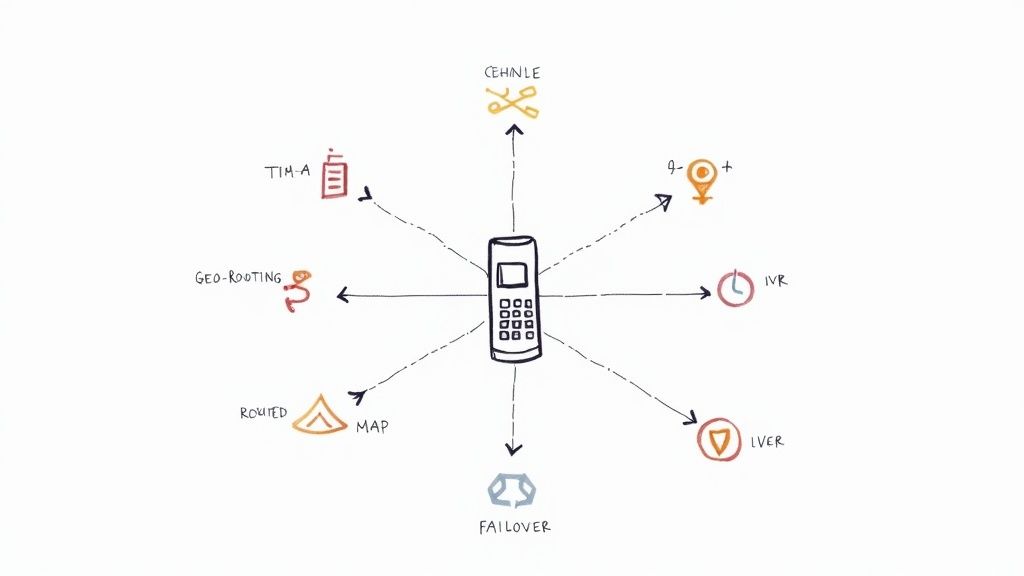
Think of call routing as your company’s digital receptionist. It’s an automated system that instantly sends every incoming call to the right person or department based on rules you set.
Imagine it as a traffic controller for your phone lines. It makes sure a customer with an emergency leak gets connected to a technician on standby, not someone in your billing department. For a home service company, that immediate, correct connection is everything—a missed or mishandled call is often a lost job.
The Foundation of Efficient Customer Communication
At its heart, call routing is a system built to sort and deliver phone calls quickly and accurately. Let's use an analogy: if your phone system is a busy post office, call routing is the expert mail sorter. Without it, letters (your calls) would just pile up, get sent to the wrong mailboxes, or even get lost in the shuffle.
Call routing acts as that sorter, instantly "reading the address" on every call—whether it's the reason they're calling, the time of day, or where they're located—and makes sure it lands with the right person without any delay.
This automated process gets rid of the old-school bottleneck of having one person trying to manually direct every call. For a home services business, the benefits are immediate and obvious:
- Faster Response Times: A frantic call about a burst pipe gets sent straight to an on-call plumber, not a general voicemail that someone might check tomorrow morning.
- Improved Customer Experience: Customers don't get bounced from person to person, having to repeat their story over and over. They get to the right expert on the very first try.
- Increased Lead Capture: New sales inquiries can be flagged and sent directly to your best salesperson, dramatically increasing the odds of booking that appointment.
Here’s a quick snapshot to put it all together.
Call Routing at a Glance
| Concept | Primary Goal | Analogy |
|---|---|---|
| Call Routing | To automatically direct incoming calls to the most appropriate person or department based on predefined criteria. | The digital traffic controller for your phone lines, ensuring every call gets to the right destination without traffic jams. |
Simply put, getting this right is non-negotiable. Even with all the digital ways to connect, a live phone call is still king for urgent needs. In fact, a recent study showed 61% of contact center leaders have seen their call volumes increase, which just underscores how vital a smart routing system is.
The Technology Behind the Scenes
So, what makes all this happen? It’s all powered by modern phone technology. To really get a handle on call routing, it helps to understand the basics of how VoIP phone works, since that's the tech that makes most of these advanced routing solutions possible.
This isn’t just a fancy feature; it's a core tool for making your entire operation run smoother and more profitably from the very first ring.
Exploring Different Types of Call Routing
Once you get the basic idea behind call routing, the next logical question is, "How does it actually work?" Think of the different routing methods as a set of specialized tools. You wouldn't use a wrench to hammer a nail, and similarly, you need to pick the right routing strategy for the right job. Each one is designed to solve a specific problem, making the path from caller to resolution as quick and painless as possible.
The diagram below shows a simple yet incredibly effective setup where incoming calls are sorted into a few main buckets: sales, support, and billing.
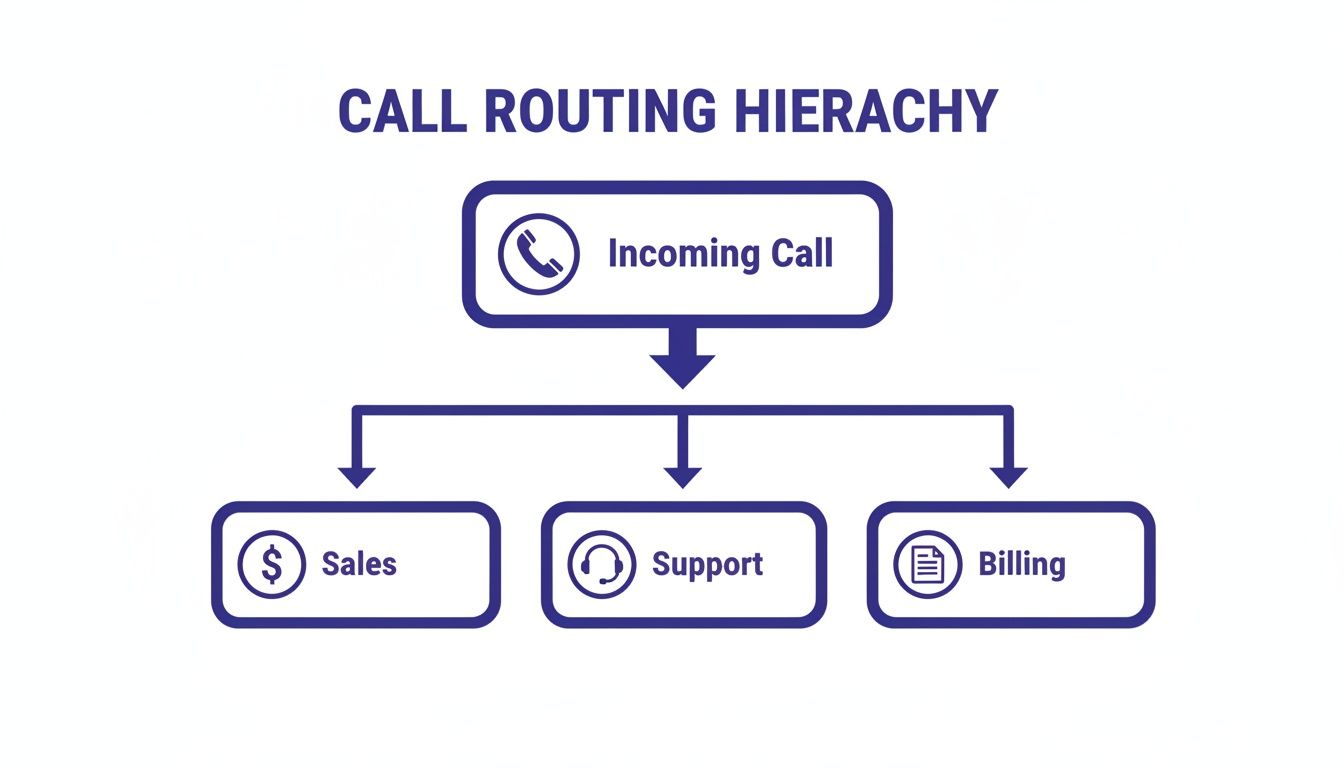
This kind of initial triage is a game-changer. It stops customers from getting bounced around and makes sure they connect with the right person from the get-go.
5 Common Ways to Route Your Calls
Let's dive into the five most common methods you'll encounter. These aren't just about sending a call to the next person in line; they're about being smart and strategic with every single ring.
- Interactive Voice Response (IVR): This is the one most people are familiar with—the classic "Press 1 for Sales, Press 2 for Service" menu. A good IVR empowers callers by letting them direct themselves, saving everyone time.
- Time-Based Routing: This is your "set it and forget it" solution for after-hours calls. Based on the time of day or day of the week, it automatically sends calls where they need to go. After 5 PM, maybe all calls forward to an on-call tech’s cell or to a 24/7 answering service like Phone Staffer. You never miss an emergency lead.
- Skills-Based Routing: Absolutely essential for home service companies. This method intelligently routes a caller to the person with the right expertise. A question about a complex tankless water heater installation goes straight to your senior plumbing specialist, not the front desk.
- Geographic Routing: Perfect for businesses covering multiple cities or counties. The system uses the caller's area code (or other location data) to connect them with the closest office or field team. This gives you a local feel and helps you dispatch technicians much faster.
- Failover Routing: This is your safety net. If your primary phone line goes down or your main office loses power, failover routing automatically redirects all incoming calls to a backup number, like a secondary office or a mobile phone. Business keeps running, no matter what.
These systems are the engine of modern customer service. It’s no surprise that the global market for this kind of software was valued at around USD 16.3 billion in 2023 and is only expected to grow. You can dig into the numbers yourself in this market research report.
Comparing Call Routing Methods
To make it even clearer, let's break down how these methods stack up and where they shine for a home service business.
| Routing Method | Best For | Benefit for Home Services |
|---|---|---|
| IVR | Offering callers self-service options | Empowers customers to quickly get to booking, billing, or service without waiting. |
| Time-Based | Managing after-hours and weekend calls | Ensures 24/7 lead capture for emergency repairs and urgent job requests. |
| Skills-Based | Complex technical or sales inquiries | Matches a high-value lead with the senior tech or salesperson most likely to close the deal. |
| Geo-Routing | Companies with multiple service areas | Provides a local touch and allows for faster, more efficient dispatching. |
| Failover | Ensuring business continuity during outages | Prevents lost revenue and customer frustration when primary phone systems fail. |
Each method has its place, but the real power comes when you start combining them.
Putting It All Together for Maximum Impact
You don't have to pick just one. The best systems often layer these methods to create a truly seamless customer experience.
A well-designed call routing system doesn't create a barrier; it creates a shortcut. It empowers customers to quickly navigate to the exact resource they need without waiting for a manual transfer, turning a potential point of friction into an efficient, self-service experience.
Imagine a caller dials your main number. The IVR first asks if they need "New Installation" or "Existing Service." If they choose "New Installation," skills-based routing can then send that high-value call directly to your top sales closer. That's how you turn a simple phone call into a booked job.
The Real-World Benefits of Smart Call Routing
Knowing the different ways to route calls is one thing, but seeing how it actually helps your bottom line is what really matters. Smart call routing isn’t just some tech feature—it's a direct investment in happier customers, smoother operations, and more money in the bank. It turns your phone system from a necessary evil into one of your best business tools.
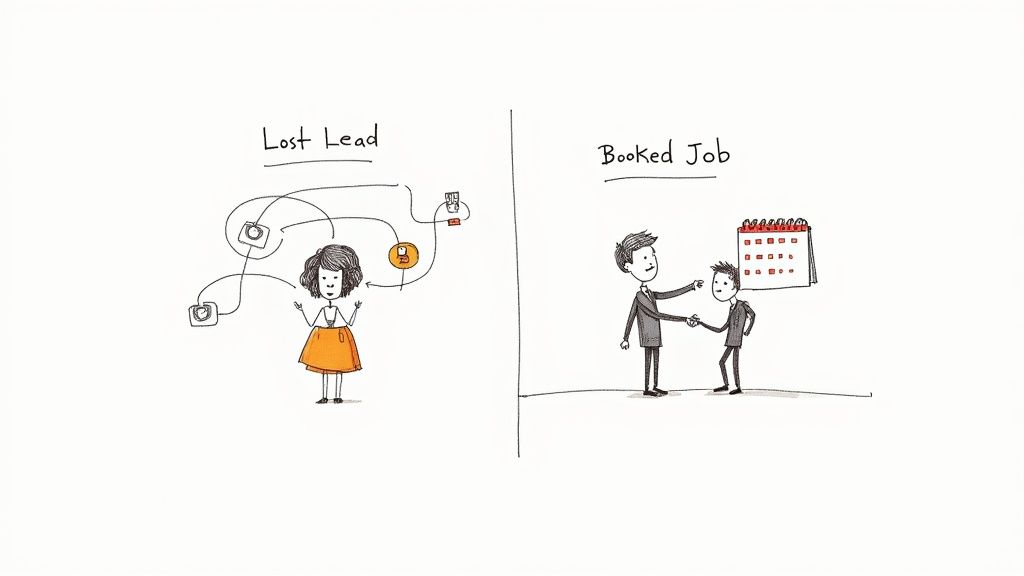
The payoff is real, and it shows up in every corner of your business, from a caller's first impression to your team's sanity at the end of the day.
Elevate the Customer Experience
For your customers, getting calls routed correctly means less time on hold and no more of that dreaded "let me transfer you" runaround. When someone's basement is flooding, the last thing they want is a tour of your phone system. They need help, now.
Getting callers to the right expert on the very first try is the gold standard of a great customer experience. It immediately tells them you respect their time and know what you're doing.
A PwC study found that a whopping 86% of buyers will happily pay more for a great customer experience. Getting calls to the right person instantly is one of the easiest ways to deliver that premium feel before your truck even pulls up.
Boost Operational Efficiency
Inside your business, call routing takes a tedious, manual task off your team's plate. Instead of acting like a human switchboard, your office staff can focus on work that actually generates revenue.
It also keeps workloads balanced. Systems like least-occupied routing spread calls out evenly, so one person doesn't get buried while another sits idle. This creates a much less frantic office and helps everyone get more done.
Dramatically Increase Lead Conversion
This is where the ROI of call routing really shines. Every single inbound call is a potential job, and that first interaction can make or break the sale.
Let's imagine a potential customer, Sarah, who needs a new furnace.
- Scenario A (Without Routing): Sarah calls and gets a general receptionist who has no idea who handles installation quotes. She gets put on hold, transferred to the wrong person, and finally just hangs up to call your competitor. A hot lead, gone cold.
- Scenario B (With Smart Routing): Sarah calls and an IVR greets her with, "For new installations, press 2." She presses 2, and the call goes straight to your best salesperson, who expertly answers her questions, builds trust, and books a consultation right then and there.
In the second scenario, the routing system didn't just connect a call—it secured a high-value sales opportunity. By getting the most important callers to the right people, you radically increase your odds of turning a simple phone call into a booked job. This is a critical piece of any solid inbound marketing lead generation strategy. Smart routing quickly pays for itself by making sure valuable leads don't fall through the cracks.
How to Build Your Call Routing Strategy
Great call routing isn't really about the technology—it's about a smart, customer-first strategy. Building one is simpler than it sounds. It all starts with understanding how your customers already try to reach you. A well-designed system anticipates what they need and gets them to a solution with zero friction.
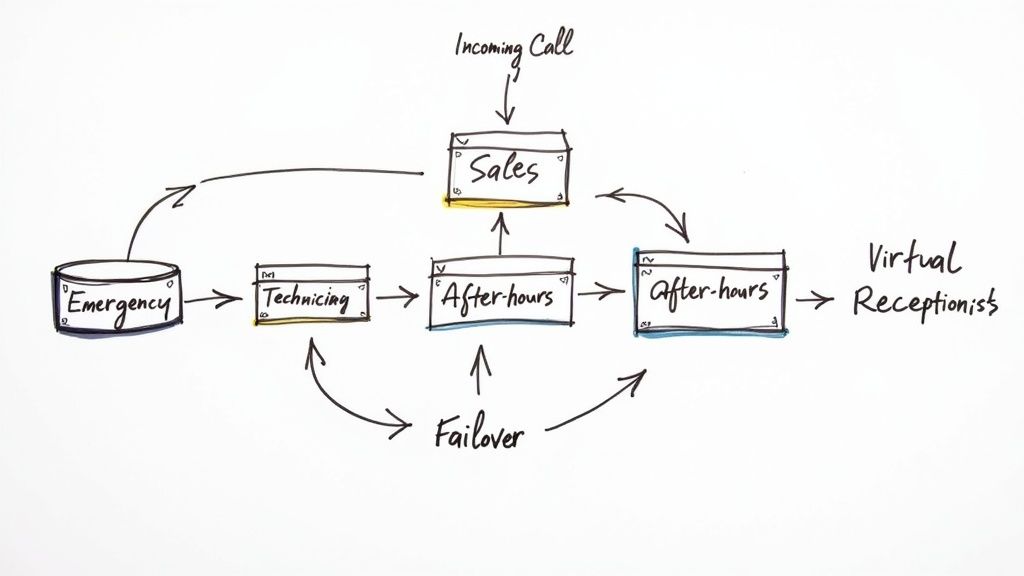
The main goal is to create a clear, simple path for every kind of call that comes in. That means mapping out your most common call scenarios, from new customers looking for a quote to existing clients with billing questions or urgent service requests.
Map Your Common Call Scenarios
Before you touch a single setting in your phone system, grab a whiteboard or a piece of paper and sketch out your call flow. Think about the top reasons customers pick up the phone to call you and, just as importantly, who on your team is best equipped to handle each request.
Start by asking these three fundamental questions:
- Who is calling? Is it a brand-new lead, a current customer with a question, or someone with a burst pipe?
- What do they need? Are they trying to book a job, get clarity on an invoice, or troubleshoot a finicky furnace?
- Who should help them? Does this call need to go to your top salesperson, a specific field technician, or someone in the back office?
This simple exercise reveals the basic rules your system needs. For example, you might decide that any call from a new number is a potential lead and should be routed straight to your sales desk.
Design Simple and Intuitive IVR Menus
Your Interactive Voice Response (IVR) menu is often the first "voice" a caller hears. The golden rule here is simplicity. Nothing frustrates a potential customer faster than a confusing menu with a dozen different options.
A great IVR menu shouldn't feel like a barrier. It should act as a helpful guide, quickly sorting callers so they can talk to a real person faster. Keep your options clear, concise, and limit them to no more than four main choices.
A home service company, for instance, could use a menu like this:
- "For new installations or quotes, press 1."
- "For existing service or repairs, press 2."
- "For billing questions, press 3."
This setup immediately segments your most important call types without overwhelming the person on the other end of the line.
Establish Rules for Every Situation
Once you have your main paths defined, you need to think about the exceptions. A solid strategy has a plan for what happens when your team isn't available.
- Define After-Hours Rules: What happens at 9 PM on a Friday? Time-based routing can automatically forward calls to an on-call technician's cell phone or a 24/7 virtual receptionist service like Phone Staffer.
- Create Failover Plans: What if your main office loses power or the internet goes down? Failover routing is your safety net. It automatically redirects calls to a backup number, ensuring you never miss a lead.
By planning for these scenarios from the get-go, you ensure your business keeps running and maintains a professional image, no matter what’s happening behind the scenes. This kind of thinking turns your phone system from a simple utility into a reliable tool for growth.
How Phone Staffer Turns Your Call Routing into a Revenue Engine
A great call routing strategy gets the right call to the right place. But what happens once it gets there? Technology is fantastic at sorting and directing, but it can't build trust, understand a homeowner's frustration, or turn a simple question into a booked job. That’s where the real magic happens—combining smart routing with a genuinely helpful human.
Think of it this way: your routing system is the highly efficient traffic controller, and Phone Staffer’s trained virtual receptionists are the skilled specialists waiting at the destination. The technology handles the logistics, but our people handle the conversation and, ultimately, the conversion.
When you blend these two, your phone system stops being just a utility and starts becoming a powerful tool for generating real revenue. You’re set up to grab opportunities that your competitors are letting slip through the cracks.
Adding the Human Touch to Your Automated System
This isn't just about having someone answer the phone. It's about strategically placing the right person at the other end of the line, based on what the caller needs in that exact moment. You can design your call flow to tap into our agents' skills for maximum impact.
Here’s what that looks like in the real world:
- Time-Based Routing for 24/7 Service: Your office might close at 5 PM, but homeowners' problems don't. When a potential customer calls with a burst pipe at 9 PM, your routing rules can automatically send that call straight to a Phone Staffer agent. Instead of a cold voicemail box, they get a calm, reassuring voice that can take down their information and get them on your schedule immediately. You’re booking jobs while your competition is sound asleep.
- Skills-Based Routing for High-Value Jobs: Let’s say a caller presses "1" for a new HVAC system installation. Your system can instantly identify this as a high-value lead and route it directly to our remote sales team. They're trained specifically to handle these bigger, more complex sales conversations. This leaves your on-site techs free to do what they do best, while our team focuses on closing new business for you.
By placing trained virtual CSRs at the most important touchpoints in your call flow, you guarantee that every caller gets a fast, professional, and helpful response. Your routing system goes from being a simple call director to an active lead-closing machine.
Maximize Your Efficiency, Capture Every Single Lead
Integrating a service like Phone Staffer also cleans up some of the most common operational messes. What happens when it’s the first hot day of summer and your phones are ringing off the hook? Instead of letting calls go to voicemail or a frustrating busy signal, you can use our team as your overflow.
Your routing system can detect when your in-house team is swamped and automatically forward the extra calls to us. The customer has a seamless experience, and you never miss a chance to book a job. It’s a simple fix for a very expensive problem.
The combination of accurate routing and skilled agents has a massive impact. Misrouting calls is a huge drain on everyone's time and patience. One major tech company, for example, discovered that a staggering 60% of its support calls were being sent to the wrong department. After fixing their routing, they cut the number of calls needing a live agent by 43%.
Now, imagine adding our trained professionals to that newly efficient system. That's how you not only fix problems faster but also convert more of those incoming calls into actual appointments. You can see more details on how AI-driven routing improves business operations in this case study.
In the end, it’s all about building a system that’s both smart and effective. Call routing provides the blueprint, but Phone Staffer provides the skilled hands that turn a simple phone call into a happy, loyal customer.
Measuring Success and Optimizing Your System
Getting a call routing system up and running is a huge first step, but it’s definitely not a one-time setup. The real magic happens when you monitor its performance and make adjustments based on what the data tells you. A common mistake is to "set it and forget it," but that's a surefire way to let missed opportunities and customer frustrations creep back in.
Think of it this way: continuously fine-tuning your system is what turns a simple call director into a powerful strategic asset. By keeping an eye on a few key numbers, you can catch small issues before they snowball into big problems and make sure every caller has a smooth, efficient experience.
Key Metrics You Need to Track
You don't need to drown in a sea of data. Focusing on a handful of essential metrics will give you a clear picture of how your call routing is actually performing. To really dig in and see what's working, implementing robust call analytics is the way to go.
Start by watching these three critical data points:
- First-Call Resolution (FCR): This is the gold standard. It tells you the percentage of calls where the customer’s problem gets solved on the first try, with no transfers or callbacks needed. A high FCR means your routing is hitting the mark.
- Call Abandonment Rate: What percentage of people hang up before they even get to talk to someone? If this number is high, it’s a major red flag that your wait times are too long or your IVR menu is confusing, causing you to lose valuable leads.
- Average Handle Time (AHT): This tracks how long a call takes from start to finish, including any work the agent does after hanging up. If you see your AHT climbing, it might mean calls are getting sent to reps who don't have the right expertise to handle them quickly.
Your data tells a story. A high transfer rate, for example, isn't just a number—it’s a sign that your IVR options might be unclear, sending callers down the wrong path and forcing your team to manually correct the mistake.
Turning Data into Actionable Improvements
Once you have the data, you can start troubleshooting. For instance, if you see a spike in abandoned calls every day around noon, that’s a clear signal you need to adjust your routing rules to bring in backup—like an overflow team from Phone Staffer—to handle that midday rush.
Likewise, if your FCR is tanking for technical questions, it’s a strong hint that your skills-based routing needs a tune-up. You might need to create a more specialized queue just for your senior techs to make sure complex issues get handled correctly the first time. This cycle of monitoring, analyzing, and adjusting is what transforms a good call routing system into a great one, constantly boosting your team’s efficiency and keeping your customers happy.
Frequently Asked Questions About Call Routing
Diving into a new system always brings up a few practical questions. Here are some clear, straightforward answers to the things we hear most often from home service business owners looking at call routing.
Is Call Routing Too Expensive for a Small Business?
Not anymore. That’s a leftover idea from the days of clunky, on-premise phone systems. Today’s cloud-based platforms bundle incredibly powerful call routing features into a low monthly cost. Think of it less like a massive capital investment and more like a small operational expense.
When you do the math on capturing just one extra job a month that would have otherwise been a missed call, the system often pays for itself right away.
How Difficult Is It to Manage My Call Routing Rules?
Modern systems are built for business owners, not IT wizards. They come with simple online dashboards that let you tweak business hours, change who’s on call, or update your phone menu with just a few clicks.
Let's say a key employee calls in sick or goes on vacation. You can log in and reroute their calls to someone else in a matter of seconds. It gives you complete control without the technical headaches.
The Goal Is Control, Not Complexity. A good call routing system should empower you to adapt on the fly. You need to be able to change call flows, update on-call technician numbers, and adjust holiday hours in minutes, not hours.
Can I Route Calls to My Technicians' Cell Phones?
Absolutely. In fact, this is one of the biggest wins for home service companies. You can set up rules that send calls directly to the mobile phone of the technician who is on-call, closest to the customer, or has the specific license for the job.
This direct connection is a game-changer. It dramatically speeds up your response time and gives the customer a much better, more personal experience, especially when they have an emergency.
Will My Customers Get Annoyed by an Automated System?
They’ll only get annoyed by a badly designed one. A well-planned system does the exact opposite—it’s fast, efficient, and genuinely helpful. The whole point is to connect the customer to the right human faster than a receptionist juggling calls ever could.
By keeping your automated menu short and the options crystal clear, you actually reduce frustration and show customers you respect their time.
Ready to pair a smart call routing strategy with expert human support? Phone Staffer provides trained remote CSRs who plug right into your system, making sure every call gets answered and every lead is captured. Learn how we can help you book more jobs.