

So, you’ve got a new lead—great! But what happens next? Most of the time, that initial spark of interest doesn't immediately turn into a booked job. That’s where lead nurturing comes in. It’s the art of building a relationship with potential customers who have shown interest but aren't quite ready to pull the trigger.
The whole point is to stay top-of-mind and guide them through their decision-making process. By providing real value and building trust, you ensure that when they are ready to hire someone, your company is the obvious choice.
What Is Lead Nurturing Beyond the Buzzword?

Think of it like tending a garden. You can't just throw seeds on the ground and expect a harvest. You have to water them, make sure they get sunlight, and pull the weeds. Lead nurturing is that same consistent, thoughtful effort applied to your potential customers. You're cultivating their initial curiosity until it blossoms into a paying customer.
It's a shift from making one-off sales pitches to having an ongoing conversation. Instead of pushing for a quick sale, you're positioning yourself as a trusted advisor. This is incredibly important for home service businesses, where trust is everything. After all, a homeowner needs to feel completely comfortable before letting a stranger into their home.
Lead Generation vs Lead Nurturing At a Glance
It’s easy to confuse getting a lead with nurturing a lead, but they are two very different—and equally important—parts of your sales funnel. Let's break it down.
| Aspect | Lead Generation | Lead Nurturing |
|---|---|---|
| Goal | Capture initial interest and contact information. | Build relationships and guide leads toward a purchasing decision. |
| Timing | The very beginning of the customer journey (top of funnel). | The middle of the journey, after a lead has been identified. |
| Focus | Quantity: Getting as many new potential leads as possible. | Quality: Developing existing leads into qualified opportunities. |
| Tactics | SEO, PPC ads, social media campaigns, contact forms. | Email sequences, helpful content, follow-up calls, retargeting ads. |
| Outcome | A list of potential customers (leads). | A pipeline of educated, trust-filled, and sales-ready prospects. |
In short, generation gets them in the door, while nurturing convinces them to stay and make a purchase.
Building Trust Over Time
At its heart, lead nurturing is about giving value without asking for anything in return right away. You’re playing the long game. This respects the homeowner's timeline and establishes your company as the go-to expert in your field.
What does this look like in practice?
- Sending a helpful guide on "How to Choose the Right Water Heater."
- Sharing a seasonal maintenance checklist for their HVAC system.
- Following up on an estimate with a case study of a similar project you completed.
This approach is critical because most leads just aren't ready to buy on day one. In fact, a staggering 80% of new leads never convert into sales, often because nobody followed up properly. On the flip side, companies that automate their lead nurturing see a massive 451% increase in qualified leads.
The goal isn't to be the loudest voice shouting for a sale; it's to be the most helpful resource that earns the customer's business when the time is right.
This ties directly into modern strategies like understanding what is conversational marketing. The focus is shifting away from just blasting out marketing messages and toward having real, one-on-one dialogues. It's about building genuine rapport that naturally moves people toward a sale, which is exactly what effective lead nurturing is all about.
Why Lead Nurturing Is a Game Changer for Home Services
Let's be honest, home service decisions are all about trust. When a homeowner has a burst pipe, a dead furnace in winter, or a roof that's seen better days, they aren't just buying a part or a service. They're inviting a stranger into their home, around their family and valuables. This is a high-stakes decision, and it’s exactly why lead nurturing is so critical for your business.
Unlike buying a t-shirt online, homeowners take their time. They'll spend days, sometimes weeks, researching the problem, digging through online reviews, and checking out local companies before they even think about making a call. Lead nurturing is your way of getting involved in that conversation early and guiding them right to your door.
The Homeowner's Path to a Decision
Instead of being just another ad they scroll past, you become the helpful expert they turn to for answers. By offering real value before asking for the sale, you build the kind of trust that wins the job long before they're ready for a quote.
Think about the typical journey they take. The infographic below lays it out nicely, showing all the spots where smart nurturing can make a huge impact.
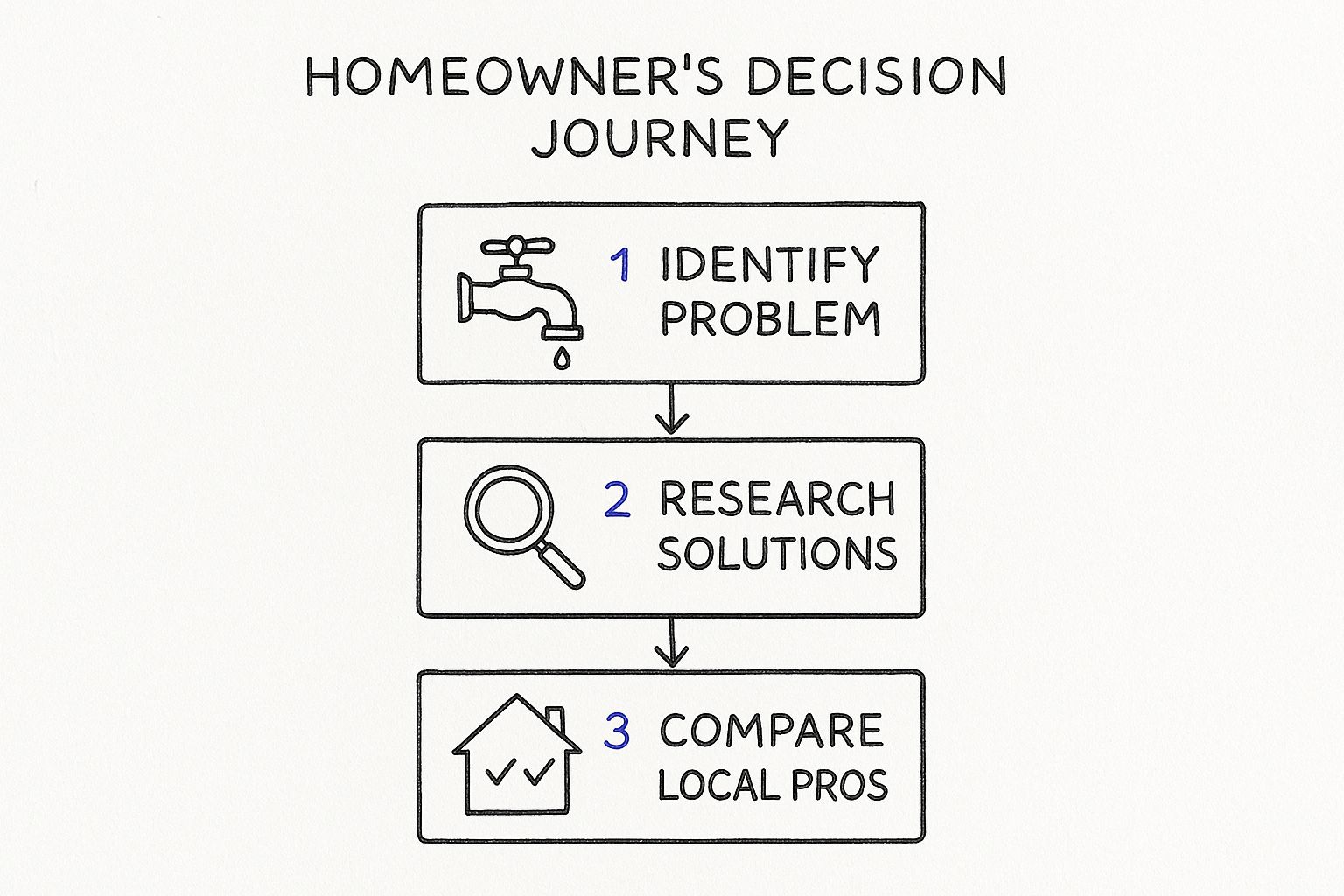
As you can see, that "Research Solutions" stage is a golden opportunity. It’s your chance to connect with potential customers and build a relationship before they even start stacking you up against the competition.
Here's a powerful stat to remember: Nurtured leads make 47% larger purchases than non-nurtured leads. By taking the time to build trust, you’re not just booking another job. You’re landing a higher-value customer who already sees you as the expert and is far less likely to haggle over price.
This whole approach is designed to calm a homeowner's biggest fears. When you've already sent them a guide on "5 Signs Your Water Heater is About to Fail" or a checklist for "Spring AC Tune-Up Essentials," you're not a random company anymore. You're the pro they already know and trust.
From Stranger to Trusted Pro
This is how you sidestep one of the biggest headaches in home services: the constant battle over price. A homeowner who believes in your expertise is focused on getting the job done right, not just finding the cheapest guy in town.
Good lead nurturing really boils down to achieving three things:
- Builds Authority: You become their go-to source for reliable information, proving you know your stuff without having to say a word about sales.
- Stays Top-of-Mind: With regular, helpful communication, your name is the first one that pops into their head when they're finally ready to hire someone.
- Creates Preference: You build a genuine connection that makes it incredibly difficult for a competitor to swoop in and win them over, even if they have a lower price.
In the end, lead nurturing shifts your entire sales process. You stop chasing after every price shopper and start proactively building a pipeline of loyal, high-value customers who see you as the only logical choice.
Mapping the Home Service Lead Nurturing Journey
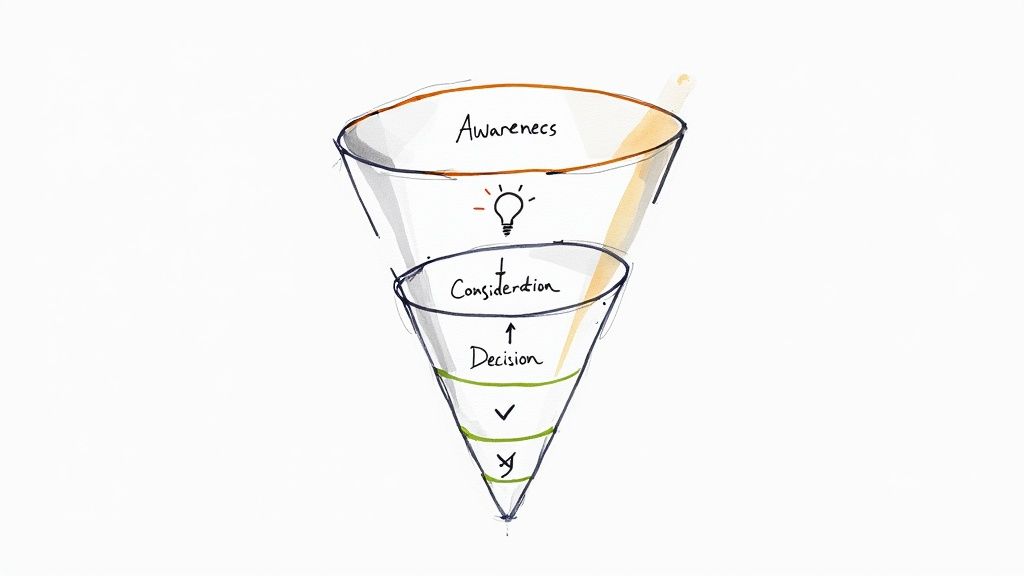
It’s one thing to understand the textbook definition of lead nurturing, but putting it into practice for your home service business is another story entirely. The path from a curious homeowner to a loyal customer isn't a straight line. It's a journey where you have to build trust, piece by piece.
If you can map out that journey, you can deliver the right message at exactly the right time, guiding someone from a vague "what's that noise?" moment to a scheduled job on your calendar. Let's ditch the fuzzy "funnel" concept and break this down into five real-world stages. Each one reflects a change in the homeowner's mindset and calls for a slightly different touch from you.
Stage 1: The Awareness Spark
This is ground zero. It's the moment a homeowner first realizes they have a problem or a need. Maybe the A/C unit starts making a weird clanking sound, a faucet develops an annoying drip, or they just start daydreaming about finally remodeling that outdated bathroom.
At this point, they aren’t looking for you. They’re trying to understand their problem. Your goal is simply to be the helpful expert in the room. Forget the sales pitch; focus on education.
- A practical example: Set up an automated welcome email for anyone who subscribes to your blog. In it, offer a link to a free resource like a "DIY Home Maintenance Checklist."
- What this accomplishes: You provide instant value and plant the seed that your company is a knowledgeable, trustworthy source.
Stage 2: The Consideration Phase
Okay, they understand the issue. Now, the research begins. The homeowner is hitting up Google with phrases like "why is my AC leaking?" or "average cost to replace a water heater." They are actively digging for information and comparing their options.
This is where you can really pull ahead of the competition. By creating content that directly answers their questions with clear, straightforward advice, you start building serious trust long before they're ready to ask for a quote.
Key Insight: This stage is your chance to stand out. While your competitors sit back and wait for the phone to ring, you're proactively solving the customer's research problem. This makes your company the one to beat.
Stage 3: The Intent Signal
The homeowner's search starts to narrow. They've shifted from "what's the problem?" to "who can fix it?" Now they're looking for local companies, digging into online reviews, and comparing the services you offer. This is when they might download your pricing guide or play around with an online estimate tool on your site.
Your nurturing approach needs to shift, too. It’s all about building their confidence that your company is the right choice.
- Show, don't just tell: Share case studies of similar projects you've done in their neighborhood.
- Let others do the talking: Feature testimonials and video reviews from thrilled customers.
- Ease their worries: Clearly highlight your service guarantees, warranties, or customer satisfaction policies.
Stage 4: The Decision Point
We're at the finish line. The lead is ready to book a job. Thanks to all your earlier efforts, they've narrowed their options down to just a handful of companies, and you're on that short list. The goal now is to make it incredibly easy for them to pick you. A timely, compelling offer or a super-simple booking process can be the final nudge they need.
And the data backs this up. One report shows that consistent lead nurturing can increase business sales opportunities by up to 20% compared to leads that get zero follow-up. Even better, nurtured leads often make purchases that are 47% larger. You can learn more about these lead nurturing statistics and see the impact for yourself.
Stage 5: The Loyalty Loop
The job is done, but your work isn't. The final, and arguably most important, stage is all about turning a one-time customer into a lifelong client who raves about your business to friends and family. A little post-job follow-up is the key to earning those five-star reviews, sparking referrals, and locking in future business.
It doesn’t have to be complicated. A simple text asking if they’re happy with the work, or an automated email a year later with a reminder for annual maintenance, is all it takes to keep that relationship warm. This last step is what transforms your marketing from a one-off expense into a true, revenue-generating asset for the long haul.
Practical Lead Nurturing Tactics You Can Use Today

Understanding the "why" behind lead nurturing is a great first step. But knowing the "how" is what actually lands you more jobs. It's time to translate that strategy into concrete actions you can start using to build trust and close more deals.
The real secret is to shift your mindset from a pushy salesperson to a helpful guide. Every text, email, or call should add value and strengthen the relationship. This is the approach that helps great companies stand out from the crowd.
Segment Your Leads for Maximum Impact
If you do only one thing, do this: stop treating all your leads like they're the same person. Blasting a generic message to your entire list is like shouting into a busy street—you might get lucky, but you're mostly just adding to the noise. Instead, you need to segment your leads based on what they actually need from you.
For a home service business, this is pretty straightforward. You could create separate buckets for:
- Emergency Repair Leads: Someone with a burst pipe or a dead AC unit in the middle of July. They need help, and they need it now.
- New Installation Leads: Homeowners thinking about a big project, like a new roof or a complete HVAC overhaul. They're in research mode.
- Maintenance Inquiries: Customers who are interested in keeping their systems in top shape with preventative tune-ups.
Once you separate these groups, you can tailor your communication to be incredibly relevant. The emergency lead gets a quick, reassuring text about your fast response time. The installation lead gets an email with a guide on financing options. This targeted approach feels personal and gets much better results.
Create and Share Genuinely Valuable Content
Think of your content as the fuel for your lead nurturing engine. It’s not about selling; it's about solving problems, answering common questions, and proving you're the expert they can trust long before they ever need to pull out their wallet.
Pro Tip: Don't just write about your services. Create content that helps homeowners solve the little problems they run into. This builds a ton of goodwill and makes you the first company they think of when a big job comes up.
Here are a few content ideas that work wonders for home service businesses:
- Checklists: "Your Ultimate Home Winterization Checklist" for your plumbing and HVAC customers.
- How-To Videos: A quick, 2-minute video on "How to Safely Reset a Tripped Circuit Breaker."
- Buying Guides: A simple blog post on "The Pros and Cons of Different Roofing Materials."
You can use automated email sequences to share these resources without coming off as annoying. For example, after someone downloads your winterization checklist, an email can automatically go out a week later with another related tip. If you're looking for more advanced strategies, digging into a range of lead nurturing best practices can provide some fantastic ideas.
Use a Mix of Communication Channels
Email is the workhorse of lead nurturing, but it shouldn't be your only tool. Sometimes, a high-value lead or someone showing strong interest needs a more personal touch. Using a mix of channels helps you meet people where they're most comfortable.
A strategically timed phone call or text message can be incredibly powerful. A quick, personalized text to confirm an estimate appointment or a follow-up call to answer questions about a big proposal can be the thing that seals the deal. The goal is always to be helpful and service-focused, which is also a core principle of effective franchise lead generation. When you combine the efficiency of automation with the power of a personal touch, you build the kind of real rapport that turns a prospect into a customer for life.
How to Measure Your Lead Nurturing Success
https://www.youtube.com/embed/AEBJqKs-w1Q
You can't improve what you don't measure. Without clear metrics, your lead nurturing efforts are just shots in the dark. Tracking the right key performance indicators (KPIs) is what turns guesswork into a repeatable strategy, showing you exactly what’s resonating with potential customers and what needs a rethink.
The goal isn't just to see if people are opening your emails. It’s about connecting every text, email, and follow-up call directly to your bottom line—booked jobs and revenue. This data-driven approach is what separates the home service companies that struggle from those that build a predictable pipeline of work.
Core Metrics for Home Service Nurturing
To get a true read on your success, you need to focus on a handful of powerful metrics that actually reflect the health of your sales process. These numbers tell a story about how well you’re building relationships and guiding leads toward a decision.
Start by tracking these essentials:
- Lead-to-Appointment Conversion Rate: This is the big one. What percentage of the leads you nurture actually end up on your schedule? A rising number here is a crystal-clear sign your messaging is hitting the mark.
- Sales Cycle Time: How long does it take, on average, to turn a new lead into a paying customer? Good nurturing should shrink this timeline by building trust and answering questions proactively, helping homeowners feel confident enough to decide faster.
- Email Open and Click-Through Rates (CTR): While not the final word on success, these are your best early indicators of engagement. A high open rate means your subject lines are compelling, while a strong CTR shows your content is valuable enough to make people take the next step.
The proof is in the numbers: nurtured leads often result in a 47% higher order value compared to non-nurtured ones. This shows your efforts aren't just winning more jobs; they're winning bigger, more profitable jobs.
Looking Beyond the Initial Sale
True success in lead nurturing isn't just about landing the first job. It’s about creating long-term customers who call you for every project and tell their friends and family about you. That’s where measuring customer lifetime value (CLV) comes into play.
By tracking CLV, you can see how your nurturing efforts contribute to repeat business and referrals, which are the lifeblood of any sustainable home service company. This metric helps you understand the full financial impact of building solid customer relationships from the very first interaction.
To keep all this data straight, it's worth exploring the best lead management software, which can centralize your tracking and give you a much clearer view of your overall success.
How Phone Staffer Fuels Your Nurturing Efforts
You can have the best lead nurturing playbook in the world, but it doesn't mean much if you don't have the time to actually run the plays. For most home service contractors, this is the biggest roadblock. The problem isn't a lack of strategy; it's a lack of hands on deck to handle consistent, professional follow-up.
This is where the rubber meets the road—and where so many good leads go to waste.
Every unanswered call or slow email response is a potential job walking out the door and right to your competitor. Proper lead nurturing demands speed and persistence, but your team is probably already juggling current projects, dispatching techs, and managing the day-to-day chaos. That's the exact gap Phone Staffer was designed to fill.
We're Not Just Answering Phones; We're Following Up
Forget what you think you know about answering services. We act as a true strategic partner, becoming the engine that powers your entire lead nurturing system. Our trained virtual receptionists plug directly into your daily operations to take on the time-sucking tasks that turn curious callers into booked jobs.
Our mission is to make sure every single lead gets immediate, professional attention. This is how we turn your marketing dollars from a simple expense into a powerful investment that delivers a real return.
Think of our team as a seamless extension of your own. We handle the critical first steps of your nurturing strategy with a human touch.
- Speedy Follow-Up Calls: We get in touch with new leads right away, striking while the iron is hot and their interest is at its peak.
- Smart Lead Qualification: We use your specific criteria to vet every inquiry, so your team's valuable time is only spent on prospects who are serious and ready to move forward.
- Direct-to-Calendar Booking: Once a lead is qualified, we book the appointment directly on your schedule. It’s a smooth, seamless process from the first "hello" to a confirmed job.
With Phone Staffer managing these crucial nurturing touchpoints, you can finally stop worrying about leads slipping through the cracks. Every opportunity gets the attention it needs to become your next happy customer.
Your Top Lead Nurturing Questions, Answered
Let's dig into some of the most common questions we hear from home service pros when they start thinking seriously about lead nurturing.
How Long Should a Lead Nurturing Campaign Last?
There's no single right answer here—it really depends on your typical sales cycle.
Think about it this way: if a homeowner calls about a burst pipe, your "nurturing" might just be a quick follow-up call or text a few hours later if they haven't booked. But for a major kitchen remodel or a full roof replacement? You could be looking at a journey that lasts weeks, even months. The goal is to stay helpful and top-of-mind until they either hire you or tell you they've gone another way.
What’s the Difference Between Lead Nurturing and Email Marketing?
This is a great question. The simplest way to look at it is that email marketing is a tool, while lead nurturing is the entire strategy.
A good lead nurturing strategy definitely uses email, but it doesn't stop there. It weaves in phone calls, SMS text messages, and helpful content to guide a potential customer from their first inquiry to a booked job. It’s the difference between a generic newsletter blast and a personalized, well-timed conversation that speaks directly to a homeowner's needs.
A good rule of thumb is to offer three to four pieces of helpful content for every one sales-focused message. This keeps your communication valuable, not aggressive.
Can My Follow-Up Feel Too Aggressive to Customers?
It absolutely can, but only if you do it wrong. The secret to effective nurturing is shifting your mindset from "pushy salesperson" to "helpful expert."
Success isn't about hammering a prospect with constant sales pitches. It’s about providing genuine solutions, answering questions before they're even asked, and demonstrating your expertise. When you focus on solving the homeowner's problem, you build trust and become their go-to resource, not just another company desperate for the job.
Ready to make sure no lead ever slips through the cracks again? Phone Staffer provides trained virtual receptionists to handle your follow-up calls, qualify leads, and book appointments directly on your calendar. See how we can fuel your growth at https://phonestr.com.