
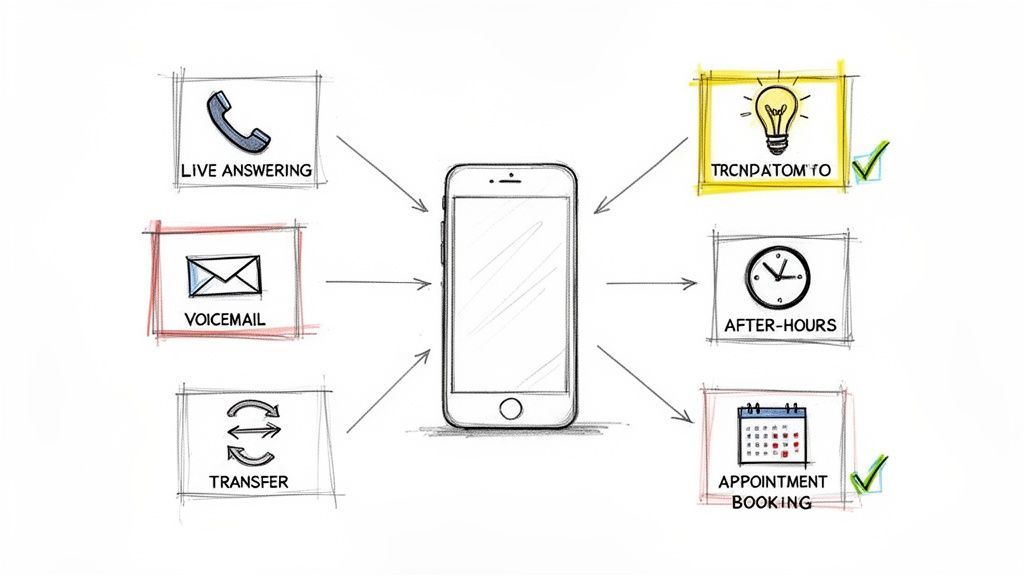
That first ring is more than just a call; it's a potential customer, a new project, and a critical chance to grow. For home service businesses, from HVAC to plumbing and landscaping, the initial phone greeting isn't just a formality. It's the frontline of your lead conversion strategy, setting the tone for the entire customer experience. A fumbled 'hello' or a confusing voicemail can lose a high-value job before you even have a chance to quote it.
This guide provides actionable phone greeting examples for business, tailored specifically for the unique demands of the home service industry. We’ll move beyond generic scripts and break down the strategy behind each greeting. You'll get detailed analysis and quick customization tips to ensure your team answers every call with confidence, professionalism, and a clear path toward booking the appointment. To help you craft the perfect first impression across all situations, you can explore more professional phone greeting examples and scripts for various business scenarios.
Below, we will dive into specific examples, showing you how to turn your phone from a simple communication tool into a powerful lead-capturing machine, one call at a time.
1. The Professional Company Name Greeting
This greeting is the foundational script for professional business communication. It's a straightforward, no-frills approach that prioritizes clarity and immediate brand identification. The core components are simple: a polite opening, your company's name, the speaker's name, and an offer to help. This structure instantly orients the caller, letting them know they’ve reached the right place and who they are speaking with. For home service businesses, this establishes a baseline of professionalism and reliability from the very first second.

Strategic Breakdown
The strength of this classic phone greeting example for business lies in its efficiency and universal recognition. Callers expect this format from professional services, which reduces confusion and allows them to state their needs quickly.
- Script Example: "Thank you for calling Precision Plumbing, this is Sarah. How may I help you today?"
This script achieves several key objectives in under ten seconds.
- Instant Confirmation: The caller immediately knows they dialed correctly.
- Personal Connection: Introducing yourself by name adds a human touch.
- Proactive Service: Asking "How may I help you?" opens the floor for the caller's query.
Actionable Takeaways
To make this greeting as effective as possible, focus on the delivery. A warm and confident tone can transform a standard script into a welcoming experience that sets a positive precedent for the entire customer interaction.
Pro Tip: Smile when you speak. Even though the caller can't see you, the act of smiling genuinely changes the tone of your voice, making it sound more friendly and approachable.
Best Practices:
- Speak Clearly: Enunciate both your company name and your personal name.
- Maintain a Moderate Pace: Don't rush the greeting; give the caller a moment to process the information.
- Stay Consistent: Ensure every team member who answers the phone uses the same professional format.
2. The Department-Specific Routing Greeting
This greeting is an evolution of the basic script, designed for larger home service businesses or companies with distinct operational divisions. It directs callers to the right place from the start by identifying the specific department, such as "Sales," "Service," or "Billing." This approach immediately clarifies who the caller is speaking with and manages expectations, proving especially useful for companies handling a high volume of diverse inquiries. For a growing business, this greeting demonstrates organizational structure and enhances customer routing efficiency.
Strategic Breakdown
The power of this department-specific phone greeting example for business lies in its ability to reduce internal transfers and speed up resolution times. By announcing the department, you filter calls effectively, which saves time for both the customer and your team. Callers feel more confident that they are talking to the right person to solve their specific problem.
- Script Example: "Thank you for calling Guardian HVAC, you've reached the Service Department. This is Michael. How can I assist you?"
This script builds on the professional foundation with an added layer of clarity.
- Pre-emptive Routing: The caller knows they have reached the service team, not sales or billing.
- Reduces Redundancy: It prevents the caller from having to explain their issue to the wrong person.
- Streamlined Experience: It directs the conversation toward a specific goal, such as booking a repair or asking a technical question.
Actionable Takeaways
To implement this greeting effectively, your team needs a clear understanding of each department's function to avoid misdirecting calls. Clear internal protocols for handling transfers are essential for when a caller does reach the wrong department despite the greeting.
Pro Tip: Keep an updated internal directory easily accessible to all staff. This ensures that if a caller needs to be transferred, the process is seamless and professional, not confusing or frustrating.
Best Practices:
- Be Precise: Use clear, simple department names like "Scheduling" or "Billing" instead of internal jargon.
- Train for Transfers: Ensure staff know the proper protocol for transferring calls smoothly, including introducing the caller to the next representative.
- Keep Scripts Updated: If your company's structure changes, update phone scripts immediately across all departments.
3. The Warm & Welcoming Personal Greeting
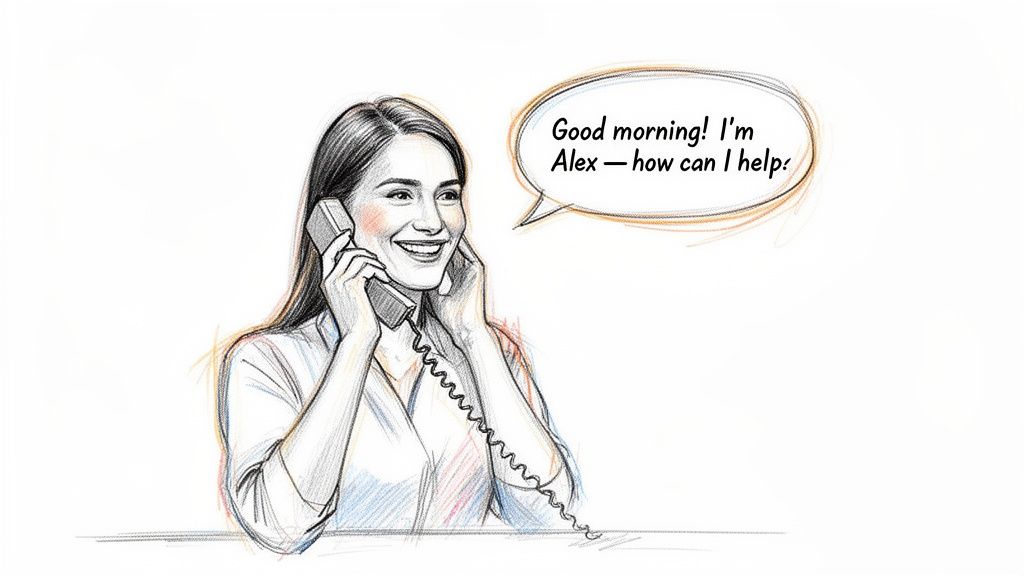
This approach builds on the professional standard by injecting a significant dose of warmth and personality. It’s designed to make the caller feel genuinely welcomed and appreciated from the very first moment. Instead of just identifying the business, this greeting uses enthusiastic language to create an immediate positive emotional connection, making it an excellent phone greeting example for business models built on strong customer relationships. For service businesses, it can instantly differentiate you from competitors by making your company feel more human and approachable.
Strategic Breakdown
The power of this greeting lies in its ability to disarm the caller and set a collaborative, friendly tone. It's particularly effective for businesses where trust and personal rapport are key, such as high-end custom services or companies with a customer-centric culture like Zappos or Ritz-Carlton.
- Script Example: "Good morning! Thank you for choosing Apex Air & Heat. This is Michael speaking. I'm delighted to help you today!"
This script does more than just transmit information; it projects an attitude.
- Positive Framing: Starting with a time-of-day greeting ("Good morning!") and using words like "delighted" creates a cheerful atmosphere.
- Expresses Gratitude: "Thank you for choosing" makes the caller feel valued before they even state their problem.
- Encourages Openness: The enthusiastic offer of help makes callers feel more comfortable sharing their needs.
Actionable Takeaways
To execute this greeting effectively, sincerity is paramount. The warmth must feel genuine, not scripted or forced. Training should focus on emotional intelligence and helping staff connect with the customer's potential state of mind, especially in home services where a call often signals a stressful problem.
Pro Tip: Vary your intonation and emphasize positive words like "great," "wonderful," or "delighted." A monotonous delivery will make the warmth feel artificial and could backfire.
Best Practices:
- Match Your Brand: This style works best if your company's brand personality is genuinely friendly and customer-focused.
- Maintain Energy: The positive energy established in the greeting should be carried throughout the entire conversation.
- Train for Genuineness: Coach your team to find their own authentic way of sounding happy to help, rather than just reading a script.
4. The Value-Added Information Greeting
This phone greeting for business moves beyond a simple welcome by immediately providing the caller with useful, timely information. It anticipates a common question or shares a relevant update before the conversation even begins, positioning your company as proactive and considerate. The structure typically includes a standard opening, followed by a brief, valuable piece of information, and then a handoff to the caller. For a home service business, this could mean mentioning current wait times or a seasonal promotion, instantly adding value to the interaction.
Strategic Breakdown
The power of this greeting lies in its ability to manage caller expectations and deliver immediate utility. By providing a relevant update upfront, you can streamline the conversation, reduce frustration, and subtly guide the caller. This approach is particularly effective for businesses that experience fluctuating service times or run frequent promotions.
- Script Example: "Thank you for calling Elite Electrical. We're currently booking for next week. This is David. How can I help you today?"
This script is a masterclass in efficiency and strategic communication.
- Manages Expectations: The caller immediately understands the current appointment availability, which helps frame their request.
- Demonstrates Proactivity: It shows your business is aware of its current operational status and is transparent with customers.
- Adds Instant Value: This information saves the caller from having to ask, making the call more efficient for both parties.
Actionable Takeaways
To execute this greeting effectively, the information shared must be genuinely helpful and consistently updated. Outdated information will damage credibility and cause confusion, defeating the purpose of the script.
Pro Tip: Keep the informational piece extremely brief, no more than one short sentence. The goal is to provide a quick, valuable update, not to overwhelm the caller with a lengthy announcement.
Best Practices:
- Keep it Relevant: Ensure the information directly benefits the majority of your callers (e.g., service availability, special offers).
- Update Diligently: Your team must be trained to update the script daily or as conditions change.
- Focus on Helpfulness: Frame the information as a benefit to the customer, not a sales pitch.
5. The Question-Based Engagement Greeting
This advanced greeting flips the traditional script by immediately inviting the caller to share their needs with an open-ended question. Instead of a generic "how can I help," this method uses more specific, engaging language to guide the conversation from the start. It positions your business as a proactive problem-solver, signaling that you are ready to listen and address the caller's specific situation. This approach is particularly effective for businesses offering customized solutions, like design-build contractors or high-end renovation specialists.
Strategic Breakdown
The power of this greeting lies in its ability to quickly move past pleasantries and get to the core of the caller's issue. It gives the caller control, making them feel heard and understood from the very first interaction. This is one of the more consultative phone greeting examples for business.
- Script Example: "Thank you for calling Elite Custom Cabinetry, this is David. To get started, could you tell me a bit about the project you have in mind?"
This script sets a collaborative tone and accomplishes several goals instantly.
- Empowers the Caller: It immediately puts the focus on the customer's needs and vision.
- Frames the Interaction: It establishes the call as a consultation, not just a transaction.
- Gathers Information Efficiently: The open-ended question encourages the caller to provide detailed context upfront.
Actionable Takeaways
To execute this greeting effectively, your team must be trained in active listening. They need to be prepared to handle a wide range of detailed responses without interrupting. The goal is to absorb information, not just wait for a turn to speak. This is the opposite of the scripted nature of a cold call, where the caller leads the conversation.
Pro Tip: Paraphrase the caller's main points back to them before moving forward. Saying something like, "So, you're looking for a full kitchen remodel with a focus on a modern, minimalist style, is that right?" confirms you were listening and builds immense trust.
Best Practices:
- Use Follow-Up Questions: Prepare a few secondary questions to guide the conversation if the caller is unsure where to begin.
- Take Detailed Notes: Capture key details about the customer's project, pain points, and desired outcomes.
- Be Patient: Allow the caller to explain their needs fully. This initial investment of time pays off in customer satisfaction and a clearer understanding of the job scope.
6. The Automated IVR with Personal Backup Greeting
This hybrid greeting blends automation with a human touch, designed for businesses managing high call volumes. An Interactive Voice Response (IVR) system initially greets callers and offers a menu of options to direct them to the correct department. The critical "personal backup" component is the option to bypass the menu and speak directly with a representative, preventing caller frustration and ensuring complex issues are handled personally. This system streamlines call routing while keeping the human connection accessible.
Strategic Breakdown
The power of this phone greeting example for business lies in its ability to efficiently segment callers by need without completely removing human interaction. For a growing home service business, this means sales leads can be fast-tracked while billing or support queries are routed to the right team, improving overall efficiency. To manage high call volumes efficiently and ensure round-the-clock service, especially for small to medium-sized businesses, leveraging an automated phone answering service for SMBs can be crucial.
- Script Example: "Thank you for calling Guardian Electric. For new installations or quotes, press 1. For service and support, press 2. For billing inquiries, press 3. Or, please stay on the line to speak with the next available representative."
This script immediately empowers the caller to direct their own call.
- Improved Efficiency: It filters and organizes incoming calls automatically, reducing the workload on your front-desk staff.
- Caller Autonomy: It gives callers control, allowing them to quickly navigate to the department they need.
- Safety Net: The "stay on the line" option ensures that callers who are confused or have a unique issue can still reach a person.
Actionable Takeaways
The key to a successful IVR is simplicity and clarity. A complicated or lengthy menu can lead to callers hanging up. Keep your options concise and logical, always prioritizing the most common reasons customers call your business.
Pro Tip: Record the IVR prompts using a clear, professional, and friendly voice. Avoid robotic-sounding text-to-speech if possible, as a warm human voice can make the automated system feel more welcoming.
Best Practices:
- Limit Options: Keep the main menu to a maximum of four choices to avoid overwhelming the caller.
- Always Offer an Out: Ensure there is a clear and easy option to reach a live person, such as "press 0" or "stay on the line."
- Test and Refine: Regularly call your own number to experience the IVR from a customer's perspective and identify any points of friction.
7. The Industry-Specific Compliance Greeting
In certain industries, legal and regulatory requirements dictate specific disclosures at the start of a call. This greeting integrates necessary compliance language directly into a professional script, ensuring your business meets its legal obligations without sacrificing a welcoming tone. The key is to deliver the required statement clearly and concisely before proceeding with the standard greeting components. This approach is non-negotiable for businesses in fields like healthcare or finance, where transparency and legal adherence are paramount.
Strategic Breakdown
The primary goal of this phone greeting example for business is to fulfill a legal mandate while maintaining a positive customer experience. By placing the compliance statement at the very beginning, you address the requirement immediately, allowing the rest of the conversation to flow naturally. It demonstrates that your company is professional, transparent, and operates by the book, which can build significant trust with callers.
- Script Example: "Thank you for calling SecureHome Alarms. This call may be recorded for quality and training purposes. This is Michael. How may I assist you?"
This script expertly balances mandatory disclosure with customer service.
- Immediate Compliance: The legal notice is delivered upfront, satisfying regulations.
- Maintained Professionalism: It seamlessly transitions into a standard, helpful greeting.
- Sets Expectations: The caller is immediately aware that the conversation is being recorded.
Actionable Takeaways
The biggest challenge with this greeting is avoiding a robotic or impersonal delivery. The compliance line should be spoken with the same natural, friendly tone as the rest of the script. Practice is key to making the entire greeting sound like a single, cohesive, and welcoming statement.
Pro Tip: Consult with a legal professional to ensure your script's wording meets all local, state, and federal requirements for your specific industry. Do not use a generic script without verification.
Best Practices:
- Keep it Concise: Work with your legal team to make the disclosure as brief as possible.
- Train for Tone: Role-play with staff to ensure the compliance statement is delivered naturally.
- Universal Consistency: Every employee must deliver the exact same legally approved message.
8. The Multi-Language Inclusive Greeting
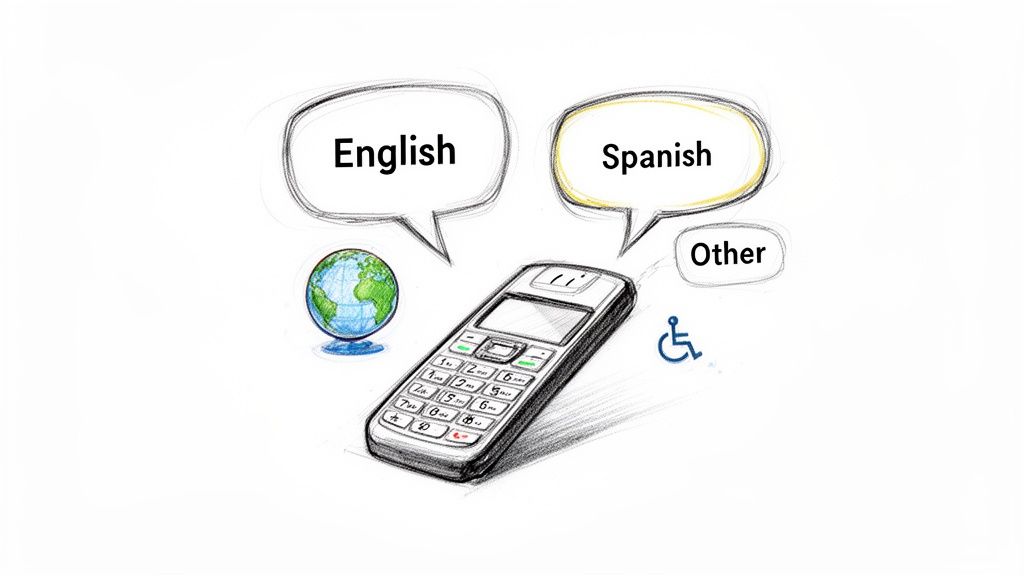
This greeting is designed for businesses serving diverse communities, immediately offering callers options in their preferred language. By moving beyond an English-only script, this approach demonstrates inclusivity and removes communication barriers from the very first interaction. It uses a simple Interactive Voice Response (IVR) menu to direct callers to a representative who can assist them effectively, signaling that your business values every potential customer, regardless of their native language. For home service businesses in metropolitan or multilingual areas, this is a powerful way to expand your customer base and build a reputation for accessibility.
Strategic Breakdown
The core strategy here is to eliminate friction and build trust. A caller struggling with a language barrier is less likely to convert into a customer. This phone greeting example for business proactively solves that problem, showing respect for the caller's background and making it easy for them to get the help they need.
- Script Example: "Thank you for calling Stellar Home Services. For English, press 1. Para español, oprima el número dos."
This script accomplishes critical goals before a human even joins the line.
- Immediate Accessibility: It instantly caters to the most common languages in your service area.
- Customer Empowerment: Callers feel respected and in control when they can choose their language.
- Operational Efficiency: It routes calls to the correct bilingual staff member, saving time and preventing miscommunication.
Actionable Takeaways
Implementation requires more than just a recording; it requires a genuine commitment to serving all customers. The key is to ensure the experience is seamless and authentic from the initial greeting through to job completion.
Pro Tip: Use professional, native-speaking voice actors for your IVR recordings. An automated or poorly translated message can sound robotic and defeat the purpose of creating a welcoming experience.
Best Practices:
- Know Your Demographics: Use local census data to identify the most prevalent languages in your service area to prioritize.
- Ensure Staffing: Make sure you have trained, bilingual staff available to handle the calls routed from the IVR.
- Professional Translation: Invest in professional translation for all scripts to avoid errors that could undermine your credibility.
Comparison of 8 Business Phone Greetings
| Greeting | Implementation Complexity 🔄 | Resource Requirements ⚡ | Expected Outcomes ⭐ | Ideal Use Cases 📊 | Key Advantages 💡 |
|---|---|---|---|---|---|
| The Professional Company Name Greeting | Low — simple script, minimal training | Minimal — one representative, basic coaching | ⭐⭐⭐ Clear credibility and context; consistent first impression | Corporate switchboards, banks, general customer service | Instant credibility; easy to standardize |
| The Department-Specific Routing Greeting | Medium — requires accurate department IDs and updates | Low–Medium — staff training, updated directory | ⭐⭐⭐⭐ Fewer misroutes; higher first-contact resolution | Large organizations, hospitals, banking & claims departments | Faster routing; reduces caller transfers |
| The Warm & Welcoming Personal Greeting | Low–Medium — needs tone coaching and practice | Low — soft-skill training, call coaching | ⭐⭐⭐⭐⭐ Strong customer satisfaction and emotional connection | Hospitality, luxury retail, customer-centric companies | Builds rapport; differentiates brand |
| The Value-Added Information Greeting | Medium — needs timely content and review process | Medium — coordination with marketing, script updates | ⭐⭐⭐⭐ Sets expectations; reduces caller anxiety and enables cross-sell | Retail during promotions, peak call centers, e-commerce support | Communicates value/updates; proactive service |
| The Question-Based Engagement Greeting | High — requires skilled agents and active-listening | Medium–High — trained staff, CRM/note systems | ⭐⭐⭐⭐ Quickly identifies intent; improves tailored resolutions | Consulting, bespoke services, VIP support lines | Gathers needs early; personalizes the interaction |
| The Automated IVR with Personal Backup Greeting | High — technical setup, menu design, maintenance | High — IVR platform, recordings, analytics | ⭐⭐⭐ Scales for volume; efficient routing but less personal | Telecoms, large banks, government call centers | Efficient 24/7 routing; cost-effective at scale |
| The Industry-Specific Compliance Greeting | Medium — must reflect legal language and reviews | Low–Medium — legal review, consistent delivery training | ⭐⭐⭐⭐ Ensures regulatory compliance and legal protection | Finance, healthcare, insurance, legal services | Meets regulations; increases transparency |
| The Multi-Language Inclusive Greeting | High — multiple languages and quality control | High — multilingual staff or translation services | ⭐⭐⭐⭐ Improves accessibility and market reach | Major hospitals, government services, international companies | Serves diverse customers; demonstrates inclusivity |
Never Miss a Lead Again: Implementing Your Perfect Greeting
Moving beyond a generic "hello" is the first and most critical step in transforming your phone from a simple communication tool into a powerful lead conversion engine. Throughout this guide, we've dissected various phone greeting examples for business, from the straightforward Professional Company Name Greeting to the more complex Automated IVR with Personal Backup. The common thread is clear: a strategic greeting sets the stage for a positive customer experience, builds immediate trust, and directs callers efficiently toward a solution.
The key takeaway is that your phone greeting isn't just a formality; it's a strategic asset. It’s your business’s first impression, an opportunity to demonstrate professionalism, empathy, and competence before your team even speaks with a potential customer. Whether it's a live answer, an after-hours voicemail, or a transfer message, each interaction is a chance to reinforce your brand's commitment to exceptional service.
From Examples to Implementation: Your Action Plan
To truly leverage the power of these scripts, you must move from passive reading to active implementation. Merely choosing a script is not enough; consistent, flawless execution is what captures leads and builds loyalty.
Here are your actionable next steps:
- Select and Customize: Review the examples and choose the ones that best fit your business's various scenarios (live answer, voicemail, after-hours). Customize them with your company name, specific services, and unique value proposition.
- Train Your Team: Consistency is non-negotiable. Hold a team meeting to review the new scripts. Practice role-playing different scenarios until the greetings sound natural, confident, and professional. Ensure everyone, from office staff to technicians in the field, understands the importance of this first interaction.
- Record High-Quality Voicemails: For your automated greetings and voicemails, record them in a quiet, echo-free room. Use a quality microphone if possible. Speak clearly and at a moderate pace, projecting a warm and helpful tone. A poorly recorded message can undermine the most perfectly crafted script.
- Review and Refine: Your business isn't static, and neither are your customers' needs. Periodically review call recordings (if applicable and with consent) to ensure the greetings are being delivered effectively. Solicit feedback from your team and customers to identify areas for improvement.
Mastering these phone greetings is an investment in your brand's reputation and your bottom line. Every call represents a potential job, a new long-term customer, or a valuable referral. By implementing a thoughtful and professional phone answering strategy, you ensure that every one of these opportunities is met with the competence and care it deserves, paving the way for sustained business growth.
Ready to ensure every call is answered perfectly, even when you're on a job site or handling other business priorities? Phone Staffer provides professionally trained, US-based virtual receptionists who can implement these proven scripts, book appointments directly into your calendar, and ensure you never miss a lead again. Visit Phone Staffer to learn how you can turn your phone into your most reliable growth tool.