
The home service industry is facing a critical challenge: explosive customer demand is colliding with a shrinking talent pool. From HVAC technicians and plumbers to customer service representatives, finding and retaining skilled staff has become a primary bottleneck for growth. This isn't a minor hurdle; it's a direct threat to your revenue, service quality, and ability to scale. When you can't find qualified people, you turn down profitable jobs, risk team burnout, and watch competitors capture market share.
The reality is that old-school hiring tactics are no longer enough to overcome this gap. To build a resilient and thriving business, owners must adopt a modern, multi-pronged strategy. This means looking beyond the traditional W-2, in-office employee model and embracing a more flexible, technology-driven approach to workforce management. The key is to attack the problem from multiple angles simultaneously.
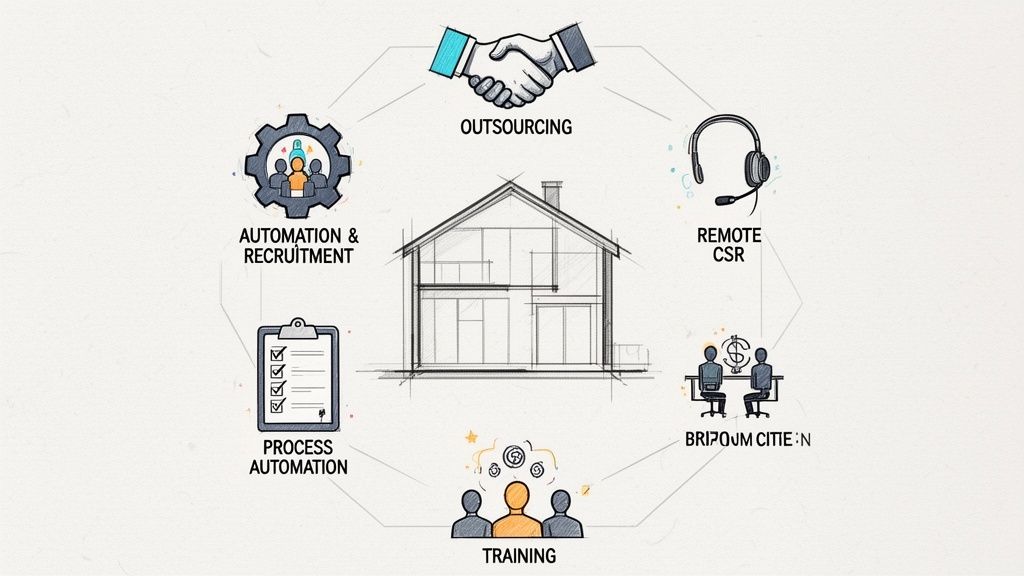
This article provides a comprehensive playbook of 12 actionable labor shortage solutions designed specifically for home service businesses. We will move past the obvious advice and dive into practical strategies you can implement right away. You will learn how to:
- Tap into a global talent pool with remote CSRs and virtual assistants.
- Automate administrative tasks to free up your existing team for high-value work.
- Structure compensation and benefits that attract top-tier talent.
- Optimize your recruitment process to become an employer of choice.
Each solution is presented as a clear, actionable tactic to help you build a robust team, overcome staffing shortages, and position your company for sustained success.
1. Remote Customer Service Representatives (CSRs) and Virtual Assistants (VAs)
One of the most immediate and effective labor shortage solutions is to decouple your administrative and customer-facing roles from your physical location. Hiring remote Customer Service Representatives (CSRs) and Virtual Assistants (VAs) instantly expands your talent pool from a limited local market to a national or even global scale. This strategy allows you to find skilled professionals to handle critical tasks like phone answering, appointment scheduling, lead qualification, and back-office administration without geographic constraints.

This approach not only fills staffing gaps but also provides strategic advantages, such as extended service hours or full 24/7 coverage, which would be prohibitively expensive with an in-house team. Companies like Phone Staffer specialize in hiring, training, and placing remote CSRs specifically for home service businesses, ensuring they understand the industry's unique demands. Large-scale providers like TTEC and Concentrix also offer tailored remote staffing, proving the model’s scalability and effectiveness.
How to Implement Remote CSRs and VAs
To successfully integrate remote staff, focus on creating a structured and supportive virtual environment. This ensures they operate as a seamless extension of your local team.
- Invest in Robust Onboarding: Develop a comprehensive remote training program that covers your specific service areas, brand voice, and operational software. Use video modules, live sessions, and a detailed knowledge base.
- Establish Clear KPIs: Before hiring, define key performance indicators (KPIs) such as call answer rate, first-call resolution, and booking percentage. This clarifies expectations and simplifies performance management.
- Utilize Technology: Equip your remote team with a cloud-based CRM and phone system. This provides real-time access to customer history and job schedules, ensuring consistent service quality.
- Prioritize Cultural Fit: During interviews, assess candidates for alignment with your company’s values. A strong cultural fit is crucial for maintaining brand consistency and team cohesion, even from a distance.
2. Done-For-You Cold Calling Services
A powerful labor shortage solution for lead generation is outsourcing your cold outreach to specialized agencies. Instead of hiring, training, and managing an in-house sales development team, you can leverage done-for-you services that use professional callers to prospect customers, qualify leads, and book appointments directly into your calendar. This strategy taps into expert sales talent and proven processes, generating a consistent lead flow without consuming internal resources.
This approach is highly effective for home service businesses looking to aggressively grow their customer base but lacking the specialized staff to do so. It bypasses the lengthy and costly process of building a sales team from scratch. For instance, Phone Staffer offers dedicated cold calling services for home service companies, while niche providers like HVAC Leads focus on specific trades. This model allows businesses to access top-tier sales expertise on demand, a key advantage when skilled sales professionals are hard to find locally.
How to Implement Done-For-You Cold Calling Services
To maximize your return on investment, partner with an agency as a strategic extension of your sales function. Success hinges on clear communication and system integration.
- Define Your Ideal Customer Profile: Provide the agency with a detailed profile of your target customer, including demographics, location, and common pain points. This ensures callers are targeting the most valuable prospects.
- Establish Quality-Based KPIs: Set clear key performance indicators (KPIs) beyond just the number of calls. Focus on metrics like qualified appointment rate and appointment show rate to measure true success.
- Integrate with Your CRM: Connect the service directly to your CRM and calendar software. This enables seamless, real-time appointment booking and lead tracking, preventing delays and double-booking.
- Provide a Comprehensive Script and FAQ: Equip the calling team with a well-researched script, key differentiators, and answers to frequently asked questions. Regularly review call recordings to ensure brand messaging is consistent and effective.
3. Automation and AI-Powered Lead Management Systems
Another powerful labor shortage solution is to automate the repetitive, time-consuming tasks that burden your administrative team. Implementing AI-powered tools streamlines lead capture, qualification, and follow-up, ensuring no potential customer slips through the cracks. These systems use chatbots, automated schedulers, and intelligent workflows to manage routine interactions, which frees your human staff to handle complex customer needs and high-value sales conversations.
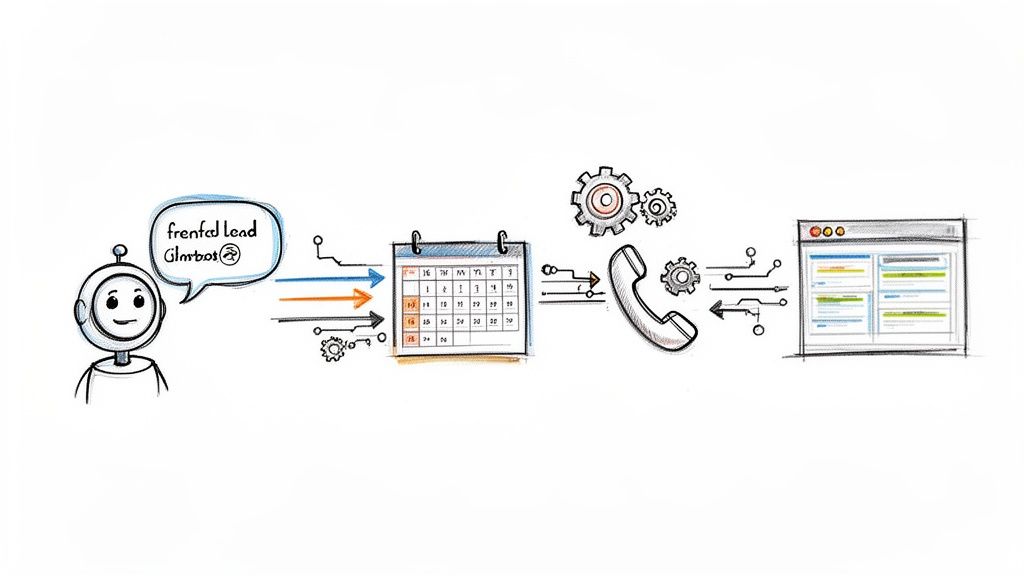
This strategy improves operational efficiency and elevates the customer experience with instant responses and seamless booking. For example, a platform like ServiceTitan uses AI to optimize scheduling for field technicians, while tools like Calendly eliminate back-and-forth emails for appointments. Unlocking growth through customer services automation allows a smaller team to manage a larger volume of inquiries effectively, directly combating staffing gaps while improving service consistency and speed.
How to Implement Automation and AI
Successfully integrating automation requires a phased approach focused on high-impact areas first. This ensures a smooth transition and measurable returns without overwhelming your team.
- Start with One Process: Begin by automating a single, well-defined task, such as appointment scheduling or initial lead qualification via a website chatbot. This allows you to learn the technology and demonstrate its value before expanding.
- Ensure CRM Integration: Choose tools that integrate seamlessly with your existing Customer Relationship Management (CRM) system. This is crucial for maintaining a single source of truth for customer data and avoiding information silos.
- Establish Clear Triggers: Define the specific rules and triggers that will initiate an automated workflow. For example, a form submission on your website could automatically trigger a confirmation email and create a new lead record in your CRM.
- Maintain Human Oversight: While automation handles routine tasks, ensure there is a clear process for escalating complex inquiries to a human agent. Regularly audit AI-driven decisions to fine-tune accuracy and maintain quality control.
4. Competitive Compensation and Benefits Packages
In a tight labor market, offering an attractive compensation and benefits package is one of the most direct labor shortage solutions available. Moving beyond just a competitive hourly wage, this strategy involves creating a holistic rewards structure that supports both financial stability and quality of life. For home service businesses, this means designing packages with performance bonuses, comprehensive health insurance, and flexible work options that appeal to the modern workforce.
This approach transforms your company from just another job into a desirable career destination, significantly boosting both recruitment and retention. For instance, major home service franchisors like ServiceMaster often provide robust benefits to attract top-tier field talent, while many local HVAC and plumbing companies implement profit-sharing or tiered bonus programs tied to lead conversion and customer satisfaction. This proves that both large and small businesses can leverage compensation as a powerful competitive advantage.
How to Implement Competitive Compensation and Benefits
Building a compelling package requires research, creativity, and clear communication to ensure it resonates with current and prospective employees.
- Benchmark and Exceed Market Rates: Regularly research local and national wage data for similar roles. Aim to offer compensation that is slightly above the market average to attract the best candidates and reduce turnover.
- Create Performance-Based Incentives: Tie bonuses directly to measurable outcomes like booked appointments, customer satisfaction scores, or first-call resolution rates. This motivates employees and aligns their goals with business objectives.
- Offer Flexible and Valued Benefits: Beyond standard health insurance, consider offering flexible perks such as 401(k) matching, professional development funds, paid time off, and flexible scheduling. Survey your team to understand which benefits they value most.
- Establish Clear Career Pathways: Document and communicate opportunities for advancement. A clear path from a CSR to a team lead or dispatcher role shows employees there is a future for them at your company, which is a powerful retention tool.
5. Training and Development Programs
Investing in your team's growth is a powerful labor shortage solution that directly combats high turnover rates. Implementing comprehensive onboarding and continuous training programs develops staff capabilities, improves performance, and boosts retention by showing employees they have a clear career path. Structured training ensures consistency in customer interactions, deepens service knowledge, and reinforces company standards, building a culture of excellence and loyalty.
This strategy transforms a job into a career, making your company more attractive to ambitious candidates. Industry leaders like ServiceTitan offer extensive training through ServiceTitan Academy, while major franchisors provide standardized curricula to ensure brand quality. Similarly, Phone Staffer’s in-depth training for CSRs and VAs ensures they are experts from day one, proving that a strong educational foundation is key to retaining top talent in a competitive market.
How to Implement Training and Development Programs
To build an effective program, focus on creating accessible, relevant, and ongoing learning opportunities that align with both employee growth and business objectives.
- Develop Detailed Training Manuals: Create role-specific manuals covering your unique service offerings, operational processes, and customer service scripts. Make these easily accessible in a digital format.
- Use a Blended Learning Approach: Combine various training methods, including video tutorials, live role-playing sessions for customer interactions, and peer mentoring that pairs new hires with top-performing veterans.
- Implement Tiered Certifications: Create a clear advancement path with tiered levels (e.g., Bronze, Silver, Gold). Link completion of these training modules to tangible rewards like pay increases, bonuses, or promotions.
- Measure Training ROI: Track the impact of your programs on key business metrics. Monitor improvements in first-call resolution, booking rates, customer satisfaction scores, and employee retention to justify and refine your investment.
6. Flexible Work Arrangements and Scheduling
Rigid 9-to-5 schedules can significantly shrink your applicant pool, excluding valuable talent like students, parents, and semi-retired professionals. Introducing flexible work arrangements is a powerful labor shortage solution that adapts your staffing model to the modern workforce's needs. This strategy involves offering options like part-time roles, compressed workweeks, or flexible start and end times to attract skilled individuals who require non-traditional hours.
This adaptability not only widens your talent pipeline but also boosts employee morale and retention by promoting better work-life balance. For example, a home service business can hire experienced, part-time technicians to cover peak demand periods in the late afternoon when homeowners are back from work. Similarly, companies like Starbucks have mastered flexible scheduling to retain employees, proving that operational efficiency and worker satisfaction can coexist. This approach allows you to scale your workforce precisely when needed without the overhead of a full-time hire.
How to Implement Flexible Scheduling
Successfully managing a flexible workforce requires clear systems and communication to maintain service quality and operational consistency across all shifts.
- Adopt Scheduling Software: Use tools like Deputy or When I Work to manage complex schedules, track availability, and allow employees to easily swap shifts. This technology automates a once-manual process, reducing administrative burden.
- Establish Core Availability: Define mandatory "core hours" or specific days when key team members must be available for meetings or collaborative tasks. This ensures team cohesion and critical communication are not lost.
- Create Clear Performance Metrics: Set explicit expectations for productivity, response times, and job completion standards for all employees, regardless of their schedule. This ensures fairness and consistent service delivery.
- Develop Part-Time Career Paths: Show part-time staff they are valued by creating clear pathways for advancement. Offering opportunities for increased responsibility or a transition to full-time work can dramatically improve retention.
7. Strategic Partnerships and Outsourcing
Another powerful labor shortage solution is to outsource non-core functions to specialized partners. Instead of building and managing an internal team for every business need, you can leverage the expertise and infrastructure of vendors focused on specific tasks. This approach allows home service businesses to access top-tier talent and technology for lead generation, appointment setting, and customer support without the overhead of direct hires. It effectively adds capacity and specialized skills to your operation on demand.
This model enables you to focus on your primary revenue-generating activities: providing excellent field service. For example, partnering with lead-generation services like HomeAdvisor or Angi connects you with a steady stream of potential customers, while outsourcing call handling to a provider like Phone Staffer ensures every lead is answered professionally. Large franchise systems often use this strategy, providing franchisees with corporate-level partnerships for marketing and customer service, allowing them to concentrate on local service delivery.
How to Implement Strategic Partnerships
Success in outsourcing hinges on selecting the right partners and managing those relationships effectively. Clear communication and well-defined expectations are essential for making a partnership a seamless extension of your business.
- Define Clear Service Level Agreements (SLAs): Before signing any contract, clearly document expectations for performance, including response times, conversion rates, and reporting requirements. This creates an objective benchmark for success.
- Start with a Pilot Program: Test a potential partnership with a small-scale, limited-duration pilot program. This allows you to evaluate their performance, cultural fit, and integration capabilities before committing to a long-term agreement.
- Integrate Technology for Visibility: Ensure the partner's systems can integrate with your CRM. This provides real-time visibility into their activities and performance, allowing you to track leads and customer interactions seamlessly.
- Establish Strong Brand Guidelines: Provide partners with detailed brand guidelines, call scripts, and communication standards. This ensures they represent your company accurately and maintain a consistent customer experience.
8. Technology Investment and Modernization
One of the most powerful labor shortage solutions is modernizing your operational technology. Upgrading to integrated platforms for customer relationship management (CRM), scheduling, and communication directly reduces the manual workload on your existing team. This allows each employee to accomplish more, easing the pressure from unfilled positions and making your business a more attractive workplace for tech-savvy talent. Modern systems streamline everything from lead management to dispatching and invoicing, minimizing administrative drag.
Investing in a robust tech stack is not just about efficiency; it's a strategic move to improve employee and customer experiences simultaneously. Field service management software like ServiceTitan automates scheduling and provides technicians with all necessary job details on a mobile device, reducing errors and saving time. Similarly, tools like Slack or Microsoft Teams enhance real-time communication between the office and the field, enabling faster problem-solving and better team cohesion without adding to staff headcount.
How to Implement Technology Modernization
A successful tech implementation requires a strategic rollout that prioritizes adoption and minimizes disruption. The goal is to empower your team, not overwhelm them.
- Conduct a Needs Assessment: Before purchasing software, map your current workflows to identify the biggest bottlenecks. This ensures you invest in technology that solves your most pressing operational problems.
- Prioritize Core Systems First: Start by implementing foundational software like a field service management platform or a CRM. Once that system is fully adopted, you can add complementary tools.
- Plan for Training and Adoption: Allocate sufficient time and resources for comprehensive staff training. Develop a change management plan to get your team excited about the new tools and provide ongoing support.
- Focus on Integration: Choose platforms with strong API capabilities or pre-built integrations with your existing systems. A well-integrated tech stack prevents data silos and automates information flow between departments.
9. Recruitment Process Optimization and Employer Branding
In a competitive hiring landscape, your recruitment process and employer reputation are powerful labor shortage solutions. By streamlining how you hire and actively building a strong employer brand, you can attract higher-quality candidates more efficiently. This involves creating a compelling company story that showcases your culture, growth opportunities, and values, making your business a preferred place to work.
This strategy shifts you from passively receiving applicants to proactively marketing your company to potential employees. Think of how tech giants like Google attract top talent; they've built a brand synonymous with innovation and employee perks. Home service businesses can apply the same principles by highlighting team camaraderie, training programs, and career advancement. Platforms like Glassdoor, LinkedIn, and even your own company website are crucial for managing this narrative and standing out.
How to Implement Recruitment Optimization and Employer Branding
A strong brand attracts talent, but an efficient process is what secures it. Focus on creating a positive and seamless candidate experience from the first touchpoint to the final offer.
- Craft Compelling Job Descriptions: Go beyond a simple list of duties. Highlight your company culture, team environment, and clear paths for career growth. Use language that speaks to the ambitions of skilled technicians and service professionals.
- Create Video Testimonials: Ask your top-performing employees to share their experiences in short, 2-3 minute videos. These authentic stories are far more impactful than a written job ad and can be shared on your career page and social media.
- Streamline the Interview Process: A lengthy, disorganized hiring process will cause you to lose A-players to competitors. Condense your process to a maximum of 2-3 rounds, communicate clearly at every stage, and respond to applicants quickly.
- Showcase Your Culture Publicly: Regularly post on your company’s LinkedIn or Facebook page. Share photos of team events, celebrate employee milestones, and highlight successful projects. This provides a genuine look into what it's like to work for your company.
10. Performance Management and Incentive Programs
A powerful labor shortage solution is to focus on retaining and motivating the talent you already have. Implementing structured performance management and targeted incentive programs aligns individual efforts with company goals, creating a culture where high-achievers are recognized and rewarded. This approach reduces turnover among top performers by showing them a clear path to success and greater earnings.
By tying compensation and recognition directly to measurable outcomes, you motivate your team to operate at a higher level. For example, a plumbing company might offer tiered bonuses based on first-time fix rates and positive customer reviews. Similarly, sales teams in home services can benefit from commission structures that reward not just closed deals but also lead generation and customer satisfaction scores. This data-driven strategy makes compensation feel fair and earned, boosting morale and productivity.
How to Implement Performance and Incentive Programs
To build an effective system, you must connect performance metrics directly to meaningful business outcomes and communicate the structure clearly to your team. A well-designed program should feel like a partnership, not a punishment.
- Define Key Metrics Per Role: Identify 3-5 core KPIs for each position that directly impact business success. For a technician, this might be job completion time, upsell revenue, and customer satisfaction.
- Establish Clear Tiers: Create baseline and stretch goals for incentives. For example, hitting 90% of a sales target could unlock a 5% bonus, while hitting 110% unlocks a 10% bonus.
- Provide Real-Time Visibility: Use dashboards to display individual and team progress toward goals. Transparency builds trust and encourages friendly competition.
- Focus on Coaching: Use performance data as a tool for constructive feedback. For those struggling, it’s not just about pointing out flaws but about following performance management best practices to coach them toward improvement.
- Celebrate Publicly: Acknowledge and reward top performers in team meetings or company-wide communications. Public recognition is often as motivating as the financial incentive itself.
11. Niche Market Targeting and Specialization
Instead of being a jack-of-all-trades, focusing your business on a specific home service niche is a powerful labor shortage solution that streamlines every aspect of your operations, from marketing to hiring. By specializing in a field like high-efficiency HVAC installations, tankless water heaters, or commercial electrical services, you create a more targeted and attractive environment for skilled technicians. This approach allows you to build a reputation as the go-to expert, attracting top talent who want to work with the best tools, receive specialized training, and command higher wages.
This focused strategy makes recruitment far more efficient. Instead of casting a wide net, you can concentrate your efforts on specific trade schools, industry associations, and online forums where specialists gather. Companies like Roto-Rooter, which built an empire on plumbing and drain cleaning, or ServiceMaster, with its portfolio of specialized brands, prove that market dominance often comes from deep expertise in a single area. This focus simplifies your hiring process and makes your company a more desirable destination for career-oriented professionals.
How to Implement Niche Specialization
Successfully narrowing your focus requires a strategic shift in how you operate, market, and train your team. The goal is to become the undeniable authority in your chosen segment.
- Identify a Profitable Niche: Analyze your local market to find underserved or high-demand specializations. Look at your own job data to see which services are most profitable and have the highest customer satisfaction.
- Develop Specialized Training: Create an in-house training program or partner with manufacturers to certify your team in niche-specific technologies and techniques. This becomes a major selling point for new hires.
- Target Your Marketing: Refine your website, ad campaigns, and sales collateral to speak directly to customers seeking your specific expertise. Use language and imagery that reinforces your specialized skills.
- Build an Expert Reputation: Obtain relevant certifications, publish blog content on niche topics, and network with suppliers and complementary businesses. This solidifies your authority and attracts talent who value expertise.
12. Customer Retention and Referral Programs
While not a direct hiring tactic, strengthening customer retention and building a robust referral program is a powerful indirect labor shortage solution. By focusing on keeping existing customers happy, you reduce the pressure on your limited staff to constantly chase and service new, one-time leads. Loyal customers generate predictable, repeat revenue and often require less administrative and sales effort, freeing up valuable team capacity.
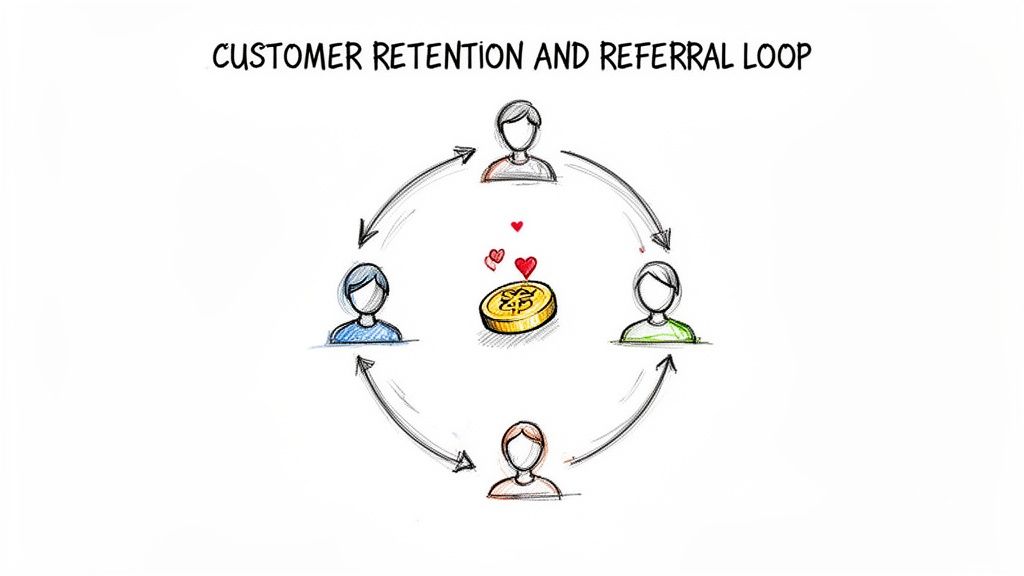
This strategy shifts your growth model from high-effort acquisition to low-cost, organic expansion. A structured referral program transforms your happy customers into an extension of your sales team, delivering high-quality, pre-qualified leads. Home service companies often see great success by offering referral bonuses, such as a $100 credit for a new HVAC system installation or a $50 gift card for a signed maintenance agreement, creating a sustainable growth channel that doesn't strain your workforce.
How to Implement Retention and Referral Programs
To turn customer loyalty into a source of growth, you must create a simple, rewarding, and easy-to-use system. This encourages participation and maximizes your return on investment.
- Establish a Simple, Valuable Offer: Create a clear referral reward that is meaningful to your customers. A cash bonus or significant service credit (e.g., $50-$200) for each successful referral is highly effective.
- Make Referring Effortless: Provide customers with a unique, shareable link or code. Automate the tracking process through your CRM so rewards are issued automatically upon a referred customer's first completed service.
- Time Your Request Perfectly: Ask for referrals immediately after a positive experience, such as following a 5-star review or a successful service call. This is when customers are most willing to advocate for your brand.
- Track Your Net Promoter Score (NPS): Regularly measure customer satisfaction using NPS surveys. This helps identify your most loyal promoters (those who score 9 or 10) who are the ideal candidates for your referral program.
12-Point Comparison of Labor Shortage Solutions
| 🔄 Implementation complexity | ⚡ Resource requirements | 📊 Expected outcomes | 💡 Ideal use cases | ⭐ Key advantages |
|---|---|---|---|---|
| Remote Customer Service Representatives (CSRs) and Virtual Assistants (VAs): Medium — setup hiring, onboarding, QA systems. | Low–Medium — HR, remote tools, QA software and oversight. | Improved responsiveness, lower overhead, 24/7 coverage and scalability. | Customer calls, appointment scheduling, lead qualification, admin tasks. | Access to global talent, cost savings, flexible scaling. |
| Done-For-You Cold Calling Services: Low — outsource execution, vendor selection required. | Low internal — vendor fees and integration into CRM/calendar. | Fast lead generation and booked appointments with professional callers. | Rapid campaign launch or when no internal calling capability exists. | No hiring/training overhead; expertise and calendar integration. |
| Automation and AI-Powered Lead Management Systems: High — integration, configuration, and tuning. | Medium–High — platform costs, implementation, ongoing maintenance. | Faster response times, consistent follow-up, reduced manual workload. | High lead volume, need for 24/7 capture and routing, scale automation. | Efficiency gains, real-time analytics, lower labor per lead. |
| Competitive Compensation and Benefits Packages: Medium–High — design, budgeting, compliance. | High — increased payroll, benefits admin, long-term financial commitment. | Higher-quality hires, improved retention, increased engagement and productivity. | Talent-scarce markets and roles needing experienced staff. | Attracts/retains skilled employees; reduces turnover costs. |
| Training and Development Programs: Medium — curriculum creation and delivery systems. | Medium — trainers, materials, time off for training, LMS costs. | Faster ramp-up, consistent service quality, higher employee capability. | Scaling staff, improving conversion/CS quality, retaining talent. | Reduces errors, enables internal promotion, improves consistency. |
| Flexible Work Arrangements and Scheduling: Medium — scheduling complexity and policy design. | Low–Medium — scheduling software and coordination efforts. | Broader talent pool, improved morale, better coverage for peaks. | Attracting parents/students, seasonal staffing, extended hours coverage. | Higher retention, reduced burnout, flexible coverage. |
| Strategic Partnerships and Outsourcing: Medium — vendor selection, contract and SLA management. | Low capital but ongoing vendor fees and integration effort. | Rapid access to expertise, faster scaling, risk transfer to partners. | Non-core functions (lead gen, appointment setting, BPO) or market tests. | Specialized capabilities without building internal teams. |
| Technology Investment and Modernization: High — vendor selection, implementation, change management. | High — software/licensing, implementation, training, integrations. | Improved efficiency, real-time data, better hiring and customer experience. | Companies needing scale, analytics, remote workforce enablement. | Operational efficiency, data-driven decisions, talent attraction. |
| Recruitment Process Optimization and Employer Branding: Medium — content creation and process redesign. | Medium — marketing, recruitment tools, employee testimonial production. | Faster time-to-hire, better candidate quality, stronger talent pipeline. | Tight labor markets and building long-term employer reputation. | Lower time/cost-per-hire and improved hire quality. |
| Performance Management and Incentive Programs: Medium — metric design, dashboards, governance. | Medium — tracking systems, incentive payouts, management time. | Higher motivation, aligned behaviors, retention of top performers. | Sales and CSR teams with measurable KPIs and growth targets. | Drives performance, transparency, and identifies top talent. |
| Niche Market Targeting and Specialization: Medium — market research and focused capabilities. | Medium — specialized training, targeted marketing, certifications. | Higher conversion rates, premium pricing, stronger reputation in niche. | Businesses seeking differentiation (plumbing, HVAC, cleaning). | Better lead quality, pricing power, focused training. |
| Customer Retention and Referral Programs: Low–Medium — program design and tracking. | Low–Medium — rewards, CRM tracking, marketing communications. | Lower customer acquisition cost, higher LTV, more predictable revenue. | Mature customer base aiming to reduce dependency on paid acquisition. | Cost-effective growth, strong repeat revenue and referrals. |
Building a Resilient Workforce for Tomorrow's Demand
The challenge of finding and retaining skilled labor is not a fleeting headline; it is the new operational reality for home service businesses. Navigating this landscape requires a fundamental shift away from reactive hiring and toward a proactive, multi-faceted workforce strategy. The 12 labor shortage solutions detailed in this guide are not just individual tactics but interconnected pillars of a resilient, modern business model designed for sustainable growth.
The era of relying on a single hiring channel or a standard compensation package is over. Today's success is built on a dynamic ecosystem where technology empowers human talent, strategic outsourcing expands your operational capacity, and a strong company culture becomes your most powerful recruiting tool. By embracing this holistic approach, you transform the labor shortage from a daunting obstacle into a catalyst for profound innovation and competitive advantage.
Synthesizing the Solutions: From Tactics to Strategy
The core theme connecting these strategies is a transition from merely filling positions to building a sustainable workforce infrastructure. Instead of viewing remote CSRs, automation, and training programs as separate fixes, consider how they work in synergy.
- Empowerment Through Technology: Implementing automation and AI-powered lead management frees your existing team from repetitive, low-value tasks. This allows skilled technicians to focus on revenue-generating activities and customer-facing interactions, increasing both their job satisfaction and the company's bottom line.
- Attraction Through Opportunity: A competitive compensation package is the entry ticket, but long-term retention is won through robust training, clear development paths, and flexible work arrangements. When employees see a future with your company, not just a job, they become invested partners in your success.
- Expansion Through Partnership: You do not have to build every capability in-house. Leveraging done-for-you services for cold calling or outsourcing administrative functions to remote professionals allows you to scale your operations efficiently without the immense overhead and hiring challenges of adding full-time staff.
This integrated model creates a powerful feedback loop. Technology and outsourcing improve efficiency, which boosts profitability. Those profits can then be reinvested into better compensation, benefits, and training programs, making your company an even more attractive place to work.
Your Actionable Path Forward
Confronted with a dozen potential solutions, the most common pitfall is analysis paralysis. The key is to start with a focused, high-impact initiative that provides immediate relief and builds momentum. For most home service businesses, the administrative and customer communication bottleneck is the most critical pain point.
Key Insight: Before you can optimize your field technicians, you must first master your inbound lead flow and customer service. A missed call is a missed opportunity, and a technician bogged down with scheduling is a resource mismanaged.
Start by auditing your front-office operations. Where is your team spending the most time? Which administrative tasks are pulling your focus from strategic growth activities? Addressing this area first is one of the most effective labor shortage solutions because it creates immediate leverage. Freeing up your core team allows them to focus on what truly drives the business: delivering exceptional service and generating revenue.
The labor shortage is not a problem to be solved, but a new environment in which to thrive. The businesses that flourish will be those that are agile, innovative, and deeply committed to building a people-centric operation. By strategically implementing the solutions outlined here, you can construct a resilient workforce ready to meet tomorrow's demand and secure your company's position as a leader in the home service industry.
Ready to take the first and most impactful step in overcoming your staffing challenges? Phone Staffer provides professionally trained, US-based remote CSRs and appointment setters specifically for home service businesses, allowing you to capture every lead and deliver world-class customer service without the hiring headaches. Visit Phone Staffer to see how you can instantly expand your team's capacity and reclaim your time.