

Hiring a contractor is one of the most significant decisions you will make for your home or business. A great contractor can turn your vision into a stunning reality, while the wrong one can lead to budget overruns, shoddy workmanship, and endless stress. The key difference between a successful project and a costly nightmare often comes down to the vetting process. It's about asking the right questions before you sign any agreement or hand over a deposit.
This comprehensive guide is designed to be your definitive checklist. We’ve compiled the most critical questions to ask contractors to ensure you cover all your bases, from legal protections to project logistics. For each question, we will not only explain why it is essential but also detail what a good answer looks like, potential red flags to watch for, and specific follow-up inquiries to dig deeper. This framework empowers you to move beyond a simple price comparison and evaluate a contractor’s professionalism, experience, and reliability. To deeply understand what goes into selecting and overseeing external workers, exploring insights from a practical contractor management course can be invaluable for establishing robust vetting procedures.
By arming yourself with this knowledge, you can confidently screen potential hires, compare bids intelligently, and select a professional partner who will deliver quality results on time and within budget. This isn't just a list; it's a strategic tool to protect your investment and ensure your project’s success from the very start. Let's build that foundation, one crucial question at a time.
1. Are You Licensed, Insured, and Bonded?
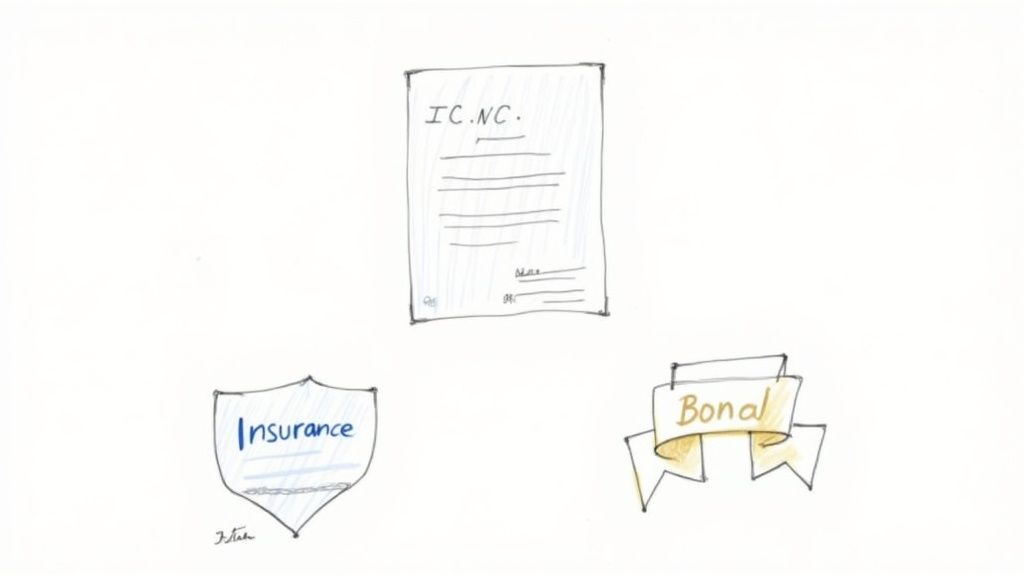
This is arguably the most critical of all questions to ask contractors before any work begins. It’s a three-part question that verifies their legitimacy, professionalism, and financial stability. A “yes” to all three parts confirms the contractor meets legal operating requirements and provides you with essential protections against liability, financial loss, and shoddy workmanship. Neglecting this step can expose your business or home to significant risks.
Why It Matters
Each component offers a different layer of protection:
-
Licensing: This confirms the contractor has met state and local competency standards, which may include passing exams, proving experience, and undergoing background checks. For example, a general contractor in California must be licensed by the Contractors State License Board (CSLB), while an electrical contractor in Texas needs a license from the Texas Department of Licensing and Regulation (TDLR). An unlicensed contractor is a major red flag, often indicating a lack of expertise and accountability.
-
Insurance: This protects you from liability. If a worker is injured on your property or your property is damaged during the project, the contractor’s general liability and workers' compensation insurance will cover the costs. Without it, you could be held financially responsible. A key part of their reliability is ensuring they carry adequate protection. Learn more about essential business insurance for contractors to understand what coverages are standard.
-
Bonding: A surety bond protects you if the contractor fails to complete the job, doesn't pay for permits, or fails to meet other financial obligations. If the contractor defaults, the bonding company will pay you to hire another contractor to finish the work or compensate for other losses.
Actionable Tips
Don't just take their word for it; verify everything.
- Request physical copies: Ask for copies of their license, certificate of insurance (COI), and bond number.
- Verify independently: Use the license number to check their status directly on your state's licensing board website. This will show if the license is active and if there are any public complaints.
- Check insurance details: Confirm the policy is current and the coverage limits are sufficient for the scale of your project. Ensure your name and property address are listed as an "additional insured" on their policy.
- Confirm workers' compensation: If the contractor has employees, they must have workers' compensation insurance. Ask for proof.
2. Can You Provide References and Previous Work Examples?
While licensing confirms a contractor's legitimacy, their past work reveals their actual skill and reliability. Asking for a portfolio and a list of references is your opportunity to perform crucial due diligence. This step allows you to see the quality of their craftsmanship, understand their process from a former client's perspective, and verify if their experience aligns with the specific needs of your project.
Why It Matters
A contractor's history is the best predictor of your future experience. Evaluating their past projects helps you gauge several critical factors:
-
Quality of Work: A portfolio with high-resolution before-and-after photos demonstrates their capabilities and attention to detail. For a kitchen remodel, this means you can see the precision of their cabinet installations and tile work. A roofing contractor's portfolio should showcase clean lines and proper flashing techniques.
-
Customer Satisfaction: References provide unbiased, firsthand accounts of working with the contractor. You can learn about their communication, professionalism, and ability to handle unexpected challenges. Hearing directly from past clients is one of the most reliable ways to vet a contractor.
-
Relevant Experience: Seeing projects similar to yours confirms they have the specific skills required. If you need a complex bathroom renovation, you want to see that they have successfully completed similar jobs, not just simple plumbing repairs.
Actionable Tips
Go beyond a quick glance at their portfolio; dig deeper to get the full picture.
- Request recent and relevant references: Ask for contact information for at least three to five clients with projects completed in the last two years that are similar in scope to yours.
- Ask specific questions: When you call references, inquire about budget and timeline adherence, the crew's professionalism, how they handled problems, and whether the client would hire them again.
- Look for long-term quality: If possible, ask for a reference from a project completed over two years ago to see how the work has held up over time.
- Verify online reviews: Supplement references by checking online reviews on Google, Yelp, and the Better Business Bureau. Look for consistent patterns in feedback, both positive and negative.
3. What is Your Detailed Written Estimate or Bid?
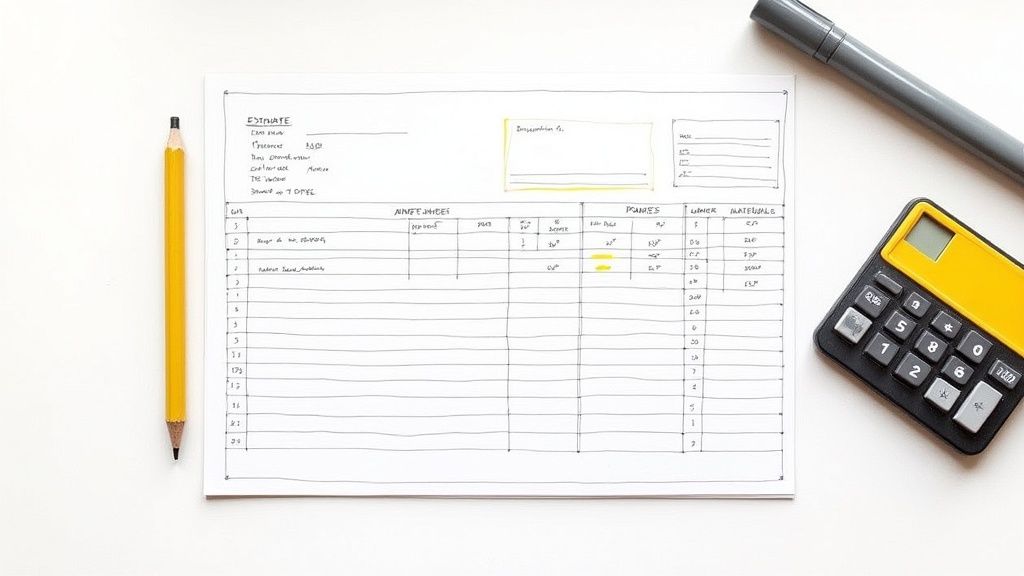
A detailed written estimate or bid is the financial roadmap for your project. It's a comprehensive document that goes beyond a simple price quote, itemizing every anticipated cost from labor and materials to permits and cleanup. This level of detail protects both you and the contractor by establishing clear, documented expectations about the project's scope, timeline, and total expense. Insisting on a written bid is a non-negotiable step in hiring a professional.
Why It Matters
A vague quote can lead to misunderstandings, unexpected costs, and disputes. A detailed estimate creates transparency and accountability.
-
Clarity on Scope: It defines exactly what work will be performed. For a bathroom remodel, this means itemizing demolition, specific plumbing and electrical work, tile installation, fixture models, and painting details. This prevents "scope creep" where a project balloons in cost and complexity.
-
Cost Transparency: The document should separate the costs of materials from labor. This helps you understand where your money is going and allows you to compare bids accurately. You can see if one contractor is using premium materials versus another's standard-grade options.
-
Legal Protection: A signed estimate can serve as a binding agreement. It provides a written record of what was promised, which is invaluable if disagreements arise later. Verbal agreements are notoriously difficult to enforce.
Actionable Tips
Treat the estimate as a critical vetting tool.
- Get multiple bids: Always obtain at least three written estimates from different contractors to ensure you are getting a fair market price.
- Compare apples to apples: Make sure each estimate covers the exact same scope of work and specifies similar quality materials.
- Question allowances: Ask how the contractor handles potential cost overruns or unforeseen issues. A good estimate may include a "contingency allowance" for this.
- Verify specifics: Ensure all materials, brands, and model numbers are listed. This prevents a contractor from substituting cheaper products to increase their profit margin.
- Confirm payment schedule: The estimate should clearly outline the payment terms, including the deposit amount and milestones for subsequent payments.
4. What is Your Experience and Specialization?
Understanding a contractor's specific expertise is crucial for ensuring they are the right fit for your unique project. This question probes their years in business, their team’s qualifications, and the specific types of work they specialize in. A contractor with decades of experience in residential kitchen remodels may not be the best choice for a commercial office build-out, and vice versa. Longevity and specialization are strong indicators of competence, stability, and a deep understanding of the challenges specific to your project.
Why It Matters
A contractor’s experience directly impacts project quality, efficiency, and problem-solving capabilities.
-
Relevant Expertise: Hiring a specialist ensures they are familiar with the specific materials, building codes, and techniques your project requires. For example, a solar installer with NABCEP (North American Board of Certified Energy Practitioners) certification has proven knowledge in photovoltaic systems, which a general electrician might lack.
-
Problem-Solving Skills: An experienced contractor has likely encountered and solved a wide range of issues on projects similar to yours. This foresight allows them to anticipate potential obstacles, navigate complex permit processes, and adapt to unexpected challenges without causing significant delays or budget overruns.
-
Established Network: Seasoned contractors have established relationships with reliable subcontractors and suppliers. This network can lead to better pricing, higher-quality materials, and a more streamlined project timeline, as they know who to call to get the job done right.
Actionable Tips
Go beyond asking how long they’ve been in business and dig into the specifics of their qualifications.
- Verify Certifications: Ask for proof of any professional certifications relevant to your project. An HVAC technician, for instance, should have an EPA 608 certification for handling refrigerants. Verify these credentials directly with the issuing organizations.
- Inquire About the Team: Ask about the qualifications and experience of the crew members who will be on-site. Are they full-time employees or subcontractors? What training do they receive?
- Discuss Similar Projects: Request to see a portfolio of projects that are similar in scope and style to yours. Ask them to describe a challenge they faced on a past project and how they successfully resolved it.
- Check Industry Memberships: Ask if they belong to professional organizations like the National Association of the Remodeling Industry (NARI) or the Associated General Contractors of America (AGC). Membership often indicates a commitment to professional standards and continuing education.
5. What is Your Payment Schedule and Terms?
Clarifying the payment schedule before signing a contract is one of the most important questions to ask contractors to prevent misunderstandings and cash flow problems. This conversation sets clear financial expectations, protects your investment, and ensures the contractor remains motivated throughout the project. A well-defined payment structure, tied directly to project milestones, is a hallmark of a professional and organized contractor.
Why It Matters
A transparent payment schedule protects both you and the contractor from potential disputes. It ensures you aren't paying for work that hasn't been completed and provides the contractor with the necessary funds to purchase materials and pay their crew without interruption.
- Financial Protection: Paying the full amount upfront is a massive red flag. A structured schedule, often with a reasonable deposit of 10-30%, minimizes your financial risk if the contractor fails to start or complete the job.
- Motivation and Progress: Tying payments to specific, verifiable completion milestones (like "framing inspection passed" or "materials delivered") incentivizes the contractor to stay on schedule. This progressive payment model ensures work continues moving forward.
- Budget Management: A clear schedule allows you to plan your finances accordingly. You'll know exactly when payments are due, preventing surprises and helping you manage your project budget effectively.
Actionable Tips
Don't agree to a payment structure without first getting all the details in writing.
- Get it in writing: Ensure the full payment schedule, including due dates, amounts, and associated milestones, is explicitly detailed in the contract.
- Avoid large upfront payments: Never pay for the entire project before work begins. A typical deposit is between 10% and 30% of the total cost, which covers initial materials and mobilization.
- Tie payments to progress: Insist that payments are linked to tangible, completed stages of the project. For example, a roofer’s schedule might be 25% deposit, 50% upon material delivery, and the final 25% upon completion and inspection.
- Hold back the final payment: It is standard practice to retain a final payment (usually 10-15%) until you have completed a final walkthrough and are completely satisfied with the work. This is known as retainage and gives you leverage to ensure any punch-list items are addressed.
- Ask about payment methods: Clarify acceptable payment forms, such as check, credit card, or bank transfer, and ask if any processing fees apply.
6. What Warranty or Guarantee Do You Offer?
A reputable contractor stands behind their work, and a warranty or guarantee is the formal commitment to that quality. This is one of the most important questions to ask contractors, as it provides a safety net for your investment long after the final payment is made. It offers recourse if materials fail prematurely or if installation errors cause problems down the line, demonstrating the contractor's confidence in their craftsmanship and the products they use.
Why It Matters
A comprehensive warranty protects you from future costs and headaches. It typically comes in two parts, and understanding both is crucial:
-
Workmanship Warranty: This covers the installation and labor. If a roof leak occurs due to improperly installed shingles, this warranty ensures the contractor will return to fix the error at no cost to you. These warranties vary by trade, for example, a roofer might offer a 5 to 10-year workmanship warranty, while an electrician may offer a 1 to 2-year guarantee on their labor.
-
Manufacturer's Warranty: This covers the physical products and materials used in your project, such as HVAC units, shingles, or plumbing fixtures. A manufacturer might offer a 25-year warranty on roofing materials or a 10-year warranty on an AC compressor. The contractor facilitates this, but the guarantee comes from the product maker.
Actionable Tips
A verbal promise isn't enough; you need everything documented.
- Get it in writing: Ensure all warranty details, including coverage, duration, and limitations, are explicitly stated in your contract.
- Clarify both warranties: Ask for separate details on the workmanship and material warranties. Request copies of the manufacturer's warranty documents for all major products installed.
- Understand the claim process: Ask what the procedure is for filing a claim. Who do you contact, what is the expected response time, and are there any service fees?
- Check transferability: If you plan to sell your property, ask if the warranty is transferable to the new owner, which can be a valuable selling point.
- Inquire about exclusions: Clarify what actions could void the warranty, such as performing your own repairs or not following required maintenance schedules.
7. How Will You Handle Changes and Unexpected Issues?
No matter how meticulously a project is planned, surprises are almost inevitable. This question probes how the contractor manages the unexpected, from client-requested alterations to unforeseen problems discovered mid-project. A transparent and well-defined process for change orders and issue resolution is a hallmark of a professional contractor and is crucial for keeping your project on track and within budget.
Why It Matters
A clear protocol for handling changes prevents misunderstandings, scope creep, and surprise costs that can derail a project.
-
Change Orders: This formal process documents any deviation from the original contract, including changes to materials, scope, or timeline. It ensures both you and the contractor agree on the adjustments and associated costs before any new work begins, protecting both parties from disputes. For example, deciding to add a kitchen island halfway through a remodel would require a change order.
-
Unexpected Issues: This covers problems that couldn't have been anticipated, like discovering asbestos during demolition or finding rotted structural beams once a wall is opened up. A contractor's plan for addressing these issues reveals their problem-solving skills and communication style. A proactive approach protects your property and ensures problems are resolved correctly and safely, rather than ignored or patched over.
Actionable Tips
Establish a clear framework for changes in your initial contract to avoid conflict later.
- Require written change orders: Insist that any change, no matter how small, is documented in writing and signed by both parties before work proceeds.
- Establish a process: Ask how they communicate discoveries. Will they call you immediately? Will they provide a detailed breakdown of the problem, proposed solution, and cost impact?
- Discuss a contingency fund: A good contractor will often recommend including a contingency fund in your budget (typically 5-15%) to cover unforeseen costs. This prevents financial shock when issues arise.
- Set approval thresholds: You might agree that the contractor can approve small, necessary changes up to a certain dollar amount (e.g., $200) for efficiency, but anything larger requires your explicit written consent.
8. What is Your Communication Style and Timeline?
Miscommunication is one of the biggest sources of conflict and frustration during a construction or renovation project. Asking a contractor about their communication style and timeline isn’t just about logistics; it’s about setting the foundation for a transparent, professional relationship. Establishing these expectations upfront ensures you remain informed, that issues are addressed promptly, and that the project progresses smoothly from start to finish.
Why It Matters
A clear communication plan prevents misunderstandings that lead to delays, budget overruns, and disappointment. You need to know how, when, and with whom you will be speaking throughout the project.
-
Defines Expectations: Knowing whether to expect daily texts, weekly email summaries, or scheduled on-site meetings helps manage your expectations. It clarifies who your main point of contact is, whether it's the contractor, a project manager, or an office administrator.
-
Ensures Accountability: A contractor with a structured communication process is typically more organized and accountable. Regular updates on progress, material deliveries, and any unforeseen challenges demonstrate their commitment to keeping you in the loop. This process is one of the key questions to ask contractors to gauge their professionalism.
-
Facilitates Problem-Solving: Issues are inevitable in any project. A good communication protocol ensures that when problems arise, they are brought to your attention quickly, allowing for collaborative and timely solutions rather than last-minute crises. Many contractors streamline this by using dedicated support, which is why an answering service for contractors can be a sign of a well-organized operation.
Actionable Tips
Don’t settle for a vague answer like, “We’ll be in touch.” Pin down the specifics.
- Establish the "Who, How, and When": Ask who your primary point of contact will be. Clarify the best method for communication (email, phone, text) and agree on a frequency, such as twice-weekly progress updates.
- Set Response Time Expectations: Ask how quickly they typically respond to non-urgent client questions. A reasonable expectation is within 24 business hours.
- Request Photo Updates: For larger projects where you can't be on-site daily, ask if they can send photos of the progress. This is a simple way to stay visually connected to your project.
- Schedule Formal Check-Ins: For projects lasting several weeks or more, schedule weekly on-site meetings to review progress, discuss upcoming milestones, and address any concerns in person.
9. Are There Any Permits Required and Who Handles Them?
Navigating the world of building permits can be complex, but it's a non-negotiable step for ensuring your project is safe, legal, and up to code. This question clarifies who is responsible for the entire permitting process, from application to final inspection. A professional contractor will understand exactly what permits your project needs and will manage the process seamlessly, preventing costly delays, legal trouble, and potential issues when you sell your property.
Why It Matters
Ignoring or improperly handling permits can have severe consequences. Work done without the required permits may need to be torn out and redone, and you could face significant fines from your local municipality. Furthermore, unpermitted work can void your homeowner's insurance policy.
-
Legal Compliance: Most significant structural, electrical, plumbing, and mechanical work legally requires a permit. This ensures the project adheres to local building codes, zoning laws, and safety standards. For instance, a room addition will always need a building permit, while a major kitchen remodel will likely require building, electrical, and plumbing permits.
-
Accountability and Quality Control: The permitting process includes mandatory inspections at various stages of the project. A city or county inspector verifies that the work meets safety and quality standards, providing an unbiased, third-party check on your contractor’s work. This protects you from cut corners and shoddy craftsmanship.
-
Protecting Your Investment: Proper permits and passed inspections are documented and become part of your property’s official record. This is crucial for future sales, as buyers will expect proof that all renovations were completed legally and safely.
Actionable Tips
Treat the permit process as a critical project milestone, not an afterthought.
- Ask for specifics: Inquire exactly which permits (building, electrical, plumbing, mechanical) are required for your specific job.
- Clarify responsibility: Confirm in your written contract that the contractor is responsible for securing all necessary permits and scheduling all inspections.
- Verify permit status: The contractor should pull permits under their own name and license, not yours. Ask for copies of the approved permits before work begins and post them visibly at the job site as required.
- Confirm inspection approvals: Request copies of the signed-off inspection reports after each phase is completed. Ensure you receive a final certificate of completion or occupancy once the project is finished.
10. What Happens if There's a Dispute or You're Unsatisfied with Work?
Even with the best contractors, disagreements can arise. Asking about the dispute resolution process upfront is a crucial part of vetting potential hires. It demonstrates foresight and sets clear expectations for how conflicts will be handled. A professional contractor will have a defined process for addressing client concerns, while a less reputable one might become evasive. This question helps establish a framework for accountability before any work begins.
Knowing the protocol for resolving issues gives you a clear path to follow if something goes wrong. This prevents minor problems, like a paint color not matching the specification or a misaligned tile, from escalating into major, costly conflicts. It ensures both parties understand their rights and responsibilities, protecting your investment and peace of mind.
Why It Matters
A contractor's answer reveals their commitment to customer satisfaction and professionalism. A well-defined process is a sign of an experienced and organized business.
- Sets Clear Expectations: It clarifies the steps you must take if you are unsatisfied. For example, if a newly installed electrical outlet is in the wrong location, you'll know exactly who to contact and what documentation is needed to request a correction before final payment.
- Provides Legal Recourse: Understanding the process outlined in your contract gives you a structured way to seek remedies. It establishes a formal channel for communication, which is vital if legal action becomes necessary.
- Ensures Accountability: A contractor who openly discusses their dispute resolution policy is more likely to take responsibility for their work. If a roof leak develops within the warranty period, a clear policy ensures they will return to make the necessary repairs at no additional cost.
Actionable Tips
Don’t wait for a problem to occur; prepare for potential issues from the start.
- Get it in writing: Ensure the dispute resolution clause is clearly detailed in the contract. It should specify procedures, timelines, and potential remedies.
- Document everything: From the very beginning, keep a detailed log of all communications, take photos of the work in progress, and document any issues with timestamps.
- Provide immediate written notice: If you spot a defect, report it immediately in writing (email is great for time-stamping). Describe the issue clearly and state your desired resolution.
- Withhold final payment: Never pay the final invoice until all work has been completed to your satisfaction and you have conducted a final walkthrough. Signing a lien waiver should only happen after you are completely satisfied.
10 Essential Contractor Questions Comparison
| Item | 🔄 Implementation Complexity | ⚡ Resource Requirements | 📊 Expected Outcomes | 💡 Ideal Use Cases | ⭐ Key Advantages |
|---|---|---|---|---|---|
| Are You Licensed, Insured, and Bonded? | Low — document checks and board verification | Minimal — time, phone/internet | High legal protection; lower liability | Any project; required for regulated trades | ⭐ Reduces legal risk; ensures legitimacy and recourse |
| Can You Provide References and Previous Work Examples? | Medium — contact refs, review portfolio | Moderate — time, calls, possible site visits | Good validation of workmanship & reliability | Selecting among bidders; quality-critical projects | ⭐ Real-world proof of performance and consistency |
| What is Your Detailed Written Estimate or Bid? | Medium–High — requires itemized scope and pricing | Moderate — contractor prep time; homeowner review | High clarity on cost/scope; fewer disputes | Complex projects; budget comparisons | ⭐ Clear scope, easier comparisons, legal protection |
| What is Your Experience and Specialization? | Low — interview and credential checks | Low — review resumes, certifications | Better fit and fewer errors for specific tasks | Specialized trades (solar, HVAC, historic) | ⭐ Expertise, faster problem solving, code knowledge |
| What is Your Payment Schedule and Terms? | Medium — negotiate milestones and contract language | Low — financial planning and documentation | Protects homeowner cashflow; aligns incentives | Larger or phased projects | ⭐ Controls payments; incentivizes phase completion |
| What Warranty or Guarantee Do You Offer? | Low — review contract warranty clauses | Low — documentation; verify manufacturer terms | Post-completion protection; recourse for defects | Major investments (roofing, HVAC, structural) | ⭐ Peace of mind; potential resale value boost |
| How Will You Handle Changes and Unexpected Issues? | High — formal change-order process required | Moderate — contingency budget, admin time | Limits surprise costs; documents decisions | Renovations and older-home projects with unknowns | ⭐ Maintains scope control; prevents conflicts |
| What is Your Communication Style and Timeline? | Low — set expectations and reporting cadence | Low — agreed update frequency, brief meetings | Fewer surprises; faster issue resolution | Any project—critical for large renovations | ⭐ Transparency; improves schedule adherence |
| Are There Any Permits Required and Who Handles Them? | Medium — research local codes and application steps | Moderate — permit fees, paperwork, inspections | Ensures code compliance and insurance validity | Structural, electrical, plumbing, additions | ⭐ Prevents legal/insurance problems; ensures inspections |
| What Happens if There's a Dispute or You're Unsatisfied with Work? | Medium–High — requires contract and dispute clauses | Moderate–High — documentation, possible mediation/legal fees | Formal recourse; enforces contractor accountability | High-value or high-risk projects | ⭐ Provides remedies and a clear path to resolution |
Building Confidence in Your Contractor Choice
Choosing the right contractor is more than just a business transaction; it's the foundation of a successful project and a satisfied client. The comprehensive list of questions detailed in this guide serves as your blueprint for conducting thorough due diligence. By moving past surface-level inquiries and digging into the specifics of licensing, communication, and contingency planning, you transform a potentially uncertain process into a structured, confident decision. This isn't about interrogation; it's about initiating a partnership built on clarity and mutual understanding.
Remember, a truly professional contractor will not only expect these questions but will welcome them. They see this detailed inquiry as an opportunity to showcase their expertise, prove their reliability, and begin building the trust that is essential for any successful project. A hesitant or dismissive response to these critical questions is often the most revealing answer you can get.
From Questions to Confidence: Key Takeaways
The journey from a potential lead to a signed contract is paved with communication. Let’s distill the core principles from our list of questions to ask contractors:
- Verification is Non-Negotiable: Never take claims of being licensed, insured, or bonded at face value. Always ask for documentation. This single step protects your business, your clients, and your reputation from immense liability.
- Past Performance Predicts Future Success: References and portfolios are not just formalities. They are direct evidence of a contractor's quality, reliability, and ability to deliver on their promises. A strong track record is your best indicator of a positive outcome.
- Clarity Prevents Conflict: Ambiguity is the enemy of a smooth project. Detailed written estimates, clear payment schedules, and well-defined change order processes eliminate guesswork and prevent costly misunderstandings down the line. Everything should be in writing.
- Communication is the Cornerstone: A contractor's technical skill is only half the equation. Their commitment to a clear communication plan, including timelines and preferred contact methods, is what will keep a project on track and ensure all stakeholders remain aligned from start to finish.
Actionable Next Steps: Implementing Your Vetting Process
Armed with this knowledge, your next step is to integrate these questions into a standardized process. Don't leave this crucial first contact to chance.
- Create a Script or Checklist: Turn the questions from this article into a formal document. Whether it's a printable checklist for in-person meetings or a script for your customer service representatives (CSRs), standardizing the process ensures no critical detail is missed.
- Role-Play with Your Team: If you have staff handling initial client or subcontractor inquiries, practice with them. Help them understand the "why" behind each question so they can ask follow-ups confidently and identify potential red flags in real-time.
- Establish Your "Red Flag" Protocol: Decide ahead of time what constitutes a deal-breaker. Is it a lack of insurance? An unwillingness to provide a detailed bid? Define your non-negotiables so you can disqualify unsuitable contractors quickly and efficiently.
Ultimately, mastering this vetting process does more than just help you avoid bad contractors. It elevates your brand, streamlines your operations, and builds a network of reliable partners who contribute to your growth. It demonstrates a commitment to quality and professionalism that clients will notice and appreciate, setting the stage for a successful project before a single hammer is swung. Taking the time to ask the right questions to ask contractors is an investment that pays dividends in quality, reliability, and peace of mind.
As your business grows, you may find that managing these crucial initial vetting calls and qualifying every lead becomes a significant drain on your time. Phone Staffer provides highly trained, remote CSRs and Virtual Assistants who can expertly handle this first point of contact, using your customized scripts to ensure every contractor is properly vetted and every client appointment is booked. Visit Phone Staffer to learn how you can reclaim your time and convert more qualified leads without lifting the phone.