
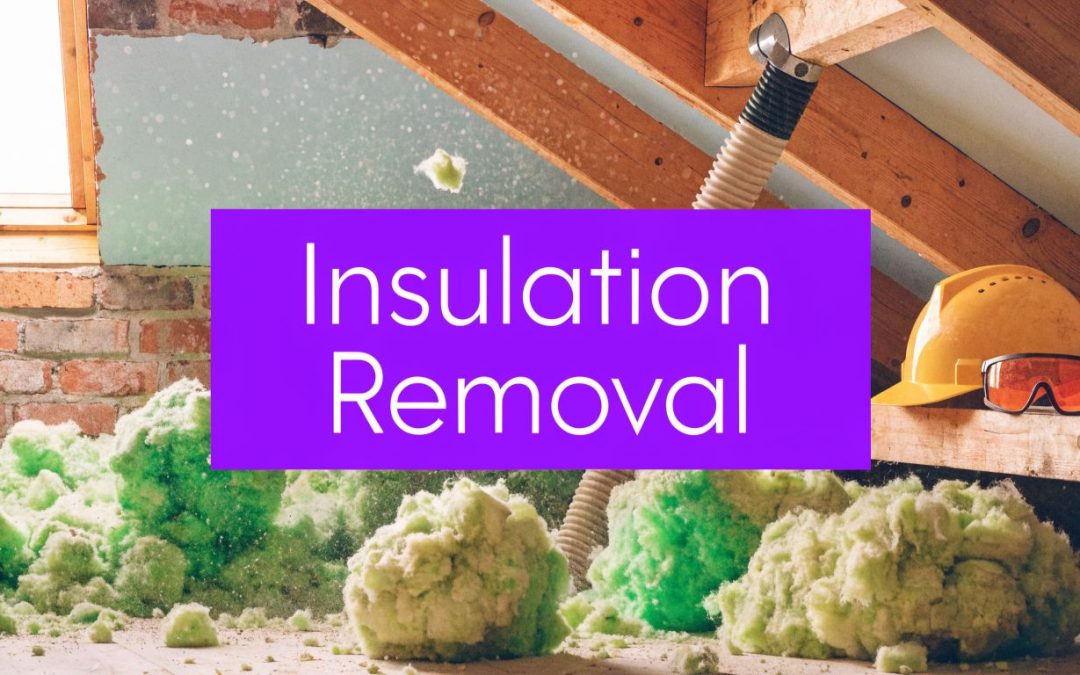
Most owners get into blown insulation removal the same way. A customer calls about high utility bills, a pest issue, or a musty attic smell. You inspect the job thinking it's a simple top-off or replacement, then you find matted cellulose, rodent trails, wet decking, and a hatch access that turns a straightforward day into a margin killer.
That’s why this service separates disciplined operators from everyone else. The money isn’t just in sucking old material out of an attic. The money is in diagnosing correctly, setting up containment properly, pricing risk before your crew steps inside, and finishing clean enough that the homeowner trusts you for the reinstall.
I’ve always looked at blown insulation removal as a business system, not a dirty side job. If you treat it like a quick add-on, you’ll eat labor, create dust problems, and get callbacks. If you build a repeatable playbook, it becomes one of the best gateway services in the attic category because it leads naturally into air sealing, sanitation, pest remediation coordination, and new insulation.
The Foundation Job Prep and Safety Protocols
The jobs that go sideways usually don’t fail during removal. They fail before the hose is even in the attic.
One contractor I know learned that the expensive way. His crew missed sealing a return vent near the hallway access, and dust found its way into the system. The attic got emptied, but the customer remembered the mess in the living space, not the work overhead. That’s the kind of mistake that erases profit and damages your name in the neighborhood.
Blown-in insulation removal becomes mandatory when the material is contaminated by water, pests, or fire, and Polk County Insulation notes that 20-30% of jobs involve these hazards. The same source explains that modern vacuum systems can remove blown material from a 1,500-square-foot attic in 4-6 hours, which is one reason pros have moved away from manual raking.

Start with a real inspection
Amateurs identify insulation. Pros identify risk.
If the attic has cellulose, fiberglass, or a mixed fill, that matters. But what matters more is what happened to that insulation. Water staining on rafters, darkened sheathing, nesting material, droppings, dead insects, chewed wiring, disconnected bath fans, old recessed lights, and questionable wiring all change the job.
I train crews to inspect in this order:
Access and layout
Tight scuttle holes, no decking, low pitch, and crowded truss webs slow production fast.Material condition
Dry and fluffy removes very differently than wet, compacted, or pest-contaminated material.Hazard indicators
Musty odor, visible growth, fire residue, rodent sign, or suspicious legacy material all change the containment and disposal plan.Mechanical and electrical exposure
Bath fan terminations, junction boxes, can lights, flex duct, open chases, and exposed wiring are where crews damage property if they rush.
Practical rule: If your inspection only answers “what insulation is this,” your quote is incomplete.
A fast inspection creates slow jobs. A careful inspection creates profitable ones.
Build containment like you expect a complaint
Containment isn’t overkill. It’s insurance.
The pros who stay busy build a clear path from attic access to truck, then protect that path before work starts. That usually means 6-mil poly, drop cloths, painter’s tape, and a zippered barrier at the work zone. Seal supply and return openings near the work area, isolate the access point, and keep traffic patterns tight so your crew doesn’t drag contamination through the house.
What amateurs miss is that small leaks in containment create big cleanup problems. One open grille, one loose seam in the plastic, one guy climbing down dusty and brushing a hallway wall can turn a good removal into a customer service event.
A few habits help:
- Protect the route first: Cover flooring and corners between the entry and the attic hatch.
- Seal HVAC openings: Don’t trust distance from the attic opening. Dust travels.
- Stage bags outside when possible: Keep debris handling away from finished living space.
- Assign one crew lead to containment checks: If everybody owns it, nobody owns it.
PPE is not the place to save money
A paper dust mask is not a removal plan.
Crews disturbing old insulation need gear that matches the exposure. In the field, that means P100 respirators, Tyvek suits, gloves, and sealed eye protection. If the insulation is contaminated, your PPE standard goes up with the job risk, not down with the homeowner’s budget.
This matters for two reasons. First, you’re protecting the crew. Second, you’re protecting the business. If workers leave a job coughing, covered in dust, or carrying contamination into the truck, your operating system is broken.
The homeowner rarely sees the quality of your respirator. They do see whether your crew behaves like trained professionals.
A strong prep routine doesn’t feel glamorous. It does something better. It keeps the house clean, the crew safe, and the invoice defensible when the work gets complicated.
The Core Service Mastering the Removal Process
The removal phase is where owners either buy speed or rent problems.
A lot of companies try to get into blown insulation removal with undersized equipment because they want to test demand cheaply. That usually produces the wrong lesson. The issue isn’t demand. The issue is that weak equipment makes the service look unprofitable because the crew spends too long on-site.
Professional crews use an exterior-positioned industrial vacuum with 1500+ CFM, then run 3-5 inch hoses into the attic. Crawl Pros describes the method clearly: work in overlapping passes from the farthest corners, compress debris into 55-gallon sealed bags, and target 95-98% complete removal. DIY setups with underpowered vacuums typically land in the 60-70% range.

Why the vacuum matters
The right vacuum changes labor economics.
A gas-powered, truck- or trailer-mounted machine lets the crew stay in production instead of fighting clogs, stopping to empty small containers, or dragging dust back into the house. Exterior positioning also helps keep indoor debris down because the collection happens outside rather than in the living area.
Smaller electric units can work for patch jobs or very limited cleanup. They’re a bad foundation for a multi-crew service line. If you want consistent scheduling, fewer labor overruns, and better finish quality, the removal system has to move material fast and predictably.
The workflow that actually clears attics
The best crews don’t wander. They follow a route.
Start at the farthest point from the access hatch and work backward. Use overlapping strokes so you don’t leave ridges of cellulose or fiberglass packed into corners, eaves, and truss intersections. Keep the hose moving with a steady rhythm instead of stabbing at piles. That reduces airborne debris and leaves a cleaner surface.
A practical field sequence looks like this:
- Set the hose line and confirm suction before entry
- Begin at perimeter corners and hard-to-reach edges
- Work bay by bay back toward the access point
- Slow down around electrical boxes, recessed lights, and wiring
- Do a second pass on joist tops, eaves, and around framing breaks
- Finish with detail vacuuming where residue hangs up
What hurts production most is not the bulk field. It’s the edges. Crews lose time in the places where insulation compacts around obstructions, especially in low-slope roofs and tight eave lines.
The money is in the pattern. A crew with average speed and a tight removal pattern beats a fast crew that has to re-enter the attic for missed material.
Common obstacles that separate pros from rookies
Every attic has a trap.
Some have deep truss webs that force awkward hose control. Some have flex duct draped low across the attic floor. Some have old junction boxes half buried and easy to bump. Others have soffit areas packed so tight that the main hose clears the field but leaves a fringe of material that the homeowner notices later in photos.
Crew discipline matters. The lead tech should call the pace. One worker handles hose placement and material extraction, while another monitors hose movement, bagging, and attic access safety. If your setup allows everybody to improvise, somebody eventually yanks on a hose too hard and breaks something the customer didn’t know was vulnerable until you touched it.
Use method, not force, around obstacles:
| Area | What works | What causes callbacks |
|---|---|---|
| Truss webs | Short controlled hose movements | Dragging the hose blindly through framing |
| Eaves | Multiple angled passes | One quick sweep and moving on |
| Can lights and boxes | Slow hand-guided extraction | Aggressive nozzle contact |
| Mixed material pockets | Separate the dense spots patiently | Assuming all fill will move the same way |
Completion means clean enough for the next sale
Removing most of the insulation is not the job. Removing enough that the next step is easy, inspectable, and trustworthy is the job.
A homeowner who sees a mostly empty attic still wonders what’s buried under the residue. A production-minded owner should care for another reason. Sloppy removal makes air sealing harder and reinstall crews slower. Clean removals set up the next invoice.
That’s why complete-looking work sells the follow-on scope. The attic should be ready for inspection, repair decisions, and the new insulation conversation without excuses.
After the Dust Settles Cleanup and Disposal
A lot of crews think the job ends when the attic floor is visible. That’s when the customer starts judging the work.
The final cleanup is where reviews are won. A strong removal crew can still leave a weak impression if the hatch trim is dusty, the hallway has footprints, or the homeowner feels unsure about where the debris went. That uncertainty creates post-job calls you don’t want.
Finish the attic like someone else is auditing it
Once the bulk material is out, detail cleaning matters. Use a HEPA-equipped shop vac on framing surfaces, around penetrations, and anywhere loose residue stays behind. The attic doesn’t have to look cosmetic. It does need to look deliberately cleaned.
Take after photos before breakdown. Not glamour shots. Clear proof shots. Attic floor, eave areas, penetration points, and the access opening. Those photos help your sales team, your reinstall crew, and your office if the customer has questions later.
A clean attic photo closes arguments faster than a long email.
Break containment without spreading the mess
Crews should remove poly and floor protection in the reverse order they installed it. The dirtiest material comes out first, and the clean route stays protected until the end. If you tear everything down at once, dust escapes during your own cleanup.
I also like a final interior touchpoint list before anyone leaves:
- Check the hatch trim and ladder area
- Vacuum traffic path protection before rolling it
- Wipe contact points such as railings or door edges
- Look at nearby vents, not just the attic opening
- Do a customer walk-through before loading out
That last step catches small concerns while your crew is still on-site and able to fix them.
Disposal can turn into a business problem
Clean dry insulation and contaminated insulation are not the same operationally. If pests, droppings, mold, or fire residue are involved, disposal becomes part of your risk management, not just your dump run.
Every owner needs a local disposal plan before selling this service at scale. Approved landfill options, bagging standards, load documentation, and contamination rules vary by market. If you need a broader reference point for handling bulky waste streams and planning legal disposal workflows, On The Move's essential guide is a useful outside-industry resource because it frames removal around logistics, not just hauling.
The key habit is documentation. Keep disposal receipts, note the condition of removed material in your file, and tie those records to the job photos. If a customer asks later what happened to the insulation, you should have an answer ready without chasing your crew for details.
The best operators treat cleanup and disposal as part of the product. Homeowners remember the condition of their home when you leave. Regulators and insurers care where the debris went. Your business needs both parts right.
From Quote to Profit Job Estimating and Pricing
Bad estimates don’t usually come from math mistakes. They come from scope mistakes.
Owners lose money on blown insulation removal when they price it like a square-foot commodity and ignore access, contamination, bag handling, and slowdown factors. The price-per-foot matters, but it’s just the starting point. Profit lives in the adjustments.
Angi’s attic insulation removal cost guide gives the broad market guardrails. Blown insulation removal averages $1-$2 per square foot, and a 1,500-square-foot attic averages $1,500-$3,000. The same guide notes that labor commonly runs $35-$85 per hour, and costs can double or triple with hazards. When mold or asbestos enters the picture, pricing changes fast, with mold remediation adding $1,225-$3,750 and asbestos contamination raising costs to $1,190-$3,255.
What actually belongs in your estimate
Square footage is easy. Difficulty is where owners either protect margin or donate it.
I break quotes into four layers:
Base removal scope
Dry loose-fill material, normal access, standard containment, standard cleanup.Production drag
Tight hatch, low slope, deep trusses, limited walk boards, or long hose routing.Contamination response
Wet insulation, rodent activity, heavy debris, odor control, extra PPE, special bagging, disposal complexity.Follow-on revenue opportunity
Air sealing, sanitation coordination, pest coordination, and reinstall setup.
If your estimator can’t identify those layers on-site, your office will feel it later in labor overages and customer change-order friction.
A sample estimate format owners can actually use
This isn’t meant to be universal. It’s meant to show how two attics with the same square footage can produce very different job values.
Sample Blown Insulation Removal Job Estimate (1,200 sq. ft. Attic)
| Line Item | Standard Job (Dry, Easy Access) | Complex Job (Wet, Pest Contamination) |
|---|---|---|
| Initial inspection and job setup | Included in base quote | Included, with added hazard documentation |
| Containment and floor protection | Standard containment | Expanded containment due to contamination risk |
| Blown insulation removal labor | Priced near the lower end of typical market range | Priced above base due to slower extraction and handling |
| Vacuum equipment and hose setup | Standard deployment | Standard deployment with more detail work |
| Bagging and load-out | Routine | Increased handling due to heavier, dirtier debris |
| Disposal | Standard local disposal | Higher disposal cost depending on local rules |
| Special PPE and sanitation measures | Minimal add-on | Separate line item recommended |
| Post-removal detailing | Standard HEPA cleanup | More intensive cleanup and documentation |
| Recommended follow-on work | Optional air sealing and reinstall prep | Strongly recommended sanitation, repairs, and reinstall prep |
A simple quote can stay simple. A dirty attic should not.
Price for clarity, not just closing rate
Homeowners don’t mind paying for risk when you explain the risk in plain English. They do push back when the quote feels arbitrary.
That’s why line items help. If the attic is wet, say the material is wet and removal slows down. If pests contaminated the insulation, say that changes handling and disposal. If access is bad, say it increases labor hours because the crew can’t move efficiently.
For owners who want cleaner templates and fewer estimating misses, Exayard construction estimating software is worth looking at because it helps standardize scope and line items across estimators. Consistency matters if you’re trying to scale beyond one salesperson’s memory.
And if you’re building a local outbound strategy around attic-related work, this roofing lead generation example is a useful reminder that neighborhood-based targeting works best when your offer is tied to visible homeowner problems, not vague service lists.
Margin check: If your quote can’t explain why one attic costs more than another, your customer will question it and your crew will suffer for it.
The strongest estimates do two things at once. They protect gross profit, and they make the sales conversation easier because the homeowner can see how the job was built.
Building Your A-Team Crew Training and Quality Control
Most removal companies don’t have a lead problem. They have a consistency problem.
The owner sells a clean, careful, professional service. The field delivers whatever the crew leader thinks “good enough” means that day. That gap is what creates callbacks, discount requests, and one-star reviews over dust, missed material, or preventable damage.

Train for repeatability, not heroics
A strong crew system doesn't depend on one talented lead carrying weak helpers. It turns average hires into reliable technicians with a defined standard.
I like training in three lanes.
First, safety and hazard recognition. New hires need to know what contaminated insulation looks like, when to stop and escalate, how to use respirators correctly, and how to respect electrical and HVAC risks in attics.
Second, equipment discipline. They should know hose handling, vacuum startup checks, bagging workflow, and how to move through an attic without damaging the house or slowing the team.
Third, customer-facing behavior. Crews need scripts for arrival, walkthroughs, and issue escalation. If they can’t explain what they found without sounding unsure, the homeowner loses confidence.
A growing operator can also benefit from admin support that keeps field jobs organized, especially if office follow-up is inconsistent. For contractor back-office help, this virtual assistant resource for general contractors shows the kinds of support tasks that can be delegated so crews and managers stay focused on production.
What I want every lead tech to prove
I don’t consider a lead tech ready just because they’ve ridden along on enough jobs. They need to demonstrate judgment.
That means they can:
- Identify when a “remove and replace” sale should become a hazard conversation
- Set containment without supervision
- Run the vacuum workflow in a clean pattern
- Spot missed areas before the customer does
- Document the job completely
- Walk the homeowner through the result without overexplaining
That last point matters more than owners think. A calm, clear closeout turns field work into referral fuel.
Train your lead techs to solve customer anxiety, not just insulation problems.
Put your standards in a checklist
If quality lives in your head, it disappears when you’re not on site.
A digital checklist fixes that. It doesn’t need to be fancy. It needs to force the crew to prove the job was prepped, executed, and closed correctly. Photo requirements are especially useful because they reduce arguments later.
A practical quality control checklist includes:
| Checkpoint | Required proof |
|---|---|
| Attic access condition before start | Photo |
| HVAC vents and openings sealed | Photo |
| Containment installed on traffic path | Photo |
| Equipment staged correctly outside | Photo |
| Hazards identified and reported | Notes plus photo if visible |
| Attic after removal | Multiple photos |
| Interior cleanup complete | Photo of work area |
| Customer walkthrough completed | Signature or digital confirmation |
Later in your process, a short training video can reinforce field standards better than another meeting. This one works well as a reminder tool during onboarding or weekly refreshers.
Quality control protects pricing power
Owners often think of training as overhead. It’s not. It’s what allows you to charge more without fear.
A trained crew finishes cleaner, misses less, and creates fewer office fires. That lowers callback drag and frees management time. It also makes it easier to promise a consistent customer experience because your standard is documented, taught, and checked.
The businesses that scale this service well don’t just buy better vacuums. They build crews that can deliver the same result on Monday, Thursday, and the last job of the month.
Winning the Work Customer Communication and Sales Angles
Blown insulation removal is not an exciting service to homeowners. The sale happens when you attach it to a problem they already care about.
That problem is usually one of four things. A smell. A pest issue. Rising energy bills. Concern about what’s sitting in the attic over their ceiling. If your sales approach starts with technical jargon, most homeowners tune out. If it starts with the symptom they’ve already noticed, the conversation opens up.

Sell the consequence, then the cure
The best sales reps don’t pitch removal first. They confirm the trigger first.
A musty smell suggests moisture or contamination. Scratching or droppings suggest insulation damage from pests. Uneven temperatures and high bills point to poor performance, but the attic inspection decides whether the right move is add-on insulation or full removal.
A future-dated trend worth tracking comes from this 2025 discussion source, which says a 2025 USGS report noted a 25% rise in attic bat infestations in the Northeast US, contaminating 15% more blown insulation annually. The same source says bundled pest-control and insulation-removal jobs were up 35% year over year, and that using the phrase “post-pest insulation failure” affecting 28% of homes in outreach can double appointment setting rates.
If you’re in a pest-heavy market, that matters. Homeowners often pay to remove the animal and leave the contaminated insulation behind. That creates a second sale opportunity for the contractor who knows how to explain the remaining problem.
Scriptable angles that book inspections
Your caller or CSR doesn’t need to sound like a building scientist. They need to sound observant.
Here are a few angles that work well in conversation:
Musty attic angle
“We’ve been helping homeowners who notice a musty smell upstairs or near the attic hatch. That can point to insulation that’s been damaged by moisture.”Pest follow-up angle
“A lot of homeowners solve the pest issue first, then find out the insulation is still contaminated and needs to come out.”Comfort angle
“If some rooms are hard to heat or cool, the attic insulation may not be the full story. Sometimes old material needs to be removed before the system performs the way it should.”Inspection angle
“We can tell you whether the insulation can stay or whether it’s damaged enough that removal makes more sense.”
Each one leads to an inspection without forcing the homeowner to understand the technical side upfront.
Don’t ask homeowners whether they want blown insulation removal. Ask whether they’ve noticed the signs that usually lead to it.
Bundling makes the offer stronger
A smart operator doesn’t market removal as a standalone mess. They package it as part of attic problem solving.
That can mean coordinating with pest control, offering sanitation after contamination, or handling removal and reinstall as one managed project. The homeowner doesn’t want three separate attic vendors arguing over responsibility. They want one clear path from problem to finished result.
This is also where communication quality matters. If your office team struggles with follow-up, tone, or customer handoffs, reviewing Twizzlo's client communication tips can help tighten how appointments, updates, and post-inspection conversations are handled.
And if you’re trying to make inbound leads convert better, the support model behind a dedicated home service receptionist team is worth studying because speed and consistency at first contact often decide whether the inspection ever gets booked.
The close that moves people forward
The strongest close is simple.
Tell the homeowner what you found. Tell them whether removal is necessary or avoidable. Explain the consequence of doing nothing. Then give them the next step.
That sounds like this:
“The insulation in this attic isn’t just underperforming. It’s contaminated, and adding more on top won’t fix that. The right move is to remove it cleanly, inspect the attic floor, and then decide on air sealing and replacement.”
That kind of close works because it sounds like judgment, not pressure. Homeowners buy confidence when the attic situation feels messy and uncertain.
If your home service company wants more qualified appointments for attic, insulation, roofing, pest-related, or other outbound-friendly services, Phone Staffer can help. They recruit callers, train them, manage performance, build targeted lists, and make large-scale outbound calling practical for owners who want more booked jobs without building an in-house calling team from scratch.