

Why Most Call Center Training Programs Fail Spectacularly
Let's be honest, most call center training programs feel incredibly outdated. They're often generic, impersonal, and totally disconnected from what customer interactions are actually like these days. This isn't just ineffective—it's hurting your business, impacting everything from agent retention to customer happiness. I've talked to so many operations managers who are pulling their hair out because their agents aren't developing practical skills in these traditional programs. They're investing in training that just doesn't cut it in the real world.
Things have changed. Customers are more tech-savvy than ever and expect personalized experiences. You're probably dealing with a hybrid workforce with different learning styles, and your agents need more than just scripted answers to really shine. That old "one-size-fits-all" approach? It's just not working anymore. Traditional programs focus on memorizing scripts, which leaves agents unprepared for the back-and-forth of real conversations.
The infographic below shows the difference a solid call center training guide can make to your key metrics:
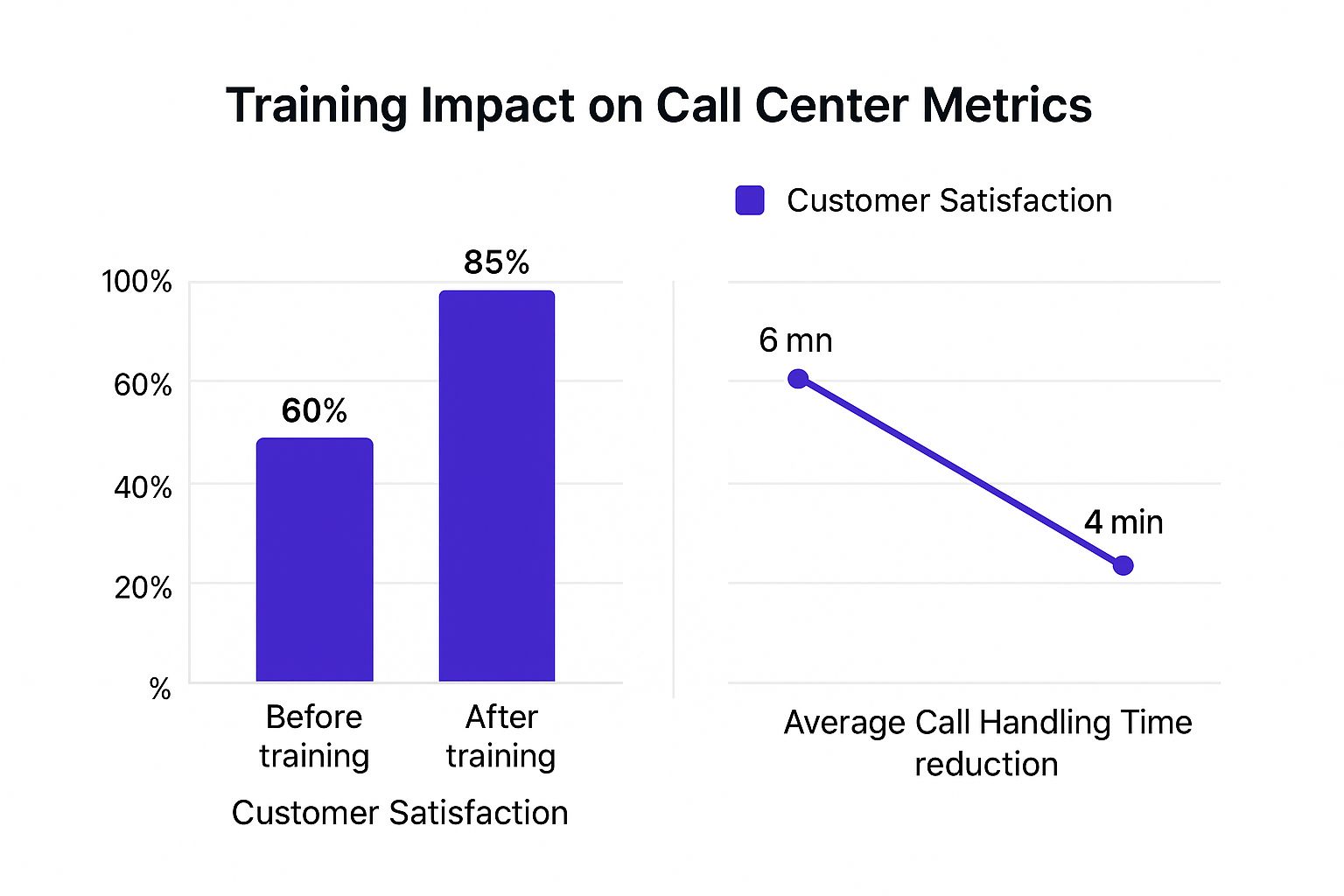
Look at that impact. Effective training can boost customer satisfaction significantly (from 60% to 85%) and cut down average call handling time (from 6 minutes to 4 minutes). That means happier customers and a more efficient operation. These kinds of results are possible when you ditch the generic training modules and build something that truly speaks to the needs of your team and your customers.
The Hidden Costs of Outdated Training
The consequences of bad training go deeper than you might think. High turnover is a huge warning sign. When agents feel unprepared and unsupported, they're much more likely to jump ship. And then you're stuck constantly recruiting and onboarding new people, which costs time and money. This constant churn also makes for inconsistent service, which hurts your customer experience.
Another hidden cost? Missed opportunities to turn everyday calls into positive customer interactions. When your agents have the right skills and knowledge, they can build rapport, solve problems effectively, and even spot chances to upsell.
Plus, the rise of remote work throws another wrench into the works. The call center world is quickly moving toward remote models, with the number of remote agents expected to jump by 60% between 2022 and 2024. Discover more insights on call center trends. This means your training needs to adapt to support remote teams and use technology to keep everyone connected and collaborating effectively. Investing in modern call center training isn’t optional—it’s essential for staying competitive and providing great customer service in today's world. It's about setting your agents up for success, not just survival. And that means a complete rethink of how we approach agent training and development.
Let's take a look at the key differences between old-school and modern training:
The following table illustrates the differences between traditional and modern approaches to call center training, highlighting their respective impact on agent performance.
Traditional vs. Modern Training Approaches
Comparison of outdated training methods versus contemporary strategies that drive real results
| Training Element | Traditional Approach | Modern Approach | Impact on Performance |
|---|---|---|---|
| Content Delivery | Lengthy lectures, dense manuals | Interactive modules, microlearning, gamification | Increased engagement, better knowledge retention |
| Focus | Product knowledge, scripts | Customer empathy, problem-solving, soft skills | Improved customer satisfaction, reduced call handling time |
| Feedback & Coaching | Infrequent, generic evaluations | Real-time feedback, personalized coaching, data-driven insights | Continuous improvement, increased agent confidence |
| Technology | Limited use of tools, outdated systems | CRM integration, call simulation software, performance dashboards | Enhanced efficiency, data-driven decision-making |
| Learning Environment | Passive learning, limited interaction | Collaborative learning, peer-to-peer support, online forums | Increased motivation, stronger team dynamics |
As you can see, modern training methods prioritize engagement, personalization, and data-driven insights, ultimately leading to better agent performance and improved customer experiences. Moving away from the traditional approach and embracing these modern strategies is crucial for success in today's call center environment.
Building The Foundation That Actually Sticks
Forget generic onboarding. Truly successful call center training creates an experience that builds genuine confidence. The best call centers get that customer service work has a huge psychological component. You're asking your team to handle tough conversations, stay energetic during long shifts, and be the face of your brand, often under pressure. That takes more than a quick overview and a handbook. The real top performers focus those first few weeks on emotional resilience– something most training programs miss.
This screenshot from Salesforce highlights how important it is to empower agents within a unified platform:

See how everything is integrated? Giving agents the information they need at their fingertips lets them handle customer inquiries efficiently and effectively. So, how do we turn this into a practical training framework? Let's break down how to structure those critical first few weeks.
Setting the Stage for Success
First, introduce your company culture authentically. Instead of just listing values, share stories that show those values in action. This makes your culture real and relatable. Also, set clear performance standards right away, but frame them as opportunities for growth, not as a way to intimidate. It’s like learning a new sport–you wouldn’t expect a rookie to play like a pro on day one.
Give new hires the time and space to learn and grow.
Building Resilience and Confidence
Next, address the mental side of customer service. Offer training on stress management techniques and how to navigate difficult conversations. This builds resilience and helps prevent burnout. I've found that role-playing scenarios that mimic real-world interactions are invaluable. They give agents a safe space to practice their skills. Think of it as a dress rehearsal before the big show.
This practice builds confidence and reduces anxiety when they finally face live calls.
Early Intervention and Support
Finally, put a system in place to spot any early warning signs that an agent might be struggling. This could be through regular check-ins with supervisors or maybe a peer mentoring program. The goal is to be proactive and offer support before small issues become big problems. Creating this safety net builds trust and shows your team that you’re invested in their success. This ongoing support is crucial for long-term job satisfaction and keeping your turnover low. It makes your call center training program a real investment in your team.
Communication Skills That Actually Connect With Humans
Let's be honest, generic call center training produces generic agents. And customers? They can sniff out a robotic interaction faster than you can say "hold music." The real magic happens when a call transforms from a mundane script-reading session into a genuine connection. That’s where the focus needs to be: empowering your agents to truly connect with the humans on the other end of the line. Think reading cues, de-escalating tense situations, and offering empathy that resonates—the kind that feels real, not rehearsed. Let's dive into those essential communication skills.
Active Listening: Beyond Simply Hearing
Think back to a truly great conversation. The other person probably wasn't just hearing your words, they were listening. They absorbed what you said, processed it, and responded thoughtfully. That's active listening, and it's the bedrock of exceptional customer service. It means focusing intently on the customer, picking up on their emotional state, and asking clarifying questions. Train your agents to listen for the subtle anxieties and frustrations hidden beneath the surface. For instance, a customer complaining about a delayed technician might actually be worried about a much bigger issue—like a burst pipe flooding their basement. By actively listening, agents can address the real root of the problem, not just the words being spoken.
Confident Speaking: Embracing Authenticity
Confident speaking isn't about putting on a fake, overly cheerful voice. It's about clear, assured communication. Encourage your agents to vary their tone, pause naturally, and ditch the technical jargon. This creates a conversational flow that instantly puts customers at ease. Simple exercises, like recording practice calls for review, can be incredibly helpful. This is especially beneficial for those more introverted team members who might need a little extra support finding their voice. On the flip side, your super extroverted agents? They might benefit from training that emphasizes active listening—sometimes their enthusiasm can accidentally overshadow the customer's actual needs.
Clear Explanations: Ditch the Tech Talk
Explaining complicated information in a way that everyone understands? That’s an art form. It’s about breaking down technical details into easily digestible chunks and anticipating those inevitable customer questions. Analogies and real-world examples are game-changers here. Instead of just reciting a company policy, explain the why behind it. This fosters understanding and builds trust. Imagine explaining a service agreement—connect it to the customer’s particular situation and highlight the benefits they receive. This transforms a dry recitation of rules into a helpful solution.
The Power of Empathy: Going Off-Script
Empathy is so much more than just saying "I understand." It’s about genuinely connecting with the customer's emotional state and showing them you genuinely care. Trained and engaged call center representatives are absolutely essential for top-notch customer service. In fact, over 70% of customers are more inclined to stick with a company known for its excellent customer service. Check out some more insightful stats on this. This highlights how vital it is to focus training programs on active listening, conflict resolution, and of course, good old-fashioned empathy. Training your team in these skills can significantly impact both customer satisfaction and loyalty. You might even want to explore affordable call answering services to see how outsourcing can enhance your customer experience. These communication techniques are fundamental to any successful call center training program. They go beyond the mechanics of a call and tap into the human connection that builds lasting customer relationships.
Product Knowledge That Transforms Agents Into Advisors
There's a huge difference between agents who can simply list product features and those who genuinely understand how those features solve customer problems. Think about it: Have you ever called customer service and felt like the agent was just reading from a script? It's instantly noticeable, and it doesn't exactly inspire confidence. But an agent who can connect what you need with how the product delivers? That builds trust and loyalty. This section is all about cultivating that deep product expertise in your team.
Moving Beyond the Basics
So many call center training programs just scratch the surface of product knowledge. They offer a basic overview, maybe a quick quiz, and then move on. That's simply not enough to create truly effective agents. The best companies go deeper. They build deep expertise, training agents to be trusted advisors, not just order-takers.
Making Complex Information Digestible
One key is making complex information easy to understand. Think bite-sized modules, interactive quizzes, and real-world examples. Instead of just listing features, explain the "why." How does this feature actually benefit the customer? For example, if you're selling a new HVAC system, don't just rattle off SEER ratings. Explain how a higher SEER rating means lower energy bills and long-term savings for the homeowner. Practical explanations make the information stick.
Knowledge Resources That Agents Actually Use
Another important element is creating resources agents can actually use during live calls. A searchable internal knowledge base, quick-reference guides, or even interactive troubleshooting tools can be invaluable. The easier it is for agents to find information in the moment, the more confident and effective they'll be. I've personally seen a well-organized knowledge base transform a struggling agent into a top performer.
Ongoing Education: Staying Ahead of the Curve
Product knowledge training isn't a one-and-done deal. Products change, markets evolve, and your agents need to stay current. Ongoing education through regular refreshers, new product modules, or even shadowing opportunities is essential. By investing in continuous development, you’re not just improving product knowledge; you’re showing your agents that you value their growth. This boosts morale and reduces turnover.
Role-Specific Training: Tailoring Expertise
Finally, not all agents need the same level of product knowledge. A sales agent has different needs than a technical support agent. Tailor your training accordingly. Sales agents benefit from training that connects features to customer benefits, while support agents need in-depth troubleshooting knowledge. This targeted approach maximizes effectiveness and ensures exceptional service across your call center.
Technology Training That Actually Empowers People
Your CRM and phone systems are supposed to be your agents' best friends, not their worst enemies. But ironically, tech training often gets the short end of the stick, leaving agents struggling and workflows a mess. The goal is for your team to own these tools, not just tolerate them. Here's how we can make that happen.
Gradual Introduction and Ongoing Support
Think of it like learning to drive. You wouldn't jump straight into rush hour traffic on your first lesson, right? The same goes for new tech. Start with the basics, let agents get comfortable, then gradually introduce more advanced features.
And remember, learning doesn't stop after the initial training. Set up systems for ongoing support. A dedicated help desk, regular Q&A sessions, or even a peer mentoring program can work wonders. Knowing help is there makes a world of difference.
Hands-on Practice and Troubleshooting
There's no substitute for hands-on experience. Create a safe space for agents to play around with the systems without the pressure of a live call. Simulated calls or dedicated practice time within the CRM are great options. This helps them internalize the workflows and build that all-important muscle memory.
Real-world tech isn't perfect. Things break. Prepare your agents for this by providing clear, practical troubleshooting guides. I've found that visual guides with screenshots are super effective. And for those inevitable moments when the system just crashes, have backup procedures in place. This minimizes downtime and keeps those little hiccups from turning into customer service disasters.
Speaking of user-friendly systems, check out Zendesk's call center software:
The clean, intuitive layout makes it easy for agents to find what they need quickly, which means a smoother workflow and shorter training times. You can even look into supplementing your in-house team with a 24/7 phone answering service to handle overflow or after-hours calls.
Workflow-Focused Training and Adaptable Systems
Don't just teach agents what the buttons do, teach them how to use the technology to get things done. Focus on the workflows. For instance, walk them through the process of logging a customer complaint from start to finish, instead of just pointing out where the "log complaint" button is. This practical approach makes the training stick.
Finally, tech moves fast. Your training needs to keep up. Design your training programs to be flexible and easily updated. This ensures your agents are always equipped with the latest knowledge and skills, ready to deliver top-notch customer service. Because at the end of the day, it's not just about training, it's about empowering your agents to succeed.
Here’s a handy checklist to guide your technology training:
Essential Call Center Technology Training Checklist
Core technology skills and proficiency levels required for effective call center operations
| Technology Component | Basic Skills | Advanced Skills | Training Time Required |
|---|---|---|---|
| CRM Software | Navigating the interface, data entry, basic reporting | Creating custom reports, managing workflows, advanced search functions | 4-6 hours |
| Phone System | Answering calls, transferring calls, placing calls on hold | Using call conferencing features, managing call queues, accessing voicemail remotely | 2-4 hours |
| Help Desk Software | Submitting tickets, tracking ticket status | Managing ticket escalations, using knowledge base resources | 2-3 hours |
| Live Chat Software | Responding to customer inquiries, initiating chats | Using canned responses, transferring chats to other agents | 1-2 hours |
This checklist gives you a starting point for structuring your training program, covering the fundamental tech components your agents need to master. Remember to adjust the training time based on the complexity of your systems and your team’s learning curve.
By focusing on these practical strategies, you’ll move beyond simply training your team; you'll be empowering them to confidently use technology as a tool for delivering outstanding customer experiences.
Performance Coaching That Motivates Instead Of Micromanages
Let's be honest, most call centers get performance management wrong. They fixate on metrics that don't really matter and create feedback systems that demotivate rather than develop their agents. Effective training doesn't stop when agents take their first solo calls—that's where the real learning begins.
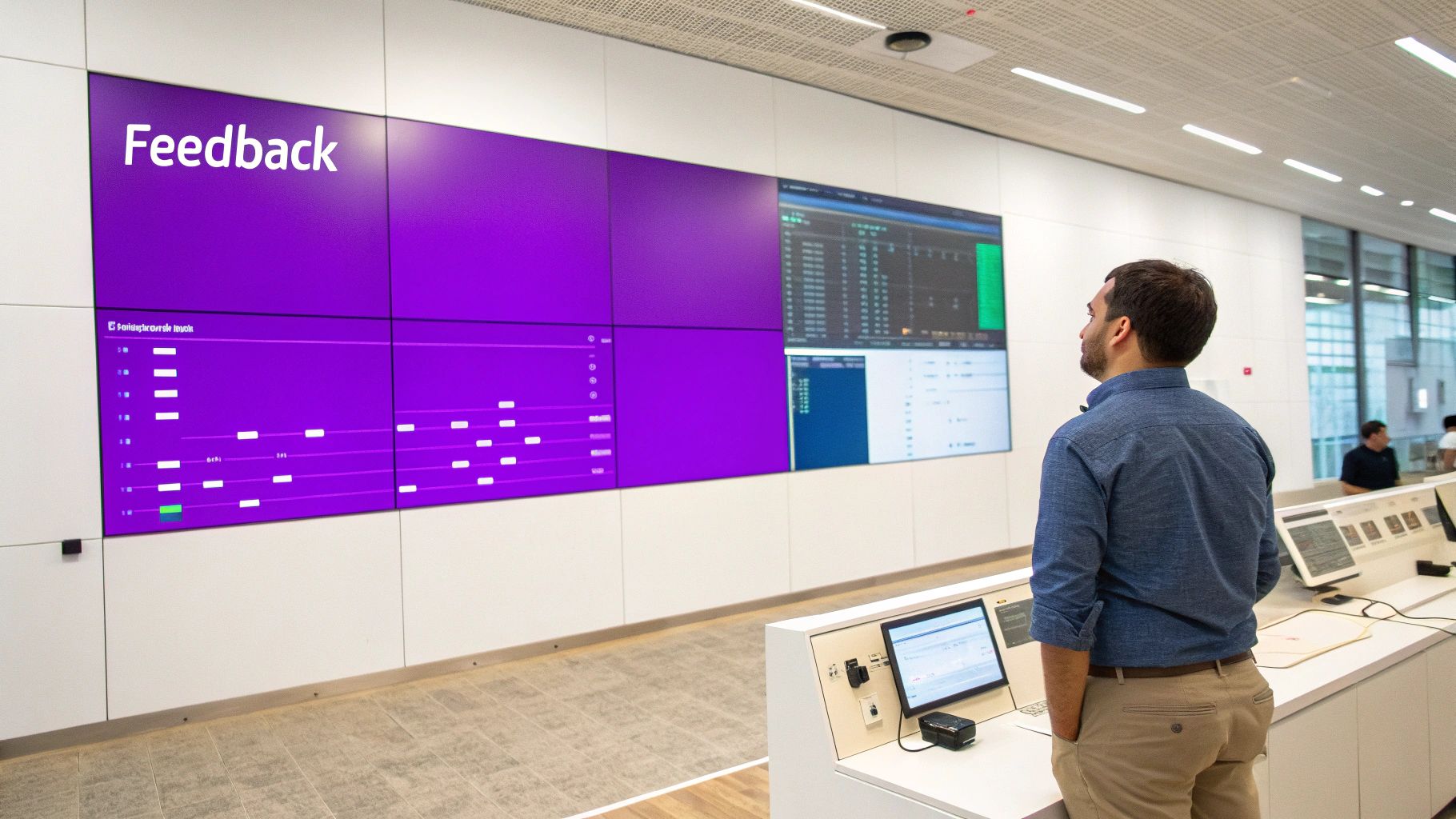
Think of it like coaching a sports team. You don’t just teach the plays and then abandon them. You give constant guidance, feedback, and support to help them grow and perform at their best. That's the kind of culture we want in our call centers: a culture of continuous improvement. So, how do we build that?
Designing Performance Improvement Systems That Actually Work
The trick is creating systems that motivate, not micromanage. This means shifting focus from simply monitoring numbers to understanding the reasons behind them. For example, if an agent's average call handling time is high, don't just tell them to speed up. Instead, investigate. Are they struggling with the CRM? Is their product knowledge lacking? Maybe they need extra help with tricky customer situations.
Once you understand the root of the problem, you can offer focused coaching and training that truly helps. This boosts their confidence and lets them own their performance.
Measuring What Matters: Metrics That Drive Results and Satisfaction
Picking the right metrics is key. Sure, call handling time and resolution rates matter. But don't ignore metrics that measure customer happiness and agent well-being. Think customer satisfaction scores (CSAT) and agent engagement surveys. These give you valuable insights into the health of your call center.
Remember: happy agents equal happy customers. Focusing on metrics that reflect both business results and employee satisfaction creates a win-win situation, driving improvement across the board.
Building Coaching Relationships That Foster Growth
The best managers act as coaches, not just bosses. They develop real relationships with their agents, offering regular feedback, support, and chances to learn and grow. This means performance reviews should be about development, not just judgment. Don’t just list areas for improvement, offer practical strategies and resources to help them build their skills.
Another important aspect? Identifying training needs before they impact performance. Regularly monitor agent performance, review call recordings, and ask for feedback to identify potential knowledge or skill gaps. Being proactive like this prevents small issues from becoming major performance headaches.
Creating Career Paths That Reduce Turnover
One of the biggest reasons for call center turnover? Lack of career growth. Agents need to know they have opportunities to advance. Creating clear career paths and offering skill development shows your agents that you’re invested in their future.
This could involve offering specialized training, creating mentorship programs, or even internal promotion opportunities. When agents see a future with your company, they're more engaged and committed, reducing turnover and creating a skilled, experienced team that delivers amazing customer service. By putting these strategies into practice, you'll build a call center where continuous improvement feels natural, not like a punishment. Your call center training guide should include these fundamentals.
Your Implementation Roadmap That Actually Works
Look, having a bunch of great call center training ideas is fantastic, but they're useless if you can’t actually put them into practice. This roadmap is all about giving you practical guidance to transform your current training into something that gets real results, without turning your business upside down in the process. We'll cover how to honestly assess where you are, prioritize improvements based on your biggest pain points, and roll out changes in manageable phases. Forget huge, overwhelming overhauls—we’re talking about creating lasting change, step by practical step.
Assessing Your Current State: Where Are You Now?
Before you even think about changing things, take a good, hard look at your existing training program. Where is it falling short? Are your agents struggling with product knowledge? Are your customer satisfaction scores looking a little…sad? Maybe your tech training is outdated and causing frustration. Honest self-assessment is absolutely essential. This isn’t about pointing fingers; it’s about pinpointing the areas where you can make the biggest difference. For example, if your customer surveys reveal confusion about your service agreements, that’s a loud-and-clear signal to strengthen training in that specific area.
Prioritizing Improvements: What Matters Most?
Let’s be real, you can’t fix everything overnight. Prioritize improvements based on your most pressing challenges and what will have the biggest impact on your bottom line. If high agent turnover is costing you a fortune, focus on onboarding and coaching that boosts job satisfaction. If customer complaints about technical issues are piling up, prioritize technology training and troubleshooting skills. This focused approach delivers quick wins and sets the stage for broader improvements later on.
Rolling Out Changes in Phases: Avoid Overwhelm
Implementing a new call center training guide doesn't have to be a chaotic, disruptive nightmare. Roll out changes gradually. Maybe start with a pilot program, concentrating on one key area, like communication skills. Get feedback, refine your approach, and then expand to other areas. This phased approach minimizes disruptions and allows you to adjust based on what actually happens in the real world. It’s like testing a new recipe—you wouldn’t serve it to a dinner party before trying it out yourself first.
Building Buy-In: Getting Everyone on Board
Change is tough, and people naturally resist things they don’t understand. Get buy-in from both management and agents by clearly explaining the why behind the changes. Show them how improved training benefits everyone—happier customers, more effective agents, and a healthier business overall. When people understand the purpose and see the value, they’re far more likely to embrace the new approach. Plus, involving agents in the process, asking for their input and feedback, fosters a sense of ownership and boosts engagement.
Measuring Success and Making Adjustments: Data-Driven Improvement
So, how do you know if your new training is actually working? Data. Track key metrics like customer satisfaction scores, call resolution times, and agent turnover. These data points provide objective insights into your training’s effectiveness. And don’t be afraid to make adjustments as you go. If something isn’t working, tweak it! Training is a continuous process, not a one-and-done event. The key is staying adaptable and responding to real performance data. You might also be interested in exploring business phone service options to further enhance your call center’s capabilities.
Let Phone Staffer transform your home service business by helping you generate and convert more leads. Our specialized services include cold calling that books appointments directly on your calendar. We can also hire, train, and integrate remote customer service representatives (CSRs) and virtual assistants (VAs) into your operations, ensuring your leads are contacted, your calls are answered, and your admin tasks are handled efficiently.