
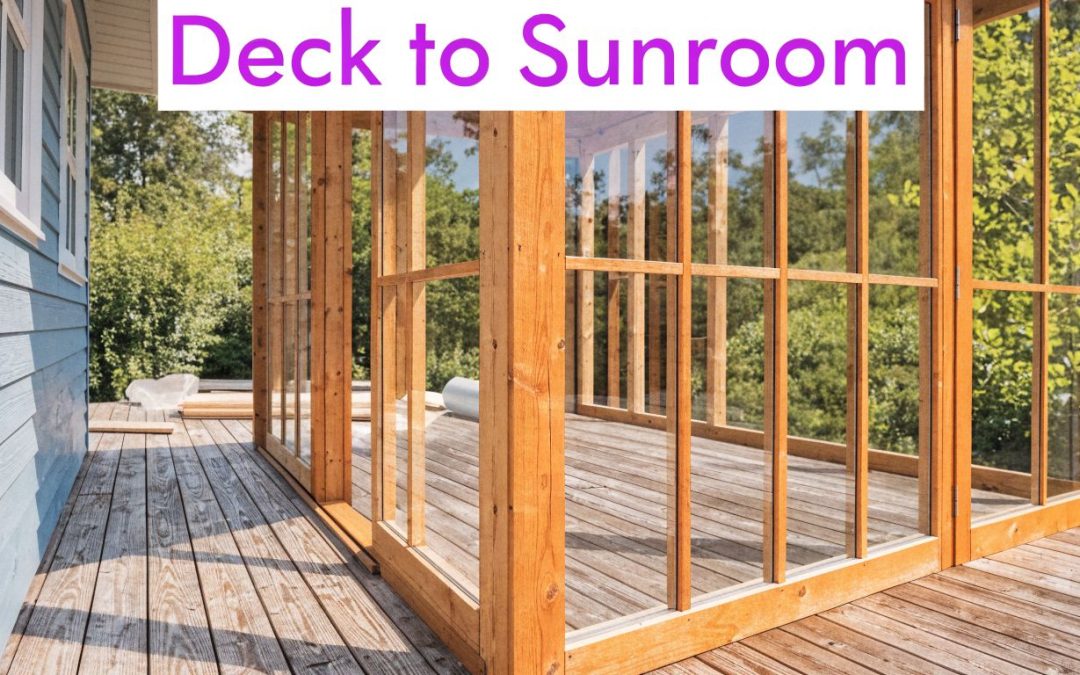
The first deck-to-sunroom job I ever remember clearly wasn’t the prettiest one. It was the one where the homeowner said, “We built this deck for family time, and now nobody uses it except the dog.” That’s the job that taught me a deck can be a wasted platform or the start of your best room.
That Deck You Never Use Could Be Your Favorite Room
I remember one backyard where the deck checked every box on paper. Big footprint. Good access off the kitchen. Nice view of the yard. The owners had even bought better patio furniture than I have on my own porch. Six months later, the cushions were faded, the table was covered in pollen, and everybody was eating inside again.
I see that pattern all the time. I’ve seen decks with perfect southern exposure that are miserable from late spring through summer because the sun bakes the boards by noon. I’ve seen covered decks that still go mostly unused because wind-driven rain keeps everything damp. A deck can be well built and still fail at the job the family wants it to do.
That is usually what pushes a homeowner to look into ways to Convert Deck to Sunroom. They are not chasing a trend. They are trying to turn leftover exterior space into a room that earns its keep.
What homeowners are really trying to solve
The first conversation rarely starts with window brands or trim details. It starts with how the house functions on a Tuesday.
Here is what people are usually trying to fix:
- A space that is technically there but practically useless: The deck exists, but the family only uses it a handful of comfortable days each year.
- Heat, bugs, moisture, and pollen: I hear this constantly from homes near trees, water, or open sun exposure. The deck becomes one more surface to clean instead of a place to relax.
- A traffic pattern that dies at the back door: The kitchen or family room opens onto the deck, but nobody wants to stay out there long enough for it to feel connected to the house.
- A room shortage inside: Homeowners want a breakfast area, homework zone, plant room, office, or quiet sitting space. The deck has the location and the light, but none of the protection.
A good conversion changes daily habits. People start using the back of the house earlier in the morning, later in the evening, and through more of the year.
I have also learned to listen for the sales clue in these calls, and that matters for contractors and remodelers reading this. When a homeowner says, "We never use this deck," that is not a small repair lead. It is often a lifestyle problem with a construction solution. The pros who ask better follow-up questions, how the family uses the kitchen, where they want natural light, what keeps them off the deck now, tend to book more of these jobs because they are selling function, not just square footage.
Homeowners feel that difference fast. They are not paying to trap an old deck behind glass. They are paying to get a room they will use.
Assessing Your Deck's Sunroom Potential
The first site visit tells you a lot. I can usually spot in ten minutes whether a project looks promising, risky, or headed toward a rebuild. Homeowners often assume a deck that feels solid underfoot is ready for walls and windows. That assumption causes expensive surprises.

A deck is designed for outdoor use. A sunroom is an enclosed structure with very different demands. According to Sunroom Designs New England’s Connecticut conversion guide, typical decks are designed for 40–50 pounds per square foot, while a three-season sunroom adds 15–20 psf and a four-season room adds 30–40 psf or more. That’s why reinforcement is often needed before any walls go up.
What I check first on every deck
I don’t start by talking about window styles. I start below the pretty parts.
Here are the first things that matter:
- Footings: Are they deep enough, stable, and in good condition, or are they shallow and questionable?
- Posts and beams: Do they look straight, properly sized, and free of obvious deterioration?
- Joists: Are they sagging, over-spanned, or showing signs of long-term moisture damage?
- Ledger connection: If the deck is attached to the house, is the ledger secure and properly flashed?
- Level and movement: Does the frame feel firm, or does it bounce and shift when loaded?
If I see rot at the base of posts, loose connectors, or old patchwork repairs, I already know the project won’t be a simple enclosure.
Practical rule: If the deck barely qualifies as a good deck, it won’t qualify as the base of a good sunroom.
Attached decks versus elevated decks
A ground-level attached deck is usually the cleanest candidate. If the ledger is sound and the support system was built right, reinforcement can be straightforward. These are the jobs where a homeowner has a real chance to reuse a meaningful part of the existing structure.
A raised or second-story deck is different. That’s where the conversation gets serious.
I’ve stood on plenty of second-story decks that looked sturdy enough for patio furniture but had no business carrying enclosed walls, larger window systems, and a roof assembly. On those jobs, the homeowner sometimes learns that building below the deck makes more sense than building on top of it. That isn’t the answer they expected, but it’s often the safer and smarter one.
Deck types that usually convert better
Not all decks give you the same options. Some layouts help. Others fight you the whole way.
| Deck type | Conversion outlook | Common reality |
|---|---|---|
| Attached deck | Often the best candidate | Works well if the house connection and footings are solid |
| Wraparound deck | Good partial-conversion option | Lets you keep some outdoor deck space |
| Covered deck | Usually easier | Existing roof structure can simplify planning |
| Elevated deck | More complex | Often needs major reinforcement or a different approach |
Covered decks deserve special mention. If the roof is already there and properly tied in, that can remove one major hurdle. But I still don’t assume anything. Existing roof structure helps only when the rest of the support system is equally sound.
A quick homeowner walk-around before calling a contractor
Before you book estimates, take a slow walk around your deck and look for what contractors notice right away.
- Look underneath: Check posts, hardware, and the underside of framing.
- Check the house connection: Any water staining or sloppy flashing near the ledger is a warning sign.
- Notice surface clues: Soft boards, uneven sections, or doors that already don’t line up can point to movement.
- Think about the shape: A simple rectangle is easier to enclose than a chopped-up, multi-level design.
A homeowner can’t replace a structural review. But a careful walk-around can tell you whether you’re likely dealing with a manageable conversion or a larger structural job disguised as one.
Handling Permits, Insurance, and Building Codes
I’ve seen deck-to-sunroom jobs stall over paperwork longer than they stalled over framing. One project had the structure figured out in a week, then lost nearly a month because the owner assumed an enclosed deck would be treated like a simple screen upgrade. The county treated it as an addition with structural review. That changed everything.
Paperwork decides whether the room is legal, insurable, and easy to sell later. Homeowners usually feel that pain at the end, right when they thought the hard part was over.
Why permits shape the whole job
Once a deck becomes an enclosed room, the rules change. The building department may want plans, footing details, load calculations, window and door specs, energy information, and a clear description of whether the space is seasonal or conditioned.
That is not red tape for the sake of red tape. It affects real job decisions.
A permit process can expose problems before they get buried behind trim and drywall. I’d rather have an inspector question a beam size on paper than have a homeowner learn during resale that the room was never approved. I’ve also seen lenders and buyers push back hard on enclosed spaces that were built without records. What looked like a finished sunroom became a negotiation problem.
Here’s the practical value of doing it right:
- The work is documented. That helps with resale, appraisal, and future repairs.
- Inspections catch misses. Connection details, header sizing, stairs, and safety glazing get reviewed before they become expensive corrections.
- The room is classified properly. That matters if the space is heated, cooled, or counted toward square footage.
- Fewer surprises show up later. Insurers, buyers, and municipalities all ask fewer questions when the file is clean.
If a contractor brushes off permits on an enclosed deck project, treat that as a warning.
Insurance needs attention before the build ends
Insurance gets overlooked all the time. It should not.
An enclosed room changes the risk profile of the house. Carrier questions often come down to how the room was built, whether it was permitted, whether it is conditioned, and whether the glass and framing meet local exposure requirements. In storm-prone areas, those details matter fast. In cold climates, insulation, heat source, and moisture control often become the bigger issue.
I tell homeowners to call their carrier early, not after the final inspection. Ask what documents they want and whether the added space changes coverage or premium. That is a short phone call that can prevent a long argument after a claim.
Code is local, and local matters
A deck conversion in one county can be a routine permit. The same basic design a few miles away can trigger engineering, upgraded footings, higher wind requirements, or stricter energy rules.
I ran into that on a coastal job where the owner wanted a light, glass-heavy room with minimal framing. On paper, it looked clean. Local wind requirements said otherwise. We had to revise the package, change product selections, and tighten the structural plan before approval. The homeowner spent more than expected, but they ended up with a room that passed inspection and held up to the weather it was going to face.
That is why low bids can be misleading. Some numbers look good because they ignore what the jurisdiction will require.
Questions worth asking before work starts
Homeowners do not need to know every code section. They do need clear answers to a few job-shaping questions.
What permit will be pulled for this conversion?
The answer should name the permit type, not dodge the question.Will the room be classified as seasonal or conditioned space?
That affects insulation, HVAC, windows, and inspections.Do local rules require stamped drawings or engineering?
Some areas do. Some do not. Guessing costs time.Has the insurance carrier been notified?
Do this before the project wraps up.Who handles inspections and corrections if the inspector flags something?
Good contractors own that process.
A note for contractors and company owners
This part of the job is also a sales issue. Homeowners calling about a deck conversion are usually excited about windows, views, and year-round use. The pro who wins the job is often the one who explains permits and insurance in plain language without making it sound scary.
That conversation builds trust. It also qualifies the lead.
If your team handles these projects, train your office staff and sales reps to ask early whether the deck is attached, raised, covered, or already partially enclosed, and whether the caller has contacted zoning or insurance. That helps you spot serious prospects, set realistic expectations, and book appointments with better close rates. It also separates your company from the outfit that promises a fast build and leaves the client to deal with code trouble later.
The Core Construction From Deck to Enclosure
The build itself follows a sequence, but the best jobs don’t feel mechanical. They feel like a series of smart decisions made in the right order. One family I worked with had a plain rear deck off their family room. By the end of the project, that old platform had become a bright enclosure they used for meals, homework, and late fall evenings.

The first week wasn’t glamorous. It was posts, connections, bracing, and the kind of corrections nobody posts on social media. That’s normal. A deck conversion succeeds or fails before the windows ever arrive.
Start with support, not finishes
Homeowners naturally focus on what they’ll see. Contractors need to focus on what they’ll never see again once the room is closed in.
On this project, the original framing looked decent at first glance. But once we opened things up, two areas needed more support than expected. We addressed the weak points before moving forward, because trying to “build through” structural doubt is how you create callback jobs.
That early phase usually includes some mix of the following:
- Reinforcing posts or beams
- Adding support where spans are too ambitious
- Correcting out-of-level areas
- Preparing connection points back to the house
- Making sure the future wall layout sits on reliable structure
A lot of budget overruns start here, not because the contractor is padding the bill, but because the old deck wasn’t built for enclosure in the first place.
Framing changes the project from patio to room
Once the base is right, the project starts looking like a room instead of an outdoor platform. Wall framing sets the openings, the roof line, and the overall feel of the space. A tight, well-planned frame makes every later step easier. A sloppy one makes every later trade curse your name.
I’ve seen homeowners struggle with one key choice here. Do they want the room to feel light and open, or solid and house-like? That affects knee-wall height, window layout, door placement, and roof tie-in details.
Here’s what usually works best:
| Decision point | Better for three-season use | Better for four-season use |
|---|---|---|
| Wall assembly | Lighter, simpler enclosure | Heavier insulated wall system |
| Window strategy | Broad seasonal ventilation | Tighter thermal performance |
| Roof approach | Basic protection from weather | Fully integrated insulated assembly |
| Floor planning | Works for casual use | Needs comfort in cold and hot months |
Windows and doors decide how the room feels
Many homeowners either make the room better or undermine it. They get excited by glass area and forget comfort.
A room with too much low-performing glass can look beautiful and still be unpleasant to sit in. A room with carefully chosen windows, proper placement, and a sensible door layout feels balanced. You get light without turning the space into a greenhouse or a draft zone.
I’ve had clients compare framing materials and glazing options with a simple question. “What’s the cheapest one that won’t annoy us later?” That’s a better question than chasing the lowest upfront price.
Some practical trade-offs:
- Vinyl framing: Usually lower maintenance and familiar to many homeowners.
- Aluminum framing: Can fit certain looks well, but the overall assembly still has to match the room’s purpose.
- Large fixed glass panels: Great for view, not always best for airflow.
- Operable windows: Help with shoulder-season comfort and cross-ventilation.
- Door placement: Matters more than people think for traffic flow and furniture layout.
The best-looking sunroom on day one is not always the one people still enjoy five winters later.
Roof tie-ins and water management separate good work from trouble
Most homeowners look at the walls and glass. I watch the roof tie-in and the drainage plan. That’s where mediocre work gets exposed.
When the new enclosure meets the old house, every flashing detail matters. If water can get in, it will. If snow or debris can sit where the design didn’t account for it, you’ll hear about it later.
On the project I mentioned, the family originally wanted a roof line that would have looked dramatic from the yard. We changed it to a more practical design because the first concept created avoidable water-management risk at the house connection. It wasn’t the flashy option. It was the one that aged better.
What works and what doesn’t
Some patterns repeat on these jobs.
What works:
- Simple footprints
- Clear structural corrections early
- Realistic expectations for seasonal versus year-round use
- Product choices that match the climate
- A contractor willing to say no to bad ideas
What doesn’t:
- Trying to hide structural weakness under finish work
- Over-glazing without thinking about comfort
- Treating a deck like it’s already a foundation
- Designing around appearance alone
- Rushing roof and flashing details
By the time framing, glazing, doors, and roof work are in place, the homeowner finally sees it. The old deck isn’t gone. It’s been absorbed into the house in a way that earns its footprint.
Bringing the Space to Life With Utilities and Finishes
Once the shell is done, the room starts telling you what it wants to be. Some homeowners think this phase is mostly decorative. It isn’t. Utilities and finishes decide whether the room becomes part of daily life or just a nice-looking add-on.
I’ve seen two similar sunroom shells end up with completely different futures because of finish decisions. One became a quiet reading room that stayed comfortable year-round. The other turned into a weekend overflow space that looked nice but never felt fully integrated into the house.
Heating and cooling shape how often the room gets used
One family extended their main HVAC into the new room. That can work well when the home system can handle the added load and the design supports it. Done properly, it helps the sunroom feel like it belongs to the rest of the house.
Another family chose a ductless mini-split. That route often makes sense when homeowners want targeted climate control without opening up larger parts of the home’s system. It can also give more flexibility if the room gets more sun than adjacent spaces.
Neither option is automatically better. The right answer depends on the house, the use case, and how “integrated” the room needs to feel.
- Central HVAC extension: Better when the room is meant to behave like adjacent living space.
- Ductless mini-split: Better when independent control matters more than system continuity.
- No serious climate plan: Usually leads to a room that only gets used when the weather is perfect.
Electrical is where comfort gets practical
A lot of homeowners under-plan electrical work. Then they move furniture in and realize the one outlet is in the wrong place, the ceiling has no fan box, and the lighting feels flat at night.
I encourage people to think beyond code minimums. A good sunroom usually needs layered lighting and better outlet placement than they first expect.
Consider the room by use:
| Intended use | Electrical priorities |
|---|---|
| Reading room | Task lighting, switched outlets, quiet fan |
| Family lounge | Ceiling fan, media outlet placement, dimmable lighting |
| Home office | Dedicated receptacles, stable lighting, device charging spots |
| Dining space | Center fixture, accent lighting, flexible outlet access |
Finishes control the mood
One homeowner chose luxury vinyl plank because they wanted a low-fuss floor that could handle wet shoes and pets coming in from the yard. Another chose tile because they liked the cooler feel and clean look. Both were reasonable. The wrong move would have been choosing purely on showroom appearance without thinking about maintenance and comfort.
Wall and ceiling finishes matter just as much. Drywall gives a more integrated interior-room feel. Wood paneling can create warmth, but it needs to fit the house. Ceiling fans, recessed lighting, and trim details often do more for the room than expensive furniture ever will.
A sunroom becomes believable as living space when the utilities disappear into the background and the room simply works.
The best finish packages usually aren’t the fanciest ones. They’re the ones that make the room easy to inhabit on a random Tuesday, not just pretty when guests come over.
Budgeting the Conversion and Hiring a Pro
Converting a deck to a sunroom blends wish lists with mathematical realities. Homeowners usually come in with one of two assumptions. Either they think converting an existing deck should be cheap because “the base is already there,” or they fear it’ll cost almost as much as a full addition no matter what. Both assumptions can be wrong.
The numbers depend on the type of room, how much of the existing structure can stay, and how much hidden correction work the project needs.

According to Patio Warehouse’s cost guide for converting to a sunroom, deck-to-sunroom conversions average $41,500–$46,000, compared with a national average of $47,000 for sunroom additions, and they offer at least a 50% return on investment. The same source notes three-season rooms run about $80–$230 per square foot, while four-season options run about $200–$400 per square foot, and added livable square footage can increase property taxes.
Three-season versus four-season money decisions
This is the first budgeting fork in the road. Homeowners who blur these two categories usually get estimates that confuse them.
A three-season room is usually the lower-cost path. A true four-season room asks more of the structure, envelope, climate control, and finish package. It’s not just “the same room but warmer.”
Here’s a simple comparison.
| Factor | Three-season conversion | Four-season conversion |
|---|---|---|
| Typical use | Spring through fall | Year-round |
| Cost range per sq ft | $80–$230 | $200–$400 |
| Insulation demands | Lower | Higher |
| HVAC integration | Often limited | Usually necessary |
| Budget pressure points | Screens, windows, basic enclosure | Insulation, glazing, heating, cooling, full integration |
A helpful video can give homeowners a visual sense of what these choices look like in practice.
The neighbor who DIYed it and the one who hired a pro
I’ve seen both paths.
One homeowner tackled the job in stages. On the surface, that looked smart. He saved labor early, reused more of the old deck than he should have, and pushed forward before the structural questions were fully settled. The room looked decent for a while, but inspection problems forced rework after money had already been spent on visible finishes. That’s the expensive kind of “savings.”
His neighbor hired a contractor with sunroom experience from the start. The estimate was harder to swallow. But the work sequence was cleaner, the permit process was handled properly, and the homeowner got a room that behaved like it belonged there.
Sunroom Conversion Decision Matrix DIY vs. Hiring a Pro
| Factor | DIY Approach | Professional Contractor |
|---|---|---|
| Upfront cash outlay | Can look lower early | Usually higher upfront |
| Structural judgment | Depends on homeowner skill | Better if contractor knows enclosure loads and local code |
| Permit handling | Homeowner manages the process | Usually handled as part of the job |
| Inspection risk | Higher if details are missed | Lower when plans and build sequence are coordinated |
| Schedule control | Flexible but often drags | More structured |
| Finish quality | Varies widely | More consistent if the crew is experienced |
| Rework risk | Higher | Lower, though never zero |
| Warranty and accountability | Limited | Clearer responsibility if issues show up later |
How to vet the contractor
Don’t just ask, “Have you built sunrooms?” Ask better questions.
- Ask about deck conversions specifically: Converting is different from building new on a fresh foundation.
- Ask what happens if the existing deck fails structural review: A serious contractor will have a clear answer.
- Ask who handles engineering and permit coordination: If they get vague, keep looking.
- Ask how they distinguish a three-season room from a four-season room in their bid: That answer tells you whether they price by reality or by wishful thinking.
- Ask what they expect to find wrong most often: Experience shows up in the problems they anticipate.
Cheap bids often depend on one hidden assumption. That the existing deck is better than it really is.
The best estimate usually isn’t the lowest or the highest. It’s the one that shows the contractor understands where deck conversions go sideways and has already accounted for that possibility.
For Pros How to Turn Sunroom Inquiries into Booked Jobs
Most contractors market deck-to-sunroom work like it’s a cosmetic upgrade. That leaves money on the table. Homeowners don’t just want a prettier enclosure. They want someone to remove uncertainty.
The strongest sales angle is not “beautiful sunrooms.” It’s “we know how to tell whether your deck can safely become one.”

That matters even more with raised decks, older decks, and homes where the owner suspects prior DIY work. According to Potomac Outdoor Living’s article on four-season sunroom conversions, a 2025 National Association of Home Builders report found 28% of deck collapses involve inadequate retrofits, and Google searches for “deck sunroom engineer near me” rose 22% year-over-year in 2025. Homeowners are not casually browsing. They’re actively looking for confidence.
Sell the assessment before the enclosure
If your ads, landing pages, and outbound calls jump straight to style and pricing, you sound like everyone else. The better offer is a structural-first conversation.
Good offer language is simple:
- Free deck-to-sunroom feasibility check
- Structural review for raised decks
- Permit-risk review before you design
- Old deck assessment before you invest in glass and framing
This works because it matches the homeowner’s actual fear. They don’t want to buy the wrong project.
What your phone team should say
A good opener doesn’t hard sell. It lowers the homeowner’s guard by naming the risk they’re already worried about.
Sample script:
“We talk to a lot of homeowners who want to enclose an existing deck, but the first question is usually whether the current structure can safely support the added room. We offer a quick review to help owners understand if they’re looking at a straightforward conversion or a larger structural project.”
A follow-up line that works well:
“If your deck is older, elevated, or attached with unknown prior work, it’s worth checking the support conditions before you spend time on design choices.”
That language positions your company as a guide, not a closer.
Build a campaign around older decks and anxious owners
The easiest leads to qualify are often the ones with obvious uncertainty. Older homes, raised rear decks, and homeowners who have already searched permit or engineering questions tend to convert better because the pain is real.
A simple campaign can include:
- Targeted outbound lists focused on neighborhoods with older homes and visible rear decks.
- Offer messaging centered on structural review, not generic remodeling.
- Landing pages that answer practical questions about suitability, permitting, and whether reinforcement is likely.
- Appointment setters trained to ask about deck height, age, and attachment style before discussing finishes.
- Estimator handoff notes that flag structural concerns early.
If you need a broader system for contractor outreach, Lead Generation for Contractors: A Simple System (2026) is a useful framework for turning educational offers into actual booked conversations.
The positioning mistake most contractors make
They lead with beauty. Homeowners are leading with risk.
That mismatch costs appointments.
If a prospect says, “We’re thinking about enclosing the deck,” and your answer is, “We build beautiful custom sunrooms,” you’ve skipped the question behind the question. They want to know whether the deck qualifies, whether the permit will be painful, and whether they’re about to sink money into something that won’t pass inspection.
A better close for this category
Don’t pressure the booking. Narrow the unknowns.
Try this:
- “The first visit is to determine fit.”
- “If the deck works, we can talk design and budget.”
- “If it doesn’t, we’ll tell you that before you waste money.”
That last line is strong because it sounds honest. Honest sells well in categories where homeowners assume they’re about to get pushed.
Contractors who understand deck conversions already know the technical side. The bigger opportunity is learning to market that technical judgment as the product people want first. The enclosure is what they buy second.
If you run a home service company and want more booked appointments from homeowners asking about sunrooms, additions, decks, and structural upgrades, Phone Staffer can help you build the outbound engine behind it. They recruit callers, train them, manage them, pull targeted local data, and make high-volume calls for home service businesses across the U.S. That lets your team focus on running estimates and closing jobs instead of chasing every lead by hand.