
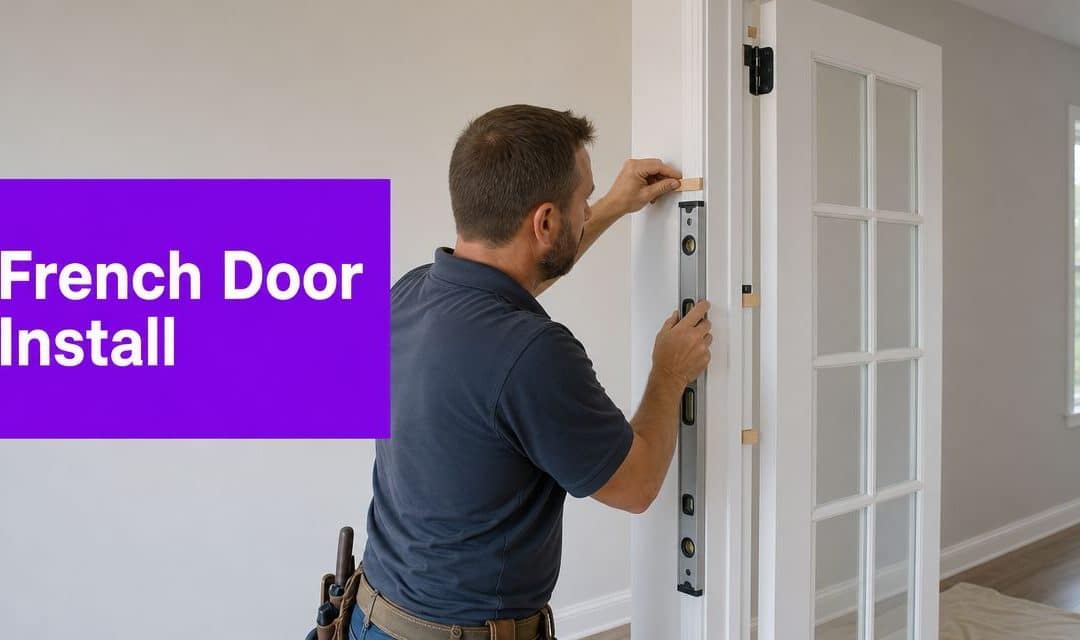
A lot of contractors learn French doors the hard way. The install looks clean on day one. The homeowners are happy. Then the weather changes, the house shifts, wind-driven rain finds a weak sill detail, and your office gets the call nobody wants. The doors drag, the lock fights, the trim opens up, or worse, the floor inside the opening starts showing moisture.
That's why knowing how to install a french door isn't about getting the unit into the wall. It's about controlling the opening, the water, the hardware, and the finish so the job still performs long after the check clears. On these projects, the mistakes that hurt you most are usually the ones the customer never saw during installation.
More Than Just a Door It's Your Reputation
Monday morning, the office gets a call from a homeowner whose new French doors looked great at handoff and now rub, leak air, and won't lock without a shove. That callback burns time twice. First on the repair. Then again when the customer tells a neighbor your crew had to come back.
French door work exposes weak habits fast, especially in older openings that are out of square or on walls that have already seen years of water and movement. A pair of doors has to meet cleanly at center, carry its weight evenly, seal at the sill, and stay predictable through weather swings. If any one of those details is off, the problem shows up in daily use.
Why French doors punish rushed installs
A standard single entry unit gives you less to coordinate. French doors ask for tighter control because both panels, the frame, the threshold, and the locking points all depend on the opening being right. Crews that chase speed and assume the framing is close enough usually pay for it later.
That is why I teach installers to treat this job like finish carpentry and water management combined. The customer sees glass, hardware, and trim. What keeps your name clean is everything behind that finish, including support under the sill, proper shimming, clean reveals, and weatherproofing that still works after seasons of expansion, contraction, and wind-driven rain.
Crew lead rule: If the opening is questionable, stop and correct it before the door goes in. Hiding a bad opening behind casing is how callbacks get scheduled.
What the client is buying, whether they say it or not
Homeowners usually start with appearance and function. They want more daylight, easier backyard access, and a better view. That is part of why articles about the benefits of new patio doors get attention. Customers are picturing the finished room.
Your crew sells something broader than that.
- The visible product is the door unit, trim, glass, and hardware.
- The delivered product is a square opening, controlled water drainage, reliable locking, and panels that operate without a fight.
- The business result is fewer return trips, stronger reviews, and enough confidence to price the work for the skill it takes.
That middle layer is where profit lives. If the door works for years, nobody remembers how long the install took. They remember that your company did it right.
The installs that build a company
Good crews do not judge the job by how it looks at 4 p.m. on install day. They judge it by whether the unit will still be plumb, dry, and easy to operate after the first hard rain and the first seasonal shift.
That standard matters even more on remodel work, where the rough opening often lies to you. The jack may be bowed. The subfloor may dip under the hinge side. The exterior sheathing may show old moisture damage that forces a change in the flashing plan. Handling those problems well protects margin and reputation. Missing them turns a decent ticket into unpaid service work.
French doors are never just a door. They are a test of whether a crew can correct the opening, manage water, and leave behind an installation that does not come back on the schedule.
Nail the Prep Work Before Unboxing the Door
The expensive mistakes happen before the door ever leaves the packaging.
A crew tears into the unit, leans panels against a wall, then finds a crowned subfloor, a twisted hinge side, or old moisture damage under the sill. Now the job has two problems instead of one. The opening still needs correction, and the product is exposed to scratches, dirt, and jobsite traffic while that correction happens. Good prep protects margin before it protects the door.
Start by proving the opening is ready
Measure the rough opening like you expect it to be wrong. Check width at the top, middle, and bottom. Check height at both sides and in the center. Those numbers show whether the opening is consistent or whether it pinches, bellies, or drops.

Then check the opening for plumb, level, square, and twist. Run a long level on both sides. Check the sill or bottom plate for level. Measure both diagonals. Add one more test that gets skipped too often on remodel work. Sight the wall plane and lay the level across the faces of the framing to catch a bow or rack that diagonal measurements will not fully explain.
French doors punish sloppy prep. A single bad read at the opening turns into uneven reveals, stressed hinges, hard locking, and callbacks that eat the profit out of the job.
Inspect the opening in the same order every time
Crews get faster when the inspection routine never changes.
- Check structure first. Look at jack studs, header, corners, sheathing, and subfloor for rot, movement, patchwork from an old leak, or crushed framing that will not hold a stable fastener pattern.
- Check bearing and plane next. The sill area has to carry weight evenly. High spots, dips, debris, or leftover fasteners create point loads under the threshold, which is one of the fastest ways to end up with an operating complaint.
- Check surface condition last. Remove dust, old sealant, loose material, and anything that keeps flashing or sealant from bonding cleanly.
That sequence matters. If the framing is bad, cleaning alone does nothing. If the framing is sound but the sill is dirty or uneven, the install can still fail because the unit is being supported badly from the start.
Know when shimming is correction and when it is concealment
This is the judgment call that separates a polished install from one that looks fine until the first season change.
Use shims for minor irregularities in stable framing. Stop and discuss reframing when the opening is out of square because the structure has moved, the header has dropped, or the sill area shows moisture damage that has changed the bearing surface. Shims can fine-tune a sound opening. They cannot turn weak framing into a reliable base for a heavy pair of doors.
As noted in this French or double door installation guide, even small out-of-plumb conditions can lead to binding doors, uneven reveals, and long-term air and water leakage, especially in older homes.
Here is the field test I give new leads. If you have to stack excessive shims to force the jamb into position, or if correcting one point throws another point out, the opening is not ready. Fixing that before install takes longer on the front end, but it prevents the kind of callback where the active panel drags, the astragal will not line up, or the lock starts fighting the homeowner a month later.
| Condition | Best response |
|---|---|
| Minor irregularity with stable framing | Shim and correct during install |
| Opening out of square with visible framing movement | Stop and discuss reframing |
| Sill not level because of debris or minor surface issue | Clean and correct bearing surface |
| Sill or framing shows damage from past moisture | Open it up and repair before setting door |
Prep includes permits, scope changes, and crew communication
If the work changes the opening size, affects structure, or triggers local review, settle that before demolition starts. Waiting until the wall is open is how a one-day install turns into a scheduling problem for the office and a margin problem for the project. Keep a reference on remodeling permit requirements handy so the field and office are working from the same playbook.
Good prep is quiet work. Customers rarely notice it on install day. They notice the result later, when the doors close cleanly, the threshold stays solid, and your company does not have to come back to fix what should have been caught before the unit was unboxed.
Setting the Unit Perfectly Plumb Level and Square
A French door can look fine for the last ten minutes of install day and still be headed for a callback.
That usually happens when the frame gets forced to match the opening instead of being set to carry its own weight correctly. The panels may latch today. After a season of movement, the active leaf drags, the meeting stiles drift, or the lock starts needing a shoulder bump. That is labor you already spent once, and it is the kind of return trip customers remember.

Set the frame in place without using fasteners to "fix" the opening
Dry-fit the unit and center it in the opening. Then stop and read it. Look at the gaps around the jamb, check how the threshold is bearing, and see whether one corner is trying to pinch. If the unit only sits where you want it after you start pulling screws, the opening is still running the job.
French doors are less forgiving than a simple single panel because two slabs have to agree with each other. The hinge jamb, head, latch jamb, and meeting stile all have to work together. A small twist in the frame shows up fast at the center where homeowners notice it every day.
On exterior work, I also pay attention to insulation strategy around the perimeter before final fastening. Overpacking a gap can bow a jamb just as surely as a misplaced screw. Products and methods aimed at protecting your home with waterproof spray foam can help in the right assembly, but the frame still has to be set and supported correctly first.
Build the hinge side first
The hinge side carries the install.
Shim directly behind each hinge point so the screws pull the jamb against solid backing. Use opposing shims and make small corrections. Long screws without solid shim support can bend the jamb inward, and that is how you create a door that swings closed on its own or binds halfway through travel.
Check the hinge jamb from bottom to top, not just at one spot. A jamb can read plumb low and still belly in the middle. In older openings, that middle bow is common, and if you miss it, the reveal at the top of the active panel will never stay consistent.
A field sequence that works looks like this:
- Support the threshold evenly so the unit does not rock under load.
- Plumb the hinge jamb first with shims at each hinge and other structural points.
- Check the head for level and watch for any twist from corner to corner.
- Shim the latch side last until the reveals stay even with both leaves closed.
Read the reveals like a finish carpenter
The level matters. The reveals matter more.
A crew can hit plumb and level numbers and still leave a bad install if the margins are off. French doors tell the truth at the meeting stile. If the gap tightens at the top or opens at the bottom, something is carrying stress. The lockset may still engage today, but seasonal expansion will expose the mistake.
I have seen this on jobs where the latch side got hurried because the doors "looked close enough." They closed. They even locked. A few months later, the homeowner had to pull the active panel into position to get the hardware to catch. The adjustment was simple. The callback was not. Travel time, schedule disruption, and a customer who stopped trusting the crew cost more than the fix itself.
Before permanent fastening, check these points with both leaves operating:
- Head gap stays consistent across the full width.
- Meeting stiles line up cleanly from top to bottom.
- Latch-side reveal is even with the doors closed.
- Both panels swing freely without rubbing, lifting, or drifting.
A properly set French door closes with fingertip pressure, not body weight.
A video like this is useful for visualizing the sequence and body mechanics involved when setting and checking the unit:
Fasten gradually and keep checking your work
Tack the unit in place. Recheck it. Then fasten it in stages.
That order matters because every screw can move the frame if the shims are not tight and doing their job. Set one area too aggressively and you can pull the head out of level or pinch the latch side without noticing until the doors are fully closed.
Use a repeatable final check before you commit all fasteners:
- Open and close each leaf several times and feel for drag.
- Watch the center seam as the doors come together.
- Confirm the weatherstrip compresses evenly instead of getting crushed on one end.
- Look at the threshold contact points to make sure the unit is bearing where it should.
A correct install has a certain feel. The doors swing naturally, meet evenly, and latch without lifting a panel or forcing the handle. That result comes from patient shimming, careful reading of the reveals, and refusing to let an out-of-square opening steal margin from the job.
Creating a Waterproof Seal That Lasts for Decades
A French door can swing perfectly on day one and still turn into a callback six months later if the water control is weak. The customer will not say, “your flashing sequence failed.” They will call about swollen flooring, stained casing, peeling paint, or a musty smell near the threshold. By that point, the leak has already moved past the opening and into materials you now have to explain, repair, or fight over.
The sill causes more failures than any other part of the install because it sees bulk water, wind-driven rain, foot traffic, and repeated movement. A bead of caulk on a flat subfloor does not solve that. Water needs a defined path out of the assembly.
Start with a sill pan that pitches to the exterior. Then tie the opening into the weather-resistive barrier so each layer laps over the one below it and sheds water out, not back toward the interior. Sealant belongs in the locations the manufacturer calls for, but sealant is one part of the system, not the system itself.

Crews usually learn this lesson after one expensive miss. Set a threshold dead flat, skip the pan, run a heavy bead of caulk, and the job can still leak on the first hard rain. The homeowner does not see the missing drainage plane. They see the floor edge start to cup and the paint line darken. That is how profit disappears from a job that looked clean at final walkthrough.
Out-of-square openings make this stage harder. One corner may need extra shimming, and that can create a deeper cavity or an uneven sealant joint at the exterior. If you do not account for that, water sits where the frame, trim, and wall surface meet. Good installers slow down here, check the joint depth, and build a seal that can move without tearing.
Manufacturer instructions matter at the perimeter for the same reason. This installation instruction PDF from Lowe's calls for sealant at the sill and around the exterior of the unit, plus a maintained 1/4-inch to 3/8-inch gap between the frame and final exterior wall surface, sealed with backer rod and sealant. That gap gives the joint room to work. Pack trim or cladding tight to the frame and the sealant joint cannot do its job.
Build the waterproofing in layers:
- Sill pan first so incidental water drains to the exterior.
- Flashing tape next in a shingle-style sequence that sheds water.
- Perimeter sealant after that at the locations the manufacturer specifies.
- Trim and cladding last to protect the joint without trapping water.
The rough opening insulation matters too, but use the right product and keep it in its lane. Low-pressure foam can help air seal the perimeter. It should not bow the frame or replace pan flashing, tape, or sealant details. The same building-science mindset shows up in adjacent envelope work like protecting your home with waterproof spray foam. Control water and air at the assembly before hidden damage starts.
Sell this part of the job plainly. Show the customer the pan, the flashing sequence, and the drainage path at the threshold. Explain that the clean finish they will notice depends on details they may never see again. That conversation protects your margin because it turns waterproofing from an invisible cost into a visible quality standard.
Installing Hardware and Trim for a Flawless Finish
The last part of the job is where the homeowner decides whether your company does average work or craftsman-level work.
By this point, the door may already swing well and seal properly. But if the hardware feels cheap, the active panel has to be tugged to latch, or the trim shows gaps against a crooked wall, the install loses its authority. Clients notice the touch points.
Hardware should feel deliberate
French doors have a security problem that single doors don't. The meeting stile has to stay tight, the inactive panel has to stay anchored, and the active panel has to latch cleanly every time. That's why experts recommend a three-point locking system for double French doors, along with a high-quality mortise lock and a double-cylinder deadbolt, as outlined in Houzz's guide to securing French doors.
That hardware only works as intended when the alignment is right.

On site, that means checking a few things in order:
- Inactive panel first. Make sure the flush bolts or other securing hardware engage smoothly without forcing the leaf.
- Active panel second. The latch should enter the keeper without the user lifting or pulling the panel.
- Lock engagement last. Test the full hardware cycle several times with the doors fully closed and weatherstripped.
One of the easiest ways to spot a rushed install is watching the client use the lock. If they have to “learn the trick,” the hardware wasn't fitted properly.
Good hardware doesn't need an explanation. It just works.
Trim tells the homeowner how careful you were
Trim is where many otherwise solid installs lose points. The opening might be right, but the walls around it usually aren't. Old plaster bulges. Drywall corners wander. Exterior cladding can roll or taper. If you cut trim like the house is perfect, the house will embarrass you.
The better approach is to fit the trim to the condition in front of you. Scribe where needed. Hold consistent reveals. Nail so the trim stays tight without being bent into a bad wall line. Then seal the exterior joint as part of the system, not as a decorative touch-up.
A good finish sequence often looks like this:
| Finish detail | What quality looks like |
|---|---|
| Interior casing | Tight reveal, clean miters, no forced bowing |
| Exterior trim fit | Even contact with siding, brick, or stucco transitions |
| Sealant joint | Flexible, continuous, and sized for movement |
| Final punch | Hardware smooth, margins even, trim paint-ready |
The finished job should feel quiet
That's how I'd describe a top-end French door install. Quiet. No rattle when it closes. No scrape at the threshold. No light showing where it shouldn't. No trim edges asking for caulk to hide a bad fit.
The homeowner may not know why one install feels better than another. They don't need to. They just know when the door feels solid, secure, and expensive in the hand.
That feeling comes from details most crews rush through in the final hour.
Turning French Door Installs Into a Profit Center
A French door job turns unprofitable fast when the crew sells a clean replacement and walks into a racked opening, rotten sill, and no thought-out flashing plan. That is how a good sales number becomes a callback, a warranty argument, and a review that costs you future work.
Profitable installs start before the contract is signed. You make money on these jobs by pricing existing conditions, setting clear scope, and giving the crew a repeatable install standard for older homes that are rarely square.
Price the opening condition, not just the door
French doors sit in a tougher category than a basic slab swap. The risk is not the unit in the driveway. The risk is what shows up after demo.
A quote needs to separate normal install labor from hidden-condition work. If you bury everything into one flat number, you either lose the job to a lower bid or win it and give away your margin the moment the old frame comes out.
A practical quote usually breaks out:
- Base install for an existing opening that is close to ready
- Opening correction for framing that needs planing, reframing, or sill repair
- Water-management work for pan flashing, WRB integration, and exterior sealing
- Finish scope for interior casing, exterior trim, paint-ready prep, and hardware upgrades
That structure protects profit and makes change orders easier to explain. Homeowners may not know how far out of square an opening can be, but they understand the difference between a standard install and structural correction once you show them.
Sell the expensive problem you prevent
The value is not "new doors installed." It is no leaks at the sill after the first hard rain. It is no sticking active panel in August. It is no daylight at the margins six months later because someone forced the frame to fit a bad opening.
That is what better crews sell.
French door buyers are already spending for appearance and performance. Give them options tied to real outcomes:
- Multi-point locks for a tighter close and better security feel
- Stronger weatherproofing details for exposed elevations and older wall assemblies
- Higher-end trim packages where finish carpentry affects the whole room
- Post-demo correction allowances for houses where hidden damage is common
Those upgrades are easier to close when the explanation is honest. Better hardware improves operation. Better flashing lowers leak risk. Better trim makes the install look like it belongs in the house.
Standardize the parts that kill margin
Crews lose money by solving the same problem from scratch on every job. A good checklist fixes that.
I want the lead installer confirming the same points every time: rough opening measurements before order approval, sill condition at demo, shim locations, reveal checks, swing test, lock engagement, water test if the scope calls for it, and final photo documentation. That discipline cuts down on the two things that wreck profit fastest. Return trips and disputed quality.
One sentence should guide the whole team. Install it once, and install it right.
Market the work like a specialist
A lot of companies advertise doors. Fewer explain why French doors fail in older homes and how their process prevents it. That gap is where better jobs come from.
Your sales page, estimate follow-up, and ads should speak directly to the concerns homeowners already have: leaking thresholds, drafts, poor security, hard-to-operate panels, and trim that looks rushed. A focused campaign built around those pain points pairs well with lead generation strategies for contractors if your goal is to book more premium exterior and entry projects instead of low-margin commodity replacements.
French door installs become a profit center when the company handles three things well. Diagnose the opening accurately. Build the estimate around real risk. Deliver a finished install that does not come back to haunt the schedule three months later.