

Finding a steady stream of high-quality leads for construction jobs isn't about luck. It’s about having a smart game plan that combines modern digital marketing with old-school networking and savvy bidding. The contractors who consistently win don't just lean on one source; they build a dynamic, multi-channel playbook that keeps their project pipeline full and predictable.
Building Your Modern Lead Generation Playbook
Are you tired of the feast-or-famine cycle of finding new projects? It's a common struggle. Too many contractors either get stuck relying on word-of-mouth referrals or waste time and money chasing down every single lead, regardless of fit.
The real key to sustainable growth is creating a repeatable system—a playbook—that consistently brings in the right kind of clients for your specific business. This isn't just about finding work; it's about strategically targeting the jobs that perfectly match your skills, crew size, and, most importantly, your profit margins. You stop reacting and start proactively defining, attracting, and building relationships with your ideal customers.
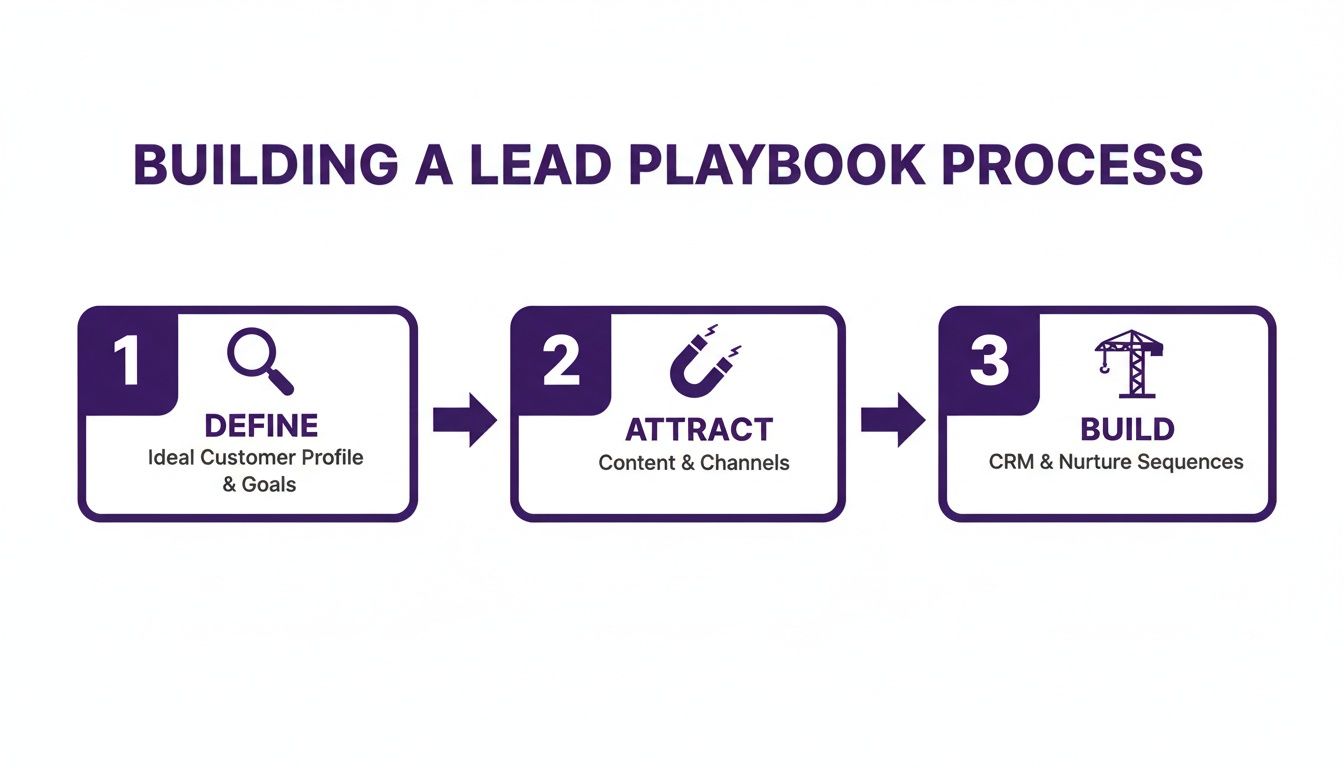
Step 1: Define Your Ideal Customer Profile
Before you can find great leads, you have to know exactly who you're looking for. This goes way beyond basic demographics. You need to build a detailed profile of your perfect client.
Think about these things:
- Project Type: Are you all about high-end residential remodels, new commercial construction, or specialized subcontracting like HVAC or electrical? Get specific.
- Budget Range: What’s the sweet spot for your project value? Figure out the minimum and maximum you can handle while staying profitable.
- Their Pain Points: What problems are your ideal clients trying to solve? Maybe it’s an outdated kitchen, an inefficient office space, or the need to meet ADA compliance. Knowing this helps you tailor your message.
Once you have a crystal-clear picture of your target, your marketing efforts become laser-focused and way more effective. And the opportunity is massive. The global construction market was valued at a staggering $11.4 trillion in 2024 and is expected to climb to $12.1 trillion in 2025. That growth means more clients are out there right now, actively looking for contractors they can trust.
For a deeper look at developing a winning strategy, check out a success guide for lead generation for contractors. A solid playbook is your foundation for grabbing a piece of this expanding market.
Step 2: Choose the Right Channels to Attract Leads
With your ideal client in mind, the next move is to figure out where to find them. Don't just throw money at every marketing channel. Be strategic and pick the platforms where your target customers are already spending their time.
Here's a look at some of the most effective channels we see working for contractors today.
Top Lead Generation Channels for Construction
| Channel | Best For | Effort Level | Potential ROI |
|---|---|---|---|
| Local SEO & Google | Residential contractors, GCs, remodelers | Medium | High |
| Paid Ads (Google/Social) | Niche services, quick lead flow | Medium-High | Medium-High |
| Referrals & Networking | All contractors, especially high-trust jobs | Low-Medium | Very High |
| Construction Bidding Sites | Commercial, government, subcontractors | High | Varies |
| Online Marketplaces | Small residential jobs, remodelers | Low | Medium |
Each channel has its own pros and cons. The best approach is usually a mix of 2-3 channels that align with your business goals and budget. Start with one or two, master them, and then expand as you grow.
Finding High-Value Clients Where They're Actually Looking
Alright, you've pinpointed exactly who you want to work with. Now for the most important part: getting in front of them. These days, that means being highly visible online. It’s no longer enough to just have a website collecting digital dust; you need to be active and strategic on the platforms where your best potential clients are searching for a contractor right now.
Think of it as a three-pronged attack. You'll combine a strong local search presence, smart paid advertising, and a solid footing on industry marketplaces. Each one feeds the others, creating a lead-gen machine that keeps your pipeline full of qualified people ready to talk business.
Win Your Own Backyard with Local SEO
Let's be honest, the best jobs are usually close to home. That’s what Local SEO is all about—making sure your company is the first one people see when they search for "kitchen remodeler near me" or "commercial contractor in Springfield." It’s about being impossible to miss at the exact moment a prospect needs you.
Your secret weapon here is your Google Business Profile (GBP). This isn't just a listing; it's your digital storefront on Google Search and Maps, and it’s completely free.
- Claim it and fill it out: Don't skip a single field. List every service, define your exact service areas, set your hours, and upload a ton of high-quality photos.
- Get reviews, then get more: Make it a habit to ask every single happy client for a review. Nothing builds trust faster with potential customers (and Google's algorithm) than a steady stream of positive feedback.
- Post regular updates: Keep your profile fresh. Share photos from current job sites, announce a special offer, or just post a team update. An active profile is a trusted profile.
A well-managed GBP is one of the fastest ways to get your phone ringing with calls from people in your area who are ready to hire.
Get a Flood of Leads Tomorrow with Paid Ads
Local SEO is a marathon, but paid advertising is a sprint. It gets you results, and it gets them fast. With platforms like Google Ads and Facebook Ads, you can put your message directly in front of your ideal customer profile with scary-good precision.
Imagine you're a roofer. You could run a Google Ads campaign that only targets homeowners in zip codes that were just hammered by a hailstorm. Or if you’re a luxury home builder, you could use Facebook Ads to reach high-income individuals who've recently shown interest in interior design or new real estate.
The trick is to create an ad that speaks to their specific problem and sends them to a simple, dedicated page on your website built for one thing: getting them to contact you.
A word of advice from the trenches: A winning ad campaign isn't about getting a ton of clicks. It's about getting the right clicks. Hyper-focused targeting ensures every dollar you spend is put in front of someone who could actually become a client.
Tap into Construction-Specific Marketplaces
Don't forget the online marketplaces. Sites like Houzz, Angi, and HomeAdvisor are basically specialized search engines for our industry. Homeowners and property managers go there with one goal: to find and hire a contractor.
Your profile on these platforms is your resume. Make it shine. Use professional photos of your absolute best work, write compelling descriptions that sell the result, and—just like with your GBP—make collecting positive reviews a top priority. A strong profile with great reviews will get you noticed over the competition every time.
Now, managing leads from all these different places can get out of hand quickly. A call from your GBP, a form from a Facebook ad, an inquiry from Houzz… it's a lot to juggle. This is where a team like Phone Staffer can be a game-changer. They can field all those incoming calls and messages, making sure every single lead gets a prompt, professional response so you never let a great job slip through the cracks.
Building a Powerful Referral and Bidding Engine
Sure, digital marketing is a big piece of the puzzle, but don't ever underestimate the old-school methods. Some of the best, most profitable leads for construction jobs will always come from your relationships and your reputation.
We're talking about referrals and bidding. These aren't just things that happen to you; they are systems you can build. When done right, they create a steady flow of high-quality work from your professional network and through formal bidding processes.

Turning Your Network into a Lead Machine
Let’s be honest, a referral is the best lead you can possibly get. It comes pre-loaded with trust. When a happy client, an architect you’ve worked with, or even a supplier vouches for you, that recommendation is worth more than any ad you could ever buy.
The trick is to stop passively waiting for these to fall into your lap and start actively generating them.
Build a simple, repeatable process for asking for referrals. It should be a standard part of your job wrap-up, just like sending the final invoice or doing the final walkthrough.
- Past Clients: About a month after the job is done, send a quick follow-up email. Check in, see how they're loving the new space, and if the feedback is good, mention you’re always grateful for introductions.
- Architects and Designers: These folks can be a goldmine. Stay in touch. Send them great photos of the finished project you worked on together and let them know you’re ready for the next one.
- Suppliers: Your reps at the supply house know who's busy and who does good work. Build a real relationship with them and be specific about the kinds of jobs you're looking to land.
A referral isn't just a name and number—it's a stamp of approval on your work. Making this a system is probably the highest-return marketing activity you can do.
It doesn’t have to be awkward. A simple line works wonders: "John, we really enjoyed bringing your kitchen vision to life. So much of our business comes from happy clients like you, so if you know anyone else thinking about a remodel, we'd be honored if you passed our name along."
Making Sense of the Bidding Process
Referrals are king for private work, but bidding is your ticket to a whole different league of public and large commercial projects. It can feel a bit overwhelming at first, but platforms like BidClerk or government portals are just structured ways to land major contracts.
The first step is knowing which fights to pick. Don't burn time and money bidding on everything that moves. Zero in on the jobs that are a perfect fit for your crew's skills, your company's size, and your bonding capacity.
Once you’ve found a project that looks right, the proposal is everything. Too many contractors think it’s just about being the lowest number. While price obviously matters, the winning bid usually shows a rock-solid understanding of the project, a believable plan to get it done, and a track record to back it up.
And here’s a pro tip: track your results. Every single time you submit a bid, find out what happened—especially when you lose. Figuring out why you didn't get the job is priceless data that will help you tighten up your estimates and win more work down the road.
Turning Inquiries Into Booked Appointments
A sudden flood of new leads feels like a win, but that's just the starting line. The real challenge—and where you actually make money—is turning those raw inquiries into solid, scheduled appointments. This requires a reliable system to quickly sift through the noise and find the serious buyers.
Let's be honest, driving out to a site visit for someone who isn't a good fit is one of the biggest time and money wasters for a contractor. A solid qualification process is your best defense. It acts as a filter, making sure your valuable time is spent only with prospects who are truly ready and able to move forward.
Crafting Outreach That Gets a Reply
When you follow up on a lead, your goal is to be persistent without being annoying. The trick is to add value with every touchpoint and make it incredibly easy for them to say "yes." Generic, automated-sounding messages are a one-way ticket to the trash folder.
Here’s a simple, down-to-earth email script you can tweak and use:
Subject: Following up on your Kitchen Remodel inquiry
Body:
Hi [Prospect Name],Thanks for getting in touch about the kitchen remodel on [Street Name]. My name is [Your Name] with [Your Company]. We've helped a lot of homeowners in the [Your City] area bring their vision to life, and I think we can help you too.
Before we go too far, could you tell me a bit more about your timeline and what you're hoping to achieve with the new space?
Would you be open to a quick 10-minute chat tomorrow afternoon to see if we're a good fit?
Best,
[Your Name]
This works because it's personal. It mentions their specific project and gets straight to the point with a low-pressure ask. Once you have a lead on the hook, it's crucial to master the sales lead qualification process to guide them smoothly from first contact to a booked estimate.
A Simple Framework for Vetting Leads
To stop chasing dead-end leads for construction jobs, you need a quick mental checklist. This isn’t about an intense interrogation; it’s a friendly conversation to discover if there's a mutual fit before you invest hours driving to their home and drawing up a detailed estimate.
Here’s a simple table to guide you or your team during that initial call.
Lead Qualification Checklist
This checklist helps ensure you're only scheduling estimates with high-potential clients who are ready to make a decision.
| Qualification Criteria | Key Question to Ask | Red Flag Indicator |
|---|---|---|
| Budget | "To make sure we're on the same page, do you have a budget in mind for this project?" | "I have no idea," or a number that's 50% or more below a realistic cost. |
| Timeline | "Ideally, when would you like to get started and have the project completed by?" | "ASAP!" (with no flexibility) or "Sometime next year, maybe." |
| Decision-Makers | "Will anyone else be involved in making the final decision on this project?" | "My spouse handles that, and they're not available to meet." |
| Project Scope | "Can you walk me through exactly what you're picturing for the final result?" | Vague, undefined goals or a project type you don't specialize in. |
Asking these questions upfront is the fastest way to separate the serious prospects from the tire-kickers.
This entire qualification and booking process is precisely where a service like Phone Staffer can be a game-changer. Their trained appointment setters can handle this whole workflow for you. They’ll promptly call every new lead, ask your specific qualifying questions, and book vetted, high-quality appointments right on your calendar. This gets you off the phone and frees you up to do what you do best—build relationships, create winning estimates, and close more deals.
Closing More Deals With Smart Follow-Up and Tracking
Getting the lead is just the first domino to fall. The real work—and where most contracts are won or lost—is in the follow-up. It's a common mistake for contractors to send a quote and then just wait, assuming the prospect will call back when they're ready. But that’s rarely how it works.
In reality, a persistent and professional follow-up system is what keeps your name at the top of their list. It proves you’re the organized, reliable choice they're looking for.
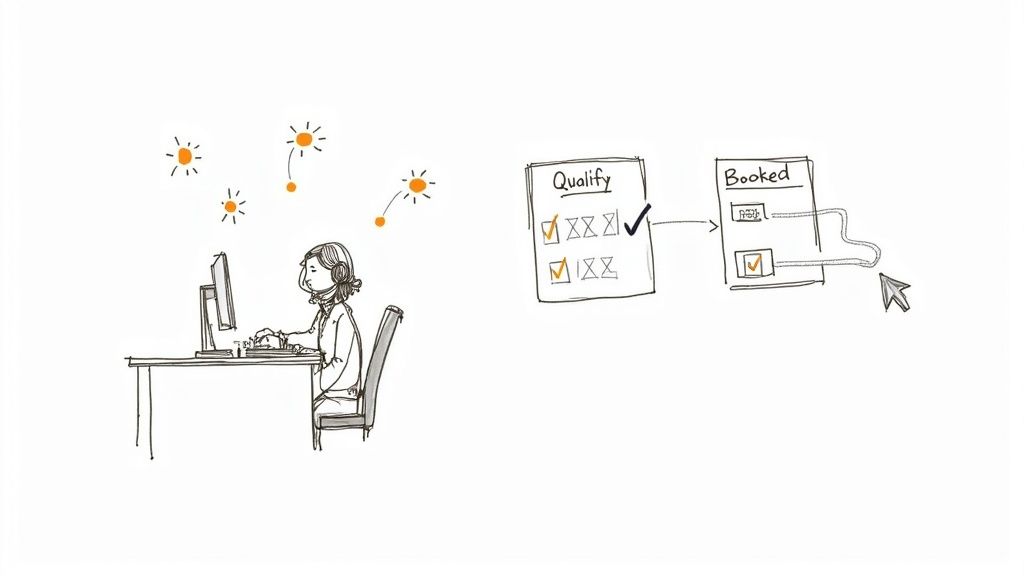
This isn’t about pestering potential clients with endless calls. It’s about creating a thoughtful sequence of touches that adds value and makes it easy for them to say "yes." A simple mix of calls, emails, and maybe a text message can dramatically improve your closing rate.
Building Your Follow-Up Sequence
A winning follow-up isn't random; it's a planned campaign. Every single interaction should have a clear purpose, gently guiding the lead from initial interest to a signed contract.
Here’s a multi-touch sequence you can adapt for your own business:
- Day 1 (Immediate): Send a quick, personal email. Just confirm you got their inquiry and let them know you'll be calling shortly. It shows you're on the ball.
- Day 1 (Later): Make that professional phone call. This is your chance to discuss the project and ask those first qualifying questions.
- Day 3: Follow up with an email that actually helps them. Send a link to a similar project in your portfolio or maybe a blog post about choosing the right materials. Provide value, don't just ask for the sale.
- Day 5: Send a brief, friendly text. Something like, "Hi [Name], just checking in on the [Project Type] we discussed. Happy to answer any questions. – [Your Name]." It’s a low-pressure way to stay top-of-mind.
- Day 7: Place one final call. Your goal here is to see if they've made a decision or if there's any final piece of information they need from you.
This structured approach ensures no lead slips through the cracks and constantly reinforces your professionalism. Remember, the very first interaction sets the tone for everything that follows.
The initial phone call is your first real impression. A missed call or a rushed, unprofessional answer can kill a high-value lead instantly. A polished front end is a massive competitive advantage.
Measuring What Matters Most
You can't fix what you don't measure. If you’re serious about getting quality leads for construction jobs, you need to track a few key performance indicators (KPIs) to see what’s working and where you're just spinning your wheels.
Focus on these core metrics:
- Lead Source Effectiveness: Where do your best jobs really come from? Dig into the data and see if your top clients are coming from Google, referrals, or those paid ads you're running.
- Conversion Rate: Of all the leads you qualify, what percentage actually sign on the dotted line? This number tells you exactly how effective your sales process is.
- Cost Per Acquisition (CPA): How much marketing money are you spending to land one new project? Knowing your CPA is absolutely vital for smart budgeting and sustainable growth.
This is more critical now than ever. The U.S. construction industry is grappling with a major labor shortage, needing an estimated 439,000 new workers on top of normal hiring just to meet demand, even as employment recently topped 8.31 million. You can read more about these construction industry trends, but the takeaway is simple: with labor already stretched thin, you can't afford to waste a single minute on lead generation that isn't pulling its weight.
Trying to manage this whole process—from answering that first call to meticulously tracking follow-ups—can feel like a full-time job in itself. This is where a service like Phone Staffer can be a game-changer. Their Customer Service Representatives can field all your non-sales calls, provide that polished first impression, and ensure every single person who contacts your business has a positive experience. That directly fuels your brand reputation and keeps the referrals coming.
Got Questions About Construction Leads? We've Got Answers.
Trying to nail down a solid lead generation strategy can be frustrating. You're a builder, not a marketer. Whether you're a one-man show or a growing firm, you've probably got questions. Let's break down a few of the most common ones I hear from contractors trying to build a predictable project pipeline.
What Is the Best Lead Generation Service for Small Contractors?
When you’re a smaller contractor, the “best” service is the one that gives you the most bang for your buck without a ton of wasted effort. It’s tempting to jump on big platforms like HomeAdvisor or Angi, but you can quickly get lost in the noise, competing with a dozen other guys for the same low-quality lead.
A smarter play is to focus on two things.
First, get obsessed with your Google Business Profile (GBP). It’s totally free and it's where local customers with real intent are looking for you. A well-managed profile with great reviews is like having a digital billboard in your own backyard.
Second, instead of buying leads from a marketplace, think about a service that gets you closer to a signed deal. An appointment-setting service or a targeted outreach specialist can deliver genuinely qualified opportunities. You end up paying for real conversations, not just a name and number.
How Much Should I Budget for Marketing?
There’s no magic number here, but a good starting point for established construction companies is around 3-5% of total revenue. If you're new or really trying to scale up and grab market share, you’ll probably need to push that closer to 7-10% to get the ball rolling.
Honestly, the total amount is less important than where you put it. I've seen guys with small, focused budgets run circles around competitors who waste a ton of cash on ads that go nowhere. Start with what you can afford, track your results religiously, and then pour more fuel on the fire where you see it’s working—whether that's local SEO or a solid referral program.
The most important part of your budget isn't the amount, but the consistency. Sporadic marketing efforts rarely produce meaningful results. Treat your marketing budget as a fixed operational cost, just like insurance or equipment.
How Can I Follow Up Without Being Pushy?
This is a big one. The secret is to stop selling and start helping. Nobody likes getting badgered with "Are you ready to sign yet?" calls. Instead, every time you reach out, try to give them something of value.
Here’s a simple, non-annoying follow-up sequence you can use:
- Email 1 (2 days after quote): A quick thank-you note. Link to a project in your portfolio that’s similar to what they want.
- Call 1 (4 days after quote): A brief, friendly call. "Just wanted to see if you had any questions about the proposal I sent over." That’s it.
- Email 2 (7 days after quote): Share something helpful. Maybe it's a blog post you wrote about "Choosing the Right Materials" or a link to a great client testimonial.
- Final Call (10 days after quote): One last touch. "Checking in to see where you are in your decision-making process."
This strategy positions you as a trusted expert, not a desperate salesperson. It keeps you on their radar and builds the kind of trust that makes them want to hire you when the time is right.
Juggling phone calls, qualifying leads, and setting appointments can feel like a full-time job on its own. Phone Staffer gives you trained, remote CSRs and appointment setters to handle it all for you. We make sure every lead is captured and every potential client gets a professional, human experience from the very first call. Learn more at https://phonestaffer.com.