
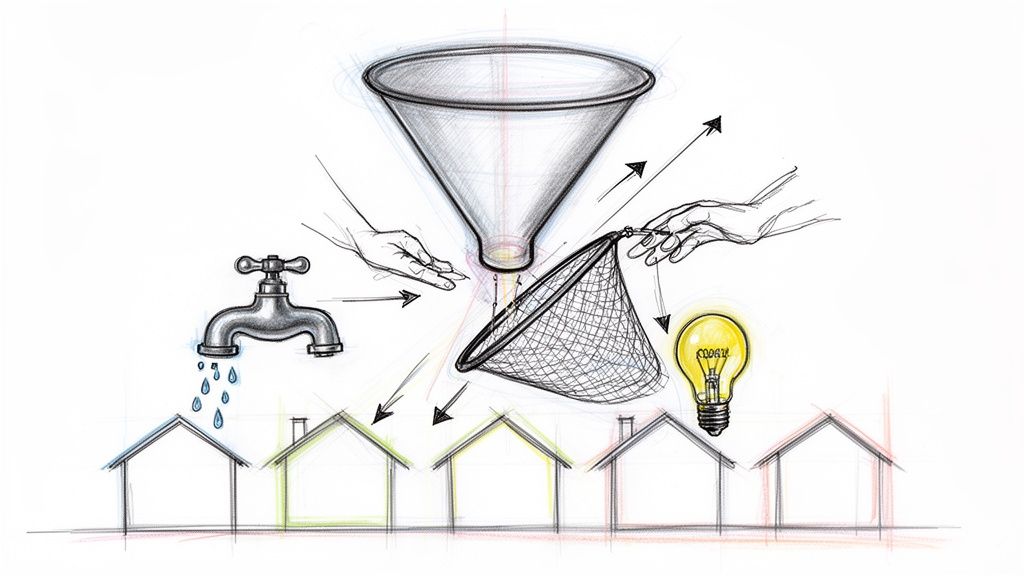
Let's talk about the top of the funnel, or TOFU as it’s often called. This is the very first, and widest, part of your marketing effort. Its entire purpose is to cast a wide net and attract a large audience of potential customers—people who are just starting to realize they might have a problem.
For a home service business, this means getting in front of homeowners before their water heater explodes or their AC gives out in July. You’re building awareness and trust so that when they do need a pro, your company is the first one that comes to mind.
What Is the Top of Funnel and Why It Matters
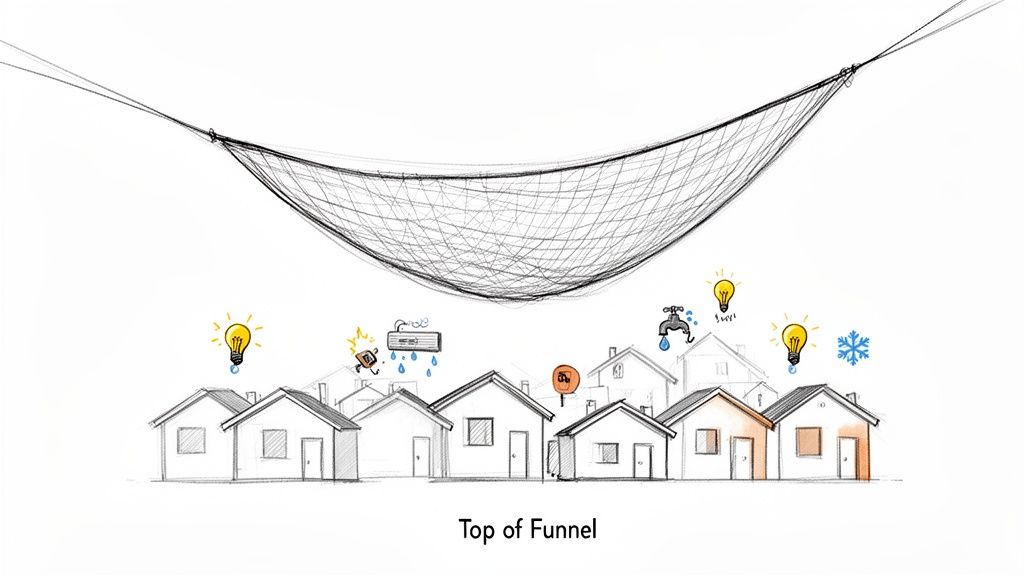
Think of it this way: sponsoring a local little league team or setting up a booth at a neighborhood block party isn't about selling a new HVAC system right there on the spot. It's about building goodwill. You're making sure local families know your name and see you as a familiar, trusted part of the community.
The digital top of the funnel works exactly the same way. This isn't the time for a hard sell. It’s all about being helpful and educational. Your goal is to grab the attention of homeowners with those early, nagging problems—a light that won’t stop flickering, a drain that gurgles ominously, or an energy bill that’s suddenly sky-high. They aren't ready to book a service just yet, but they are absolutely looking for answers.
Building Your Future Customer Base
A solid top-of-funnel strategy is the bedrock of long-term, sustainable growth. If you skip this stage, you’re stuck fighting for the same small group of customers at the bottom of the funnel—the ones with a full-blown emergency who are frantically calling around for quotes. That’s the most competitive and expensive audience to chase.
The top of the funnel is your chance to introduce your brand and build trust before a prospect even knows they need you. It’s about being the helpful expert first, so you become the obvious choice later.
Investing in TOFU activities is like planting seeds for your future sales pipeline. It creates a steady stream of leads by building a relationship long before your competitors even know that customer exists.
Taking this approach helps you:
- Establish Authority: When you provide genuinely helpful content, you’re not just another contractor; you're the local expert.
- Increase Brand Recognition: Familiarity breeds trust. When a homeowner eventually needs a repair, your company’s name will be the first one they think of.
- Lower Customer Acquisition Costs: It's almost always cheaper to earn a customer through trust and education than to pay top dollar for high-intent, "I need help now!" emergency ads.
Ultimately, a well-oiled top-of-funnel machine is what keeps a service business healthy. If you're looking to really nail down the fundamentals of attracting and converting new business, these lead generation best practices are a great place to start. A great TOFU strategy creates a reliable system that consistently brings new opportunities in the door, turning curious homeowners into loyal, repeat customers.
Picking the Right Channels to Maximize Your Reach
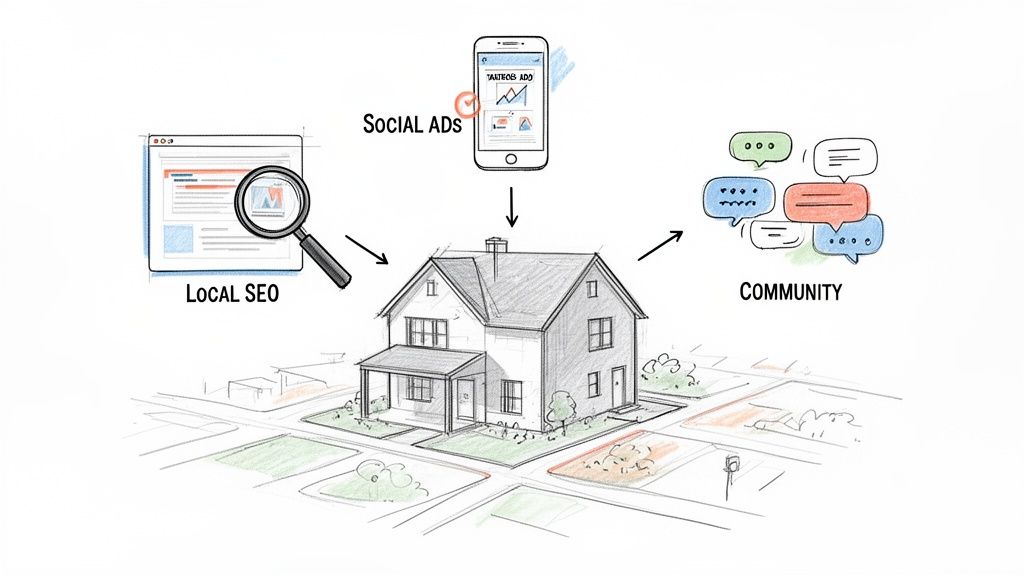
Okay, so you get why the top of the funnel is a big deal. Now for the million-dollar question: where do you actually find these future customers? The trick is to show up where homeowners hang out online, long before they're in panic mode over a burst pipe.
To really nail this, you need to understand the top marketing lead sources that drive real growth for businesses like yours. For home services, that almost always means a smart mix of local search, social media, and community platforms. This isn't about shouting from every rooftop; it's about being in the right places with a helpful, not-salesy, message.
Dominate Local Search with SEO
When a homeowner has a question about their house—any question at all—where do they go first? Google. Always Google. Being the answer they find is the core of Local Search Engine Optimization (SEO), and it's easily the most powerful top-of-funnel channel for any service business.
Think about this: a whopping 78% of local searches on mobile devices result in a purchase within 24 hours. That's huge. It means the person searching "why is my faucet dripping" is already on the path to hiring someone. If your blog post is the one that gives them the answer, you've just put yourself at the top of their list.
Your game plan here is to create genuinely useful content that solves problems and answers common questions.
- Helpful Blog Posts: Think like a homeowner. Write articles like "5 Signs Your Water Heater is About to Fail" or "How to Prep Your AC for a Brutal Summer." This kind of content catches people at the very beginning of their journey.
- A Polished Google Business Profile: This is your digital storefront. Keep it loaded with recent photos, a clear list of services, and a steady stream of positive reviews. It's often the first impression you'll ever make.
Engage Your Community with Smart Social Ads
Platforms like Facebook and Instagram have become the modern-day town square. No one is actively looking for a plumber while scrolling through vacation photos, but that’s the beauty of it. You can use incredibly specific ad targeting to build brand awareness with the exact people you want to serve.
Imagine running a Facebook ad campaign that only targets new homeowners in a specific zip code. The ad doesn't have to scream "CALL NOW!" Instead, it could offer a free home maintenance checklist or a quick video tip on a simple DIY fix. You instantly position yourself as a helpful local expert, not just another company trying to sell something.
The goal with top-of-funnel social ads isn't to get a phone call today. It's about building familiarity and trust, so when a real need pops up, your name is the first one that comes to mind.
Tap Into Hyper-Local Platforms
Don't sleep on platforms built specifically for neighborhood chatter. Nextdoor, for example, is an absolute goldmine for home service businesses. It's where neighbors go to ask for recommendations for everything—from a good electrician to a trustworthy roofer.
Being an active, helpful member of these communities builds a kind of credibility that money just can't buy. You can answer questions, share seasonal maintenance advice, or even sponsor a local little league team. This grassroots marketing solidifies your reputation and keeps you top-of-mind right where it matters most: in your own backyard.
Top of Funnel Channel Comparison for Home Services
Choosing where to invest your time and money can be tough. The table below breaks down the most effective TOFU channels for home service pros, outlining what each is best for and what you can expect in terms of cost.
| Channel | Primary Goal | Best For | Typical Cost |
|---|---|---|---|
| Local SEO | Answering questions; building authority | Homeowners actively researching a problem or need | Low to Medium (content creation, optimization) |
| Social Media Ads | Building brand awareness & familiarity | Targeting specific demographics (e.g., new homeowners) | Low to High (highly scalable ad spend) |
| Nextdoor | Building community trust & referrals | Hyper-local targeting within specific neighborhoods | Free to Medium (organic participation + paid ads) |
| Referral Programs | Leveraging existing customer trust | Generating warm leads from your happiest clients | Low (incentives, discounts on future services) |
Each channel plays a unique role. SEO catches people with immediate questions, social ads build long-term familiarity, and local platforms create authentic community trust. A healthy mix is your best bet for keeping the top of your funnel full.
Creating Content That Builds Trust and Attracts Leads
The secret to great top of funnel content is actually pretty simple: help, don't sell. At this point, homeowners aren't ready for a hard pitch. They're just looking for answers. Your job is to become the most helpful, knowledgeable expert in your area.
Think about the questions your techs and CSRs field every single day. Those aren't just one-off problems; they're a goldmine of content ideas that will pull in exactly the right kind of people.
The strategy is straightforward. You solve their small, low-stakes problems today so that when a big, high-stakes emergency happens tomorrow, your company is the first one they think of. It’s all about building a relationship based on expertise long before they ever need to pull out their wallet.
Identify Your Customer's Pain Points
The best content ideas aren’t dreamed up in a boardroom; they come straight from your customers. The first step is to figure out what they’re actually worried about. A little bit of listening and some smart research go a long way here.
Keyword research is a fantastic place to start. It shows you the exact words and phrases people are typing into Google when their home isn't cooperating. You'll uncover real questions that local homeowners have, like "why is my garbage disposal humming?" or "how to improve my home's air quality." These aren't just search queries; they're cries for help.
Creating content around these specific questions does more than just attract website traffic. It demonstrates that you understand your customers' problems on a deep level, which is the foundation of building lasting trust.
Don't forget the simplest method of all: talk to your team. Your CSRs and field technicians are on the front lines. Ask them what questions they get over and over again. Every one of those is an opportunity to create a genuinely helpful article, video, or guide.
Develop Content That Genuinely Helps
Once you know what people are asking, you can start giving them the answers. The trick is to offer real value without asking for anything in return right away.
Here are a few proven content formats that work wonders for home service businesses:
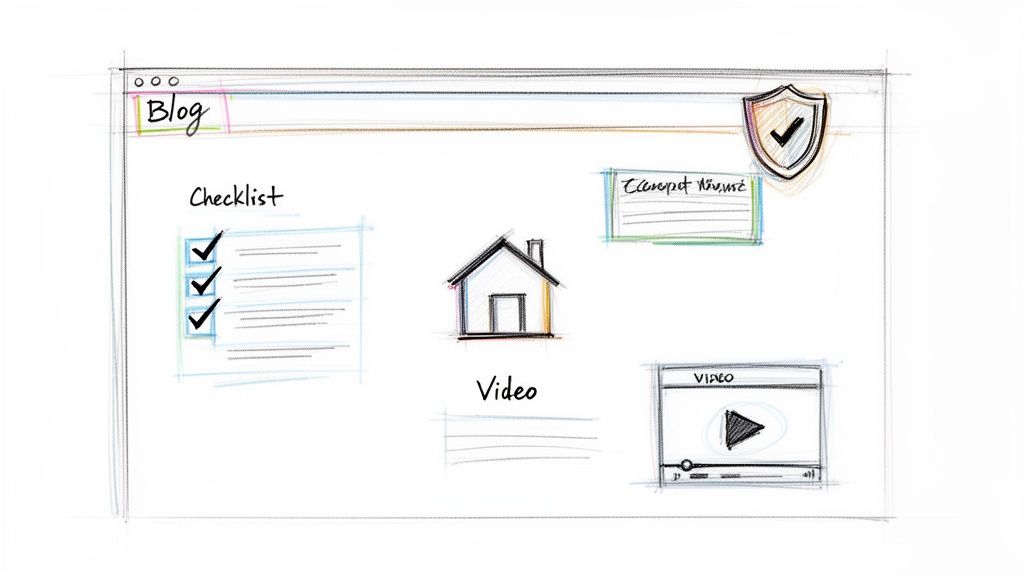
- Educational Blog Posts: Write articles that dig into a specific problem. A post titled "5 Warning Signs Your Electrical Panel Needs an Upgrade" is far more compelling than a generic ad because it hits on a real fear and positions you as the expert with the solution.
- Printable Checklists: A simple "Spring HVAC Maintenance Checklist" is incredibly useful. It's something a homeowner can print, stick on their fridge, and actually use—keeping your brand top-of-mind right inside their home.
- Short Video Tips: Shoot quick, one- or two-minute videos showing how to handle a simple fix, like relighting a pilot light or clearing a clogged drain. These are perfect for sharing on social media and make your brand feel friendly and approachable.
When you consistently put out this kind of valuable information, your top of funnel strategy stops being about chasing down leads. Instead, you start attracting them naturally. You become the trusted resource they turn to first, making it a no-brainer for them to call you when they finally need to hire a pro.
Measuring Your Top of Funnel Success
So, you're casting a wide net with your top of funnel marketing. That's a great start, but are you actually catching anything? Pouring money into ads and content without tracking what’s working is like fishing in the dark—you might feel busy, but you have no idea if you’re getting any bites.
To make sure your efforts are actually building your business, you need to watch a few key numbers that show you're getting noticed. This isn't about getting lost in a spreadsheet full of confusing analytics. It’s about knowing the basic signs that people are seeing your brand and showing some initial interest. Think of it as checking your fuel gauge on a long road trip; these metrics tell you if you have enough gas to actually get where you're going—booked appointments.
Key Metrics for the Awareness Stage
You don't need fancy, expensive software to get started. Free tools, like Google Analytics, are more than powerful enough to give you a clear picture of what’s hitting the mark. The goal is simple: track how many people your content reaches and see how they're engaging with it.
Here are the essential numbers you should be keeping an eye on:
- Website Traffic: This is the most straightforward signal. Are more people landing on your site this month compared to last month? A steady upward trend is a clear sign your awareness efforts are paying off.
- Click-Through Rate (CTR): This little number is a big deal. It tells you the percentage of people who saw your ad or search result and actually clicked on it. A high CTR means your message is hitting home and feels relevant to your audience.
- Cost Per Lead (CPL): This is the bottom-line metric for any marketing campaign. It tells you exactly how much you're spending to get a single potential customer's contact information. Your main job is to keep this number as low as possible.
Measuring your top of funnel isn't about chasing vanity metrics like social media likes or shares. It's about tracking the real, tangible impact on your pipeline of leads and making sure every dollar you spend is an investment in future jobs.
Navigating Rising Costs in Home Services
Keeping a close watch on your CPL is more critical now than ever. The home services space is getting crowded and competitive, which is driving ad costs through the roof. In fact, 69% of home services businesses have reported a 10.51% jump in their CPL year-over-year, pushing the average cost well over $100 per lead. You can read the full breakdown on Invoca.com to see more on these trends.
This is exactly why a smart top of funnel strategy gives you a serious edge. When you build a strong brand and attract customers early in their journey, you become less dependent on those expensive, last-minute ads that everyone else is fighting for.
While the average CPL might hover between $50 and $150, focusing on efficient, top-of-funnel channels can help you stay on the lower end of that spectrum. When you nail a cost-effective lead generation plan and pair it with professional call handlers who know how to convert those leads, the return can be massive. Businesses that get this combination right often see a 200-500% ROI, turning a smart marketing budget into a powerful engine for growth.
Turning Awareness Into Booked Appointments
Getting your name out there with top of funnel marketing is a fantastic start, but it's really only half the battle. A long list of curious homeowners doesn't pay the bills—booked appointments do. Without a rock-solid plan to turn that initial interest into actual jobs, even the most brilliant marketing strategy will fizzle out.
Think of it like a relay race. Your marketing efforts get you off to a great start, running the first leg and building a lead. But the handoff to your sales or customer service team has to be flawless. If you drop the baton, you lose the race. A seamless process for managing and nurturing new leads is what turns a marketing expense into a profitable investment.
This is how you actually make money from all the attention you worked so hard to capture.
The Playbook for a Perfect Lead Handoff
A potential customer’s interest is never higher than in the first few moments after they reach out. Every second you wait is an opportunity for them to second-guess their decision or, even worse, call your competitor down the street. A fast, organized follow-up system isn't just a nice-to-have; it's essential.
Here’s a simple three-step process to get it right:
- Speed Is Everything: Your goal should be to respond to every single inquiry within five minutes. I know, that sounds intense, but it dramatically increases your odds of booking the job. Set up automated texts or emails that immediately confirm you got their request and let them know a real person will call shortly.
- Centralize Your Leads: Don't let leads get lost in a messy spreadsheet or a cluttered inbox. Use a Customer Relationship Management (CRM) tool to track every interaction. This prevents anyone from slipping through the cracks and gives your team the full picture when they connect with the homeowner.
- Train Your Team to Convert: Your front-line staff—whether they're in-house CSRs or remote VAs—need to be more than just receptionists. They need to be trained to listen for customer pain points, build genuine rapport, and confidently steer the conversation toward a booked appointment. While the tactics might change by industry, as shown in this guide on lead generation for car sales, the core principles of speed and service are universal.
Why Phone Calls Are a Top Priority
Web forms and emails are convenient, but nothing closes a deal like a real conversation. This is especially true in the home services world, where homeowners are letting you into their most personal space and trust is everything.
A strong handoff process is the bridge between marketing and sales. It ensures that every lead generated by your top of funnel efforts is given the best possible chance to become a paying customer.
The numbers don't lie. Data shows that phone calls from search campaigns convert a staggering 40% of callers into paying customers—a conversion rate that web forms just can't touch. This is exactly where a dedicated phone team shines, taking that lukewarm interest from the top of the funnel and turning it into a confirmed appointment on your calendar.
The infographic below breaks down the simple flow for measuring whether your marketing is actually working, from getting initial traffic to seeing a real return on your investment.
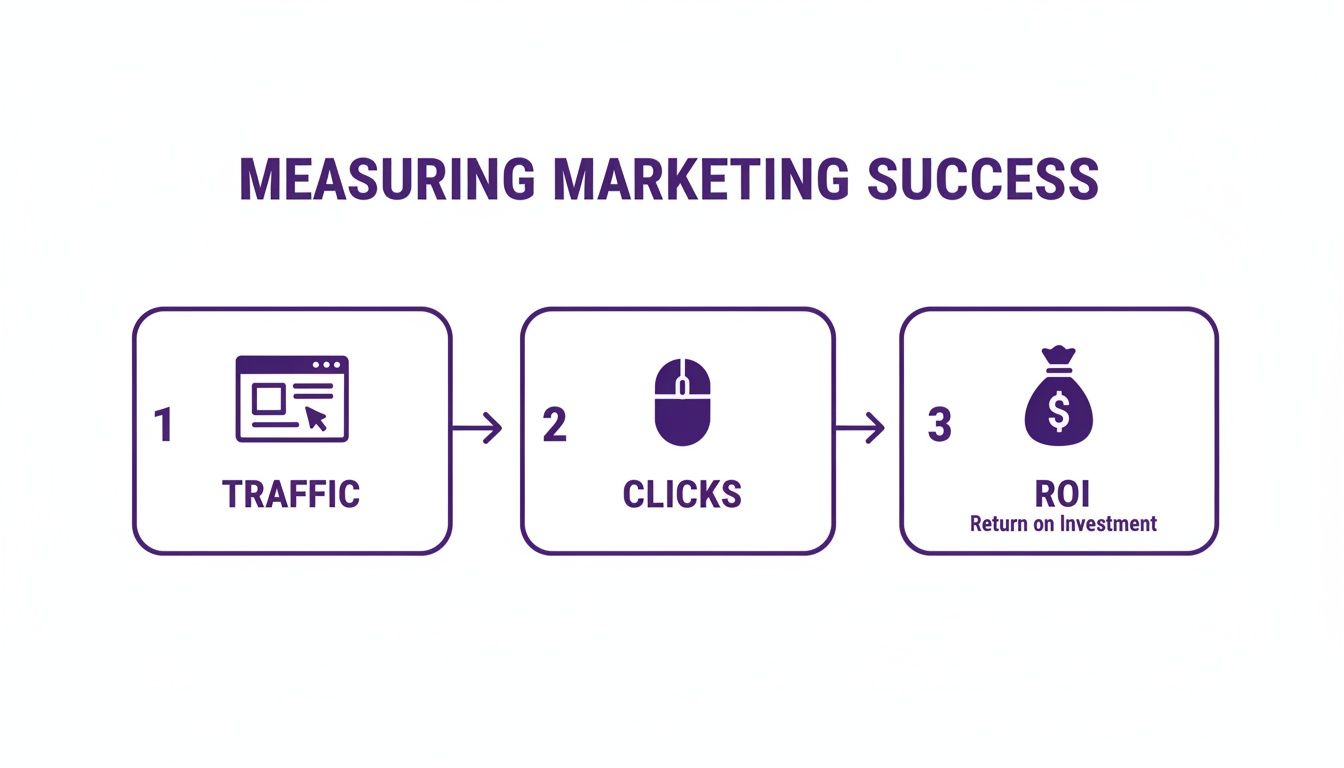
This really drives home the point that getting traffic is just the beginning. Those clicks have to eventually lead to a positive financial return, or it's all just noise.
Got Questions About Top of Funnel Marketing? Let’s Answer Them.
Even with a solid plan, jumping into top of funnel marketing for the first time can feel a little daunting. Most home service owners I talk to have the same core questions: Where should I put my money? And what are the big mistakes I need to avoid?
Getting the answers right is what separates a marketing expense from a marketing investment that fuels real, sustainable growth. Let's tackle the most common questions head-on with some practical, no-fluff advice.
How Much of My Budget Should Go to Top of Funnel Activities?
Look, there’s no single magic number here. But a really solid rule of thumb is to dedicate around 50-60% of your total marketing budget to your top-of-funnel efforts.
That might sound like a lot, but remember, this is the engine that fills your entire pipeline. It's where every future customer comes from. If you're a brand-new business just trying to get your name out there, you might even need to push that number higher to make a splash.
For more established companies with good brand recognition, it can be a bit lower. The most important thing is to obsessively track your cost per lead (CPL) and customer acquisition cost (CAC). If you're getting leads cheaply and your team is fantastic at closing them, pouring more gas on your TOFU fire is the fastest way to scale.
What Is the Biggest Mistake Businesses Make with TOFU Marketing?
The single biggest—and most expensive—mistake is dropping the ball on the follow-up. It's a classic story: a business owner spends a ton on SEO or Google Ads to make the phone ring, but then lets those valuable leads go completely cold.
Here’s the hard truth: if you don’t contact a new lead within five minutes, they’re already on the phone with your competitor. I've seen it happen time and time again.
At the top of the funnel, people are just browsing. They have a problem, but they haven't picked a solution—or a company—yet. Without an ironclad system for immediate contact, you're just spending your marketing budget to warm up leads for the next guy.
A brilliant top of funnel strategy is absolutely worthless without an equally brilliant system for handing those leads off to your sales team or CSRs. That handoff is the critical moment where marketing spend becomes actual revenue.
Should I Focus on Organic SEO or Paid Ads?
The real answer? You need both. They play for the same team but have totally different jobs. Think of it as a short-game vs. long-game strategy.
-
Paid Ads (Google Ads, Social Ads): This is your short game. It delivers results right now. You can spin up a campaign this morning and have your phone ringing with new jobs this afternoon. It's perfect for filling immediate gaps in your schedule.
-
Organic SEO (Blogging, Content): This is your long game. It's an asset you build over time. It can easily take 6-12 months of consistent effort to get your website ranking on the first page of Google. But once you’re there, you get a steady stream of high-quality leads for free, day in and day out.
The smartest approach is to walk and chew gum at the same time. Use paid ads to generate cash flow and keep your team busy while you invest in your long-term SEO strategy. That way, you build a sustainable business that isn't completely reliant on one source of leads.
Are you spending good money on marketing only to see leads slip through the cracks? Phone Staffer can fix that. We provide professionally trained remote CSRs and VAs who will answer your phone, call every new lead within minutes, and fill your schedule. You’ll never lose another customer to a slow follow-up again. Learn how we can help you turn awareness into revenue.