

Let's get right to it. A sales lead is essentially a potential customer—someone who has shown some kind of interest in what your home service business offers. Think of it as a homeowner raising their hand to say, "Hey, I might need your help." This is the starting pistol for your entire sales process.
So, What Is a Sales Lead, Really?

Cutting through the business jargon, a sales lead isn't just a random name you bought from a list. It’s a real person or company that has actively shown interest in your services.
Maybe they filled out a "Request a Quote" form on your website. Perhaps they called your office asking about your process or downloaded your "5 Tips for a Healthy HVAC System" guide. Whatever the action, they've gone from being a total stranger to a genuine prospect.
For a home service pro, this is the crucial difference between a random homeowner in your service area and the person who specifically asked for a price on a new roof. The first is just a contact; the second is a real lead. Getting this right is the key to spending your time and money where it counts.
A sales lead is really just an opportunity. It's that moment a potential customer gives you permission to start a conversation, turning what would have been a cold call into a warm, welcomed follow-up.
The True Scale of Lead Generation
Bringing in a steady stream of these opportunities is a top priority for nearly every business out there. In fact, organizations generate an average of 1,877 leads per month, which shows just how critical this activity is for growth.
But here’s the thing: not every lead is ready to buy right away. About 81% of those initial inquiries are what we call "marketing-qualified," meaning they need a bit more nurturing before they’re ready for a hard sell. If you're curious, you can find more lead generation statistics that show how other businesses handle this.
Lead vs. Contact: Knowing the Difference
It's easy to get "lead" and "contact" mixed up, but they play very different roles in your sales pipeline. A contact is just information, while a lead is an opportunity waiting to happen.
This table breaks it down clearly.
Lead vs Contact At a Glance
| Characteristic | Sales Lead | General Contact |
|---|---|---|
| Level of Interest | Has shown direct interest in your service. | No expressed interest; you just have their info. |
| Initial Action | Filled out a form, called, or downloaded content. | Their name is on a purchased list or in a directory. |
| Sales Potential | Higher likelihood of becoming a paying customer. | Very low; needs a lot of work to become interested. |
| Next Step | Follow up to qualify them and provide a quote. | Nurture them with general marketing over time. |
Internalizing this distinction is a game-changer. It helps you focus your energy on the conversations most likely to turn into paying jobs, so you're not wasting precious time chasing dead ends.
Alright, let's break down the different kinds of sales leads you'll actually run into on the job. Now that we've got a handle on what a lead is, it's time to get practical.
Think of it like this: not all leads are the same. In fact, it helps to think of them as having different "temperatures." Knowing the difference is what separates the pros from the rookies, because it tells you exactly where to put your energy.
Hot, Warm, and Cold: Gauging a Lead's Temperature
You've got your hot leads. This is the homeowner calling you in a total panic because a pipe just burst and water is flooding their basement. They have an urgent, painful problem, and they need to hire someone now. This isn't a "get back to them later" situation; it's an all-hands-on-deck, immediate follow-up.
Then you have warm leads. This is the person who fills out a form on your website asking for a ballpark estimate on a kitchen remodel they're dreaming about for "sometime this year." There's a real project on their mind, but the timeline is flexible. They aren't ready to sign on the dotted line today, but with a bit of nurturing and helpful information, they could easily become your next big project.
Finally, there are cold leads. This is someone who downloaded your "Spring Home Maintenance Checklist" six months ago and then… crickets. They showed a tiny spark of interest once, but chasing them with a hard sales pitch now would be a waste of everyone's time. These folks need to be gently "warmed up" over time with your general marketing, not a sales call.
From Casual Interest to Ready-to-Buy
In the sales world, we have more formal names for these temperatures. You'll often hear them called Marketing Qualified Leads (MQLs) and Sales Qualified Leads (SQLs). It's just a professional way of sorting them.
-
Marketing Qualified Lead (MQL): This is anyone who's interacted with your marketing but isn't quite ready for a sales conversation. They've downloaded a guide, followed you on social media, or subscribed to your newsletter. Your warm and cold leads fall squarely in this bucket.
-
Sales Qualified Lead (SQL): This is someone who has raised their hand and shown clear intent to buy. They've taken a high-value action, like filling out your "Request a Quote" form or calling your office to ask about scheduling. This is your hot lead, ready for your sales process.
Your main goal is to build a system that turns those curious MQLs into ready-to-buy SQLs. This nurturing process is where the magic happens. In fact, nurtured leads create, on average, a 20% higher increase in sales opportunities than leads that get ignored. If you're interested in more data like this, you can find a ton of powerful sales statistics on spotio.com.
By quickly figuring out what kind of lead you're dealing with, you can perfect your timing—calling the hot leads right away while patiently guiding the warm ones until they're ready to make a decision.
Why Quality Leads Are the Engine of Your Business Growth
Chasing every single phone call and form submission might feel productive, but it’s often just a fast track to burnout. The real secret to growing your home service business isn't just about getting more leads; it's about getting better leads. Trust me, focusing on quality over quantity is a game-changer for both your bottom line and your sanity.
Think about it this way. Imagine two HVAC contractors. The first one, let's call him Contractor A, treats every single inquiry as a top priority. He spends his days driving all over town to quote tiny, unprofitable repair jobs for price-shoppers, burning through fuel and his own energy.
Then there's Contractor B. She takes a much smarter approach. She aims her marketing specifically at homeowners who need full system replacements. Sure, she might get fewer calls, but each one is a serious, pre-qualified opportunity for a high-value project that actually grows her business.
That’s the difference in a nutshell. It’s not about how many names you can collect, but the real, tangible value each of those names represents.
The Power of a Quality-First Mindset
Switching your focus from quantity to quality is one of the most impactful decisions you can make. It creates a ripple effect that strengthens your entire operation. Here’s how:
- Higher Conversion Rates: When a lead is already a good fit, they're much further along in their decision-making process. That makes them far more likely to approve your quote and sign on the dotted line.
- More Profitable Projects: Better leads typically come from customers with bigger problems to solve—which means bigger, more complex jobs for you. This translates directly to higher revenue and healthier profit margins.
- Better Use of Your Time: You finally get to stop wasting precious hours on dead-end inquiries. Instead, you can invest that time and energy into serving clients who genuinely appreciate your expertise and are ready to move forward.
A focus on lead quality isn't just a nice-to-have; it’s a strategic necessity. A constant stream of junk leads will drain your resources, frustrate your team, and bring your growth to a screeching halt.
This isn't just theory, either. Companies are increasingly recognizing the direct financial impact of good leads. Depending on the business, leads generated by marketing can contribute anywhere from under 10% to over 50% of total company revenue. It's solid proof that getting the right kind of leads directly fuels your bottom line. You can dig deeper into lead generation's financial impact on adamconnell.me.
Proven Ways to Generate High-Quality Sales Leads

Knowing what a sales lead is and actually getting them are two very different things. To keep your pipeline full of genuine opportunities, you need a set of practical, real-world strategies. It all comes down to being in the right place at the right time—and giving customers a compelling reason to choose you.
The days of just cold calling are over. In fact, research shows that a staggering 97% of people ignore cold calls. The game has changed. Today, the most successful companies pull customers in. We're seeing 76% of marketers use content marketing and 68% credit social media for bringing in fresh leads.
This shift means your energy is best spent on inbound strategies that attract people who are already looking for your services.
Build a Referral Program That Works
Your happiest customers are your most powerful advocates. A solid referral program isn't just about tossing a discount their way; it’s about making it ridiculously simple for them to spread the word. Think about creating easy-to-share referral cards or a dedicated page on your website. This formalizes the process and shows your clients you genuinely appreciate their support.
Supercharge Your Local SEO
When a homeowner’s pipe bursts or they need an urgent roof inspection, what's their first move? They Google it. That’s why having a fully optimized Google Business Profile is absolutely essential. Keeping it updated with your correct information, showcasing high-quality photos of your work, and consistently gathering positive reviews is the bedrock of lead generation for any local service business.
Your online presence is your new storefront. A neglected profile is like putting a "Closed" sign on your door, while a well-managed one acts like a magnet, drawing in a steady stream of local customers who are ready to hire.
Use Social Media for Social Proof
Don’t just tell potential customers you do great work—show them. Platforms like Facebook and Instagram are perfect for posting impressive before-and-after photos of your jobs. This kind of visual evidence is powerful social proof. It builds trust and showcases your expertise long before someone even thinks about calling you. Every completed project becomes a living advertisement for your next one. This approach is effective across various service industries, which you can see in our guide on how to find new lead mortgages in Bradenton.
Turning Potential Into Profit with Lead Management
Getting a potential customer to raise their hand is just the first step. The real work begins now—turning that initial spark of interest into a paid job. A simple but powerful lead management process acts as your playbook, making sure no opportunity ever falls through the cracks. Think of it as a well-oiled pipeline, guiding potential customers smoothly from their first call to their final invoice.
This process involves a few crucial stages: capturing their information accurately, qualifying them to see if they're a good fit, nurturing the relationship with timely follow-ups, and finally, converting them into a happy, paying client. The game has changed, too. Today’s customers do a lot of homework on their own, with research showing they complete nearly 70% of their buying journey before even speaking to a business. This shift makes having a structured approach more important than ever. You can dig deeper into how modern buyers make decisions with these revealing sales statistics from Spotio.
The Path from Lead to Customer
Having a clear system in place frees you up to focus on what you do best—delivering outstanding service. A huge part of this is speed. Responding to an online inquiry within just five minutes can dramatically boost your chances of winning the job.
The infographic below offers a simplified look at this journey, visualizing the flow from the moment you capture a lead's information to qualifying them and passing them off for a quote.
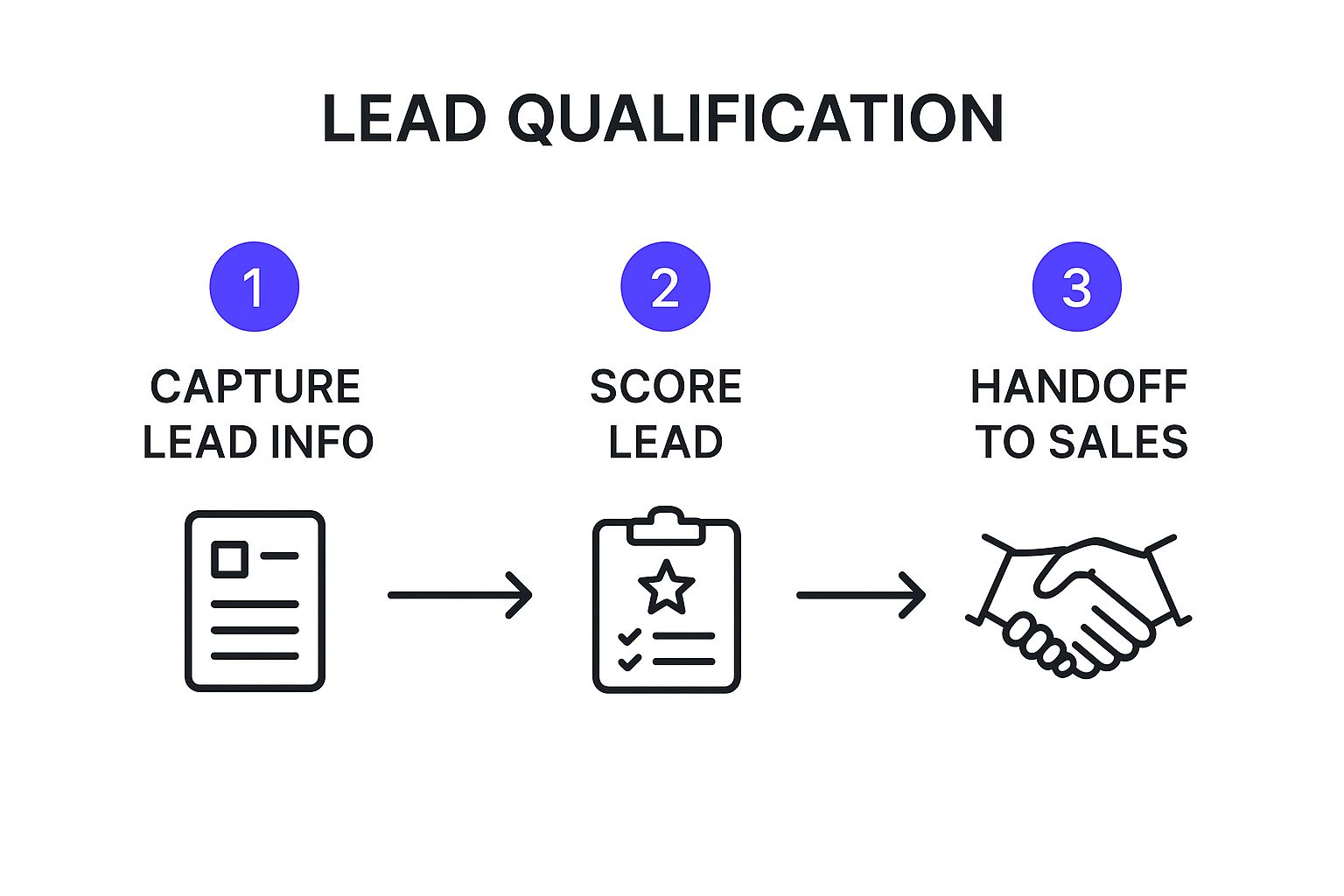
This visual roadmap shows how every lead needs to pass through distinct checkpoints. This ensures your team invests its time and energy where it counts the most. You can see how this process works in the real world when handling something like a new power washing lead in Manheim.
A repeatable system for managing sales leads is your best defense against chaos. It turns random inquiries into a predictable stream of revenue, allowing your business to grow consistently and efficiently without the constant stress.
Answering Your Top Questions About Sales Leads
Getting the basics down is one thing, but putting it all into practice is where the real questions pop up. Let’s tackle some of the most common questions we get from home service pros just like you. My goal here is to give you simple, no-nonsense answers you can actually use.
We'll skip the high-level theory and get right into the specifics that will help you sharpen your strategy and see a real difference in your business.
What Is the Difference Between a Marketing Lead and a Sales Lead?
Let's use a fishing analogy. A marketing qualified lead (MQL) is like a fish that’s curious about your bait. Maybe they nibbled on a helpful blog post you wrote or downloaded a guide from your website. They’re swimming around your boat, interested, but they haven't tried to jump in yet.
A sales qualified lead (SQL) is the fish that’s already on your hook. They’ve taken a decisive action that says, "I'm ready to buy." This is the person who filled out your "Request a Quote" form or called your office directly. You nurture MQLs with more helpful info, but you engage SQLs to get the job on the calendar.
As a Small Business, Where Should I Start with Lead Generation?
Don't try to do everything at once. For most home service businesses, the best results come from simple, local strategies that are easy to manage.
- Own Your Google Business Profile: Think of this as your most important digital sign. It’s free, and it's often the first place local customers look. Fill it out completely with your hours, service area, and lots of great photos of your work. Most importantly, consistently ask for reviews and respond to every single one.
- Launch a Simple Referral Program: Your happiest customers can be your most effective sales team. You don't need a complicated system. Just offer a small gift card or a discount on their next service for every new customer they send your way. This is a low-cost way to get some of the best leads you'll ever have.
How Do I Know if My Lead Generation Is Working?
You don't need a fancy dashboard or a degree in analytics. Just keep an eye on two key numbers to see what's actually moving the needle.
Cost Per Lead (CPL): This tells you exactly how much you're paying for each new inquiry. To find it, just divide your total marketing spend for the month by the number of new leads you got.
Lead-to-Customer Conversion Rate: This shows how good you are at turning those inquiries into paying jobs. Calculate this by dividing your number of new customers by the total number of leads you generated.
Tracking these two metrics will quickly show you which marketing efforts are worth your time and money and which ones are just noise.
Should I Buy Sales Leads from a Service?
Buying leads can give you a quick boost, but you need to go in with your eyes open. These leads are almost always sold to multiple companies—meaning you’re in a dead sprint against your competitors to see who can call first. The quality can be a mixed bag, and they usually don't convert as well as the leads you generate yourself. This is a common tactic, even for getting a new power washing lead in Alpharetta.
If you decide to buy leads, you have to treat every single one like it's pure gold and have a system ready for immediate follow-up. But your primary focus should always be on generating your own exclusive leads. Over the long run, they’ll always provide a much better return.
Are you tired of chasing leads and wish you had a predictable system to book more jobs? The team at Phone Staffer can help. We provide trained remote CSRs and VAs to answer your phone, call your leads, and handle your admin tasks, freeing you up to focus on what you do best. Learn how we can fill your calendar with qualified appointments.