

A well-written customer service rep job description is your first, and most important, tool for attracting the right people. Think of it as a blueprint for the ideal candidate. It needs to clearly map out the role’s responsibilities and required skills, showing applicants exactly how they can bring value to your company. Get this right, and you'll attract people with the perfect mix of technical know-how and genuine people skills.
The Evolving Role of Modern Customer Service Representatives
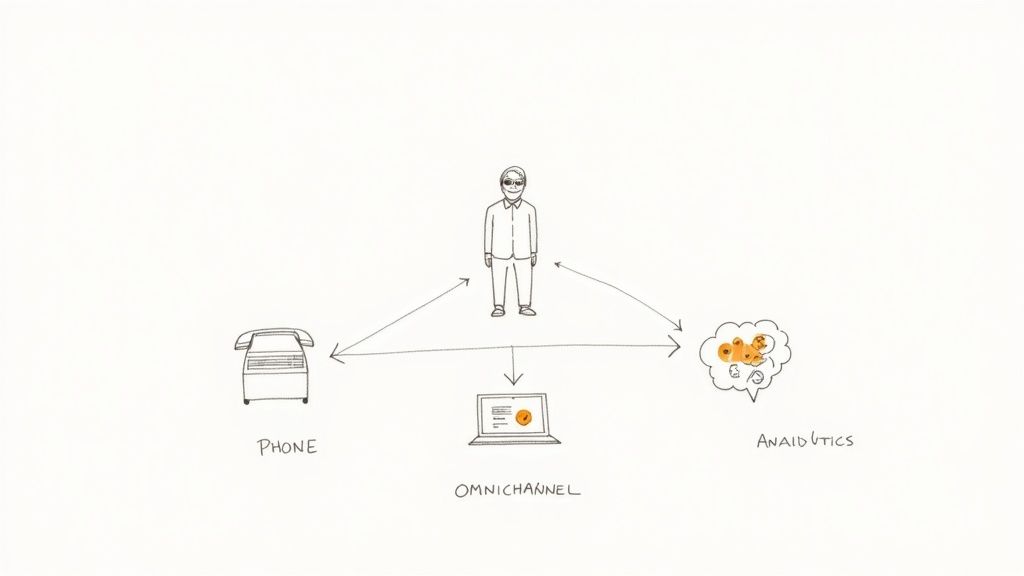
The old image of a customer service rep just answering phones and reading from a script is completely outdated. Today, this role is a dynamic, strategic part of the business. Modern CSRs are the face of your brand, expert problem-solvers, and tech-savvy pros who build and maintain customer relationships across a dozen different channels.
Let's be real: they are often the first—and sometimes only—human contact a customer has with your company. That makes their impact on customer loyalty and retention absolutely massive. This shift has been driven by skyrocketing customer expectations and new technology. People want instant, personalized support whether they're calling, emailing, using live chat, or sending a message on social media.
A Shifting Job Market
The job market for CSRs tells a similar story. While there are roughly 2.8 to 3 million customer service reps working in the U.S. today, that number is projected to dip by about 5% by 2032. This isn’t because the job is disappearing; it's because automation and AI are starting to handle the simple, repetitive questions.
This actually creates a new opportunity. The demand is now for higher-skilled reps who can tackle the complex, sensitive issues that a chatbot just can't handle. For more data on this trend, check out the market analysis on CareerExplorer.com.
The Strategic Value of a CSR
Because the role is becoming more specialized, your job description has to work harder than ever. It needs to attract candidates who bring a sophisticated mix of skills to the table, not just a friendly voice.
Here are the qualities that really matter for a modern CSR:
- Empathy and Emotional Intelligence: The skill to actually understand a customer’s frustration, connect with them on a human level, and de-escalate tense situations.
- Tech Proficiency: Being able to confidently jump between a CRM, helpdesk software, and multiple communication platforms without missing a beat.
- Proactive Problem-Solving: Not just patching over a problem, but digging in to find the root cause and offering a real, lasting solution.
- Adaptability: The ability to effortlessly switch from a formal email to a casual live chat, adjusting their tone to fit the customer and the situation.
A powerful job description frames the CSR role as a strategic one. It helps you find people who see this as a genuine career in customer advocacy, not just a temporary gig.
Defining Core Responsibilities And Daily Duties
When you're writing a job description for a customer service rep, vague statements like "assists customers" just won't cut it. You need to get specific. Laying out the concrete, day-to-day tasks gives potential candidates a clear picture of the job and helps them decide if they're truly a good fit for the role.
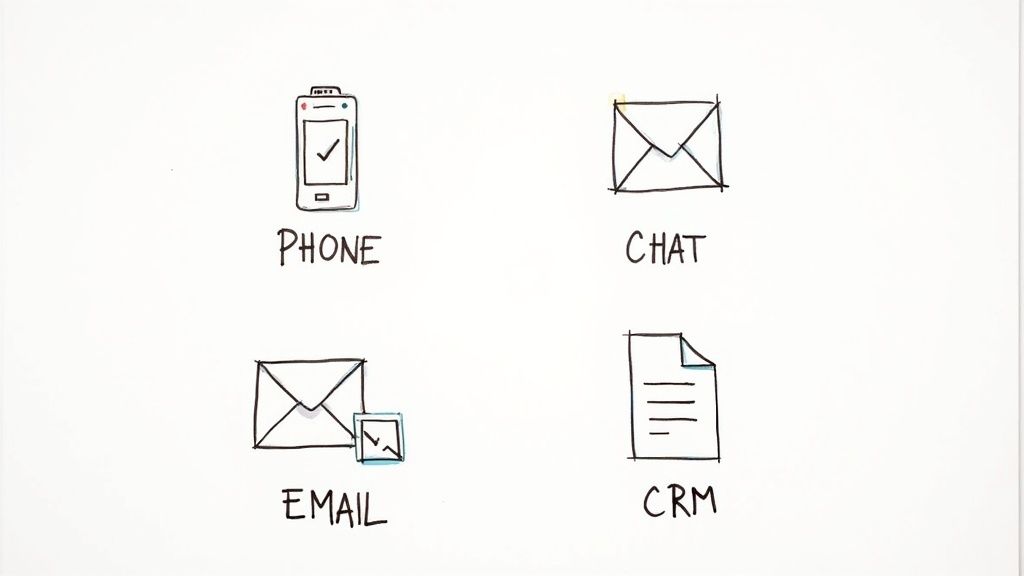
Think of it this way: your CSR is the voice of your company, the first point of contact for anyone reaching out. They're handling all sorts of communication, both coming in and going out, across different channels. A detailed list of duties means no surprises down the line, which translates to happier employees and better performance.
Customer Interaction and Resolution
This is the heart of the role—direct engagement with your customers. It's where a CSR's people skills and quick thinking are constantly put to the test. For a home service business, one minute they might be calming a customer with a burst pipe, and the next they're sorting out a scheduling mix-up.
Here are some actionable responsibilities to include:
- Responding to Inquiries: Promptly and professionally answer customer questions about services, pricing, and availability via phone, email, and live chat.
- Resolving Issues: Listen carefully to customer concerns, troubleshoot problems, and find effective solutions. For instance, if a technician is delayed, the CSR needs to proactively inform the customer and offer a new appointment time.
- Processing Service Orders: Accurately log new service requests, handle payments, and schedule jobs in the company’s software.
"A great job description moves beyond just listing tasks. It connects those tasks to the company’s mission, showing candidates how their daily work directly contributes to creating happy, loyal customers."
Administrative and Internal Duties
The job isn't just about talking to customers. CSRs also handle crucial administrative work that keeps the entire operation running. These tasks demand a keen eye for detail and excellent organizational skills, and leaving them out of the job description gives an incomplete picture of what the role entails.
These behind-the-scenes duties are just as vital. They ensure that all customer information is accurate, easy to find, and used to make the whole service experience better for everyone.
Be sure to list key administrative tasks like these:
- Maintain Customer Records: Keep customer accounts in the CRM system up-to-date with detailed notes on every conversation, transaction, and service call.
- Escalate Complex Cases: Know when to pass a tricky issue to a senior tech or a manager. Following company protocol for escalations is key.
- Provide Product/Service Information: Develop a deep understanding of your company's services to educate customers on their options and even spot opportunities to suggest additional, helpful services.
By spelling out these responsibilities, your job description becomes more than just a posting—it's a tool. It defines the role clearly, sets expectations from day one, and ultimately attracts candidates who are truly ready to step in and succeed.
Identifying Essential Skills and Qualifications
When you sit down to write a job description for a customer service rep, you're really defining what separates a good hire from a great one. The best CSRs I've worked with are a unique blend of people-person and tech-savvy operator. They can calm down a frustrated homeowner one minute and navigate complex scheduling software the next. This section will give you a practical checklist of the skills you need to look for.
Think of these abilities as the bedrock of great service. While you can always teach someone your company's software, those core soft skills are much harder to train.
Essential Soft Skills for Customer Service
Soft skills are all about how your rep interacts with people. This is the human side of the job—the part that turns a simple service call into a positive experience that a customer remembers. Without these skills, even the most technically brilliant rep will fall flat when trying to build trust or handle a tense situation.
Here are the soft skills that are truly non-negotiable:
- Empathy: It’s more than just being nice. It's the ability to genuinely understand and validate a customer's frustration, making them feel heard and respected.
- Active Listening: This means hearing what the customer isn't saying. It’s about digging deeper to find the root cause of the problem, not just slapping a band-aid on the symptoms.
- Patience: You need someone who can stay cool and collected, especially when a customer is upset or confused. A patient rep doesn't rush people off the phone, which means issues get solved right the first time.
- Clear Communication: Can they explain a complex scheduling issue or a service delay in simple, easy-to-understand terms? This skill prevents confusion and follow-up calls.
- Problem-Solving: The best CSRs don’t just follow a script. They think on their feet to find a real solution when faced with a unique customer problem.
Critical Hard Skills and Technical Proficiencies
If soft skills are the "how," hard skills are the "what." These are the tangible, teachable abilities your rep needs to actually do the job within your company's tech stack. How well a candidate can use these tools directly impacts their day-to-day efficiency and ability to keep up.
Even as the job market changes, the need for sharp, digitally-capable customer service pros isn't going anywhere. While plenty of entry-level spots exist, experienced reps who can master both the tech and the talk can command a much higher salary, showing just how valuable that combination really is.
Key hard skills to look for include:
- CRM Software Proficiency: Have they worked with platforms like Salesforce, HubSpot, or maybe even a CRM built for the home service industry? This is key for tracking customer history.
- Helpdesk Software Knowledge: Experience with tools like Zendesk or Freshdesk is a huge plus for managing and resolving support tickets efficiently.
- Typing Speed and Accuracy: For roles involving live chat or heavy email volume, this is crucial. A good baseline to look for is at least 40 WPM.
- Phone System Experience: They need to be comfortable with multi-line phone systems or VoIP software like Aircall or RingCentral, especially if your phones are ringing off the hook.
To help you organize these skills when evaluating candidates, here’s a quick-reference table.
Essential CSR Skills Breakdown
This table breaks down the crucial soft and hard skills, categorizing them to give you a clear picture of what a well-rounded candidate looks like.
| Skill Category | Essential Skills | Why It's Important |
|---|---|---|
| Communication | Active Listening, Clear Verbal & Written Communication | Prevents misunderstandings, ensures customers feel heard, and builds trust. |
| Emotional Intelligence | Empathy, Patience, Conflict Resolution | Helps de-escalate tense situations and turn negative experiences into positive ones. |
| Problem-Solving | Critical Thinking, Resourcefulness, Decision-Making | Enables reps to find effective solutions independently instead of just following a script. |
| Technical Proficiency | CRM & Helpdesk Software, Typing Speed, Phone Systems | Allows reps to perform their core job functions efficiently and keep up with daily tasks. |
| Organization | Time Management, Multitasking, Attention to Detail | Ensures that customer follow-ups don't fall through the cracks and records are kept accurately. |
Focusing on these specific skills will help you attract candidates who are ready for the job's demands from day one.
The customer service world is notorious for high turnover rates, which is exactly why hiring people with a solid foundation in both soft and hard skills is so important for retention. For a deeper dive into workforce trends, you can explore more statistics on consumer service roles. By being specific about what you need, you’ll find candidates who aren’t just looking for a job, but are ready to build a career with your company.
Ready-To-Use Job Description Templates For Any Role
Getting the customer service rep job description right is probably the single most important thing you can do to attract great candidates. A solid, well-thought-out template doesn't just save time; it makes sure you cover all the bases, from day-to-day tasks to the skills that really matter. It’s all about setting clear expectations right from the start, which leads to a much better fit for everyone involved.
Think of these templates as a strong starting point—they’re ready to be copied, pasted, and then customized for your home service company. Whether you're hiring someone to work in the office, remotely, or in a senior role, you can tweak these to match your needs.
Don't forget to cross-reference our sections on Core Responsibilities and Essential Skills to plug in the specific details that make your business unique. If you're looking for more ideas, you can also check out various job description examples to see how other companies are framing their roles.
On-Site Customer Service Representative Template
This template is built for a classic, in-office role where being part of a physical team and collaborating face-to-face is a big part of the job.
Job Title: Customer Service Representative
Company: [Your Company Name]
Location: [City, State]
Job Summary:
We’re looking for a dedicated and personable Customer Service Representative to join our team right here in the office. You’ll be the first point of contact for our customers, responsible for providing top-notch service, answering questions, scheduling jobs, and making sure their experience with us is a great one. The right person for this role is a fantastic communicator, a natural problem-solver, and someone who feels at home in a bustling office.
Key Responsibilities:
- Handle incoming phone calls, emails, and chat messages with a professional and helpful attitude.
- Schedule service appointments accurately and dispatch technicians to job sites.
- Listen to customer issues and complaints with empathy, finding solutions and escalating complex cases when needed.
- Keep detailed and accurate customer notes in our CRM system.
- Give customers clear information about our services, pricing, and any current promotions.
Qualifications:
- High school diploma or equivalent.
- Previous experience in a customer service or call center role is a huge plus.
- Exceptional communication skills, both verbal and written.
- Comfortable using CRM software and other standard office programs.
- Great organizational skills and the ability to juggle multiple tasks at once.
Remote Customer Service Representative Template
This one is geared for a remote position, so it highlights skills like self-motivation, being comfortable with technology, and proactive communication.
Job Title: Remote Customer Service Representative
Company: [Your Company Name]
Location: Remote (USA)
Job Summary:
[Your Company Name] is searching for a motivated and self-starting Remote Customer Service Representative to be part of our growing team. As the voice of our company, you'll provide outstanding support to our customers from your home office. We need someone who is tech-savvy, a great communicator, and has a proven track record of working independently while still being an active part of a remote team.
Key Responsibilities:
- Manage a steady flow of customer interactions through phone, email, and live chat.
- Troubleshoot customer problems and provide solutions in a timely and effective way.
- Book service appointments and coordinate schedules with our field technicians.
- Keep meticulous records of all customer communications and updates in our CRM.
- Stay connected with team members and managers through tools like Slack and video calls.
Qualifications:
- Proven experience working in a remote customer service position.
- A dedicated, quiet home office setup with a reliable, high-speed internet connection.
- Strong self-discipline and excellent time management skills are essential.
- Familiarity with remote collaboration tools (like Slack or Zoom) and CRM platforms.
- A real knack for problem-solving and a genuine commitment to keeping customers happy.
Senior Or Lead Customer Service Representative Template
This template is for a more seasoned professional. The focus here is on leadership, mentoring others, and being the go-to person for tough customer situations.
Job Title: Senior Customer Service Representative / Team Lead
Company: [Your Company Name]
Location: [City, State / Remote]
Job Summary:
We are on the hunt for a seasoned and highly skilled Senior Customer Service Representative to step up as a leader on our support team. In this role, you’ll not only handle our most challenging customer escalations but also mentor our junior CSRs and help us improve our processes. The ideal candidate has deep customer service experience, a talent for de-escalation, and a passion for helping their teammates grow.
Key Responsibilities:
- Act as the main point of contact for escalated customer issues, making sure they are resolved completely.
- Provide guidance, coaching, and mentorship to the Customer Service Representative team.
- Help train and onboard new members of the team.
- Spot trends in customer feedback and suggest improvements to our service and procedures.
- Keep an eye on team performance metrics and help the department hit its goals.
Qualifications:
- 3-5 years of experience in a customer service role, with at least one year in a senior or lead position.
- Demonstrated expertise in conflict resolution and advanced problem-solving.
- Natural leadership and coaching abilities.
- In-depth knowledge of CRM systems and customer service best practices.
- Excellent interpersonal and communication skills.
How To Write A Compelling Job Posting That Attracts Talent
Think of it this way: a job description is your internal blueprint, but a job posting is your public advertisement. To stand out in a sea of listings and grab the attention of top-tier talent, you have to do more than just list duties. You need to sell the opportunity and your company.
The best job postings start by highlighting what makes your company a genuinely great place to work. It’s a crucial detail when you realize that 73% of candidates are passive, meaning they aren't actively looking but could be tempted by a truly compelling offer. A bland, generic posting just won’t cut it.
Go Beyond the Bullet Points
Kick things off with an introduction that actually paints a picture of your company culture. Are you a tight-knit crew that thrives on collaboration? Or a fast-paced environment perfect for quick-thinking problem-solvers? Use real, descriptive language to give candidates a feel for the place so they can start to see themselves on your team.
From there, shift your focus to the "why." Don't just list what they'll be doing; explain the impact their work will have.
- Standard: "Answer customer phone calls."
- Compelling: "Be the trusted voice of our brand, providing solutions that turn frustrated customers into loyal fans."
This simple reframing connects the day-to-day tasks to a bigger purpose, which is exactly what ambitious, high-quality candidates are looking for. If you're looking for more general tips, there are some great resources out there on writing effective job descriptions that go even deeper.
Optimize for Search and Visibility
Remember, job boards like Indeed and LinkedIn are basically search engines. To make sure your posting actually gets seen, you have to think about search optimization. Stick to clear, standard job titles. "Customer Service Representative" is going to get a lot more views than something quirky like "Client Happiness Guru."
Weave relevant keywords naturally throughout the entire post. Think about terms related to your industry ("home services," "HVAC," "plumbing") and the specific skills you need ("CRM software," "scheduling," "dispatching"). This helps the right people find your listing when they're searching for jobs that match their skills.
A great job posting is a marketing asset. Every single word should be chosen to attract, engage, and persuade a potential candidate to apply. It’s a direct reflection of your brand and how serious you are about building an amazing team.
Highlight Benefits and Perks
Finally, make sure you have a dedicated section that spells out what's in it for them. Go beyond just the salary and basic benefits. Talk about the unique perks that really define your company culture.
- Opportunities for professional development and ongoing training.
- Company-sponsored team events, lunches, or outings.
- Flexible scheduling options or performance-based bonuses.
- A genuinely supportive and positive team environment.
When you sell the complete package, you show that you value your employees as people, not just cogs in a machine. This approach does more than just attract talent; it attracts the right talent from the get-go, which helps keep hiring costs down. Attracting the right people efficiently is all about managing acquisition costs, a concept you can dig into by understanding what cost per lead is and how it relates to recruitment. Ultimately, writing a compelling customer service rep job description is an investment in finding talent that will stick around.
Key Performance Indicators For Measuring CSR Success
Before you can write a solid job description for a customer service rep, you need to know what success actually looks like in the role. That’s where Key Performance Indicators (KPIs) come in. These are the specific metrics you'll use to track a representative's effectiveness and efficiency.
Mentioning these KPIs in your job description is a smart move. It sets clear expectations from the very beginning and signals to potential hires that you have a well-thought-out system for managing performance.
Core Customer Service Metrics
Most of the go-to KPIs in customer service revolve around three things: efficiency, effectiveness, and how the customer feels about the whole experience. Looking at all three gives you a balanced picture of a CSR's performance, making sure that speed doesn’t get in the way of quality service.
- First Call Resolution (FCR): This is a big one. It measures the percentage of customer issues that get completely solved in a single interaction—no follow-up needed. A high FCR is a great sign that your reps know their stuff and are genuinely solving problems, which keeps customers happy.
- Average Handle Time (AHT): AHT tracks the average length of a customer interaction, from the moment it starts until it's wrapped up, including any hold time or after-call work. While a lower AHT can mean efficiency, you have to watch it. If it’s too low, it might mean reps are rushing customers off the phone, so you always want to look at it alongside FCR and satisfaction scores.
- Customer Satisfaction (CSAT): This is as straightforward as it gets. Usually measured with a quick survey after an interaction ("How satisfied were you with your service today?"), CSAT asks customers to rate their experience. It’s a direct line into how your customers are feeling.
A strong performance framework isn't just about hitting numbers. It’s about using these KPIs to coach representatives, identify areas for improvement, and ultimately create a better overall customer experience.
The infographic below breaks down how to take these performance metrics and other critical job details and turn them into a job post that grabs attention.
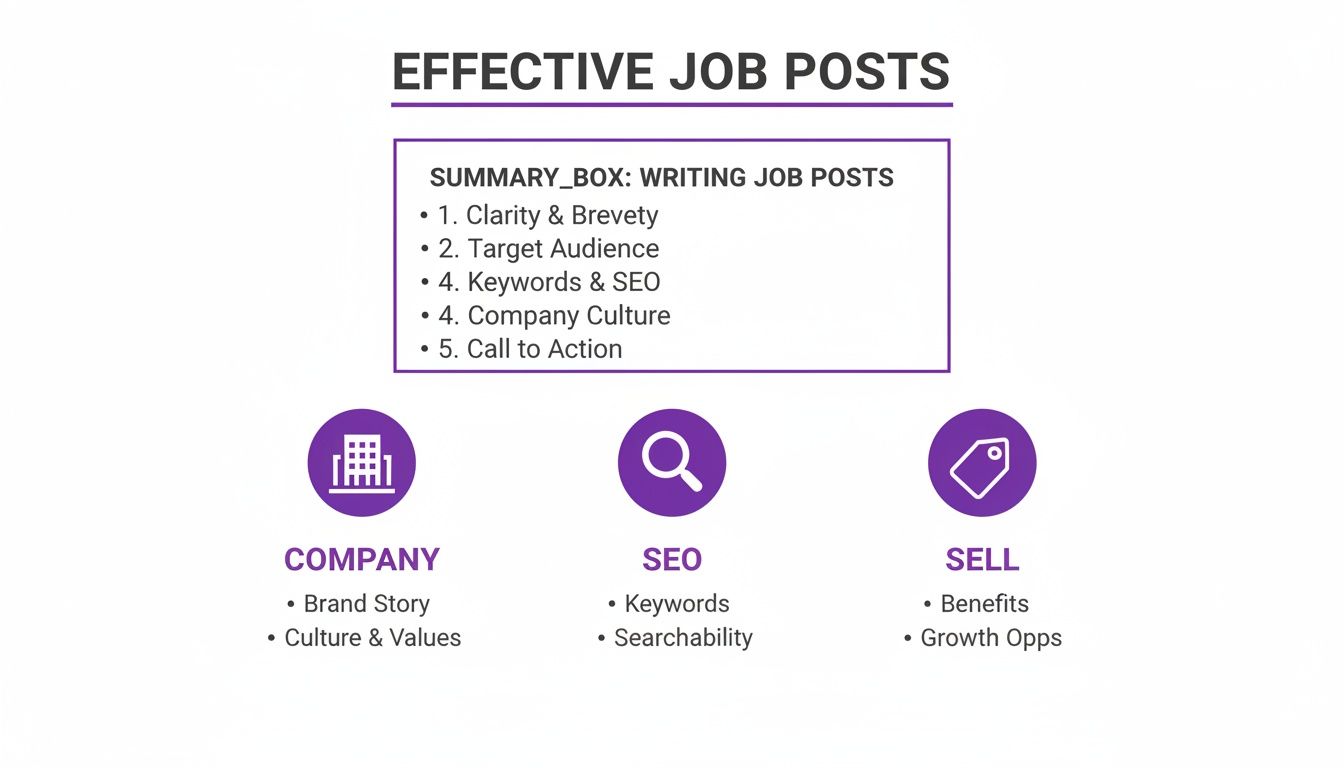
As the visual guide shows, a great job posting is about more than just a list of duties. It needs to sell your company culture, be easy for candidates to find, and make the role sound appealing. By clearly defining performance expectations like CSAT and AHT right in the job description, you show candidates exactly what it takes to succeed, making your company a much more attractive place to work.
Common CSR KPIs And Their Meanings
To help you get a quick handle on the most important metrics, we've put together a summary table. These are the KPIs you'll see most often in the customer service world.
| KPI Acronym | Full Name | What It Measures |
|---|---|---|
| FCR | First Call Resolution | The percentage of customer issues resolved in the first interaction. |
| AHT | Average Handle Time | The average duration of a customer call, including hold time and follow-up work. |
| CSAT | Customer Satisfaction Score | A direct measure of customer happiness with a specific interaction, usually a survey. |
| NPS | Net Promoter Score | Customer loyalty and willingness to recommend the company to others. |
| CES | Customer Effort Score | How much effort a customer had to put in to get their issue resolved. |
| QA | Quality Assurance Score | An internal score of how well a rep followed company procedures and protocols. |
Having a firm grasp of these metrics is the first step. The real magic happens when you use them to provide feedback, guide training, and build a customer service team that truly stands out.
Figuring Out Pay: Salary and Compensation
Getting the compensation right is one of the most important parts of your customer service rep job description. In a field notorious for high turnover, a competitive salary and benefits package isn't just about getting someone in the door; it's about finding people who see a future with you and are driven to stick around. Nailing this gives you a real edge when you're trying to hire.
The salary you land on needs to account for a few things: the candidate's years on the job, what you're actually asking them to do, and the cost of living where your business operates. It's always a good idea to see what similar companies are paying locally and nationally to make sure your offer is fair and attractive.
What's the Going Rate?
Generally, entry-level customer service jobs are paid hourly, while more experienced or specialized roles might get an annual salary. The national median wage usually falls somewhere between $18 and $22 per hour, but that number can swing wildly depending on location. A CSR in a big city like New York is going to earn a lot more than one in a small town.
To get your pay range right, think in these tiers:
- Entry-Level (0-2 years of experience): You’ll want to offer a solid hourly rate here. Also, make sure to talk up the opportunities for training and moving up in the company.
- Mid-Level (2-5 years of experience): These folks have proven they can handle tricky customer issues and know their way around CRM software. Their pay should reflect that, whether it's a higher hourly wage or a move to a salaried position.
- Senior/Lead (5+ years of experience): This is a salaried role. The compensation should match their leadership duties, like training new reps and dealing with the toughest customer problems.
The Real Cost of a Revolving Door
The customer service world is constantly battling high employee turnover. It's not uncommon for call centers to see annual turnover rates spike above 40%. Every time an agent walks out the door, it costs a company thousands in recruiting and training to replace them. This high-pressure environment can easily lead to burnout without supportive managers and fair pay.
On top of that, unemployment for customer support jobs is incredibly low, which means you're fighting for a small pool of qualified people. You can explore the latest data on in-demand administrative roles to get a better sense of the market.
Pro Tip: Don't be shy about putting the salary range in your job description. Being upfront about pay attracts better applicants because it shows you respect their time and sets clear expectations from day one.
Building the Full Package
A great compensation plan is more than just a paycheck. When you write your job description, lay out all the perks to give candidates the full picture of what they'll get working for you.
Think about including these elements:
- Performance Bonuses: Linking bonuses to metrics like Customer Satisfaction (CSAT) scores or First Call Resolution (FCR) rates is a great way to motivate your team.
- Health Benefits: Be specific. Let them know if you offer medical, dental, and vision insurance.
- Paid Time Off (PTO): Clearly list out how many vacation days, sick days, and holidays they'll get.
- Professional Development: Mention if you offer training, help with certifications, or have clear paths for them to advance in the company.
By detailing both the salary and the benefits, your job description becomes a much stronger magnet for attracting and keeping top-tier customer service talent.
Frequently Asked Questions
Putting together a solid customer service rep job description often brings up a few common questions. Beyond just listing duties and skills, how do you really nail the posting? Here are some answers to the questions we hear most from hiring managers in the home service industry.
How Do I Make My Job Description Stand Out?
To write a job description that grabs the attention of top talent, you need to sell the role, not just describe it. Go beyond the bullet points and focus on three things: your company culture, the real-world impact of the job, and the potential for career growth.
Instead of generic buzzwords, tell a story about what it's like to work on your team. Show candidates how their work directly leads to happy customers and contributes to the company's success. And don't forget to outline a future for them—mentioning training opportunities or paths for advancement proves you're invested in your people, making your company a place they'll want to stay.
What Are the Key Differences for a Remote vs. On-Site Role?
The core responsibilities might be similar, but the way you frame them matters a lot. For a remote CSR, you need to be crystal clear about the technical setup. Think high-speed internet, a dedicated, quiet workspace, and comfort with tools like Slack or Microsoft Teams. You should also highlight skills like self-discipline, proactive communication, and top-notch time management, as these are non-negotiable for remote success.
For an on-site role, you can shift the emphasis to in-person collaboration, teamwork, and the ability to thrive in a busy office environment. The job description needs to reflect the unique demands of each setting to attract the right person for the job.
Including a salary range isn't just a trend; it's a sign of transparency that respects a candidate's time. We've found that job postings with clear compensation details consistently attract a higher number of qualified applicants, which saves everyone a lot of hassle.
Should I Include Salary Information?
Yes, you absolutely should. In today's market, job seekers expect it, and leaving it out can be a red flag. Posting a salary range right from the start sets clear expectations and saves a ton of time by weeding out candidates whose financial needs don't align with what you can offer.
Simply put, job ads with salary details get more relevant applications. It shows you’re confident in your compensation and you value people’s time, giving you an edge over the competition. It's a simple change that makes your entire hiring process more efficient.
Do I Need to List Required Software?
Definitely. Listing the specific tools your team uses every day is one of the best ways to filter applicants. Mentioning your CRM (like Salesforce or HubSpot), communication apps, and phone systems (such as Aircall or RingCentral) helps you find people who can hit the ground running with minimal technical training.
Just be sure to clarify what’s a “must-have” versus what’s “nice-to-have.” You don’t want to scare off a fantastic candidate who’s a quick learner just because they haven’t used your exact tech stack before.
Ready to find the perfect customer service representative without the hiring headaches? Phone Staffer can help. We specialize in hiring, training, and placing highly-skilled remote CSRs and VAs directly into your home service business, ensuring your phones are answered and your leads are converted.
Learn more about how Phone Staffer can build your expert support team.