
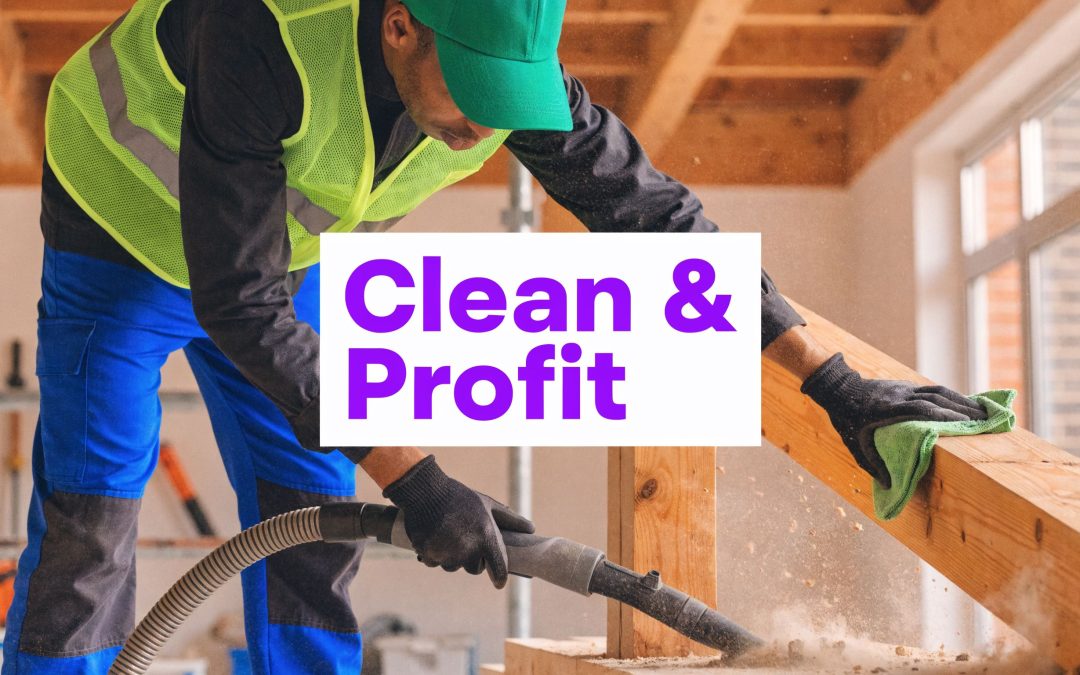
A lot of owners get into construction clean up the same way. A builder calls at the last minute. The painters are done, the electrician is gone, the owner walkthrough is tomorrow, and the site still looks like a jobsite instead of a finished project.
The floors are covered in dust. Window stickers are half-peeled. There’s drywall powder sitting on top of cabinet crowns and inside vent grilles. The general contractor is stressed because the project is “done” on paper, but nobody can hand over a dirty building with a straight face.
That gap is where good cleaning companies make money.
Construction clean up isn’t basic janitorial work. It’s the final trade on the site, whether the builder says it out loud or not. If you do it well, you help the contractor close out the job, protect their reputation, and avoid the kind of punch-list chaos that drags on for days. If you do it poorly, you become the reason a project handoff turns into an argument.
The Hidden Profit in Post-Construction Chaos
One of the most profitable jobs I ever saw looked terrible at first glance.
A GC had a nearly finished tenant buildout. The trades were technically wrapped, but the space was still full of scrap packaging, fine dust, adhesive residue on glass, and footprints tracked across new flooring. The client walkthrough kept getting pushed because every time someone “did a quick clean,” the dust came back.
That’s normal on construction sites. Dust falls again after vents kick on. Subcontractors walk through cleaned areas. Someone removes floor protection too early and leaves glue behind. A project can be structurally complete and still not be ready for turnover.
That’s why this niche works.
Builders increasingly outsource this work, and the market reflects that demand. The global construction cleanup service market is projected to reach approximately $351.11 million by 2025 and grow at a 3.7% CAGR from 2025 to 2033, while the U.S. environmental cleanup services market generated $27.0 billion in revenue over the past five years (Data Insights Market construction cleanup service report).
Why contractors pay for this
General contractors don’t hire you just to make things look nice. They hire you to solve expensive problems.
- Handover risk: A dirty site delays owner walkthroughs and tenant move-ins.
- Trade conflict: Finish crews blame each other when debris, smudges, and dust are still present.
- Reputation damage: A client remembers the first finished impression, not the framing stage.
- Safety pressure: Leftover debris, silica dust, and improper disposal can create compliance headaches.
Practical rule: If you pitch construction clean up as “we clean buildings,” you sound cheap. If you pitch it as “we help you close jobs faster and cleaner,” you sound useful.
Where the margin comes from
The money isn’t in dragging a mop around. It’s in knowing sequence, surfaces, protection, and site politics.
A good crew leader knows when not to touch a floor because another trade is still overhead. A good estimator knows that a renovation with old adhesive and paint overspray can eat hours fast. A good owner knows that builders pay more willingly when you remove friction from their closeout process.
That’s the business. You’re not selling cleanliness. You’re selling a clean turnover.
Understanding the Three Phases of a Professional Clean
Most new operators lose money because they treat every construction clean up job like one visit. That’s a mistake.
The debris volume alone tells you why. In 2018, the United States generated over 600 million tons of construction and demolition debris, more than twice the amount of municipal solid waste (BigRentz construction waste statistics). With that much mess moving through projects, one pass usually won’t cut it.

Imagine hosting a huge dinner.
First, you clear the plates and trash. Then you wipe the table and reset it properly. Last, you do the final polish right before guests arrive. Construction clean up works the same way.
Rough clean
This is debris removal and reset work. You’re not trying to make the site pretty yet. You’re making it manageable.
Typical rough clean tasks include:
- Removing bulk debris: Scrap materials, boxes, plastic wrap, tape, and leftover packaging.
- Sweeping and vacuuming: Getting loose dirt and dust off floors and major surfaces.
- Clearing work zones: Opening up bathrooms, kitchens, offices, and corridors so finishing trades and inspectors can move through.
- Spot removal of heavy residue: The obvious chunks of mud, caulk, paint drips, and drywall piles.
This phase matters because the final clean is slower and more expensive if your crew is still stepping over trash bags and loose material.
Final clean
The job starts to feel finished in this phase.
You clean visible surfaces, remove fine dust, detail trim, wipe cabinets, clean interior glass, and get floors into presentation shape. This phase is what most clients think they’re buying, but it only works if the rough clean happened first.
A proper final clean usually includes:
- High dusting: Light fixtures, vents, ledges, tops of doors, exposed pipes, and beams.
- Vertical surface cleaning: Walls, trim, frames, and baseboards.
- Cabinet and fixture detailing: Inside and out, with attention to shelves, pulls, and corners.
- Glass and sticker removal: Film, tape residue, handprints, and dust along tracks.
- Floor care: Vacuuming, mopping, scrubbing, or specialty floor treatment based on material.
Touch-up clean
This is the phase many new companies forget to price.
After your final clean, people still come back through the building. Punch work happens. A superintendent walks in with muddy boots. An owner opens windowsills and checks corners. Dust appears again.
Touch-up cleaning handles that last round of fingerprints, tracked-in dirt, and settled dust before handover.
The companies that look “expensive” on paper often win because they include all three phases and avoid the argument that starts with, “I thought that was included.”
What works and what doesn't
Here’s the simple version.
| Phase | What works | What doesn't |
|---|---|---|
| Rough clean | Removing debris early and opening access | Trying to detail around piles of trash |
| Final clean | Cleaning after trades are substantially done | Sending detail cleaners in while work is still active |
| Touch-up clean | Scheduling close to walkthrough day | Assuming the building stays clean after final pass |
If you explain these phases clearly to a GC, pricing gets easier and disputes drop. They know what they’re buying, and your crew knows what “done” means.
Your Step-by-Step Construction Clean Up Workflow
Crews need a repeatable system. Without one, they miss high dust, re-dirty lower surfaces, and waste time cleaning the same room twice.
The backbone of professional construction clean up is the ceiling-to-floor methodology. It’s a core principle in ISSA-certified training, and it pairs with HEPA-filtered vacuums to help crews meet OSHA’s 50 micrograms per cubic meter permissible exposure limit for respirable crystalline silica (National Cleaning Authority post-construction cleaning guidance).

If you clean the floors first and the ceiling last, you’re creating your own rework.
Start with the site walk
Before a rag comes out, walk the job.
Check what trades are still active. Look for uncured finishes, exposed wires, wet paint, missing hardware, and surfaces that shouldn’t be touched yet. Confirm water, power, dumpster access, and where your team can stage tools.
During that walk, lock down the scope in plain language:
- What’s included
- What’s excluded
- What surfaces need specialty care
- Who signs off on the work
- Whether this is rough, final, touch-up, or a combination
A rushed estimate causes more trouble than a slow one.
Work high to low
This sequence saves labor and keeps dust moving in one direction.
Ceiling and overhead items
Hit these first:
- Light fixtures
- HVAC diffusers and vents
- Exposed beams or ductwork
- Sprinkler lines and conduit
- Top edges of cabinets and shelving
Use extension dusting tools, microfiber heads, and HEPA vacuum attachments where appropriate. Don’t blast dust into the air with dry sweeping or a standard shop vac.
Walls and vertical surfaces
After overhead dust is down, move to the walls.
Wipe smudges, drywall haze, and fine dust from painted surfaces, door frames, trim, switches, and outlet covers. On rougher projects, you’ll also remove sticker residue and caulk smears from frames and hardware.
The mistake new crews make is over-wetting fresh paint or rubbing too aggressively on new trim. Use as little moisture as the surface allows.
Glass, windows, and tracks
Glass can make a clean building look dirty fast.
Remove labels carefully. Lift adhesive with the right solvent for the surface. Clean frames, tracks, and sills before detailing the pane itself. If you clean the glass first and leave the sill dusty, the window still looks unfinished.
“Clean what the owner will touch and what the owner will look through. That’s where callbacks start.”
Cabinets, counters, and fixtures
Open everything.
Wipe cabinet interiors, drawers, shelves, counters, vanities, sinks, and appliance exteriors if they’re in scope. Construction dust hides inside hinges, shelf pin holes, and under sink lips.
A lot of crews only clean what they can see while standing up. That’s not enough in finished residential work or office interiors.
Finish with the floors
Floors come last because everything above them sheds dirt.
Hard floors
For concrete, tile, vinyl, or sealed surfaces:
- Vacuum first with HEPA equipment
- Scrape residue carefully with the correct blade
- Use the right neutral or surface-safe cleaner
- Rinse or mop in controlled sections
- Watch edges and corners where powder collects
On coating jobs, floor residue can ruin the next step. If another contractor is applying finish after you, ask what they need left behind and what they don’t.
Carpet
Construction carpet cleaning isn’t standard janitorial vacuuming. Fine dust sinks deep.
Vacuum slowly, overlap your passes, and inspect edges, transitions, and closet corners. If adhesive scraps, drywall chunks, or screws are present, get those out before a vacuum head drags them across the fibers.
Close with quality control
The final walkthrough should be your supervisor’s job, not the GC’s first discovery round.
Use a checklist room by room. Take photos. Mark unfinished punch items clearly. If something falls outside your scope, document it before the client assumes you missed it.
A clean workflow does three things at once:
- Protects surfaces
- Cuts rework
- Makes your crew trainable
That last point matters more than most owners think. You can’t scale construction clean up if the quality lives only inside one person’s head.
Equipping Your Team for Safety and Success
The fastest way to look amateur on a jobsite is showing up with household spray bottles, cotton rags, and a loud shop vac that spits fine dust back into the air.
Construction clean up punishes weak equipment. Wrong tools scratch new floors, smear adhesive, damage finishes, and slow your crew down. Good gear costs money up front, but bad gear costs contracts.

I’ve seen crews lose trust with a builder over something small. One team used the wrong scraper angle on a newly installed floor and left marks in a visible traffic lane. The clean itself was decent. The damage overshadowed all of it. After that, the GC stopped calling them.
Must-have equipment
If you want to operate like a professional, start with the tools that prevent dust spread and surface damage.
- HEPA-filter vacuum: This is the workhorse. It handles fine dust properly and belongs on every job.
- Microfiber cloths and flat mops: They trap dust better than cheap cotton and leave less lint behind.
- Extension dusters and poles: You need safe reach for vents, lights, and tops of frames.
- Scrapers with the correct blades: Use them carefully and match them to the surface.
- Buckets, wringers, and labeled spray bottles: Keep chemicals controlled and crews organized.
- Floor protection materials: Sometimes your job is keeping a cleaned area clean while another trade finishes.
- PPE: Gloves, eye protection, masks or respirators as required, and site-appropriate footwear.
If you’re still building your safety setup, this complete guide to safety supplies is a practical reference for what crews need on active job sites.
Nice-to-have gear
These aren’t day-one purchases for every owner, but they become useful as you grow.
Specialty floor machines
Auto scrubbers, burnishers, and specialty pads help on larger commercial spaces. Don’t buy them just to look established. Buy them when your job mix justifies the transport, maintenance, and operator training.
Pressure washing tools
Useful for some exterior or industrial surfaces, but easy to misuse. Pressure and runoff can create problems if your crew doesn’t understand the site.
Digital inspection tools
Simple mobile checklists, punch tracking apps, and shared photo folders reduce the “you missed this” debate. They also make training easier because your standard is visible.
Field lesson: The best equipment purchase is the one that cuts callbacks. Fancy gear that your crew can’t use correctly is just expensive clutter.
Build the right crew, not just a bigger crew
A solid construction clean up crew needs at least one person who thinks like a site supervisor.
That person checks finish conditions, talks to the superintendent, stages the sequence, and knows when to stop a worker from using the wrong chemical on the wrong surface. Without that role, you end up with motion instead of progress.
Look for team members who can do these things well:
- Follow sequence instead of rushing
- Notice damage risks before they happen
- Take direction from site management
- Document what’s complete and what isn’t
- Work around trades without getting in the way
Training matters more here than in basic recurring cleaning. Construction sites are less forgiving. A missed dusting isn’t just a cosmetic issue. It can trigger a failed inspection, a callback, or a fight over responsibility.
Handling Safety Regulations and Compliance
A new owner usually learns this lesson on a rushed job. The superintendent wants the final clean done by Friday, another trade is still touching up drywall, and your crew is already unloading vacuums. Then someone finds unlabeled chemicals on-site, fine dust hanging in the air, and a pile of debris nobody wants to claim. If you do not have clear rules for what your team can touch, bag, move, or report, profit disappears fast.
Safety compliance in construction clean up is not back-office paperwork. It affects labor speed, insurance exposure, callback risk, and whether a GC trusts you with the next building.
The first rule is simple. Your crew needs to know the line between cleaning and hazardous material handling. Post-construction jobs often include silica dust, adhesive residue, broken glass, sharp metal scraps, and containers left behind by other trades. Some of that is routine. Some of it is a stop-work situation.
What matters on the job site
Silica dust is one of the biggest problems because crews can make it worse without realizing it. Dry sweeping, using the wrong vacuum, or knocking debris around after other trades leave can push fine dust back into the air. That creates a health issue and can turn a nearly finished clean into a reclean.
Hazard communication is another area where small mistakes become expensive ones. Every bottle your team brings should be labeled correctly. Safety Data Sheets should be easy to access. Crew members should know what chemical they are using, what surface it belongs on, and what to do if it spills or reacts badly. If they cannot answer those questions, training is not done.
Waste handling needs a hard line. General debris is one thing. Suspected lead paint, asbestos-containing material, unknown powders, chemical waste, or anything that looks questionable is another. Stop work, document it, and get direction from site management. A cleaner trying to be helpful can create a liability claim in ten seconds.
Compliance helps you sell, too
Builders remember the cleaning company that causes fewer problems.
A company that shows up with site-specific procedures, labeled products, PPE standards, and a supervisor who documents issues looks different from a crew that just starts wiping surfaces. That difference matters when you are trying to turn one clean into repeat work. It also matters in outreach. When I coached newer owners on cold calling GCs and property managers, the pitch that got traction was never "we clean better." It was "we close jobs cleanly, document our work, and keep your finish stage from turning into a safety mess."
That is one reason established construction clean up services operators win referrals. They reduce friction for the superintendent, and they do not create new exposure while finishing the site.
Documentation is not admin fluff. It is proof when there is a dispute about damage, debris, or missed scope.
The systems to put in place early
Do not wait until you land a large project to build your compliance habits. Put the basics in place while your company is still small, because small companies get hurt faster by one bad claim.
Here is the baseline setup:
- Written scope of work: Define what your crew will clean, what they will not touch, and who approves extra work.
- Site hazard check at arrival: Look for active trades, dust conditions, exposed materials, and disposal issues before work starts.
- Photo documentation: Capture pre-existing damage, questionable materials, and closeout conditions.
- Chemical labeling and SDS access: Every product on-site should be identifiable and documented.
- PPE rules by task: Gloves, eye protection, respirators, and footwear should match the actual site conditions.
- Stop-work escalation procedure: Give field leads authority to pause work when they find suspect materials or unsafe conditions.
- Insurance review: Make sure your policy fits post-construction work, not just janitorial cleaning.
Owners who get this right build a safer operation and a stronger sales story. That matters if you want to scale this service line. The companies that grow are not just good at cleaning. They know how to control risk, communicate it clearly, and use that credibility in bids, follow-ups, and cold outreach.
How to Price Construction Clean Up Jobs for Profit
Most bad pricing starts with one bad assumption. “It’s just cleaning.”
It isn’t. It’s debris handling, detailed finish work, risk management, and often multiple visits. If you price it like recurring office cleaning, you’ll stay busy and broke.
I’ve watched owners underbid their first large clean because they wanted the job badly. They counted visible square footage, ignored the amount of adhesive removal and detail wiping involved, and forgot to charge for a return touch-up. The invoice got paid, but the profit barely existed. That usually happens once. After that, they either learn to estimate correctly or they quit chasing this niche.
Three pricing models that make sense
No one model fits every project. Good estimators switch depending on job type and scope clarity.
| Pricing Model | Typical Range | Best For |
|---|---|---|
| Per square foot | Varies by project scope and finish level | Standard new builds with predictable scope |
| Hourly rate | Varies by labor intensity and site conditions | Renovations, uncertain conditions, punch-heavy jobs |
| Flat fee | Varies by clearly defined deliverables | Jobs with a tight written scope and clean handoff terms |
Use precise numbers in your private estimating system. In your sales conversation, focus more on what’s included than on trying to sound cheap.
How I’d break down an estimate
Per square foot
This works best when the building is fairly standard and the scope is known. Think new construction with clear room counts and a straightforward final clean.
The trap is assuming all square feet are equal. They aren’t. A wide-open shell and a detailed medical office aren’t the same animal.
Hourly
Hourly pricing is useful when the site is unpredictable.
Older remodels, phased jobs, and occupied renovations often hide labor. There may be dried mud in transitions, sticker residue everywhere, or multiple trades still drifting through. Hourly protects you when the mess is real but hard to quantify up front.
Flat fee
Flat fee works when your scope language is strong.
You define what you’re doing, how many visits are included, and what counts as additional work. If you don’t define those things, flat fee becomes a charity program for the client’s bad planning.
A simple estimate template
Use a quote structure like this:
- Project type: New build, remodel, commercial tenant improvement, custom home
- Cleaning phase: Rough, final, touch-up, or combined
- Included areas: Rooms, floors, windows, fixtures, cabinets, debris zones
- Excluded items: Exterior glass, hazardous materials, high access work, floor finishing beyond agreed scope
- Site conditions assumed: Power, water, trade completion, dumpster access
- Return visit terms: What triggers a touch-up and whether it’s included
- Approval standard: Who signs off and how punch items are handled
That last part saves a lot of grief.
Charge for friction, not just labor
If a site has poor access, active trades, no dumpster, delayed readiness, or specialty surfaces, the price should reflect that. Owners who ignore job friction end up donating margin.
For a practical example of how service providers present smaller-job offers and package their construction clean up services, it’s worth looking at how scope framing affects buyer expectations. Not to copy their pricing, but to see how clearly packaged services help avoid confusion.
If the client says, “It should be quick,” but the site says otherwise, trust the site.
A profitable estimate isn’t the one that wins every job. It’s the one that lets you complete the work properly, pay your people, and still want to do the next one.
How to Land Your First High-Value Contract
A lot of cleaning companies wait for construction clean up leads to appear through referrals, Google Business Profile, or random inbound calls. That can work eventually. It’s slow.
If you want this service line to grow, go where the jobs are. Call the people running them.

The buyers are usually easy to identify:
- General contractors
- Custom home builders
- Commercial project managers
- Remodelers
- Property improvement firms handling tenant turnovers
Most of them aren’t browsing social media looking for a cleaner. They’re in the middle of jobs, solving problems in real time. That’s why outbound works.
Cold calling works because timing matters
Construction clean up is often bought close to need.
A superintendent doesn’t always plan the final clean weeks in advance. Sometimes they realize late that the owner walkthrough is coming and the site still isn’t presentable. If your company is the one that called last week, introduced itself clearly, and followed up without being annoying, you’re in the running.
Your call doesn’t need to be clever. It needs to be relevant.
A simple opening sounds like this:
Hi, this is [Name] with [Company]. We help contractors with rough, final, and touch-up construction clean up. I’m calling to ask who handles closeout cleaning and site maintenance for your projects.
That script works because it’s direct. It tells them what you do and gives them an easy path to route you to the right person.
What to say when you get the right contact
Once you reach a project manager or superintendent, don’t unload a speech. Ask a useful question.
Try this:
- Ask about current process: “Are you handling final cleans in-house or outsourcing them?”
- Ask about pain: “Where do jobs usually get stuck. Debris, dust, or last-minute touch-ups?”
- Offer a simple next step: “If it helps, I can send a short scope sheet and stop by one active site so you can see how we work.”
That’s enough to start.
The best sales conversations happen when you sound like someone who understands jobsites, not like someone reading a telemarketing script written for carpet cleaning.
Sell more than the final clean
One of the easiest ways to stand out is to offer ongoing site maintenance cleaning during the build, not just the final pass.
That can mean daily or weekly debris removal, sweeping common paths, keeping trailers tidy, and helping the site stay safer and more presentable while trades are still moving. It solves a different problem than closeout cleaning, and contractors often feel that pain earlier.
This angle matters because it can add 20% to 30% in revenue per project and create repeat bids when pitched as cleanup-as-a-service for contractors under OSHA safety pressure (Skynova guide on starting a construction cleanup business).
A simple outreach routine that works
Don’t overcomplicate your first prospecting system.
Build a target list
Start with builders in a tight geographic area. Pull permit activity, drive developing neighborhoods, and note signs on active commercial jobs. You want enough volume to stay consistent, not a giant list you never touch.
Call with a purpose
Your goal isn’t to close on the first call. It’s to identify decision-makers, introduce your service, and create a reason for a second conversation.
Follow up with useful information
Send a short email with your service summary, insurance status, and the phases you handle. Keep it brief. A busy PM won’t read your life story.
Visit active sites when appropriate
Some markets still respond well to respectful drop-ins. Bring a one-page handout, wear proper PPE, and don’t interrupt active work. A short introduction at the trailer can open doors if you handle yourself professionally.
Contractors remember the vendors who make their day easier, not the ones with the prettiest brochure.
What your first contract usually looks like
It probably won’t be a huge commercial closeout. More often, it’s a smaller remodel, a custom home, a tenant buildout, or an overflow clean when another company dropped the ball.
Take that seriously. Builders test vendors on smaller jobs all the time.
If you communicate well, show up ready, document everything, and leave the site cleaner than expected, that first modest project can turn into recurring work across multiple jobs.
Your Top Construction Clean Up Questions Answered
What if my crew finds asbestos, lead paint, or another hazardous material?
Stop work in that area and notify the site contact immediately. Don’t let your team “clean around it” or bag it for disposal. If the material wasn’t disclosed, that’s a site management issue, not a place for guesswork. Document what was seen, who was notified, and what area was paused.
What if the GC says the job isn’t finished, but my crew completed the agreed scope?
Go back to the written scope and your job photos. Walk the site together and separate true misses from added expectations. A lot of disputes happen because one side is talking about the signed scope and the other is talking about what they hoped was included. Stay calm, mark punch items, and put change work in writing.
How do I clean specialty surfaces without causing damage?
Slow down and verify the material first. Reclaimed wood, polished concrete, natural stone, custom metal finishes, and new coatings can all react badly to the wrong pad, scraper, or chemical. If you’re unsure, ask the GC for manufacturer guidance or the installer’s recommendation before your crew starts experimenting on a finished surface.
What if other trades keep re-dirtying cleaned areas?
That’s common. Schedule the clean as close to turnover as possible, and define whether a touch-up visit is included. If active work continues after your final pass, your quote should state that additional cleaning may be required.
Should I take jobs that are still too active?
Usually no, unless the client is specifically buying phased site maintenance. Final-detail crews on an active site waste time, get frustrated, and look bad when areas get dirty again. If the site isn’t ready, say so. Good contractors respect that more than a desperate yes.
If you want more construction clean up jobs without waiting on referrals, Phone Staffer helps home service companies book appointments through outbound cold calling. They handle the callers, training, supervision, list building, and high-volume outreach so you can focus on estimating jobs, running crews, and closing profitable work.