
Thinking about starting your own plumbing business? It really comes down to three big things: mapping out your game plan, getting all your legal ducks in a row, and then getting the tools and customers you need to make it work. Nail these fundamentals, and you’re well on your way from being a skilled plumber to a successful business owner.
Your Blueprint for a Successful Plumbing Launch
Jumping into business for yourself is a big leap, but the good news is you're stepping into a market that's always in need of skilled pros. The demand isn't going anywhere. This guide is your roadmap to get started—no fluff, just a straight shot through the essential stages, from setting up your LLC to landing that very first paying customer.
The numbers don't lie. The global market for HVAC and plumbing hit a massive $270.6 billion in 2021 and is on track to climb to $336.5 billion by 2025. With the U.S. market making up almost 79% of North America's total, it’s clear that homeowners and businesses are actively looking for reliable plumbers. You can dig deeper into these plumbing market trends and growth projections to see the opportunity for yourself.
A Realistic Look at Startup Costs
Before you even think about quoting your first job, you need to get real about the money. A solid budget is your best defense against nasty financial surprises down the road, ensuring you have enough cash in the bank to get through those first few months. It's easy to underestimate what it really takes to get off the ground.
I've seen it a hundred times: new owners budget for the van and the big-ticket tools but completely forget about the smaller costs that bleed you dry. Things like software subscriptions, fuel, and those monthly insurance premiums add up fast and can crush your cash flow if you aren't prepared.
To give you a clearer picture, I've put together a table outlining the typical expenses you should be planning for.
Estimated Startup Costs for a New Plumbing Business
Here’s a practical breakdown of potential one-time and recurring expenses to help you budget for your launch.
| Expense Category | Estimated Cost Range (One-Time) | Estimated Cost Range (Monthly) |
|---|---|---|
| Licensing & Permits | $500 – $5,000 | N/A |
| Business Insurance | $1,000 – $5,000 (annual premium) | $80 – $420 |
| Work Vehicle & Outfitting | $15,000 – $45,000+ | $400 – $900+ (loan/lease) |
| Tools & Equipment | $5,000 – $20,000+ | N/A |
| Marketing & Branding | $1,000 – $3,500 | $250 – $1,000+ |
| Software (Scheduling/Invoicing) | $0 – $500 | $50 – $250 |
Remember, these are just estimates. Your actual costs will depend on your location, the services you offer, and whether you buy new or used. The key is to do your homework and create a budget that reflects your specific plan.

Spending time on this kind of research upfront is invaluable. It helps you get a feel for what customers in your area really need and what your competitors are charging. This is how you figure out your own pricing and pinpoint exactly who you want to serve.
Getting Your Legal Ducks in a Row
Now that you have a handle on your numbers, it's time to build the legal framework for your plumbing business. This part might feel like a lot of red tape, but trust me, it's about protecting yourself, your family, and your future. Getting this right from the jump shows customers you're a professional and keeps you out of hot water down the road.
Your first big decision is how to structure your business. This choice has a direct impact on how you’re taxed and, more importantly, your personal liability.
Choosing Your Business Structure
For most plumbers starting out, it usually boils down to a couple of options.
A Sole Proprietorship is the path of least resistance. It's easy to set up because, legally, you and the business are one and the same. The downside? That means your personal assets—your truck, your house, your savings—are on the line if the business gets sued.
That's why an LLC (Limited Liability Company) is often the way to go. It creates a legal wall between your business and personal finances, giving you crucial protection. Sure, there’s a bit more paperwork and a small filing fee, but the peace of mind is worth every penny. If you're unsure, it’s a good idea to get some smart small business legal advice to make sure you're starting on solid ground.
Nailing Down Licenses and Permits
With your business registered, you'll need the right credentials to legally turn a wrench. Plumbing is a highly regulated field, and for good reason—people’s health and safety are at stake. The specific licenses you'll need can vary wildly depending on your state, county, or even the city you're working in.
Your first stop should be your state’s contractor licensing board. They'll lay out exactly what you need for a plumbing contractor's license, which usually means proving you have enough on-the-job experience and passing an exam.
But don't stop there. You’ll likely need other permits, such as:
- A general business license from your local city or county.
- Specific permits for certain jobs, like working on gas lines or major sewer mains.
- A surety bond, which is basically an insurance policy that protects your clients if you can’t finish a job.
A Tip from the Trenches: Don't just rely on the state's website. Pick up the phone and call your local municipal building department. They often have their own unique rules and permit processes that can trip you up if you’re not aware of them.
Getting the Right Insurance Coverage
Running a plumbing business without proper insurance is a risk you just can't take. A single on-the-job accident could sink your entire operation before you even get going. Think of good insurance as one of the most important tools in your truck.
You'll need a few key policies to cover your bases.
Your Must-Have Insurance Policies
| Insurance Type | What It Covers | Why You Can't Skip It |
|---|---|---|
| General Liability | Protects you if you cause property damage or injure someone. Think: a pipe you just installed bursts and floods a client's kitchen. | This is your foundational coverage. It handles the most common and expensive accidents that can happen on a job site. |
| Commercial Auto | Covers accidents involving your work van or truck. This includes damage to other vehicles and injuries to other people. | Your personal auto insurance won’t cover you when you’re driving for work. Don't make that costly mistake. |
| Workers' Compensation | Provides medical benefits and wage replacement for employees who get hurt on the job. In most states, it's legally required as soon as you hire help. | This protects your employees and protects you from potentially devastating lawsuits if someone gets injured. |
The U.S. plumbing market is massive, projected to hit $169.8 billion in revenue in 2025. And with over 132,000 plumbing businesses out there—most of them small shops like yours—having your legal and insurance house in order is what sets the pros apart. It's your ticket to grabbing a piece of that profitable pie. You can dive deeper into the numbers with these plumbing industry statistics and insights on Workyard.com to see just how big the opportunity is.
Building Your Business Plan and Financial Strategy
Think of your business plan as your operational playbook—not just some formal document you dust off for a bank loan. This is your guide. It’s what keeps you on track, outlines your goals, and makes sure your financial decisions are based on reality, not wishful thinking.
Jumping in without a plan is like trying to build a house without a blueprint. You might end up with four walls and a roof, but I guarantee it won't be stable. Your plan forces you to answer the hard questions now, saving you from a world of expensive guesswork later. Who are you serving? What makes you better than the guy down the street? How are you actually going to turn a profit?
Pinpoint Your Ideal Customer and Niche
Before you spend a single dollar on marketing, you have to know exactly who you're trying to reach. The plumbing problems of a frantic homeowner with a burst pipe are a world away from the needs of a general contractor building a new subdivision. Getting this right makes every other decision so much easier.
Let's break down the main markets you could go after:
- Residential Homeowners: This is the bread and butter for most new plumbing businesses. You're dealing with everything from emergency leak repairs to routine drain cleaning and installing new faucets.
- Commercial Clients: This means offices, restaurants, and other businesses. These jobs are often bigger and can lead to lucrative maintenance contracts, giving you a predictable, steady income stream.
- New Construction Contractors: Working with builders puts you on-site from the very beginning. You’ll be responsible for installing the entire plumbing system for new homes or commercial buildings.
Seriously consider carving out a niche. Instead of being a jack-of-all-trades, what if you became the go-to expert for tankless water heater installations? Or maybe you specialize in trenchless sewer repair. When you're a specialist, you can charge more and attract customers looking for your specific skill set.
Analyze the Competition and Set Your Prices
Once you know who you’re serving, it’s time to size up the competition. A quick Google search for plumbers in your area is your first recon mission. Check out their websites, read the good and bad reviews, and see what services they're pushing hard. This isn’t about copying them—it’s about finding the gaps they’ve left open for you.
All this research feeds directly into your pricing. You're looking for that sweet spot: rates that are competitive enough to get the phone to ring but high enough to cover your costs and, you know, actually make a good living.
Don't fall into the trap of being the cheapest plumber in town. Competing on price is a race to the bottom that just devalues your craft. Instead, compete on quality, reliability, and killer customer service. People will gladly pay more for a pro they can trust.
When you calculate your prices, you have to factor in everything: your overhead (insurance, van payments, software), material costs, and the hourly rate you need to earn. A lot of successful plumbers are moving to a flat-rate pricing model. Customers love it because there are no surprises.
Charting Your Financial Course
Alright, with a solid plan for your services and pricing, the last piece of the puzzle is your financial strategy. This means building a realistic budget and figuring out where the startup money is going to come from.
Your budget needs to cover it all, from the one-time hit for a new pipe threader to the monthly grind of fuel, insurance, and marketing costs.
Getting your hands on startup capital can feel like a huge hurdle, but you’ve got options. Using your personal savings is the most direct route, of course. But small business loans from banks or the Small Business Administration (SBA) are incredibly common. Another smart move is equipment financing, which lets you get the tools and truck you need without draining your cash reserves. For a really thorough look at your options, this guide on how to fund a startup is a great resource.
A clear business and financial plan gives you the foundation you need to handle the ups and downs of starting a company. It turns your big idea into a real, actionable strategy for success.
Getting the Right Tools and Technology
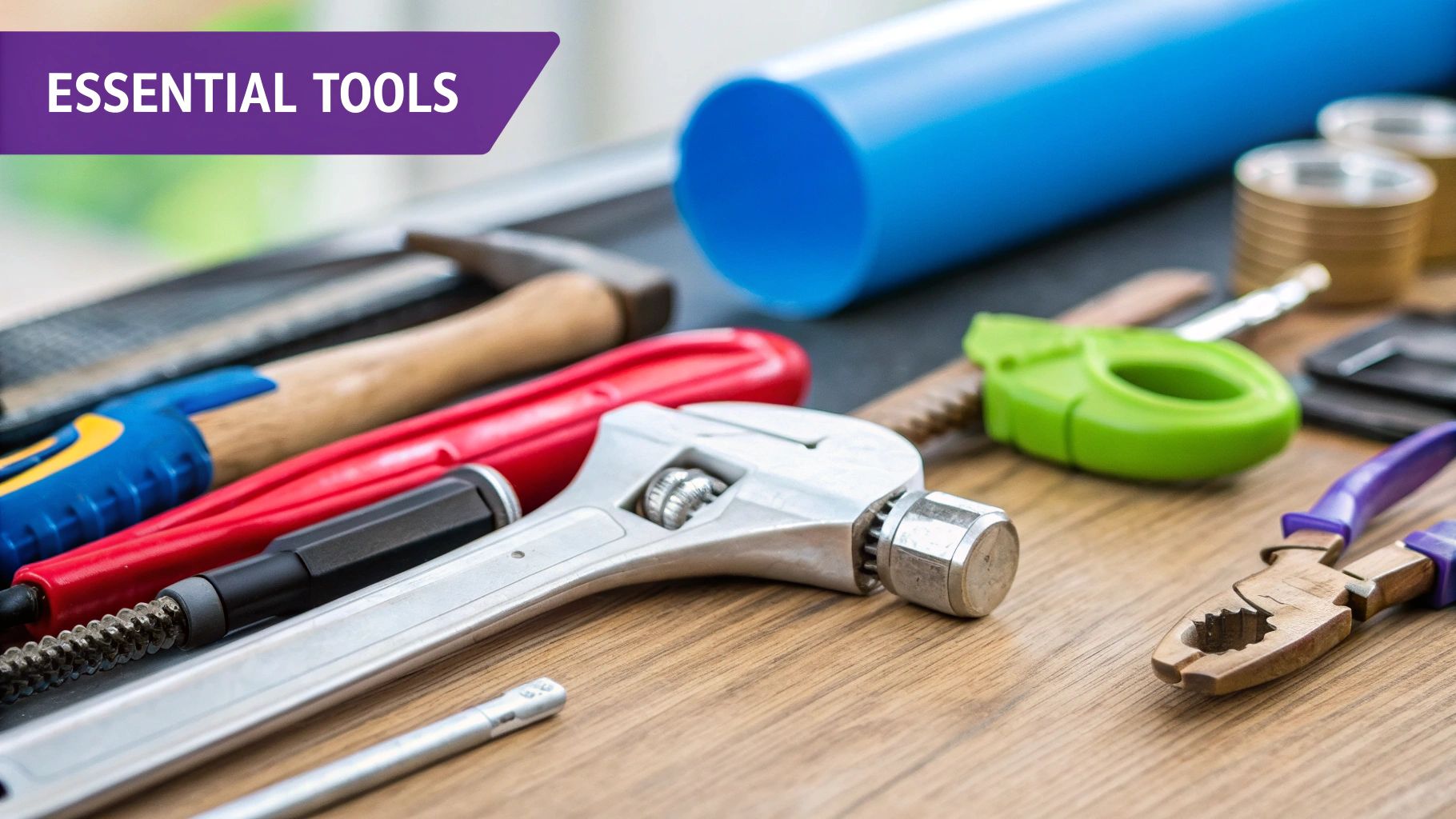
Your technical skill is the heart of your plumbing business, but the right tools and technology are the backbone. They support every single job you do. When you show up with professional-grade equipment, it does more than just make your work faster—it sends a clear message to your clients that you’re a serious, reliable expert.
This is about more than just wrenches and drain snakes. You're building a complete operational toolkit. That means a dependable vehicle to get you there and modern software to keep the business running smoothly when you're not on-site. Think of these as assets just as critical as your plumbing know-how.
Your Work Vehicle: The Mobile Workshop
Your truck or van isn't just for getting from point A to point B. It’s your mobile office, your workshop, and a rolling billboard for your brand. A reliable vehicle is non-negotiable, and how you organize it can make or break your daily efficiency. A well-stocked, organized van means fewer time-wasting trips to the supply house.
For a killer vehicle setup, you’ll want to dial in these key elements:
- Durable Shelving and Bins: Keep your tools, fittings, and parts organized and secure. This saves you from hunting for a specific part while the customer is looking over your shoulder.
- Secure Ladder Rack: A sturdy, accessible rack is essential for safety and convenience, especially for those jobs that need roof or attic access.
- Smart Inventory System: Stock your vehicle with the most common parts for your typical service calls. It’s like having a small, curated warehouse on wheels.
A disorganized truck is a clear sign of a disorganized business. I’ve seen plumbers waste 15-20 minutes on every single job just hunting for a specific fitting. That time adds up, costing you money and making you look unprofessional.
Assembling Your Essential Plumbing Toolkit
When you're starting out, it's easy to fall into one of two traps: buying the cheapest tools you can find, or going overboard on specialized gear you don't need yet. The smart money is on high-quality versions of the essentials first—the tools you'll be reaching for every single day.
To make sure you're ready from day one, you need all the necessary gear. For example, knowing what makes up a complete set of faucet installation tools helps you build a comprehensive kit for common residential jobs. A solid starter toolkit should absolutely include pipe wrenches, drain snakes, a borescope, and a quality soldering kit.
From there, you can expand your arsenal as you take on more specialized work. For expensive, rarely used equipment like hydro-jetters, leasing is a fantastic option. It lets you offer advanced services without a massive upfront investment.
Using Technology to Streamline Your Operations
These days, running a successful trade business takes more than just skill with your hands. Customer expectations have changed, and efficiency is everything. The right software can save you from an administrative nightmare and free up countless hours.
Your best bet is to look for a field service management (FSM) platform that pulls several key functions into one simple system.
Here's what a good FSM software should do for you:
- Scheduling and Dispatching: See your calendar at a glance, book jobs, and assign them without a tangled mess of phone calls and text messages.
- Invoicing and Payments: Create professional invoices right there on-site and take payments immediately. This is a game-changer for your cash flow.
- Customer Communication: Automatically send appointment reminders and "on the way" texts to your clients. It's a professional touch that builds a ton of trust.
By choosing a user-friendly platform, you can manage your entire operation from a phone or tablet. It truly gives you the power to run your business from anywhere.
Finding and Winning Your First Customers

You’ve done the heavy lifting—getting licensed, insured, and kitted out with all the right gear. Now for the moment of truth: making the phone ring. Without a steady stream of customers, a business is just a very expensive hobby. This is where you need to take off your plumber hat and put on your marketer hat.
The good news? You don’t need a massive advertising budget to get things moving. A smart, focused strategy that combines modern digital tactics with some old-school, proven methods is all it takes to land those first crucial jobs and build real momentum.
Laying Your Digital Foundation
Let's be honest, your first impression is almost always going to be a digital one. When a homeowner has a pipe burst at 10 PM, they aren't digging through a phone book. They’re grabbing their smartphone and searching for an "emergency plumber near me." If you don't show up online, you're invisible.
First things first, you need a professional website. It doesn't have to be fancy, but it absolutely must be clean, easy to navigate on a phone, and clearly state who you are, what you do, and how to get in touch. Your phone number should be plastered everywhere, impossible to miss.
Next up is something arguably even more critical: your Google Business Profile (GBP). This is the free listing that pops up in Google Maps and the local search results. For a local service business, a well-managed GBP is the most powerful free marketing tool you have.
To make your profile actually work for you, you need to:
- Fill Out Every Single Field: Don't skip anything. Add your hours, list all your service areas, and write a detailed description of your services.
- Upload High-Quality Photos: Get pictures of your branded van, you in uniform, and maybe some before-and-after shots of your clean, professional work.
- Aggressively Chase Reviews: This is huge. Ask every single happy customer to leave you a review on Google. Those stars are a massive trust signal for potential clients and for Google itself.
Think of it this way: your website is your digital storefront, but your Google Business Profile is the giant, flashing sign on the main road that tells people you're open for business. Neglecting it is like hiding your shop down a back alley.
Old-School Tactics That Still Pack a Punch
While a solid online presence is non-negotiable, don't write off the power of traditional, boots-on-the-ground marketing. These methods are fantastic for building trust in your local community and creating a network that feeds you work for years.
A classic for a reason: turn your work vehicle into a mobile billboard.
A professional vehicle wrap with your business name, logo, phone number, and website is a one-time investment that works for you 24/7. Whether you're driving to a job, parked at the supply house, or just grabbing lunch, you’re advertising to hundreds of potential customers every single day.
Build a Referral Network
Another powerhouse strategy is to build real relationships with other local professionals who serve the same homeowners you do. They can become a consistent source of high-quality, ready-to-buy leads.
Who Should Be in Your Circle?
| Professional Group | Why They're a Goldmine for Referrals |
|---|---|
| General Contractors | They constantly need reliable plumbers for remodels and new construction. Be their go-to. |
| Real Estate Agents | Agents are always dealing with pre-sale inspections and last-minute repairs for their clients. |
| Property Managers | Managing dozens or hundreds of units means they have a never-ending list of plumbing needs. |
Don't just drop off a business card and hope they call. Take a real estate agent or property manager out for coffee. Ask about their business and their biggest headaches. Then, explain how you can make their lives easier by being the reliable, professional plumber who always shows up on time and leaves the workspace cleaner than you found it. That’s how you turn a simple contact into a referral partner who sends you business month after month.
By combining a strong digital footprint with targeted local networking, you create a powerful system for attracting customers. This balanced approach gets you in front of people no matter where they're looking, building the foundation of trust that will keep your plumbing business thriving for years to come.
Answering Your Top Questions About Launching a Plumbing Business
Even with the best business plan in hand, you’re bound to have questions. It’s only natural. When you're putting it all on the line to start your own plumbing company, the "what-ifs" can feel overwhelming.
Let's cut through the noise and tackle some of the most common questions I hear from plumbers who are just starting out. Think of this as a straight-to-the-point guide to get you past those initial hurdles.
How Much Does It Really Cost to Start a Plumbing Business?
This is the million-dollar question, isn't it? The honest-to-goodness answer is: it depends. I’ve seen guys get started for around $10,000, while others in pricier markets might spend closer to $75,000. The biggest factors are always your location and how much you're willing to buy used versus new.
Here’s a realistic breakdown of where that money usually goes:
- Licensing & Insurance: Getting bonded, licensed, and insured for your first year will likely run you somewhere between $1,500 and $5,000. Don't skimp here.
- Your Work Vehicle: This is your biggest ticket item. A new, fully-equipped van can easily top $40,000, but a reliable used one can get you on the road for half that.
- The Right Tools: To do the job right, you need professional-grade tools. A solid starter set is going to cost between $5,000 and $15,000.
- Getting the Word Out: Set aside at least $1,000 to $3,000 for the basics: a simple website, getting your van wrapped, and setting up your Google Business Profile.
The key is to be smart about your spending. A dependable used van and high-quality pre-owned equipment can save you a ton of cash right out of the gate, leaving you with more working capital.
What Are the Most Profitable Plumbing Services to Offer?
Fixing leaky faucets and running toilets will pay the bills, for sure. But the real money is in specialized services. Once you find your footing, focusing on a few high-margin areas can seriously accelerate your growth.
A lot of new owners get caught in the trap of chasing volume. Trust me, it's better to be the go-to expert for one or two complex services than it is to be the cheapest guy for every simple repair. Specialization is the fastest way to build a profitable business.
If you're looking for where the big profits are, consider building your skills in these areas:
- Drain Cleaning & Hydro-Jetting: Every home and business needs this eventually. The equipment is an investment, but it allows you to charge a premium.
- Trenchless Sewer Line Repair: Homeowners will pay top dollar to avoid having their entire front yard dug up. This service is a game-changer.
- Tankless Water Heater Installation: People are always looking for energy-efficient upgrades. Becoming the local expert on tankless systems can set you apart from the competition.
- 24/7 Emergency Services: This isn't for everyone, but being available when a pipe bursts at 2 a.m. means you can charge emergency rates.
How Should I Set My Prices for Plumbing Services?
Pricing can feel like you’re just pulling numbers out of thin air, but it should be a strategy. Many of the most successful plumbers I know use a flat-rate pricing model. It’s a win-win: the customer knows the exact cost upfront, and you're not penalized for working efficiently. No more surprise bills, no more unhappy customers.
To figure out your rates, you’ve got to do the math. Start by adding up all your monthly overhead costs—your van payment, insurance, fuel, software, marketing, you name it. Then, add the salary you need to draw. That's your total monthly nut.
Once you have that number, you can calculate the hourly rate you need to cover all your costs and still make a decent profit. The final step is to check out what your local competitors are charging. You don't want to be the cheapest, but you need to be in the ballpark. Your final price for any job has to cover materials, your labor, a piece of the overhead, and your profit.
Do I Need to Hire Employees Right Away?
Nope. In fact, you probably shouldn't. Most plumbing businesses start out as a one-person show, and that’s the smart way to do it. This keeps your overhead rock-bottom while you focus on building a name for yourself and getting your processes down pat.
You’ll know it’s time to hire when the business tells you it is. The biggest signs? You’re consistently turning down good, profitable jobs because you’re just too booked up, or you want to start offering after-hours emergency services that you can't cover alone.
Before you even think about putting out a job ad, make sure your finances are ready for it. Hiring someone means taking on payroll, taxes, and workers' comp insurance. It’s a huge step, so make sure your cash flow is strong enough to handle it without breaking a sweat.
Ready to make sure every lead gets the attention it deserves? Phone Staffer can help. We provide trained, remote CSRs and VAs to answer your phones, book appointments, and handle administrative tasks so you can focus on growing your business. Learn how we help home service companies succeed.