

So, what exactly is a sales lead? Let's skip the dictionary definition. Think of it as a homeowner raising their hand to ask about a problem—a leaky pipe, a flickering light, or an AC unit that just won't cool. They've shown an initial flicker of interest in what you do, which is the very first step in turning a stranger into a loyal customer.
What a Sales Lead Really Means for Your Business

Let's get practical. Imagine your business is like a neighborhood block party you're hosting. A sales lead is someone who has RSVP'd with a "maybe." They aren't a confirmed guest yet, but they’ve peeked over the fence and shown they're curious about what's going on.
That initial signal is pure gold. It means you're not just cold-calling a random name from a list; you're talking to a potential customer who has already initiated contact in some way. Grasping this simple idea is key because it shapes how you approach every single sales conversation from here on out.
The Two Core Components of a Lead
At the end of the day, every sales lead can be broken down into two essential parts:
- Contact Information: This is the basic stuff—a name, an email address, or a phone number. It’s your ticket to start a conversation.
- Demonstrated Interest: This is the action that separates a genuine lead from just a name. They might have filled out a form on your website, downloaded your "Winter HVAC Prep" checklist, or called your office with a question.
This combination of data and action is why lead generation is such a massive focus for businesses. In fact, around 50% of marketers say that generating new leads is a top priority for their campaigns, which really highlights its importance in fueling growth. You can learn more about these fascinating lead generation statistics and trends.
To really understand what makes a lead valuable, it helps to break down its parts from your business's perspective.
Anatomy of a Home Service Lead
| Component | What It Means for Your Business |
|---|---|
| Contact Info | The direct line you have to reach out and offer a solution. |
| Expressed Need | The specific problem they've told you about (e.g., "my sink is clogged"). |
| Implicit Need | The underlying pain point they haven't said out loud (e.g., they need it fixed before family visits). |
| Urgency | The timeframe driving their decision (e.g., a burst pipe is more urgent than a slow drain). |
| Source | How they found you (e.g., Google search, referral), which tells you what marketing is working. |
This table shows that a lead is far more than just a name and number—it's a package of information that gives you a clear path to making a sale.
A lead isn't just data; it's a conversation starter. It’s the permission a potential customer gives you to solve their problem, whether it's a leaky faucet or a broken air conditioner.
Ultimately, a strong sales lead is all about intent. It's about finding the people who are actively looking for the exact solutions your home service business offers and making it easy for them to connect with you.
Hot, Warm, and Cold Leads Explained
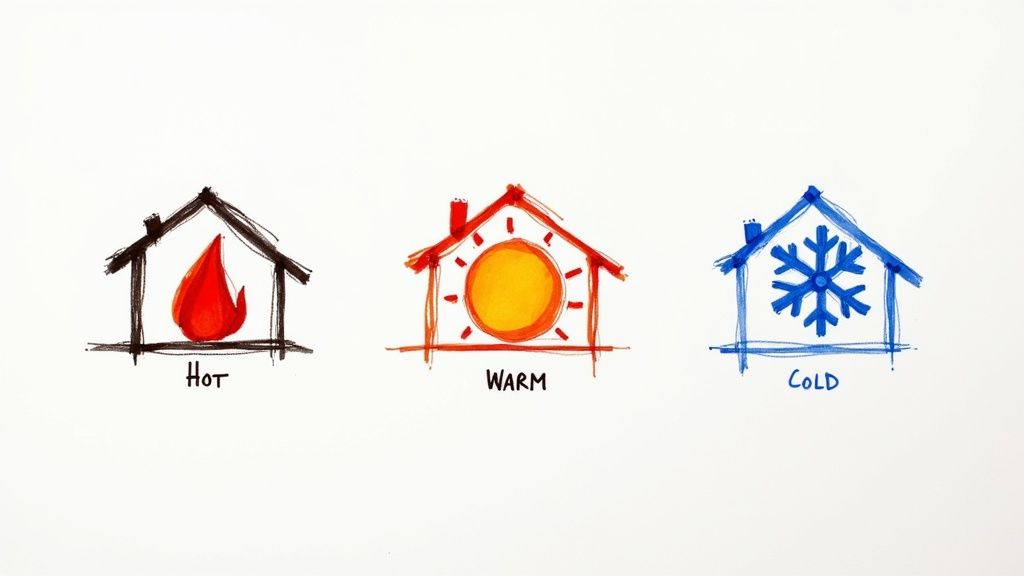
Let's be honest: not all leads are created equal. Trying to pitch a brand-new HVAC system to a homeowner who just randomly followed you on social media is a bit like trying to fix a leak that doesn’t exist. It’s a complete waste of your valuable time and energy.
To work smarter, not harder, you need a simple way to sort your leads based on how ready they are to buy. This is where the idea of "lead temperature" comes in handy. Think of it like a sales thermometer—it tells you who’s ready for a sales call and who just needs a little more time to warm up.
Cold Leads: Cautious and Curious
A cold lead is someone at the very beginning of their journey with your business. They’ve shown a flicker of interest, but they haven't explicitly raised their hand for help.
- Who they are: This could be someone from a mailing list you acquired or a homeowner who liked one of your Facebook posts.
- What to do: Your goal here is to build trust, not make a sale. Nurture these leads with genuinely helpful, no-strings-attached content. Share blog posts about seasonal maintenance or tips for cutting down on their energy bills. You're just trying to stay on their radar.
Warm Leads: Interested and Investigating
A warm lead has taken a clear step forward. They've moved from just being aware of you to actively looking into what you offer, making them a much better prospect for a conversation.
A great example is a homeowner who downloads your "Furnace Maintenance Checklist." That single action tells you they have a potential need. They're looking for solutions you provide, which is the perfect opening for a friendly, informative follow-up call. It's this focus on lead quality that's becoming crucial; in fact, 91% of marketers now say lead generation is their top goal, with a major shift from chasing quantity to finding quality. You can dive deeper into these lead generation trends and priorities.
Hot Leads: Ready to Act
Finally, we have the hot lead. This is someone with an urgent problem who has reached out to you directly for a fix. They are on the brink of making a hiring decision.
A hot lead isn't just browsing for information; they're trying to book a service. Think of the homeowner whose water heater just burst or the one filling out your "Request an Estimate" form for a broken AC in the middle of July.
These are your five-alarm fires. They demand an immediate response because if you don't get back to them, your competitor will. Responding to hot leads in minutes, not hours, is one of the single most effective things you can do to book more jobs and grow your business.
How to Generate a Steady Stream of Quality Leads
Knowing the difference between hot, warm, and cold leads is one thing, but building a system that actually brings them to you is another. To turn your marketing into a reliable source of new business, you need a focused strategy, not just a bunch of random marketing activities. For any home service company, that means getting in front of homeowners right where they're already looking for help.
This isn't about casting the widest net possible and just hoping for the best. It's about being visible and valuable at the exact moment a potential customer needs you. Think about it: when a pipe bursts, what does someone do? They search for "emergency plumber near me" or "AC repair in [Your Town]." Your goal is to be the first name they see when that happens.
Core Strategies for Home Service Businesses
To keep new prospects coming in and your business growing, you need a solid plan. You can explore comprehensive strategies for effective lead generation, but for service pros, the best methods are usually a smart mix of digital marketing and good old-fashioned local outreach.
This infographic highlights the three pillars of a powerful lead generation strategy.
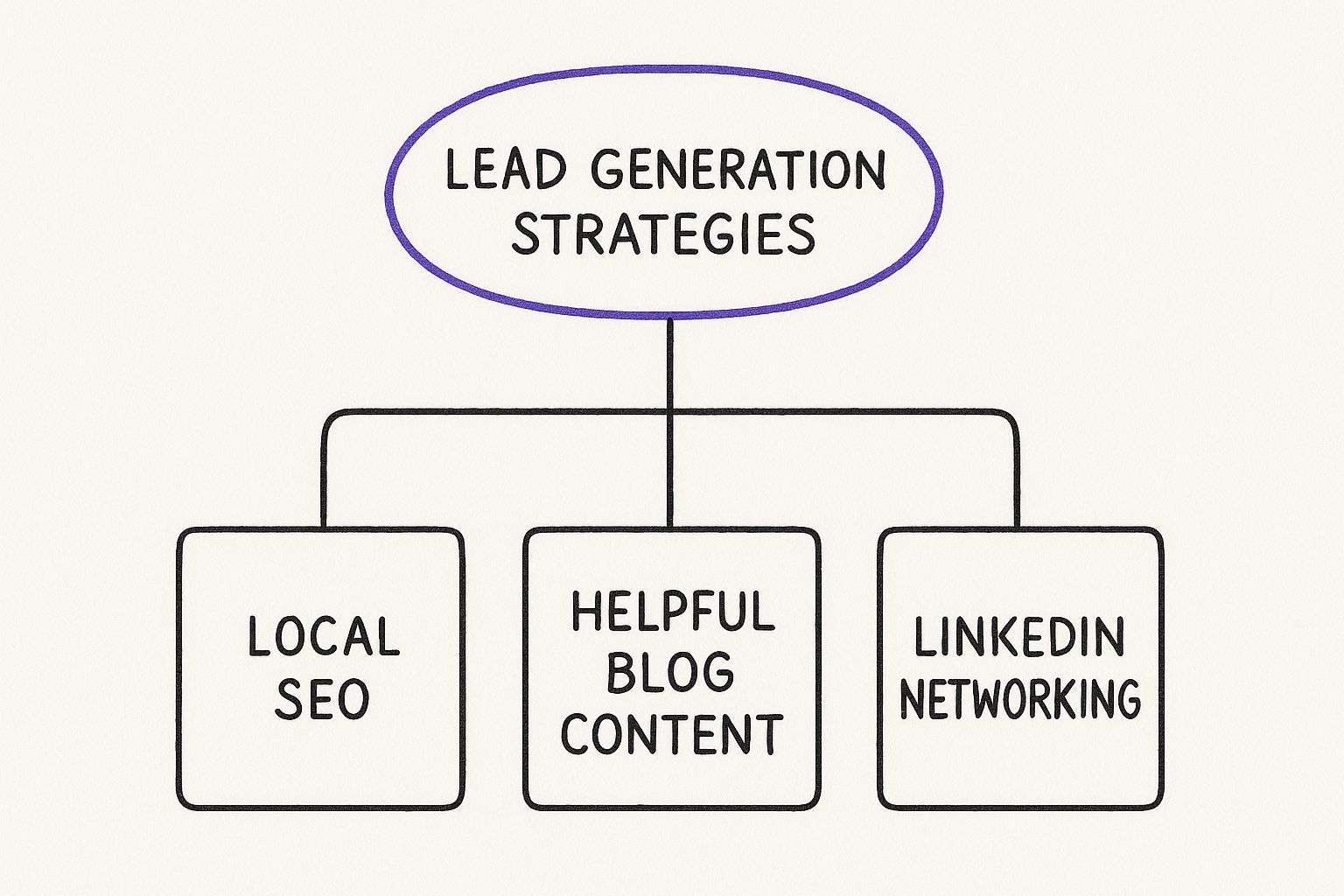
As you can see, local SEO, helpful content, and networking all work together to create a machine that consistently brings in new leads for your business.
Don't forget about commercial clients, either. Platforms like LinkedIn are fantastic for connecting with property managers, real estate agents, or commercial building owners who need recurring maintenance or repair services. In fact, more than half (53%) of B2B marketers use LinkedIn to find prospects. By engaging with these decision-makers, you can build a pipeline for bigger, more stable jobs.
The goal is to create multiple streams of potential business. A strong local search presence captures urgent needs, while strategic networking builds a foundation for long-term commercial contracts.
By focusing on these core areas, you create a much more balanced approach. You'll attract homeowners with immediate problems while also nurturing relationships that lead to more substantial, ongoing work. This ensures your business has a steady flow of high-quality opportunities month after month.
The Art of Qualifying Your Sales Leads
Getting leads is just the first step; knowing which ones are actually worth your time is what truly matters. Let’s be honest, a list of 100 random inquiries is far less valuable than 10 solid, ready-to-buy prospects.
This sorting process—separating the serious customers from the window shoppers—is what we call lead qualification. It’s less about selling and more about being a detective. Your mission is to find out if a potential customer is a genuine fit for your services before you invest hours into a detailed estimate they were never going to approve.
A Simple Framework: The BANT Method
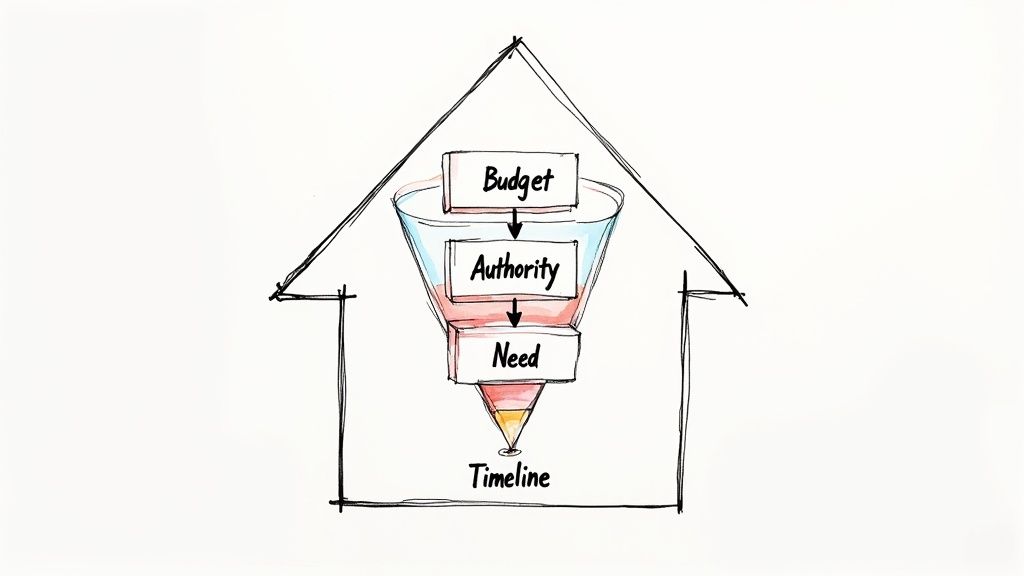
A tried-and-true method for this is the BANT framework. It’s an acronym that stands for Budget, Authority, Need, and Timeline. While it sounds a bit corporate, it’s incredibly effective for home service pros.
Think of it as a guide for your first conversation, helping you ask the right questions to gauge a lead’s real potential.
- Budget: Does the homeowner have a realistic budget in mind for the project? You don't need a final number, but managing expectations early prevents sticker shock down the road.
- Authority: Are you speaking directly with the person who makes the final decision? Ensuring you're talking to the homeowner who can actually say "yes" saves you from playing telephone with someone else.
- Need: What’s driving their request? A leaking roof is an urgent, undeniable need, whereas a “maybe someday” bathroom refresh is just a nice-to-have.
- Timeline: When are they looking to get the work started? Knowing if they need a plumber now versus just getting ideas for next spring helps you prioritize your schedule and focus your energy.
Asking a few thoughtful questions around these four areas is not an interrogation. It’s a strategic conversation that reveals how serious a potential customer is.
To make this even easier, here’s a quick checklist you can use to guide your initial calls.
Lead Qualification Checklist for Home Services
This simple table adapts the BANT model specifically for home service businesses. Use it to quickly assess if a new lead is a hot prospect or just kicking tires.
| Criteria | Key Question to Ask |
|---|---|
| Budget | "Do you have a budget in mind for this project? It helps me suggest the best options for you." |
| Authority | "Are you the homeowner, or will anyone else be involved in making the final decision?" |
| Need | "What’s the main reason you're looking to get this work done now?" |
| Timeline | "Ideally, when would you like this project to be completed?" |
By running through these quick checks, you can instantly tell which leads need your immediate attention.
This approach lets you confidently focus on the homeowners who are ready to hire you right now, while moving the less urgent inquiries into a follow-up plan for later. It’s a simple but powerful way to improve your closing rate and make sure your hard-earned leads don't go to waste.
Turning a New Lead Into a Loyal Customer
Knowing what a sales lead is gets you to the starting line. But the real race is turning that first flicker of interest into a long-term, loyal customer.
This journey from stranger to fan follows a predictable path. For home service pros, it’s a process you probably see play out every single week, even if you don't call it a "sales funnel."
It almost always starts with a simple problem. A homeowner hears a weird rattling from their AC unit and starts to worry. They jump online, type in a few keywords, and land on your helpful blog post, "5 Noises Your AC Shouldn't Be Making." This is the Awareness stage. They didn't know you a minute ago, but now they see you as an expert who can solve their problem.
They like what they read and decide you might be the right pro for the job. They spot your "Get a Free Quote" button, click it, and fill out the form. That's the Decision stage. Just like that, they've gone from a curious visitor to a hot lead in your system. This is a make-or-break moment where your response time can mean the difference between winning and losing the job.
From First Contact to Finished Job
Next up is the Action phase. You call them back quickly, give them a fair estimate, and they hire you for the repair. You show up on time, do a fantastic job, and soon enough, their AC is humming along quietly. The customer is relieved and happy.
This is where a lot of businesses stop. The job is done, the invoice is paid—on to the next one. But if you stop here, you're walking away from the most profitable part of the whole process.
Finishing the job isn't the real goal. The true opportunity is turning that one-time fix into a lasting relationship. That's the secret to building a business that lasts.
The ultimate goal isn't just to close a single deal; it's to create a customer for life who becomes a source of referrals and repeat business for years to come.
This final, crucial stage is Loyalty and Advocacy, and it’s built on great service, clear communication, and smart follow-up. It starts from the very first interaction—a professional and friendly voice on the phone can make a huge impression. That’s why many successful companies use a dedicated contractor answering service to make sure every lead gets a perfect first impression.
You cement that loyalty by going the extra mile after the job is done. Send a simple thank-you note. Set a reminder to call them about their next maintenance check-up. Offer a small discount for future work. It’s these small gestures that turn a satisfied customer into a powerful advocate for your brand, transforming a simple sales lead into your best marketing asset.
Common Lead Management Mistakes You Can't Afford to Make
Getting a steady flow of leads is a great first step, but what happens next is where the real money is made—or lost. I've seen countless home service businesses let perfectly good leads go cold simply because of small, fixable mistakes in their follow-up process.
These aren't massive, complicated operational breakdowns. They're usually just little gaps that, when added up, create a leaky bucket that costs you serious revenue. The good news? Plugging these holes is easier than you think and can make a huge difference in your conversion rates.
The Need for Speed Isn't Just a Saying
In this business, speed is everything. When a potential customer reaches out about a burst pipe or a faulty furnace, their problem is happening right now. They aren't just browsing; they're looking for a hero.
Waiting even an hour to get back to them is like giving your competition a head start in a race you should have won. By the time you call, another contractor is probably already on their way to the job site.
The single biggest mistake is a slow response time. If you’re not the first to respond, you're drastically reducing your chances of ever winning the job, no matter how good your service is.
Giving Up After the First Try
It's easy to get discouraged when a lead doesn't answer your first call. But here's something to remember: not every lead is an emergency. Some homeowners are in the early stages, just gathering quotes for a kitchen remodel they've been dreaming about or planning to replace their roof next season.
Mistaking that early research for a lack of interest is a huge mistake. When you give up after one or two attempts, you're walking away from a warm lead who will eventually become a paying customer for someone. A little persistence—even a simple automated email or text follow-up—can keep your name at the top of their list, turning a "not right now" into a "let's do this."
Got Questions About Sales Leads? We've Got Answers.
Let's wrap things up by tackling a few common questions we hear all the time from home service pros. Getting these basics right can make a huge difference in your sales process.
What's the Real Difference Between a Lead and a Prospect?
It's easy to use these terms interchangeably, but they represent two very different stages.
Think of a lead as someone who raised their hand. They downloaded your ebook, filled out a contact form, or called your office for information. There's a spark of interest, but that’s all you know for sure.
A prospect is a lead you've actually vetted. You've spoken with them, confirmed they have a problem you can solve, and verified they're a good fit for your services (think budget, location, and timeline). Every prospect starts out as a lead, but only the qualified ones earn the "prospect" title.
How Fast Do I Really Need to Follow Up with a New Lead?
Faster than you think. In the home service world, speed is your secret weapon. The goal? Five minutes. Seriously.
Every minute you wait, your chances of even connecting with that lead plummet. Research has shown this time and again. A lightning-fast response tells a potential customer you're on the ball, professional, and ready to get their problem solved now. Anything less, and you're likely calling a competitor's new customer.
Where Are the Best Leads for Home Service Businesses Hiding?
There’s no magic bullet, but a healthy mix is usually the winning formula.
For most contractors we work with, nothing beats the power of local SEO (like showing up in the Google Maps pack) and good old-fashioned referrals. These leads are often high-intent—they're actively searching for your exact service and are ready to make a decision.
That said, don't sleep on paid ads or a solid social media game. They're fantastic for casting a wider net, reaching people who might not know they need you yet, and keeping your brand top-of-mind.
Ready to stop missing calls and start converting more leads? Phone Staffer can help. We provide trained CSRs and VAs to answer your phones, qualify leads, and book appointments, so you can focus on running your business. Learn more at phonestaffer.com.