

Turning Cold Calls into Warm Conversations
Want to book more appointments and boost sales? This listicle explores the critical differences between cold calling vs warm calling, providing eight actionable strategies to transform cold leads into warm opportunities. Learn how to leverage referrals, events, social media, content, and targeted outreach to connect with potential customers. Whether you utilize a service like Phone Staffer or manage an in-house team, these techniques will improve your connection rates and maximize your sales success.
1. Referral-Based Warm Calling
Referral-based warm calling stands out in the "cold calling vs warm calling" debate as a highly effective strategy for home service businesses. It leverages the power of existing relationships and networks to secure introductions to potential clients. Instead of reaching out to complete strangers (cold calling), you're contacting someone who has been referred to you by a mutual connection. This pre-existing relationship immediately establishes credibility and trust, making prospects significantly more receptive to your outreach and ultimately boosting your chances of converting leads into paying customers. It transforms a cold call into a warm conversation, paving the way for smoother interactions and a higher likelihood of securing business.

This approach hinges on cultivating and maintaining strong relationships with your existing customer base. Satisfied customers become your advocates, opening doors to new prospects within their networks. Features of successful referral-based warm calling campaigns include using existing customer relationships to gain introductions, building on established trust, achieving higher conversion rates than true cold calling, and prioritizing the maintenance of strong customer relationships. Learn more about Referral-Based Warm Calling For home service businesses, where reputation and word-of-mouth are critical, this approach is particularly valuable.
Pros:
- Higher response and conversion rates: Prospects are more likely to engage with someone recommended by a trusted source.
- Less resistance from prospects: The initial barrier of suspicion common in cold calling is significantly reduced.
- Builds on existing trust: The referral creates an instant connection and a foundation of trust.
- Creates a natural conversation opener: Mentioning the referrer provides a smooth and relevant entry point.
Cons:
- Limited by the size and quality of your network: Your reach is dependent on your existing connections.
- Requires maintaining good relationships with referrers: Neglecting these relationships can negatively impact your referral stream.
- May not scale as quickly as some cold calling approaches: Building a robust referral network takes time and effort.
Examples:
- Imagine a scenario using LinkedIn's TeamLink (or similar features in other CRM systems). Your sales team can identify potential home service clients and then see if any of your colleagues are connected to them. Leveraging that connection for an introduction instantly warms up the call.
- Salesforce has reported that implementing referral programs resulted in a 60% higher close rate, showcasing the power of leveraging existing relationships.
Tips for Home Service Businesses:
- Always thank referrers for their help: Show your appreciation with a personal note, a small gift, or a discount on future services.
- Mention the mutual connection immediately in your call: This establishes context and builds rapport. For example, "Hi [Prospect Name], I'm calling on behalf of [Referrer Name] who suggested I reach out…"
- Prepare a brief explanation of how you helped the referrer: This reinforces your credibility and demonstrates the value you provide. For instance, "We recently completed a kitchen remodel for [Referrer Name], and they were thrilled with the results…"
- Follow up with the referrer about the outcome: Keep them in the loop and demonstrate respect for their contribution.
- Develop a formal referral program with incentives: Offer rewards to existing customers for successful referrals, encouraging active participation. This could include discounts, free services, or gift cards.
Referral-based warm calling deserves a prominent place in any discussion of "cold calling vs warm calling" precisely because it addresses the key challenges of cold outreach. For home service business owners, franchise owners, and franchisees, building a solid reputation is crucial. This method leverages that reputation by turning satisfied customers into powerful advocates, creating a sustainable stream of warm leads and driving business growth. It's a more personalized, relationship-focused approach that resonates deeply within the home service industry.
2. Event Follow-Up Warm Calling
Event follow-up warm calling bridges the gap between cold calling vs warm calling by leveraging prior in-person or virtual interactions. This approach involves contacting prospects after meeting them at industry events like trade shows, conferences, webinars, or even local networking meetups. That initial face-to-face or virtual interaction, however brief, transforms subsequent calls from cold outreach into warm leads by establishing a degree of recognition and shared experience. This makes it significantly easier to initiate a conversation and build rapport.
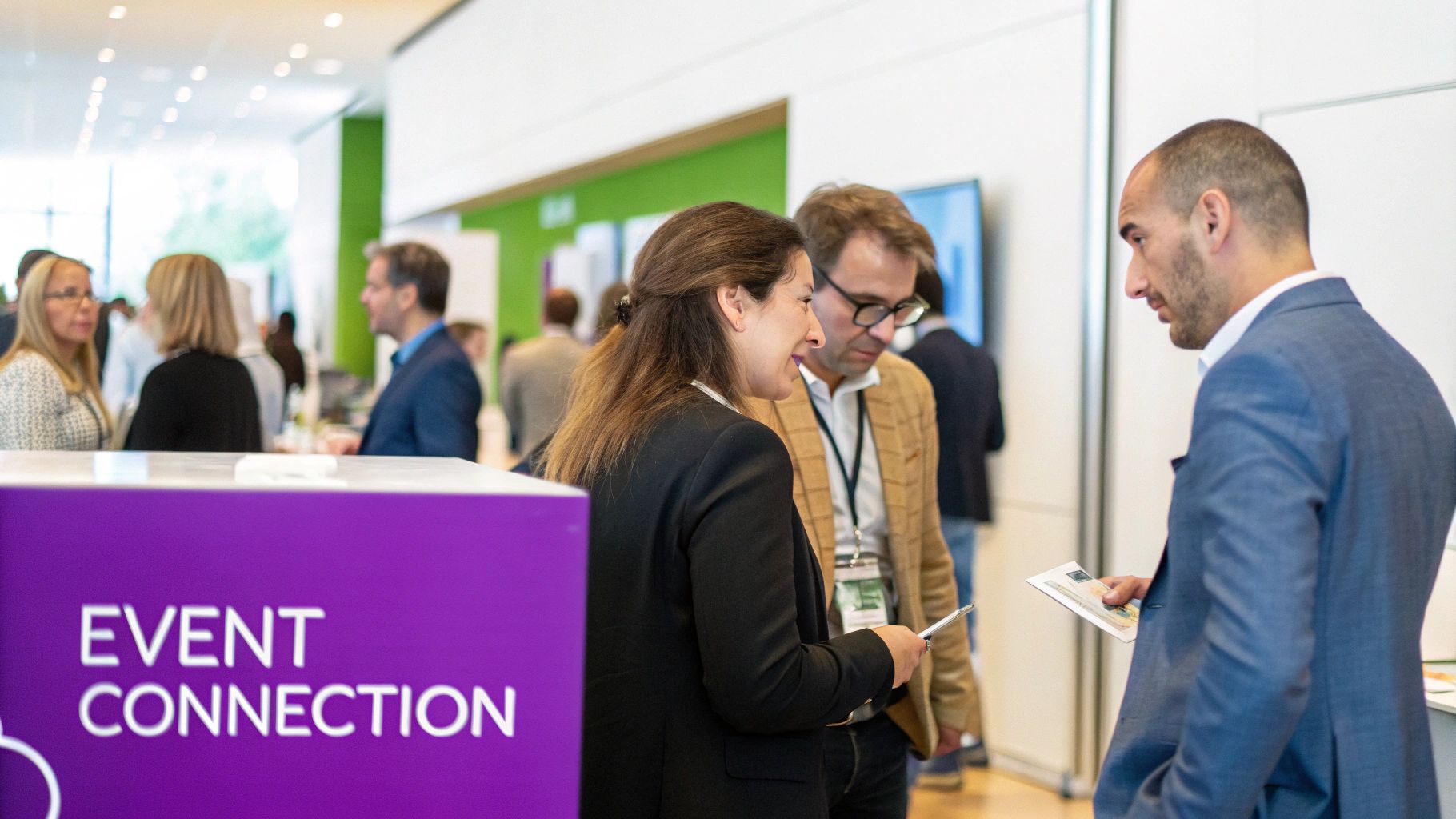
For home service businesses, this could mean following up with homeowners you met at a local home and garden show, a community fair, or even a neighborhood association meeting. For franchisees, this might involve connecting with potential clients after a franchise-sponsored webinar or a national industry conference. This strategy deserves its place on this list because it offers a natural, less intrusive way to connect with potential customers, resulting in higher conversion rates than traditional cold calling.
Features and Benefits:
- Builds on prior interactions: The pre-existing connection, even if fleeting, provides a foundation for a more meaningful conversation.
- Uses shared experiences as conversation starters: Recalling a shared experience from the event, like a particular speaker or demonstration, allows for a natural and engaging opening.
- Time-sensitive approach: Following up promptly, ideally within 48 hours, maximizes the chances of the prospect remembering you and the interaction.
- Allows for personalization: You can tailor your conversation based on specific topics discussed at the event, demonstrating genuine interest and understanding of their needs.
Pros:
- Natural conversation flow: The shared experience facilitates a more organic and less awkward conversation starter.
- Higher receptivity: Prospects are generally more receptive to calls from someone they've already met, even briefly.
- Personalized outreach: Referencing specific conversations or observations from the event allows for a more tailored and relevant pitch.
Cons:
- Limited scale: Your reach is limited by the number of attendees at the event.
- Diminishing effectiveness over time: The impact of the initial interaction fades as time passes.
- Requires investment in event participation: Attending events requires time and financial resources.
- Potential for forgotten interactions: Prospects may not recall brief encounters, especially at larger events.
Examples:
- Salesforce leverages its annual Dreamforce conference to generate a significant number of warm leads through aggressive post-event follow-up.
- HubSpot’s INBOUND conference follow-up campaigns have reportedly yielded 35% higher conversion rates than standard cold outreach. For a home service business, this could translate into a significant boost in booked appointments and closed deals.
Tips for Home Service Businesses:
- Follow up within 48 hours: Strike while the iron is hot and the interaction is fresh in the prospect's mind.
- Reference specific conversations: Mention something specific you discussed at the event to show you were paying attention. For example, "We spoke about your kitchen remodel at the Home and Garden Show…"
- Include a photo: If you took a photo together, include it in your follow-up email. This visual reminder can significantly increase recognition.
- Mention other attendees you both know: Connecting through mutual acquaintances strengthens the bond and builds credibility.
- Provide additional value related to event topics: Offer a free consultation, a discount on services, or a helpful resource related to their expressed needs. For example, if you discussed their leaky faucet at a community fair, offer a free plumbing inspection.
Popularized By:
Event marketing giants like Tony Robbins and Gary Vaynerchuk have consistently emphasized the importance of post-event relationship building. Salesforce's sophisticated event marketing team also serves as a prime example of how to effectively leverage events for lead generation and sales. By adopting these strategies, home service businesses and franchisees can transform events from mere networking opportunities into powerful lead generation engines, effectively bridging the divide between cold calling vs warm calling.
3. Social Selling to Warm Up Cold Calls
In the battle of cold calling vs warm calling, social selling emerges as a powerful weapon to transform frigid outreach into warm conversations. This strategy leverages social media platforms like LinkedIn, Facebook, and Twitter to engage with prospects before picking up the phone. By commenting on their posts, sharing their content, and participating in relevant online discussions, salespeople can gradually build rapport and establish a digital relationship. This pre-call engagement transforms a cold call into a warm one, filled with recognition and context. Instead of being just another unknown voice, you become a familiar face, increasing your chances of a positive interaction.

For home service businesses, this is particularly valuable. Imagine a homeowner sees your insightful comment on a local community Facebook group discussing landscaping challenges. When you call them a week later about your landscaping services, they already have a positive impression of your expertise. This familiarity can drastically improve your conversion rates.
Social selling is a multi-touch approach that emphasizes gradual relationship building through content-based engagement. This requires social media proficiency and a strategic mindset. Features of an effective social selling program include consistent activity across relevant platforms, a focus on building relationships rather than immediate sales pitches, and engagement centered around valuable content. Learn more about Social Selling to Warm Up Cold Calls and how it can benefit your business.
Pros:
- Creates Recognition: Prospects are more receptive when they recognize your name and company.
- Provides Insights: Social media activity reveals valuable information about a prospect's interests, needs, and pain points. For instance, a homeowner complaining about their old HVAC system on Twitter presents a perfect opportunity for an HVAC company.
- Establishes Credibility: Thoughtful engagement positions you as an expert in your field.
- Offers Conversation Starters: Previous social interactions provide natural and relevant talking points for your calls.
Cons:
- Time-Intensive: Building meaningful relationships takes time and effort.
- Can Appear Stalker-ish: Overly aggressive or inauthentic engagement can backfire.
- Difficult to Scale Manually: Managing multiple social media interactions across numerous prospects can be challenging without automation tools.
- Not All Decision-Makers Are Active: Some key decision-makers may have a limited social media presence.
Examples of Success:
IBM's social selling program famously increased sales by 400% by empowering its sales team to engage with prospects on social media. LinkedIn's own Sales Navigator platform boasts a 45% higher opportunity creation rate for its users, highlighting the effectiveness of social selling tools.
Tips for Home Service Businesses:
- Engage Authentically: Provide genuine value and contribute to the conversation instead of just pushing your services. Offer helpful tips, answer questions, and share relevant industry news.
- Reference Specific Interactions: When calling, mention a specific post or comment you engaged with to personalize the conversation and demonstrate your genuine interest. For example, "I noticed you were asking about energy-efficient windows on the neighborhood forum…"
- Use Social Media Management Tools: Tools like Hootsuite or Buffer can help streamline your social media activities and schedule posts.
- Create a Multi-Week Engagement Plan: Don't expect immediate results. Plan a series of interactions over several weeks to build familiarity and trust before making a call.
- Share Relevant Industry Insights: Share valuable content related to home services, such as home maintenance tips, energy-saving advice, or design trends. This establishes your expertise and provides value to your target audience.
Social selling deserves its place on this list because it fundamentally shifts the dynamic of cold calling vs warm calling. By proactively building relationships and establishing credibility through social media, home service businesses can dramatically increase their chances of converting cold leads into paying customers.
4. Content-Triggered Cold-to-Warm Conversion
This approach bridges the gap between cold calling vs warm calling by using content engagement as the catalyst for sales outreach. Instead of reaching out blindly, sales representatives contact prospects who have already demonstrated interest by downloading whitepapers, attending webinars, or interacting with other relevant content. This transforms a traditionally cold call into a timely, relevant, and warm conversation. This strategy allows home service businesses to connect with potential customers who have actively signaled their interest in specific services or solutions. By focusing on engaged prospects, you can significantly increase your chances of converting leads into paying customers.

This method deserves a place on this list because it represents a significant improvement over traditional cold calling, particularly for home service businesses. For example, imagine a potential customer downloads a guide on "Winterizing Your Home." A timely follow-up call discussing their specific winterization needs and how your business can help turns a cold lead into a warm prospect. This strategy leverages the prospect's active research phase, resulting in higher conversion rates and more meaningful interactions.
Features of Content-Triggered Cold-to-Warm Conversion:
- Behavior-based trigger system: Automated alerts are set off when a prospect interacts with specific content.
- Content marketing integration: Requires a robust content strategy that attracts and engages your target audience.
- Time-sensitive follow-up processes: Ensures prompt contact while the prospect's interest is still high.
- Robust tracking tools: Necessary to monitor content engagement and trigger the appropriate sales outreach.
Pros:
- Highly Relevant: Calls are directly related to the prospect's demonstrated interests.
- Perfect Timing: Aligns with the prospect's active research phase.
- Higher Conversion Rates: Engaged prospects are more likely to convert.
- Natural Conversation Starter: The content provides a natural and relevant topic for discussion.
Cons:
- Reliance on Content Marketing: Requires investment in creating high-quality, engaging content.
- Sophisticated Tracking Tools: Implementing and managing these tools can be complex.
- Limited by Content Engagement Volumes: Success depends on a consistent flow of engaged leads.
- Potential for Intrusiveness: Aggressive follow-up can be perceived negatively.
Examples of Success:
- Marketing automation platforms like Marketo have reported a 25% increase in conversions using content download follow-up systems.
- Companies like DocuSign have seen 3x higher meeting booking rates through webinar attendance follow-up programs.
Actionable Tips for Home Service Businesses:
- Speed is Key: Call within 5 minutes of content engagement for optimal results. Imagine someone downloads a checklist about plumbing maintenance. A quick follow-up offering a free plumbing inspection can be highly effective.
- Be Specific: Reference the exact content they engaged with. For example, "I noticed you downloaded our guide on 'Choosing the Right HVAC System.' Do you have any questions about it?"
- Be Prepared: Anticipate questions related to the content and have answers ready.
- Segment Your Approach: Tailor your follow-up based on the content type and level of engagement. A prospect who downloaded a simple checklist might require a different approach than someone who attended a detailed webinar.
- Automate for Efficiency: Use marketing automation to alert sales teams of high-value engagement.
When and Why to Use This Approach:
This strategy is ideal for home service businesses that want to move beyond random cold calling and connect with truly interested prospects. It's particularly effective when launching new services, promoting special offers, or targeting specific customer segments. By aligning your sales outreach with demonstrated content engagement, you create a more receptive audience and dramatically improve your conversion rates. This method, popularized by inbound marketing methodologies from companies like HubSpot, Marketo, and Pardot, focuses on attracting and engaging prospects rather than interrupting them with unwanted calls.
5. Account-Based Cold Calling Strategy
When comparing cold calling vs warm calling, the Account-Based Cold Calling strategy stands out as a powerful, albeit more resource-intensive, approach. Instead of casting a wide net with generic cold calls, this method focuses on meticulously researching and targeting specific high-value accounts. Think of it as a laser-focused beam instead of a floodlight. This precision allows salespeople to create highly personalized and informed conversations that feel less like a cold call and more like a consultative discussion, even on the first contact. This is particularly relevant for home service business owners, franchise owners, and franchisees looking to secure larger contracts or recurring business with property management companies, real estate developers, or commercial clients.
How it Works:
The Account-Based Cold Calling strategy hinges on deep pre-call research. Salespeople invest time understanding the target company's industry, business challenges, strategic initiatives, and key decision-makers. This knowledge allows them to craft a compelling, personalized message that resonates with the prospect and positions the home service business as a valuable solution provider. Instead of pitching generic services, the focus is on addressing specific needs and demonstrating a clear understanding of the target account's unique context.
Features and Benefits:
- Research-intensive Approach: This is the cornerstone of the strategy. Deep dives into company data, industry trends, and individual stakeholders provide the foundation for targeted outreach.
- Focus on Quality over Quantity: Rather than making hundreds of generic calls, this approach prioritizes a smaller number of highly targeted interactions.
- Highly Personalized Outreach: Calls, emails, and other touchpoints are tailored to each account, addressing their specific needs and challenges.
- Multiple Stakeholder Mapping: Identifying all key decision-makers and influencers within the target account ensures a comprehensive approach.
- Industry and Company-Specific Value Propositions: The value proposition isn't a one-size-fits-all pitch. It's carefully crafted to resonate with the target account's specific circumstances.
Pros:
- Higher Success Rates with Target Accounts: Personalized outreach and relevant messaging significantly increase the chances of converting leads.
- More Intelligent Conversations Leading to Better Relationships: Consultative conversations build trust and establish stronger relationships with potential clients.
- Aligns Sales with Strategic Business Objectives: Focusing on high-value accounts directly supports overall business growth goals.
- Higher Average Deal Values: Landing larger accounts typically results in higher revenue per client.
Cons:
- Extremely Time-Intensive Research Phase: Thorough research requires significant time investment upfront.
- Smaller Reach than High-Volume Approaches: This strategy isn't designed for reaching a large number of prospects quickly.
- Requires Advanced Research Skills: Salespeople need the ability to effectively gather and analyze information from various sources.
- Higher Cost Per Acquisition Initially: The upfront investment in research can result in higher initial acquisition costs.
Examples:
While examples like Microsoft and Terminus demonstrate the power of ABM in a B2B software context, the principles apply to home services as well. Imagine a home services franchise targeting a large property management company. By researching the property management company's portfolio, understanding their current maintenance challenges, and identifying the key decision-makers, the franchisee can create a highly targeted and effective cold calling campaign.
Tips for Home Service Businesses:
- Research Property Management Companies, Developers, HOAs: Explore their online presence, review local news for projects, and attend industry events to gather information.
- Identify Key Decision-Makers: Determine who is responsible for maintenance, vendor selection, and budgeting.
- Develop Account-Specific Value Propositions: Highlight services that directly address the target account's needs, like 24/7 emergency repair services for property managers.
- Create Custom Call Scripts for Each Target Account: Tailor your messaging to resonate with the specific challenges and opportunities of each target.
- Coordinate with Marketing for Multi-Channel Touches: Reinforce your cold calling efforts with targeted email marketing, direct mail, and social media outreach.
Why This Approach Deserves Its Place in the List:
In the debate of cold calling vs warm calling, the Account-Based Cold Calling strategy offers a powerful middle ground. While technically still "cold calling," the extensive research and personalized approach bridges the gap towards warmer outreach. For home service businesses seeking high-value clients and long-term relationships, this method provides a structured and effective way to cut through the noise and secure meaningful connections. This is especially true in the competitive home services landscape, where differentiating your business is crucial. By demonstrating a deep understanding of a client's needs, you position yourself as a trusted advisor and increase your chances of securing the business.
6. Trigger Event Cold Calling
In the ongoing debate of cold calling vs warm calling, trigger event cold calling emerges as a potent strategy that bridges the gap between the two. It leverages the time-sensitive nature of specific events within a target company to create a more opportune, and therefore warmer, cold calling experience. This approach involves monitoring for specific "trigger events" – occurrences like leadership changes, new funding rounds, company expansions, mergers and acquisitions, or even new product launches – that signal a potential shift in a company's needs and priorities. By contacting prospects immediately following these triggers, salespeople can capitalize on moments of change when companies are often more receptive to exploring new solutions. This allows you to insert yourself into the conversation at a critical juncture, increasing the likelihood of a positive response. Learn more about Trigger Event Cold Calling
For home service business owners, franchise owners, and franchisees, this can be incredibly valuable. Imagine a local business just received a large investment round and is planning a significant expansion. They'll likely need various home services, from cleaning and maintenance to renovations and landscaping. Trigger event cold calling allows you to reach out at precisely the right moment, offering your services when they're actively seeking solutions.
How Trigger Event Cold Calling Works:
This strategy hinges on a proactive, event-based timing strategy. It requires consistent monitoring of target companies for relevant trigger events. This can be achieved through various means, from setting up Google Alerts to utilizing sophisticated sales intelligence platforms. The key is to act quickly, as the window of opportunity following a trigger event is often narrow.
Features of Trigger Event Cold Calling:
- Event-based timing strategy: Calls are strategically timed around specific company events.
- Requires monitoring systems for triggers: Utilizes tools and services to track relevant events.
- Highly time-sensitive approach: Demands quick action to capitalize on short windows of opportunity.
- Focuses on relevant business changes: Directly addresses the prospect's evolving needs.
Pros:
- Catches prospects during windows of opportunity: Increases the chance of reaching decision-makers when they are actively considering new solutions.
- Provides natural conversation starters about the trigger event: Offers a relevant and timely reason for contacting the prospect.
- Higher relevance due to timing with business needs: Connects your services directly to the prospect's current challenges and opportunities.
- Demonstrates market awareness and business intelligence: Positions you as a knowledgeable and informed resource.
Cons:
- Requires sophisticated monitoring tools or services: Can involve investment in specialized software or platforms.
- Highly competitive as others may target the same triggers: Requires a well-crafted approach to stand out from the competition.
- Narrow windows of opportunity: Demands swift action and efficient follow-up.
- May still feel like cold calls despite timing: Requires skillful communication to avoid sounding intrusive or irrelevant.
Examples of Success:
Companies like ZoomInfo have reported that their alert systems, which notify clients of trigger events, help increase contact rates by 30%. Similarly, Lattice Engines, which leverages predictive analytics to identify trigger events, has seen conversion rates increase by up to 75%. These examples highlight the potential impact of trigger event cold calling when executed effectively.
Actionable Tips for Home Service Businesses:
- Set up Google Alerts for target companies or keywords related to your services: This will notify you of any news or online mentions.
- Subscribe to industry news sources and local business journals: Stay informed about developments and potential trigger events in your target market.
- Use sales intelligence platforms like ZoomInfo or LinkedIn Sales Navigator: These tools provide in-depth company information and trigger event alerts.
- Develop specific scripts for different types of trigger events: Tailor your message to the specific situation and how your services can address the prospect's needs.
- Reference the trigger event within the first 10 seconds of the call: Immediately establish relevance and capture the prospect's attention. For example, "I saw you recently secured funding for expansion, and I wanted to reach out and discuss how our landscaping services can support your growth."
Why Trigger Event Cold Calling Deserves Its Place in Cold Calling vs Warm Calling Discussions:
Trigger event cold calling represents a significant evolution in outbound sales. It acknowledges the limitations of traditional cold calling while offering a more targeted and relevant approach. While it still technically falls under the umbrella of "cold calling," the strategic use of timing and context significantly warms up the interaction, increasing the likelihood of a positive outcome. This is particularly beneficial in the home services sector where businesses need to connect with potential clients at the exact moment they need their services. This approach allows you to stand out from the competition and position yourself as a proactive and valuable partner.
7. Multi-Channel Warming Strategy
In the debate of cold calling vs warm calling, a multi-channel warming strategy firmly positions you on the side of warm calling, and significantly increases your chances of success. This approach leverages multiple communication channels to nurture prospects before a direct sales call, transforming cold leads into warm conversations. By strategically sequencing emails, social media interactions (like LinkedIn), direct mail, and other touchpoints, you ensure prospects recognize your name and company when you finally pick up the phone. This familiarity breeds trust and dramatically improves the chances of a positive interaction.
This method works by gradually increasing engagement with a prospect over time. Instead of a jarring cold call out of the blue, they receive a series of increasingly personalized touches that showcase your brand and value proposition. This might start with a connection request on LinkedIn, followed by a targeted email sharing a relevant blog post, perhaps a follow-up email offering a free resource, and finally, a phone call to discuss their specific needs.
Features of a Multi-Channel Warming Strategy:
- Coordinated Cross-Channel Approach: A cohesive strategy across all channels ensures a consistent brand message and experience for the prospect.
- Automated Sequence Design: Tools like Outreach.io and SalesLoft allow for the automation of these sequences, saving you time and ensuring consistent follow-up.
- Gradually Increasing Engagement: The level of engagement increases with each touch, leading to a warmer reception when you finally call.
- Brand Recognition Building: Repeated exposure to your brand across different channels builds familiarity and trust.
Pros:
- Creates Familiarity Before the Call: Prospects are more likely to answer and engage with someone they recognize.
- Higher Answer and Engagement Rates: Studies show significantly higher connect rates with multi-touch sequences compared to cold calling.
- Accommodates Different Communication Preferences: Reaching out through various channels caters to individual prospect preferences.
- Creates Multiple Opportunities for Prospect Response: Each touchpoint presents a chance for the prospect to engage and express interest.
Cons:
- Complex to Coordinate Without Proper Tools: Managing multiple channels and sequences manually can be time-consuming and inefficient.
- Risk of Annoying Prospects Across Multiple Channels: Overly frequent or irrelevant communication can irritate prospects.
- Requires Content for Multiple Formats: You need to create compelling content tailored to each channel.
- More Expensive Than Single-Channel Approaches: Utilizing multiple channels and automation tools may involve higher upfront costs.
Examples of Successful Implementation:
Outreach.io clients have reported a 30% increase in connection rates after implementing 7-touch sequences. Similarly, SalesLoft users have seen 3x response rates with multi-channel compared to single-channel outreach. These statistics demonstrate the effectiveness of this approach.
Tips for Home Service Businesses:
- Start with Less Intrusive Channels: Begin with email or LinkedIn connection requests before moving to more direct channels like phone calls.
- Space Touches Appropriately: Avoid overwhelming prospects by spreading your touches over several days or weeks.
- Personalize Each Touch: Use unique information about the prospect and their property to tailor your message. For example, referencing a recent home renovation project they posted about on social media.
- Reference Previous Touches When Calling: Remind the prospect of your previous interactions to build rapport. For example, "I sent you an email last week about our new energy-efficient HVAC systems…".
- Use Automation Tools to Maintain Consistency and Timing: Tools like Outreach.io and SalesLoft can help you automate and manage your multi-channel sequences.
Why This Approach Deserves a Place on the List:
In the context of cold calling vs warm calling, the multi-channel warming strategy represents a significant evolution in outreach. It addresses the key challenges of cold calling by building familiarity and trust before the sales call, leading to higher engagement and conversion rates. For home service businesses, where building personal relationships is crucial, this approach can be particularly effective. By nurturing leads across multiple touchpoints, you can establish a stronger connection with potential customers, increasing the likelihood of securing their business. This method, popularized by companies like Outreach.io and SalesLoft, along with thought leaders like Kyle Porter (SalesLoft CEO), represents a best-practice approach to modern sales outreach, making it an essential consideration for any business looking to maximize their lead generation efforts.
8. Pure Cold Calling with Targeted Value Proposition
This traditional cold calling approach, often contrasted with warm calling in the "cold calling vs warm calling" debate, focuses on delivering an extremely targeted value proposition within the first few seconds of the call. Unlike warm calling, where prior contact establishes familiarity, pure cold calling dives straight into addressing a known pain point specific to the prospect's industry, role, or company size. This method relies heavily on volume and precise targeting to generate leads.
How it Works:
Pure cold calling with a targeted value proposition skips the "warming up" phase and gets straight to the point. It's about grabbing the prospect's attention immediately by demonstrating an understanding of their challenges and offering a potential solution. This requires meticulous research and a highly refined script to maximize the impact of those crucial first few seconds.
Features:
- No prior warming: Direct outreach with no previous interaction.
- Highly researched value propositions by segment: Tailored messaging for specific target audiences (e.g., home service business owners in a particular geographic area struggling with lead generation).
- Script optimization for quick engagement: Concise and impactful scripts designed to capture attention and deliver the core value proposition swiftly.
- High volume approach with quality targeting: Reaching a large number of prospects while ensuring they fit the ideal customer profile.
Pros:
- Scales more efficiently than warm calling approaches: Allows for reaching a broader audience more quickly.
- Requires less pre-call preparation per prospect: While segment research is essential, individual prospect research is minimized.
- Allows testing of different value propositions: Provides an opportunity to experiment with messaging and identify what resonates best with different segments.
- Develops sales team resilience and skills: Builds strong objection handling and communication skills due to the higher volume of rejections encountered.
Cons:
- Lower connection and conversion rates than warm approaches: Expect more hang-ups and less initial engagement.
- Higher rejection rates: Requires a thick skin and persistent effort.
- Requires excellent objection handling skills: Sales representatives need to be adept at addressing concerns and overcoming resistance.
- May create negative brand impressions if done poorly: A poorly executed cold call can damage your brand's reputation.
Examples:
- SDR teams at tech companies making 80-100 calls daily with 3-5% success rates, focusing on specific pain points for different sized businesses (e.g., lead generation for smaller home service businesses, software integration for larger franchises).
- InsideSales.com research showing 6.5% connection rate for pure cold calls vs 16% for warm calls highlights the challenges but also demonstrates the potential for success with a targeted approach. For home service businesses, this might translate to a lower initial connection rate, but a higher conversion rate among connected prospects due to the targeted value proposition.
Tips for Home Service Businesses:
- State your name, company, and value proposition in under 15 seconds: For example, "Hi [Prospect Name], this is [Your Name] with [Your Company]. We help home service businesses like yours in [City/Region] increase lead flow by 20% within the first quarter."
- Research common pain points by industry and role: Understand the challenges faced by home service business owners, franchise owners, and franchisees. Are they struggling with lead generation, customer retention, or managing online reviews?
- A/B test different opening statements: Experiment with different value propositions to identify what resonates most effectively with your target audience.
- Call during optimal times (Tuesday-Thursday mornings): Tailor calling times to when home service professionals are most likely available.
- Train extensively on objection handling: Prepare your team to address common objections like "I'm too busy," "I'm already working with someone," or "I'm not interested."
- Focus on booking next steps rather than selling on the first call: Aim to schedule a follow-up call or meeting to discuss their needs in more detail.
Why This Approach Deserves Its Place in the List:
Despite the challenges, pure cold calling with a targeted value proposition remains a relevant strategy, especially for home service businesses seeking to rapidly expand their client base. When comparing cold calling vs warm calling, this method offers a scalable and efficient way to reach a large audience and test different messaging approaches. When executed effectively, with a focus on delivering immediate value and addressing specific pain points, it can generate a consistent flow of qualified leads. This approach, popularized by figures like Aaron Ross (author of 'Predictable Revenue') and John Barrows (sales trainer), and incorporated into methodologies like The Bridge Group's inside sales strategies, provides a valuable framework for outbound sales success.
8-Point Comparison: Cold vs Warm Calling Strategies
| Strategy | Implementation Complexity (🔄) | Resource Requirements (⚡) | Expected Outcomes (📊) | Key Advantages (⭐) |
|---|---|---|---|---|
| Referral-Based Warm Calling | Moderate; relies on nurturing and leveraging existing relationships | Uses current network; moderate investment | Higher conversion rates via warm introductions | Builds trust and natural conversation openers |
| Event Follow-Up Warm Calling | Moderate; requires timely follow-up after events | Involves event participation and swift contact post-interaction | Increased engagement from recognized prospects post-event | Leverages shared experience for personalized outreach |
| Social Selling to Warm Up Cold Calls | High; sustained multi-touch social engagement required | Needs strong social media presence and dedicated tools | Gradual warmth with enhanced recognition and insight-driven conversations | Provides contextual insights from social interactions |
| Content-Triggered Cold-to-Warm Conversion | Moderate-High; demands robust tracking and automation | Requires integrated content marketing and advanced tracking tools | Timely, relevant outreach leading to improved conversion rates | Aligns outreach with prospect’s demonstrated content interest |
| Account-Based Cold Calling Strategy | High; research-intensive with personalized account mapping | In-depth research and resource allocation for target, high-value accounts | More consultative conversations and potential for higher deal values | Focuses on strategic, high-quality account targeting |
| Trigger Event Cold Calling | Moderate; depends on monitoring and reacting to trigger events | Requires monitoring tools and real-time alert systems | Timely engagement during business changes, increasing relevance | Catches prospects at opportune moments with natural conversation starters |
| Multi-Channel Warming Strategy | High; complex coordination across multiple communication channels | Involves various tools and channels such as email, social media, and direct mail | Improved engagement and connection rates through layered, consistent touchpoints | Builds familiarity and consistent brand recognition |
| Pure Cold Calling with Targeted Value Proposition | Moderate; demands precise scripting and immediate value delivery | Involves high-volume calling with targeted research | Consistent lead generation at scale with rapid outreach | Scalable strategy that refines messaging and enhances objection handling |
Choosing the Right Approach for Your Business
Ultimately, the "cold calling vs warm calling" debate boils down to finding the strategy that best suits your home service business. We've explored various approaches, from referral-based warm calling and event follow-ups to leveraging social selling and content to warm up cold calls. We also touched on purely cold calling strategies like account-based calling and trigger event calling, and the effectiveness of a multi-channel warming strategy. Each tactic, from pure cold calling with a targeted value proposition to leveraging warm introductions, offers unique advantages. The key takeaway is that understanding the nuances of each approach and adapting your techniques accordingly is crucial for maximizing your sales potential.
Mastering both warm and cold calling strategies empowers you to connect with a broader range of potential customers and nurture leads more effectively. By strategically implementing these methods, you can turn cold leads into warm opportunities, build stronger customer relationships, and significantly impact your bottom line. Whether you're a home service business owner, a franchise owner, or a franchisee, choosing the right blend of cold and warm calling will significantly influence your growth and success.
Ready to supercharge your sales efforts and implement these strategies without the added workload? Phone Staffer provides done-for-you cold calling services and staffing solutions for remote CSRs and VAs, helping you effectively connect with potential clients whether it's a cold call or a warm lead. Visit Phone Staffer today to learn how we can help you transform your lead generation and boost your business.