
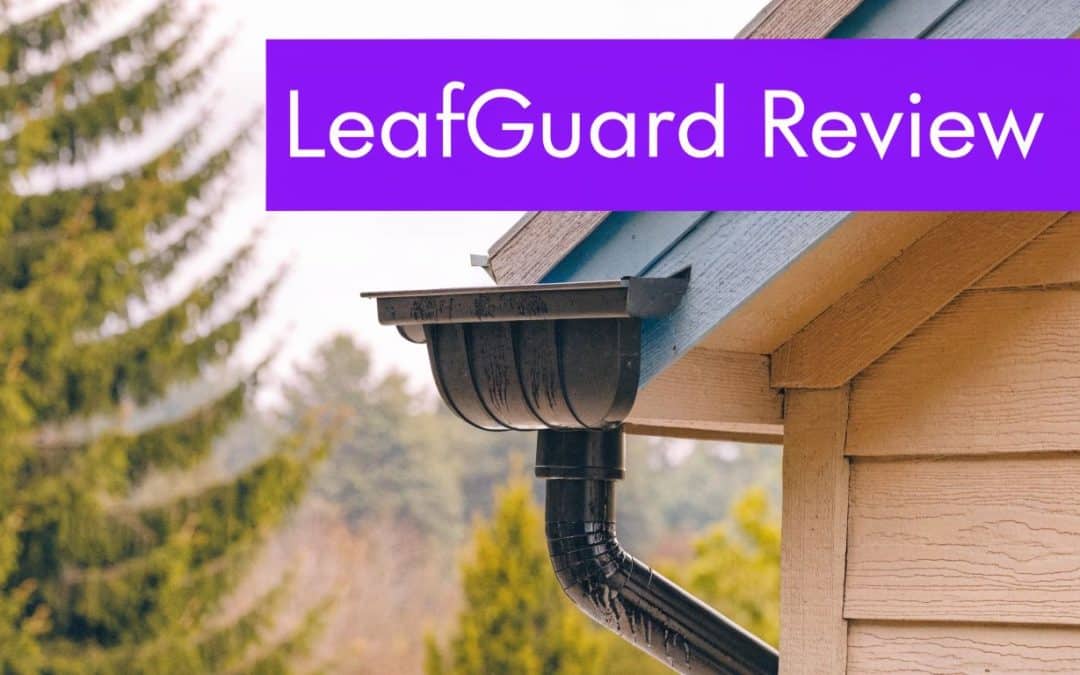
A homeowner calls after the third gutter cleaning in a year. Trees hang over the roof, the back elevation is too steep for a normal ladder setup, and the last storm dumped enough debris to spill water over the front entry. They’re not shopping for a cheap screen. They’re shopping for a way to stop dealing with gutters.
That call should get your attention.
If you run a roofing, gutter, siding, or exterior service company, LeafGuard sits in an interesting spot. It isn’t a basic add-on. It’s a premium replacement system with strong selling points, real installation implications, and some annoying service realities that most homeowner reviews gloss over. That makes this leaf guard gutter review a business decision, not just a product review.
I’ll give you the blunt version. LeafGuard can be a solid revenue line if you sell to the right buyer, price it like a premium product, and prepare your crew and office for the service issues that come with a proprietary one-piece design. If you treat it like “just another gutter guard,” you’ll create callbacks, price objections, and headaches.
The End of the Ladder or a New Business Opportunity
A lot of exterior businesses stumble into premium gutter work by accident. A roofing customer asks for a fix because their existing guards still clog. A siding customer complains about overflow staining. A homeowner with a two-story house says they’re done paying someone to clean gutters and they’re definitely done climbing up there themselves.
That’s the opening.
The homeowner sees a dangerous, repetitive chore. You should see a higher-ticket conversation tied to safety, water control, and long-term home protection. That’s why LeafGuard keeps coming up in sales calls. It isn’t sold as a cheap accessory. It’s sold as a replacement system for people who are tired of recurring gutter problems.
What owners usually get wrong
Many contractors make one of two mistakes.
- They undersell it like a commodity and get crushed on price.
- They oversell the “never any issue again” message and get burned when a customer sees dirt buildup, valley overshoot, or fine debris in problem areas.
Neither approach works.
The better approach is to treat LeafGuard as a premium offer for a specific type of client:
- Older homeowners who want less ladder work
- Upscale neighborhoods where curb appeal matters
- Tree-heavy properties where standard guards have already failed
- Customers already spending money on roofing, fascia, soffit, or drainage corrections
Practical rule: If the buyer’s main concern is “lowest installed price,” LeafGuard is usually the wrong lead to chase hard.
I’ve seen this play out in plenty of service businesses. The companies that do well with premium gutter systems don’t pitch features first. They start with the homeowner’s frustration. Overflow. Cleaning. Water near the foundation. Ugly front-elevation stains. Fear of climbing.
Then they move to the core business question. Can you install, support, and sell this system profitably without creating a service mess later?
That’s the only leaf guard gutter review that matters to an owner.
How LeafGuard Gutters Actually Work
LeafGuard works because it combines the guard and the gutter into one piece instead of attaching a separate cover over an existing trough.

That matters more than most sales reps explain. A retrofit guard still depends on the old gutter underneath. LeafGuard replaces the whole assembly with a one-piece aluminum system that uses a hooded opening and a reverse-curve front edge. If you want a broader overview of how leaf guard systems compare in the field, that resource gives useful context before you decide what to offer.
The simple physics
The core idea is liquid adhesion and surface tension. Water doesn’t always fall straight down. You’ve seen it cling to the side of a tipped glass before it drops. LeafGuard uses that behavior on purpose.
Rain hits the hooded surface, follows the curve, and wraps into the gutter opening. Leaves, twigs, and bigger debris don’t follow that same path. They keep moving forward and fall off the edge.
That’s the promise in plain English. The system separates water from debris by shape, not by punching tiny holes in a screen.
According to Modernize’s LeafGuard brand overview, LeafGuard’s patented reverse-curve design uses liquid adhesion and surface tension to separate rainwater from debris, can handle up to 32 inches of rain per hour, uses .032-inch aluminum that is 20% thicker than industry standards, includes downspouts 30% larger, and uses supports every 2 feet.
What the one-piece design changes on the job
This isn’t a snap-on product. It changes your install process and your sales pitch.
Here’s what that means in practice:
- You’re selling replacement, not an accessory. That raises ticket size and raises scrutiny.
- You need cleaner measurements and tighter install discipline. A one-piece system leaves less room for sloppy adjustments.
- You control more of the result. Since the gutter and protection are integrated, the finished performance depends heavily on layout, pitch, outlets, and downspout planning.
A rep who explains this clearly sounds credible fast. A rep who says “it’s basically a gutter cover” sounds like they don’t know what they’re selling.
A quick video helps some customers grasp the concept faster than a verbal explanation alone.
What to say at the kitchen table
Keep it simple.
Water follows the curve. Debris doesn’t. That’s why the product is built as one system instead of a guard sitting on top of an old gutter.
That line works because it explains the design without sounding like brochure copy.
The business takeaway is straightforward. LeafGuard is easiest to sell when your rep can explain the mechanism in under a minute and tie it directly to homeowner pain. Less cleaning. Better water capture. Cleaner roofline. Fewer moving parts than a patchwork gutter-plus-guard setup.
Performance and Durability Under Pressure
A premium gutter system has to do more than sound smart in a demo. It has to survive weather, debris load, and the installer’s own workmanship.
That’s where LeafGuard makes its strongest case.
Why the material spec matters
LeafGuard uses .032-inch aluminum, which is 20% thicker than standard gutters, according to LeafGuard’s FAQ. That thicker aluminum isn’t a small detail. It gives your sales team a concrete reason for the premium positioning and gives your install crew a sturdier product to work with.
The same source says the system uses hidden internal brackets every 2 feet and can handle up to 32 inches of rain per hour, which it describes as over 3x the U.S. Weather Bureau’s record downpour. It also notes validation through the Good Housekeeping Seal.

You should read that as a selling asset and an operations warning.
Thicker aluminum and tighter bracket spacing help you sell durability. They also raise expectations. When a homeowner buys a premium system, they expect it to feel rigid, look clean, and perform in the next ugly storm. If your crew leaves wavy runs, bad pitch, or poor downspout placement, the product won’t save the install.
What holds up well
LeafGuard appears strongest in a few situations:
- Large leaf load where open-top gutters or basic screens get buried
- Heavy rain markets where overflow prevention matters in the sales conversation
- Homes prone to dents or visible wear where sturdier aluminum helps support the premium pitch
- Buyers who care about warranties and want a long-term ownership story
I’ve seen contractors win these jobs after a homeowner already tried cheaper guards. That customer usually doesn’t need a long education. They need proof that this setup is built differently and installed with more care.
If your area gets hammered by leaves and storms, “thicker aluminum, hidden brackets, and one-piece construction” is a stronger sales story than “tiny holes keep debris out.”
The fine print you need to respect
The same LeafGuard FAQ also notes occasional accumulation of fine debris like pine needles. That is important. Don’t let your reps act like every debris type behaves the same way.
Here’s the honest version you should use internally:
| Performance area | What to expect |
|---|---|
| Large debris | Strong fit for leaves, twigs, and bigger roof debris |
| Heavy rainfall | Strong selling point when properly installed |
| Fine debris | More mixed results, especially in pine-heavy areas |
| Storm durability | Good pitch for strength because of thicker aluminum and bracket spacing |
A field example that matters
A common real-world sales scenario looks like this: a homeowner in a storm-prone area calls after a hard rain exposed overflow problems on an older gutter setup. Your rep inspects the fascia, points out previous staining near corners and downspouts, and explains why a sturdier integrated system can reduce weak points.
That conversation works because it stays grounded in visible evidence. Not hype. Not “best on the market” talk. A premium system earns trust when you connect product design to the exact failure the homeowner already saw.
For owners, the conclusion is simple. LeafGuard gives you real performance language to sell, but only if your install quality matches the claim.
The True Cost and Profit Margin of LeafGuard Jobs
LeafGuard is a premium sale. Treat it that way.
According to NorthStar’s LeafGuard cost analysis, LeafGuard typically runs $22 to $38 per linear foot, compared with $12 to $25 per foot for standard gutters with add-on guards. On a home with 150 to 200 linear feet, that puts the installed price in the $3,300 to $7,600 range.
That pricing changes your entire sales model. You are not selling to the average gutter shopper who wants the cheapest fix before the next storm. You are selling to homeowners already spending on roof replacement, fascia repair, soffit work, siding, or drainage upgrades. If your team keeps chasing low-budget gutter leads, your close rate drops and your estimating time gets burned up on jobs that were never a fit.
What that means for quoting
Use price range to qualify fast.
A 200-foot house can easily price into the mid to upper end of the range, and larger or more complex homes can go much higher, as noted earlier. The point is not to memorize a single price per foot and force every house into it. The point is to build a quoting system that protects margin.
Your quote should account for:
- Roof access
- Story count
- Pitch and safety requirements
- Corners, miters, and long runs
- Downspout layout and drainage corrections
- Labor availability in your market
- Warranty risk and callback exposure
A steep two-story home with difficult access can look profitable on footage and still turn into a weak job once labor, setup time, and service risk hit the file.
Where owners actually make money
The install price matters, but the main upside comes from business structure.
First, LeafGuard raises ticket size. That helps if your company already has the sales process to support premium pricing. Second, it bundles well with other exterior work. A rep who sells water management instead of “gutters only” has a much better shot at protecting margin. Third, premium gutter leads can be more efficient than low-dollar cleaning or repair calls because one closed job can cover the revenue of several smaller appointments.
There is also a control advantage. A higher-end gutter system gives your company a stronger position with the customer after the initial sale. That can lead to future fascia work, drainage upgrades, roof referrals, and replacement jobs.
The margin trap owners miss
Revenue can look great on paper and still disappoint in the bank account.
The usual failure points are simple. The office does not pre-qualify for budget. The estimator cannot explain why the system costs more. The crew installs it like a standard gutter job. Then callbacks, sales friction, and slow production eat the spread.
That is why LeafGuard works best for companies with disciplined estimating, strong production standards, and a sales team that knows how to defend premium pricing without sounding scripted.
My advice is straightforward. Add LeafGuard only if you can sell value, screen leads hard, and price for labor reality instead of footage alone. If you do that, it can be a strong margin service. If you do not, it becomes an expensive distraction.
Common Pitfalls and Real-World Maintenance Issues
This is the part most glossy sales material softens. You shouldn’t.
LeafGuard solves some problems well, but it doesn’t eliminate service reality. The one-piece design creates a genuine maintenance tradeoff. That’s the biggest issue owners need to understand before adding it to their lineup.

The proprietary service problem
According to MasterShield’s review of LeafGuard issues, LeafGuard’s one-piece construction can prevent easy servicing by local gutter companies and may require pressure washing to clear clogs from acorns or sticks. The same source notes reports of water overshooting in roof valleys during heavy rain, which can contribute to ice dams, and says some local pros prefer perforated aluminum guards because they’re more serviceable and can flush fine particles without specialized tools.
That’s not a minor footnote. It affects operations.
If you install a proprietary-feeling system, the homeowner often assumes you own every future problem tied to it. That can be good if you want long-term customer control. It can be bad if your office isn’t ready for service calls that are messy, emotional, and not always billable.
Where problems tend to show up
The weak spots are predictable.
- Roof valleys can send concentrated water past the intake path.
- Fine debris can behave differently than broad leaves.
- Dirt and grime can collect visibly on curved areas.
- Acorns and sticks can create service situations that aren’t quick to resolve.
I’ve heard the same story from exterior contractors more than once. The original sales conversation focused on “clog-free.” Months later, the customer calls because they saw a dirty shelf, a valley splash-over, or winter ice where they expected a maintenance-free result. The product discussion turns into a trust discussion.
What your reps must say before the contract is signed
Use plain language.
This system is built to reduce gutter clogging and routine cleaning headaches. It still needs proper installation, and certain roof designs or debris types can create service situations.
That sentence protects you. It doesn’t weaken the sale. It makes the sale more believable.
The maintenance policy you need
Don’t wait until the first complaint to decide how your company handles LeafGuard-related service.
Build a simple policy that covers:
| Issue type | Your internal stance |
|---|---|
| Visible dirt on the hood | Cosmetic issue unless water performance is affected |
| Valley overshoot | Inspect roof geometry and flow concentration before making promises |
| Debris concern from acorns or sticks | Define service process clearly before install |
| Customer asks another contractor to service it | Explain compatibility limits upfront |
If you skip this, your office staff will improvise. That never goes well.
The hard truth in any leaf guard gutter review is this: premium products don’t remove callbacks. They change the kind of callbacks you get. Instead of “my gutter is full of leaves,” you’ll hear “I paid premium money, so why am I seeing this?”
That’s manageable if you sell accurately. It’s brutal if you oversell.
Is Adding LeafGuard Service Right for Your Business
LeafGuard isn’t automatically the best gutter protection product for every company. It’s the best fit for a certain business model.
If you want straightforward installs, broad price accessibility, and easy third-party serviceability, a different guard style may fit better. If you want a premium replacement offer with strong authority positioning, LeafGuard deserves a close look.
The business fit comes first
Start with your existing operation.
A company already selling roofing, fascia, and full exterior replacements has a much easier path with LeafGuard than a company built around low-ticket cleanings and simple guard add-ons. Your crews, sales process, and customer expectations already lean premium or they don’t.
The wrong way to decide is by asking, “Is LeafGuard better?”
The right way is asking, “Does LeafGuard match the kind of company we’re building?”
Gutter Guard Systems Business Comparison
| System Type | Install Complexity | Avg. Material Cost | Marketing Angle | Ideal Customer |
|---|---|---|---|---|
| LeafGuard one-piece system | Higher, because it replaces the gutter system and demands tighter install quality | Premium | Permanent-feeling upgrade, less routine maintenance, stronger build story | Upscale homeowner, older homeowner, prior guard failure customer |
| Micro-mesh guards | Moderate, usually as an add-on to existing gutters | Mid-range | Fine debris protection and visible filtration story | Homeowner with mixed debris who wants an upgrade without full replacement |
| Perforated aluminum guards | Moderate | Mid-range | Serviceable, durable, easier local maintenance | Practical buyer who wants protection without proprietary feel |
| Basic screens | Lower | Lower | Budget-friendly debris reduction | Price-sensitive customer |
| Foam inserts | Lower | Lower | Fast install and simple upsell | Temporary or low-budget buyer |
Who should say yes
LeafGuard makes the most sense if these sound like your business:
- You already sell premium exterior work
- Your reps can handle consultative sales
- Your customers care about warranty and appearance
- You’re comfortable managing post-install expectations carefully
Who should probably pass
You should think twice if this sounds more familiar:
- Your market buys mostly on lowest bid
- Your crew thrives on speed, not precision finish work
- You don’t want service complexity
- Your gutter business depends on simple add-ons over full replacements
A profitable service line has to match your operating style. The wrong premium product can distract a healthy business faster than a weak lead source.
One more point matters. Offering LeafGuard doesn’t mean dropping cheaper options. In many markets, the smart move is a tiered menu. Good, better, best. Let the homeowner self-select. That protects close rates while giving your reps a premium anchor.
If your team can explain the differences, LeafGuard becomes a high-end option instead of an all-or-nothing gamble.
How to Market and Sell LeafGuard Installations
Most companies don’t have a product problem with LeafGuard. They have a positioning problem.
They market it like a gutter cover when they should market it like a premium exterior protection upgrade. That one mistake drags down close rates and fills the pipeline with bad-fit leads.

Go after the right neighborhoods
Start with geography and property type.
The best LeafGuard leads usually come from areas with mature trees, older homeowners, multi-story homes, and houses where water control problems show up visibly on fascia, siding, or foundation edges. You don’t need fancy theory here. You need targeted list building, clean territory selection, and reps who know how to talk about the actual pain points on those properties.
For search visibility, local map presence matters too. A practical resource like Netco Design LLC's local SEO guide is useful if you need to tighten your local service pages, review strategy, and service-area targeting.
Sell the outcome, not the part
A weak pitch sounds like this:
“We install a premium, joint-free gutter with a hood.”
A better pitch sounds like this:
For the safety-focused buyer
“This gives you a way to stop dealing with gutter cleaning on a ladder.”For the protection-focused buyer
“This is about controlling roof runoff before it damages fascia, trim, or areas around the foundation.”For the convenience buyer
“You’re replacing a recurring chore with a long-term system.”
Those are different buyers. Train your reps to identify which one they’re talking to.
A simple sales script that works
Try this framework in the home:
Start with what failed before
“What are you tired of dealing with right now. Overflow, cleaning, or both?”Tie the problem to visible evidence
Point out staining, debris load, sagging, splash marks, or bad drainage paths.Explain the premium difference
“This isn’t a cover added to an old gutter. It’s a one-piece replacement system.”Address the objection before it lands
“It costs more up front, so it only makes sense if you want a premium long-term fix.”Set realistic expectations
Mention that roof design and debris type still matter, especially in trouble areas.
Sales note: Price objections get weaker when the rep first proves they understand the homeowner’s exact problem.
Bundle it with bigger jobs
LeafGuard gets easier to sell when it rides with another exterior project.
Best pairing opportunities:
- Roof replacement because runoff and edge detail are already part of the conversation
- Fascia and soffit repairs because the homeowner already sees water-management issues
- Siding projects where staining or overflow has hurt appearance
- Drainage improvements when gutter discharge is part of a bigger water problem
One common field story is a roofing contractor who starts by fixing leak-prone edges and then notices the customer’s old guards are failing. The gutter upgrade becomes a logical extension of the roof job because the buyer is already spending to correct exterior problems the right way.
That’s how average ticket grows. Not with a hard upsell. With relevance.
Train your office to qualify premium leads
If your phone team treats every gutter inquiry the same, your sales reps will waste time.
Have the office ask things like:
- Is the customer asking for a repair, cleaning, or permanent upgrade
- Do they currently have guards that failed
- Is the house one story or more
- Are there heavy trees near the roofline
- Are they comparing low-cost options only
Then monitor how calls are handled. A simple call center quality monitoring form helps owners score whether staff are qualifying correctly, setting expectations, and booking the right appointments.
Don’t compete on cheap
If a lead wants the cheapest possible way to keep some leaves out, let another company fight for it.
LeafGuard closes best when your company sounds selective, informed, and calm. You’re not selling commodity gutters. You’re selling a premium answer to a recurring problem. The rep who sounds desperate loses. The rep who sounds diagnostic wins.
Key Questions for New LeafGuard Installers
Owners usually ask the same practical questions once they get serious about offering it.
What’s the biggest training mistake a new crew makes
They install it like standard gutter work.
That shows up as weak pitch control, sloppy finish alignment, poor planning around valleys, and bad expectation setting between the office and field. A premium one-piece system needs tighter handoff from sales to install. Notes on roof geometry, debris type, and problem runoff areas can’t stay in the rep’s head.
How should I handle the warranty conversation
Keep it clean and specific. Explain the manufacturer warranty as the product warranty, then explain your company workmanship promise separately.
Don’t blur those two things together. If a customer later complains about visible grime, minor debris behavior, or roof-valley splash conditions, your office needs a script that distinguishes product coverage from install review and routine service questions.
Sell confidence, not perfection. Customers accept nuance when you give it to them before the install.
Can I offer LeafGuard and cheaper guards at the same time
Yes. You probably should.
A tiered offer makes your pricing easier to defend. The budget buyer doesn’t feel pushed into a premium system. The premium buyer sees that you’re giving options, not steering every lead to the highest ticket. That usually makes the LeafGuard recommendation more credible.
When should I avoid recommending LeafGuard
Walk carefully when the customer is extremely price-sensitive, the roof design creates obvious trouble spots, or the property has debris conditions better suited to a more serviceable guard style. A bad-fit LeafGuard job is worse than no LeafGuard job.
What should my office say when a customer reports a problem
Start with diagnosis, not defense.
Ask where the issue appears, what weather conditions triggered it, what debris is involved, and whether the concern is cosmetic or performance-based. Customers calm down when your team sounds organized. They escalate when your team sounds surprised.
The best LeafGuard installers don’t just mount product well. They sell with integrity, document carefully, and service calmly.
If you want more booked estimates for premium gutter, roofing, and exterior jobs, Phone Staffer helps home service companies generate appointments through outbound cold calling. They find callers, train them, supervise them, scrape target zip codes, skip trace contact data, and make large call volumes for home service businesses that need a steadier flow of qualified opportunities.